trust

What are some of the most difficult questions in life?
Reading Time: 4 minutes

Here are some of the most difficult questions in life, along with my current partial answers to them. None of these complex questions have simple answers. If you have a better answer than the one I have, or would like to share your answer to these questions, please leave a comment below.

Who am I?

Who I am is fluid rather than fixed and changes constantly. It encompasses my thoughts, feelings, intentions, actions, omissions, behaviours and my soul. Who I am changes as quickly as each encompassed element can change.

What is consciousness?

Consciousness is a result of billions of neurons in the brain firing electrical signals to other neurons. Our body allows us to sense the world (through taste, sight, touch, smell, sound and psychic intuition) and then create thoughts and feelings based on the now, memory and past experiences, dreams and hopes for the future.

What’s the meaning of life?

I have no idea what the meaning of life is. But I’ve got a feeling that it’s different for every life. I do know that you should decide on the purpose or ideally purposes of your life.

Purposes may include: dedication to family/friends, goals/achievements of your own, contribution to the wellbeing of others, learning/studying/growth, to create or destroy, to consume and enjoy, to travel, to adventure and experience, to improve humanity, to love, the list goes on and on.
Where does creativity come from?

Perhaps the question should read: what inspires creativity? A large number of things can inspire creativity, including: nature, research, other people’s creative works (art, music, literature, sculpture, etc.), curiosity, questions, past experiences, daily life, failures, logic/illogic, other people’s ideas, emotions, procrastination, through play, again the list goes on and on.

Does God exist?

Pagans are polytheistic, meaning that they worship many Gods and Goddesses. I personally believe that these Gods and Goddesses represent humanistic aspects of a Divine Energy.

This Divine Energy is infinitely complex and incomprehensible by the limited human mind. This Divine Energy is within everything that ever was, is and will ever be. It is timeless, interconnects everything and keeps the universe in balance through constant creation, change and destruction.
Why do bad things happen to good people?

We all have a sense of fair play. When we see bad things happen to good people, we notice it as it feels unfair. We notice it more because the person is a good person. But life events are simply what they are.

Sometimes bad things appear at random and sometimes they are methodological. They can be difficult to accept and it is normal to feel a sense of injustice and unfairness.

Reframing your thoughts to acknowledge that bad things happen regardless of whether a person is good or not is a way to balance your thinking. It is also useful in breaking the association between behaviours (being a good person) and negative life events (the bad things).

What happens after we die?

The cells, tissues and organs in your body die (necrosis). Your body decays until the point that only your skeleton is left (skeletonisation).

But when most people ask this question, they are referring to what happens to the soul after death. Well most believe in heaven or an afterlife of some sort. Others believe in reincarnation (being reborn as another person, animal or plant).

I personally believe in both an afterlife and reincarnation. I think that your soul is energy and is released from your body on your death. It travels to another plane of existence (the astral plane).

The astral plane is like an afterlife but not like a traditional version of heaven. You are reunited with other souls that you have known (possibly over several lifetimes and the times in-between). You have the choice of if and when (although there is no concept of time in this place) you want to be reincarnated.

The purpose of being reincarnated is so that you can grow as a soul, but also so you can do some of the things that only physical entities can do (such as enjoy food, music, dance, sex).
What is love?

Poets, Writers, Musicians and Artists have all been exploring what love is and how it is expressed since humans were first able to feel and think. I think any type of love starts with vulnerability, connection and intimacy. From there it grows into trust, warmth and attachment.

For me there are different types of love:

  • Love shared with friends. Familiarity, shared interests, shared values and loyalty.
  • Love shared with family. Familiarity, growing together, mutual respect and unconditional acceptance.
  • Love shared with a lover. Romance, possibility, comfort, sensuality and sex. (I should note here that I am single.)
  • Unexpressed love. Fantasy, a crush, desire and longing.

Have I met Mr/Mrs Right?

How the heck should I know? But I would ask yourself: Does he/she make you laugh? Can you tell them anything? Does he/she build you up and support you? Does he/she add something to your life? Does he/she have their own life, with their own friends, dreams and ambitions? What do your friends and family honestly think about them and you as a couple?

Hopefully answering these questions will give you more insight.

Can love last a lifetime?

Yes. As long as both partners continue to grow independently as well as growing together. And as long as they continue to love one another. I believe love can last, not just a lifetime, but into the afterlife and beyond.

Write soon,

Antony

More Content From Antony

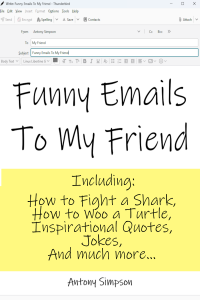
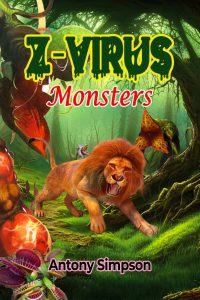
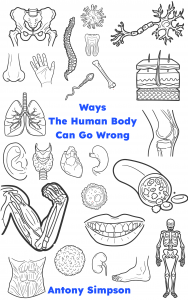
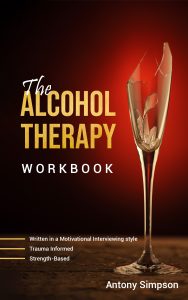
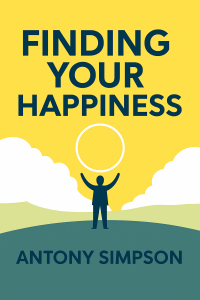
Here are the books that Antony has published:
Share on Social Media:
Life, Thinking, , , , , , , , , , , , , , , , , , , , , , , , , , , , , , , , , , , , , , , , , , , , , , , , , , , , , , , , , , , , , , , , , , , , , , , , , , , , , , , , , , , , , , , , , , , , , , , , , , , , , , , , , , , , , , , , , , , , , , , ,

10 Easy Ways to Improve Your Mental Health

Reading Time: 4 minutes
world-mental-health-day
Tuesday 10th October 2017 – World Mental Health Day

Today (Tuesday 10th October 2017) is World Mental Health Day. So here’s 10 easy ways to improve your mental health:

10. Regular Exercise

I don’t mean becoming a gym bunny or taking up running. Start walking. Walking is the easiest form of exercise. Take it slow and easy. Do it regularly, a couple of times a week. Gradually build up the distance. It’s even better if you can walk in places of natural beauty, as you’ll have the scenery to enjoy.

NHS Choices says:

Research shows that physical activity can also boost self-esteem, mood, sleep quality and energy, as well as reducing your risk of stress, depression…

(From: NHS Choices, last accessed: Thursday 28th September 2017)

9. A Better Diet

We could all do with eating a bit better right? Add more fruit and vegetables to your diet – aim for five a day. Cut down on the amount of sugar and salt in your food. Try to drink 6-8 glasses of fluid per day (roughly 1.2 litres). You can learn more about diet on the NHS Choices – Eatwell Guide website.

8. Go Smoke-Free

Despite many smokers saying that a cigarette reduces their stress levels, Nicotine is a stimulant which means it has the opposite effect. It increases anxiety and stress levels, especially when those nicotine receptors in the brain need feeding. Becoming smoke-free has loads of other benefits as well.

7. Drink Less Alcohol

Alcohol is a depressant drug and affects your brain chemistry. Drinking a small amount of alcohol decreases inhibitions and can make you feel happier. But drinking heavily can lead to a lowered mood. It’s also not a good idea to drink if you are angry or upset, as it can make you feel worse and do things that you wouldn’t do sober.

You don’t have to stop drinking alcohol, just cut down on the amount. A good tip is to buy less alcohol. If you buy less alcohol you’ll have less to drink.

6. Meditate

Meditation is about clearing your mind and focusing on the present or a particular thought or emotion. Research suggests that daily meditation for just 20 minutes per day has benefits to mental health after just five days. Benefits of meditation include: lower stress levels, feeling more positive, improved concentration, improves the ability to be in the moment and helps with clarity of thought.

Start slow with meditation. Set an alarm for a short period of time, say 5-10 minutes and gradually build up the time. Gradually build up the frequency of meditation sessions to, so start with a couple of times a week and work towards daily practice. Like anything, your ability to meditate will get better with practice. So don’t be surprised if you struggle with intruding thoughts initially and don’t let them discourage you.

5. Recognise the Signs of Stress

Recognise when your stressed and take steps to de-stress. You can do this by taking a deep breath, focusing on your body, mind and feelings and look for signs of stress. I call this checking-in with myself and try to do it a few times a day. Signs of stress include:

How you may feel emotionally

  • overwhelmed
  • irritable and “wound up”
  • anxious or fearful
  • lacking in self-esteem

How you may feel mentally

  • racing thoughts
  • constant worrying
  • difficulty concentrating
  • difficulty making decisions

How you may feel physically

  • headaches
  • muscle tension or pain
  • dizziness
  • sleep problems
  • feeling tired all the time
  • eating too much or too little

(From: NHS Choices, last accessed: Friday 29th September 2017)

4. It’s okay to say NO

When we think about saying no to people, we imagine the world will end. But the reality is nothing like our imagination. In fact, most of the time, people are okay about it. Remember that it is okay to say no and say it when you need to.

Sometimes it’s better to say no rather than say yes. Otherwise we risk over committing ourselves and spread our limited energy too thinly.

3. Sleep

Sleep is so important for good mental health. Sleep allows our bodies to rest and repair. The average adult needs eight hours of sleep. But children and teenagers need much more. But it’s not just about the amount of the sleep you get, it’s also about the quality. Poor quality sleep lowers resilience and increases the risk of physical and mental illness. Get your shut-eye in and try to have a good sleep routine.

2. Off-Load

We all need people to talk to and to off-load to at times. Some off-load to their families, their spouses, their friends or their therapists. Find some people in your life who you can off-load to.

Important characteristics in people you choose to off-load to: they should give you a feeling of trust, they should have the ability to actively listen to what you say, they should be non-judgemental, they should be empathetic and they should challenge you when needed.

1. Relaxation

Write a list of things that help you relax. Then do some of the things on the list on a regular basis. For example, reading really relaxes me. So every night before bed, I read, even if it’s just for ten minutes.

Write soon,

Antony

References

NHS Choices – Benefits of exercise
NHS Choices – Eatwell Guide
Smokefree NHS
Drink Aware – Alcohol and mental health
NHS Choices – Does meditation reduce stress?
NHS Choices – How to deal with stress
One You – Sleep

mental-health-wisdom-banner
Share on Social Media:
Health, , , , , , , , , , , , , , , , , , , , , , , , , , , , , , , , , , , , , , , , , , , , , , , , , , , , , , , , , , ,

My Thirtieth Birthday

Reading Time: 2 minutes

Yesterday I Became:

Thirty years old. It was a busy day with many highlights. My close family and I went out for a meal in my favourite restaurant Gallimore’s. I was so pleased that almost everyone could and did come. Here are photos of my cake and balloons:

my-30th-birthday-cake
My 30th Birthday Cake: Minion Bob.
my-30th-birthday-ballons
My 30th Birthday Balloons.

Gallimore’s Fine Restaurant served sublime and tasty food and the service was excellent. My thanks to Gallimore’s for making my birthday even more special.

I was completely overwhelmed by the kindness and generosity from my family and friends on my birthday. I want to say thank you from the bottom of my heart for all the Facebook messages, the cards, the balloons, the gifts and the money from family and friends.

At the end of the month, some good friends and I are going to Chester Zoo to see the new Islands Exhibit.

Big birthdays always cause me to reflect on my life so far. I think about what I’ve done and not done. What I’ve experienced and haven’t experienced. I play what if scenarios out in my head for both the past and the future.

We are all a work in progress. We are constantly growing as we experience life and learn. I am proud of what I’ve achieved in life so far. I could list my achievements like overcoming adversity, becoming and being a good Nurse, being creative and my ongoing recovery from a mental health illness.

But the thing I’m most proud of is to have a wonderful loving family and a bunch great friends whom I would trust with my life.

Write soon,

Antony

Share on Social Media:
Friends & Family, Happiness & Joy, Life, Thinking, , , , , , , , , , , , , , , , , , , , , , , , , , , , , , , , , , , , , , , , , , , ,

Book Review: Big Magic Creative Living Beyond Fear by Elizabeth Gilbert

Reading Time: 6 minutes

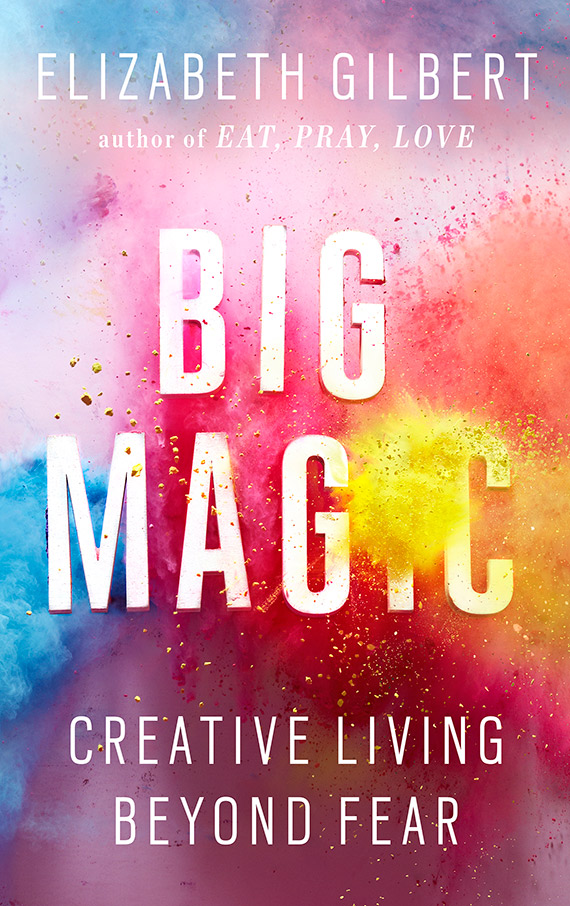
big-magic-elizabeth-gilbert I first discovered the amazing Writer Elizabeth Gilbert when she did a TED talk on creativity (see this TED talk at the end of this post).

Gilbert became a huge success back in 2006, when her memoir Eat, Pray, Love became an international bestseller. It was later made into a film. Prior to this Gilbert had always felt that it was her responsibility to take care of her creativity, so wrote while holding down other jobs. This big success meant she could afford to write full-time. I intend to read and review Eat, Pray, Love at some point in the future.

Gilbert was inspired by creativity, the creative process and the concept of creative living. She began to explore how other cultures throughout history had viewed creativity and the artists that create. This lead her to study the ancient Romans and Greeks. Which in turn led to her quirky and unconventional views about creative living, which she explores in Big Magic – Creative Living Beyond Fear.

Big Magic

is split into six parts: Courage, Enchantment, Permission, Persistence, Trust & Divinity. Each section deserves to be written about individually, which is what I have done below:

Courage
Gilbert starts by defining what creative living means to her. She describes it as having the courage to follow your aspirations, longings and talents. Gilbert writes about desires, that you are driven to do from somewhere deep within. Things or activities that have great meaning to you. Gilbert’s examples include: writing, dancing, painting and basically anything with any sort of activity that has an element of creativity within it.

Gilbert writes about fear. She recognises that fear can and does stop some people from living creatively. But as she explains, fear is boring – as fear’s inner voice repeats the same things. Whereas living creatively is never boring. Gilbert advises the reader that fear is not to be conquered, but acknowledged and thanked for its concern. Then the reader should do the thing that scares them anyway.

Gilbert’s key message in this section is that the reader should follow their curiosity without being inhibited by their fear.

Enchantment
Gilbert believes that ideas are disembodied energy that wants to manifest. But in order to do that they need to work with willing, creative humans. Humans that will commit their time and energy to bringing the idea into reality.

A good lesson learned from Gilbert in this section is that you have to make space for the idea. Both physically and figuratively. Which is why in my workspace, my desk has been cleared, ideas have been listed on the wall (in the order that they will be completed) and that time is regularly set aside to work on the idea at the front of the queue.

Gilbert writes that if the reader commits to an idea, that they should try to keep their end of the bargain. Otherwise the neglected idea will eventually get fed up of excuses, waiting and will continue on its travels looking for another human collaborative partner.

Gilbert gives an example from her own life, writing about an idea for a book that got away from her and found its way to Ann Pattchett (another author who has an especially special place in my heart for writing The Magician’s Assistant, but I digress). Gilbert tells the story of a conversation she had with Pattchett:

I tried to summarize my ex-novel as concisely as possible. I said, “It was about this middle-aged spinster from Minnesota who’s been quietly in love with her married boss for many years. He gets involved in a harebrained business scheme down in the Amazon jungle. A bunch of money and a person go missing, and my character gets sent down there to solve things, at which point her quiet life is turned into chaos. Also, it’s a love story.”
Ann stared at me from across the table for a long minute.
Before I continue, I must give you to understand that – decidedly unlike myself – Ann Patchett is a true lady. She has exquisite manners. There is nothing vulgar or coarse about her, which made it even more shocking when she finally spoke:
“You have got to be fucking kidding me.”
“Why? I asked. “what’s your novel about?”
She replied, “It’s about a spinster from Minnesota who’s been quietly in love with her married boss for many years. He gets involved in a harebrained business scheme down in the Amazon jungle. A bunch of money and a person go missing, and my character is sent down there to solve things. At which point her quiet life is completely turned into chaos. Also, it’s a love story.”

(From: Big Magic Creative Living Beyond Fear, by Elizabeth Gilbert, p. 53-54, 2015. Copyright © Elizabeth Gilbert 2015.)

Permission

Gilbert explains that she never felt the need to be given permission to begin writing; but that some people do feel the need for permission to create. So she advises the reader to give themselves permission to start living creatively. She advises the reader to label themselves, i.e. I am a Writer. Gilbert advises the reader to be authentic and live creatively, first and foremost for themselves.

Gilbert advises the reader to avoid getting into debt. According to Gilbert debt leads to trappings that will greatly influence the ability to live creatively. Being debt free is likely something that most readers will need to work on.

Persistence
Gilbert encourages readers to keep going and don’t be disheartened if the first thing created gets no recognition. Take your time. Learn your craft. She reminds readers that people go to great lengths to create, often maintaining a day job, having busy lives, but always making the time for creativity.

Gilbert motivates her readers to protect the space and time to create from intrusions, distractions and most of all procrastination. Procrastination can be fear’s way of avoiding starting, continuing or finishing a creative project. So watch out – because fear can be sneaky in its tactics.

Gilbert advises of the perfectionism pitfall for creatives. She writes that done is better than good. Yes, by all means work hard to make sure the work is good, but good enough will do. Aiming for perfection is where most people set themselves up to fail, because perfection is an unrealistic goal that either drives a person insane or causes them to give up on an idea.

Trust
Gilbert writes that a creative should go where the idea takes them, even if it’s emotionally uncomfortable. Gilbert states that you should trust in the idea and continue with Stubborn Gladness.

For Gilbert, living creatively is all about following where curiosity takes her. She encourages the reader to follow their own curiosity.

Divinity
Gilbert concludes by writing that creativity is scared and that the reader should start creative living immediately.

Throughout Big Magic Gilbert’s writers voice is warm and engaging. Gilbert tells many wonderful, meaningful and great little stories as examples of her ideas on creativity in action. She tells these stories exceptionally well.

Stories are not the most scientific form of evidence. But does there need to be empirical evidence for creativity and the creative process? After all, even those at the heart of creative processes struggle understand or explain how their creative process works.

What matters in Big Magic, is that Gilbert writes her truth. Every word is written for herself – so that she can further her study of creativity.

The audience for this book is anyone that wants to live a creative and fulfilled life. Gilbert is undoubtably clever, wise and inspiring in Big Magic. The reader will find that some, most or all of Gilbert’s work will resonate with themselves.

So go and buy Big Magic to lap up some creative living inspiration. Big Magic is available to buy on Amazon.

Review soon,

Antony

TED Talk – Your Elusive Creative Genius by Elizabeth Gilbert

Click here to display content from TED.
Learn more in TED’s privacy policy.

Elizabeth Gilbert muses on the impossible things we expect from artists and geniuses — and shares the radical idea that, instead of the rare person “being” a genius, all of us “have” a genius. It’s a funny, personal and surprisingly moving talk.
(From: TED, Last Accessed: Thursday 3rd December 2015.)

mental-health-wisdom-banner


I aim for posts on this blog to be informative, educational and entertaining. If you have found this post useful or enjoyable, please consider making a contribution by Paypal:


Share on Social Media:
Books & Authors, Inspiration, Reviews, , , , , , , , , , , , , , , , , , , , , , , , , , , , , , , , , , , , , , , , , , , , , , , , , , , , , ,
Scroll to Top
×