Category

Thinking

Girls and Women – Learn The Lesson from The Gay Civil Rights Movement

By Thinking, The WebNo Comments
Reading Time: < 1 minute

I saw an announcement on social media about a new law in the UK, one that in theory will help protect girls and women from harassment. I posted a comment stating that I hoped that this law would be applied regardless of gender.

I was making a simple, but important point: That the law should be applicable to and applied equally, regardless of gender.

I found myself under attack from well meaning women in the comments. I never disagreed that the safety of girls and women is an issue in our society. Nor that boys and men are usually the perpetrators of harassment towards girls and women.

I replied to each comment, encouraging girls and women learn the lesson from the gay civil rights movement. The lesson is this: The gay civil rights movement made changes happen because they gained allies. I encouraged these women to gain allies, rather than go on the attack.

To girls and women: Know that there are many boys and men that are not harassing you. Know that many boys and men don’t share the views, attitudes or behaviours of those that harass you or might do.

Write soon,

Antony

Share on Social Media:

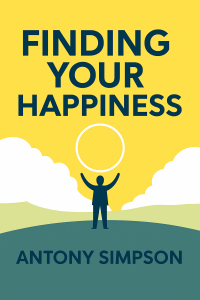
Can Money Buy Happiness? – a section from my next book titled FINDING YOUR HAPPINESS

By Money / Finances, Books & Authors, Creativity, Happiness & Joy, ThinkingNo Comments
Reading Time: 4 minutes

I am currently writing a book on the topic of happiness, titled FINDING YOUR HAPPINESS, which is due for release later this year (2026). Writing a non-fiction book requires me to do a lot of research and explore my thoughts, opinions and feelings about what the research suggests. This is something I love about writing.

A question that has caused me to do a lot of thinking and feeling recently is the question: Can money buy happiness? I didn’t know the answer to this question, so I looked into the research. In this blog post, I share with you the section I’ve written for FINDING YOUR HAPPINESS, free of charge, because I’ve found it fascinating.

Your Money

The question that I often get asked is:

Can money buy happiness?

Research suggests that having more money does increase the likelihood of a person being happier, up until a certain annual income.

Once a person reaches around £75,000 (around $100,000 USD) per year, money no longer has any impact on how happy the person is, when compared with other people that have the same income.

I would like to acknowledge here that this is a very high level of income and that most people don’t have an income this high. At this point, I am answering the question above based on available research.

This amount of money stated above is correct for the year 2026. This annual income amount is likely to increase year on year, as the cost of living is ever increasing.

According to research, the reasons why more money increases the likelihood that a person will be happier include:

  • Basic needs are met: Enough food, clean water, decent housing, appropriate clothing, access to healthcare and access to education. This significantly reduces a person’s level of stress and can provide a person with a greater sense of security.
  • Increased choice and autonomy. The person has more options and freedom of choice in their life.
  • The person has money for comfort, pleasure, leisure and fun. This includes money for travelling and new experiences.
  • The person can use money to give them more free time. For example, they could hire a cleaner, cook, pay for childcare, all freeing them up from the time they would have spent undertaking these activities.

Some people who reach this high level of income or exceed and still seek to increase their income. Why do they do this?

One reason could be that they have a strong belief that more money = more happiness. This belief likely comes from their past experiences. Earlier in their career, increases in income probably did contribute to making them feel happier.

Although the research does suggest that more money increases the likelihood of being happier, it also points out that having any amount of money doesn’t guarantee happiness.

You could earn the amount stated above (or more) and still be miserable. You could equally earn a lot less and yet be incredibly happy.

My view is that no amount of money can buy happiness. Happiness is a feeling. A feeling we get through a wide variety of experiences. Yes some of these experiences require money, but others do not.

The best way to keep informed of the release of FINDING YOUR HAPPINESS is to sign up to my newsletter here. You’ll receive just 1 email per month covering: details of my new books/articles as I release them, notification of my latest blog posts and the very occasional special offer. This is not a spammy sales newsletter, but an opportunity to stay up to date.

Write soon,

Antony

My published non-fiction books include:

Share on Social Media:

AI Going Awry

By Technology, ThinkingNo Comments
Reading Time: 4 minutes

According to a recent report, AI (Artificial Intelligence) chatbots are increasingly lying to users and AI agents are increasingly acting outside of their established parameters.

For those of you who don’t know, an AI chatbot is an AI service that answers human users’ questions. Whereas a AI agent is takes actions to achieve a goal set by human users.

These are worrying trends, given the rush many businesses seem to be in to implement more and more AI within their companies. It’s not just businesses implementing more AI, public sector organisations and charities are doing it too.

AI has benefits, risks and some disadvantages. Here are just some of them:

Benefits of AI

  • Repetitive tasks can be automated.
  • Can summarise a lot of information and condense it down in seconds.
  • It can provide answers to questions quickly, using information available online (this does have a risk of wrong or biased information being given).
  • It can create visual representations, based on text prompts pretty quickly.
  • Reduces human errors in some processes.
  • It is available 24 hours a day, 7 days a week, 365 days a year.

Risks of AI

  • AI doesn’t fully consider every possible solution to a problem.
  • AI can make errors that can have a massive impact on a human’s life. Think of this recent case where AI mistook a man for someone wanted by the Police.
  • AI currently struggles with understand context on some occassions.
  • AI can’t understand emotions or behaviour that it is emotionally driven.
  • AI can currently be easily manipulated.
  • AI can give wrong or biased information.
  • AI analysis often reaches wrong conclusions.
  • Use of AI could be unsafe for humans or even endanger life in some cases, see my blog post: The Dangers of Emotional Support from an AI (Artificial Intelligence) App.
  • AI often doesn’t protect intellectual property or copyright owners.
  • AI doesn’t have any ethics and very few restrictions to its use.
  • AI’s application of rules can make creative works feel like they are less enjoyable and lack the same quality as human works.
  • AI can lead to data breaches, loss of data or loss of access to data.
  • AI may lead to some job losses or jobs not being created in the first place.
  • AI use can limit the development of or diminish a human’s ability to think critically.
  • AI requires a lot of data centres and electricity to power them. This means a greater demand for electricity which will drive up the cost of it and could lead to scarcity.
  • AI requires a high number of processor chips and memory chips, as well as other computer parts. This has already reportedly led to a shortage, which has fuelled increases in prices for these chips.
  • People often don’t realise that the way companies that offer free use of AI make money is to sell your data or target you with very specific advertising through tracking what you do online.

Disadvantages of AI

  • Economically, AI may only end up benefiting the super wealthy. Making the incredibly wealthy, even more so. This will increase inequality and will worsen the living standards for most people.
  • AI appears to be the only future of computer-based technology being considered and developed.
  • AI can be so compelling that it is difficult to tell whether something is human made or AI generated and sometimes this really matters.
  • Overall human critical thinking is likely to decrease as more AI is used.
  • AI lacks the ability to be flexible to unpredictable changes to circumstances. Especially changes that it hasn’t encountered before or has no/very limited data on.
  • AI is too reliant on data for answers and solutions to problems. Not everything can be measured. There may be limited or even no data for things that are impossible to measure. Therefore AI can’t provide answers and solutions to problems with very limited or no data.
  • Some AI could lead to humans being excluded or even discriminated against.
  • No humans are responsible for the information provided by AI or the actions it takes. In my view, this is clear lack of accountability and all Governments should regulate the sector immediately to provide some accountability for AI services.
  • AI requires internet access. There are 8.3 billion people in the world today, but only approximately 6 billion people have access to the internet (74%), what about the other 2.3 billion people (26%)?
  • Some devices may become useless if the internet became unavailable for a time. Many apps on devices require constant access to the internet or access to the internet during use to be functional. Part or all of the internet could go down, it has happened before.
  • It is getting more and more difficult for people to choose not to use AI. More and more products are including AI, including household appliances, software, etc. Even Windows comes with Copilot AI pre-installed.
  • It will likely replace some low paid/start of career jobs. AI is likely to create some jobs, but not as many as will probably be lost. The new jobs will likely require specialist knowledge or skills, that current low paid/start of career workers won’t have.
  • We are working towards AI super intelligence, but we don’t really have a clear vision of what this will look like or what it will mean for humans.

At this time, the benefits of AI seem extremely limited and some of risks are massive. I understand that AI is a developing technology. I know that it is constantly being improved upon to improve its performance and enable it to do more.

The benefits of AI are constantly talked about – along with many promises being made about improved performance, future abilities and how these could benefit humanity as a whole. The risks are often being ignored or talked about in a way that lacks rational thinking and there are likely to be more risks in the future. The disadvantages of AI nobody seems to be thinking about.

If AI continues to develop as it already has, AI may end up resolving the debate around its future use. All it would really take is AI to make a major error that would effect a large number of people across the world. With the increasing rate of AI implementation in businesses and institutions around the world, I fear such an event could easily occur in the near future.

Blog soon,

Antony

Share on Social Media:

Lucy Letby: A Miscarriage of Justice?

By ThinkingNo Comments
Reading Time: 7 minutes

Lucy Letby was a Neonatal Nurse at Countess of Chester Hospital, an NHS run hospital in Cheshire, UK.

Letby was accused of and convicted of 7 counts of murder and 8 counts of attempted murder of neonatal infants whilst working on the Neonatal Unit at the hospital. Letby was sentenced to life in prison without the possibility of parole.

Many years ago, as a Student Nurse, I completed a placement on a Neonatal Unit. With this limited experience I couldn’t understand how practically Letby would be able to do what they were suggesting she did. A Neonatal Unit is a very busy place: Lots of Nurses, Doctors, Health Care Assistants, Other Healthcare Professionals, Parents, etc. There are always other people around.

I was never alone with any neonate for more than 2 minutes. Even if I were, I could be seen by other staff through windows at all times. Some of what Letby is accused of would require longer than 2 minutes to execute, so it just didn’t make sense to me.

I had a gut feeling that in the case of Letby, that something wasn’t right. As more details of Letby’s crimes were reported in the media, this only added to my doubts are her guilt.

So I decided to learn all I could. What I discovered is truly shocking. Here is what I learned:

1. Nobody ever saw Letby harm any neonate.

2. Nobody has given any possible motives as to why Letby would want to harm or murder neonates. The Police don’t even explore possible motives, in fact, they actively avoid discussing this in the documentaries I’ve seen.

3. Staff at the hospital became alarmed after a spike in neonatal deaths on the unit.

However the unit has a number of problems including:

  • A lack of suitably qualified and experienced staff – it is reported that Letby was one of only two full time qualified Neonatal Nurses on the unit. Remember this is for a unit that operates 24/7/365.
  • The unit was admitting neonates that were much more complex than staff could care for safely and effectively.
  • Team working on the unit was poor. This included poor communication and a poor level of trust between the professions.
  • Consultant Ward Rounds only took place twice a week, rather than twice a day as is standard practice on other neonatal units. Consultants were unavailable out of hours and Nurses reported that it was often to difficult to find a doctor when one was required.
  • Taps were contaminated. Sewage came up from drains in the sinks. This led to outbreaks of serious and potentially life threatening infections.

Despite all of the above, Cheshire Police did not explore or examine what was happening on the neonatal unit as part of their investigation.

3. Dr Stephen Brearey, Dr John Gibbs, Dr Ravi Jayaram and another doctor (not named publicly for legal reasons apparently) suggested to Cheshire Police that Letby could be harming/murdering neonates, without any evidence.

Their main reason for suspecting Letby was that she always seemed to be around when incidents happened. This was unsurprising when you consider the staffing levels of the unit, that she was one of the most qualified and experienced Neonatal Nurses and was available to pick up additional shifts due to having no other responsibilities outside of work (apart from caring for her cat).

4. Cheshire Police launched their investigation but needed an expert medical review of suspicious cases to establish if neonates had been intentionally harmed/murdered or if there could be other causes for harm or death.

Around this time, Dr Dewi Evans, a retired Paediatrician approached the Police offering to provide his medical experience and expert opinions in exchange for being paid. It is reported that in less than 10 minutes of reviewing the first case he declared that harm/death had been intentional.

It is also reported that Dr Dewi Evans told the Police that he had “never lost a case.” This suggests that he wanted to find intentional harm/murders, rather than providing a balanced and evidence-based medical opinion.

Dr Dewi Evans went on to review all suspicious cases and classify them, without ever giving a rationale for why some cases were put in his ‘intentional harm/death’ category and others in ‘harm/death by other causes.’ His expert testimony in court likely led to Letby’s conviction.

However Dr Dewi Evans was a Paediatrician and not a Neonatologist. In one case he quoted a research paper by Dr Shoo Lee (a recently retired Neonatologist from Canada). The research paper was from over 30 years ago. Dr Dewi Evans drew the completely wrong conclusion from the research paper and cited it as evidence of intentional harm towards one of the neonatal cases he reviewed.

Dr Shoo Lee heard about Letby’s case and how his research had been used after Letby’s trial and conviction.

Dr Shoo Lee was concerned about the misuse of his research paper and concerned that this evidence might have been used to wrongly convict Letby. He assembled a panel of 14 internationally respected Neonatologists. They worked in pairs, reviewing the case notes for each suspicious case of neonatal harm/death.

If the pair of Neonatologists didn’t agree on the cause or contributing factors of harm/death in a case, a third Neonatologist would be brought in to review the case to aid in discussion and reaching an agreement.

Dr Shoo Lee and the other 14 Neonatologists did this at their own expense produced a comprehensive report. Dr Shoo Lee and the team of 14 Neonatologist found that in all cases, there was no evidence of intentional harm or murder.

5. Police appeared to assume Letby was guilty, without the evidence to support this assumption. In interview footage released, Police Officers repeatedly asked Letby to provide them with an alternative explanation for harm/death caused to neonates if she didn’t do it. In the UK it is the Police Officer’s responsibility to prove guilt, beyond reasonable doubt, not for someone accused of a crime to have to prove their innocence.

6. Police Officers reported that Letby was “very compliant,” but have also made comments that on occasions Letby said “no comment” and this increased their conviction that she was guilty. In court it was suggested that Letby repeatedly said “no comment” when questioned, which could be an indicator of guilt.

However, according to people who’ve read the transcripts of Letby’s interviews the amount of times that Letby said “no comment” in interviews was greatly exaggerated by both Police Officers and the Crown Prosecution Service in court.

It should be noted her that Letby is entitled to say “no comment,” may have been advised to do so by legal counsel. It appears that Police Officers jumped to an assumption that Letby was guilty and did not consider other possibilities. Police Officers are supposed to keep an open mind and discover the truth.

7. Police Officers appeared to assume Letby must be guilty because she couldn’t remember details of neonatal cases from years ago. Police Officers were suspicious and appeared to assume Letby must be guilty because she couldn’t remember requested details of neonatal cases from years ago.

As a Registered Nurse I couldn’t provide details of cases I worked on a few year ago. This is due to the number of patients I’ve seen since and the general passage of time.

Being unable to remember specific details of cases, without access to clinical notes, is not an indicator of guilt, but an indicator of being human.

8. Evidence against Letby was manipulated so that it was factually incorrect when presented at trial. This included:

  • Showing a duty chart evidencing that Letby was always on shift when all the incidents happened. This chart deliberately excluded incidents where Letby wasn’t on shift. This manipulated duty chart was visually powerful. However, if the incidents where Letby wasn’t on shift had been included, it wouldn’t have shown any pattern what so ever.
  • Use of swipe card data to access the unit was used. Even though everyone on the unit was aware of the code to the backdoor, which allowed entry without swiping an ID card.
  • In a search of Letby’s home on one occasion Police found notes Letby had written. The Crown Prosecution Service pointed to specific comments Letby wrote such as “I did it.” “I wasn’t good enough.” and “I’m evil.” The Crown Prosecution Service stated that these comments were a confession. Yet they failed to mention other comments Letby wrote such as “I’m innocent.” and “I’ve done nothing wrong.” The Crown Prosecution Service failed to mention that Letby was mentally ill due to the stress of being under investigation in court. Or that Letby had also been advised to write down any and all thoughts by a Counsellor provided by the hospital’s Occupational Health Department.

9. Letby’s defence team didn’t present any Expert Medical Witnesses to challenge Dr Dewi Evans’ testimony or suggest an alternative narrative. Nobody really knows why Letby’s defence team didn’t do this. But there are reports from people that were in court of utter shock and disbelief that they didn’t present any expert medical witnesses. One of the most compelling arguments of Letby’s guilt was the medical evidence provided by Dr Dewi Evans.

10. Voices that felt Letby was being wrongly accused and that she was innocent were silenced. It is reported that some Nursing colleagues and even her Unit Manager felt that Letby was being wrongly accused, yet they were silenced by the hospital trust. These were some of the people who worked closely with Letby and their voices should have been heard.

Miscarriage of Justice? My Thoughts:

After careful consideration of all the above, I am convinced that Letby’s convictions are a miscarriage of justice. I suspect that in time, all will come to think this. But what will have been the impact of this miscarriage of justice?

Letby has already lost everything: Her freedom, her vocation, her privacy, her ability to ever lead a normal life.

But the impact is much bigger than that. People will trust institutions like the Police, the Crown Prosecution Service, the Courts and the NHS significantly less. There will be a number of public inquires to try to understand what happened in Letby’s case, to learn from it, so it doesn’t happen again. But the damage will have been done.

Trust once gone, is very difficult for institutions to regain. It may take several generations for people to forget the abuse of power and serious errors in judgement in the Letby case. But for this to happen, it relies on institutions not abusing their power in the future.

The impact of the Letby case could be used positively. Some ideas for this include:

  • To improve standards in neonatal and maternity care in the NHS. I think the conversation around this has already started to happen as a result of this case.
  • Used to re-examine the role of leaders within public institutions. We should consider how they are accountable for their organisations, what values they should have and what culture they should foster.
  • Cause reflection and discussion around every aspect of the criminal justice system. What its purpose? How it should operate? Etc.
  • Used to reconsider the appeals process for convictions.
  • Used as an example of how institutions and professionals within them shouldn’t operate.
  • Used to develop critical thinking within all public institutions.

Write soon,

Antony

mental-health-wisdom-banner
Share on Social Media:
×