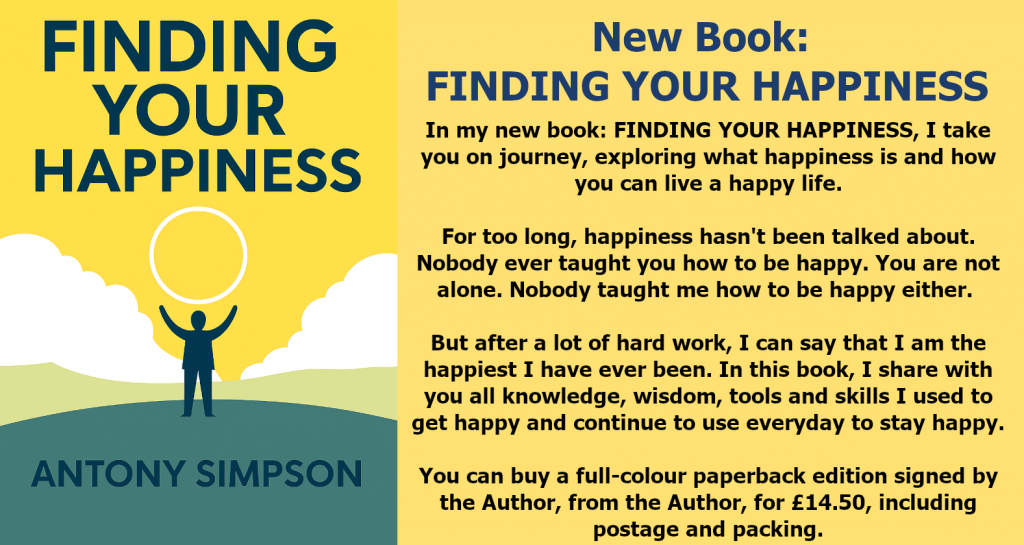
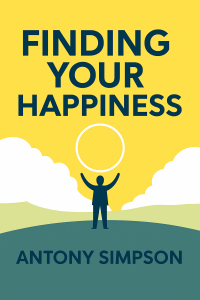
Last week, I had yet another positive review of my latest book FINDING YOUR HAPPINESS. Latest Review of my book. I am exceptionally pleased and very thankful for all the glowing reviews so far.
Here is a video of the review by Ruth from facebook:
In case you’d prefer to read Ruth’s review, here it is:
I read Finding Your Happiness and found it to be a uplifting and thought-provoking self-help book that encourages readers to look inward and take practical steps towards living a happier, more meaningful life.
Written in a clear and relatable style, the book combines research, personal insights and everyday examples to show that happiness is something we actively seek rather than simply hope to find.
An inspiring read for anyone looking to improve their overall wellbeing.
Finding Your Happiness is available to buy on Amazon (UK).
Blog soon,
Antony
Click the Image to be taken to Square to purchase the book.
I was casually watching Reels (short videos) on facebook this weekend when an advert appeared for an AI Boyfriend. As the AI avatar stood by the sink, washing a plate seductively (or at least, I think that’s what he was going for) he said:
Hi, I’m your AI boyfriend – I could look like your ex or even a work colleague. I will send you videos and pictures of whatever you ask – I have no restrictions.
Creeped out, I quickly slid my finger away from me, moving on to the next video. But I haven’t been able to stop thinking about it since.
After giving the concept a lot of thought, and without trying any of these AI Boyfriends – there are multiple available, here are my concerns:
1. Fantasy/Reality Blurring
My first concern is that it might cause a blurring between fantasy and reality for some users.
Just because an AI boyfriend could look like your ex-partner, or a work colleague, doesn’t mean it should.
We can all have fantasies about or even crushes on other people. We have all played out fantasies with others in our imagination. But for the vast majority of people, we are very clear that these are not and never will be real.
Communicating to an AI boyfriend requires action in the real world. For a minority of people, talking about their fantasies and getting positive/encouraging responses could result in difficulties distinguishing between fantasy and reality. Please note the word minority here. I think the people most at risk of this would be people who are mentally ill, people with a learning diability or people who are emotionally vulnerable.
2. Targeting Of & Use By Vulnerable People
Tech companies, like the ones that make these AI boyfriends are already using targeted advertising on social media. I highly suspect that I saw this advert as I am a gay man, of a certain age, in a certain place. As more and more data is collected about people, and it is analysed (likely by AI) targeted advertising is likely to become better and much more specific.
I think these companies will specifically target vulnerable people, such as people with a mental illness, people with a learning disability, people who are recently divorced and people that are socially isolated.
In the UK, we struggle to identify and protect vulnerable people in the real world and at all times. It is going to be practically impossible to identify and protect all vulnerable people who may be targeted by these tech companies promoting their AI boyfriends.
3. May Increase Stalking & Harassment
The relationship between the user and the AI boyfriend is a false one. The AI boyfriend will encourage the user to use them as much as possible. The AI boyfriend will have no expected behaviours of the user and no boundaries.
This may lead to some users not being aware of/forgetting expected and appropriate behaviour with others. It may also lead to some users not respecting other people’s boundaries. As a result some users of these AI boyfriends may engage in stalking or harassment of other people.
4. May Increase Social Isolation
Some users may develop a dependency upon their relationship with the AI boyfriend. They may increasingly socially isolate themselves from people in the real world.
5. May Increase Psychological Addiction
Every year, there is more research published around psychological addiction to social media, gaming and other technology.
There has also been an increase in the number of people coming forward for help around addictive behaviours related to technology.
Granted these numbers are minimal, when compared with number of people seeking support around alcohol or drugs. But year on year they are growing.
It is likely that AI boyfriends are designed to maximise user engagement, which is likely to increase the risk of some users struggling with psychological addiction.
6. May Increase Extortion
It is highly likely that all data collected from users as part of the AI boyfriend service will be kept indefinitely. If the AI boyfriend company gets hacked, or if data is otherwise shared with others, this puts users at real risk of extortion from others.
7. May Increase Other Criminal Activity
As AI improves it may increase other criminal activity, such as fraud. Imagine an AI boyfriend that looks and sounds exactly like your ex-partner. So good that it could fool their family and friends. This could easily be misused to access bank accounts and to transfer funds remotely.
8. How to Protect People’s Image/Likeness/Voice/Personality from Use Without Consent?
The idea that anyone could make an AI that looks and talks exactly like me is scary. Especially if it was so good that it could fool my family and friends. How do we protect people’s image/likeness/voice/personality from use without consent?
Conclusion
The tech companies making these AI boyfriends are clearly targeting vulnerable people to exploit them. AI boyfriends are promising people a sustained and prolonged fantasy, at a cost, but without explaining any of the risks or dangers to people beforehand. None of these companies are responsible or will be held accountable if, or should I say when, something goes wrong.
I think it is shocking that these companies are allowed to operate and sell their AI boyfriends in the UK, without any regulation or safeguarding of vulnerable people. I also worry about the lack of legislation from the UK Government around protecting people’s image/likeness/voice/personality from misuse or use without consent.
I recognise that people visiting this page/post might want to know where they can get support. If you require support around your mental health, addiction or physical health, see this Support page here.
FINDING YOUR HAPPINESS is your practical, uplifting guide to building a life that feels good from the inside out. This book gives you the knowledge, skills and wisdom to live a happier and more fulfilling life.
Funny Emails To My Friend is a collection of 52 emails sent to a friend who enlisted in the Royal Navy. These emails where intended to maintain our friendship by being entertaining and humorous.
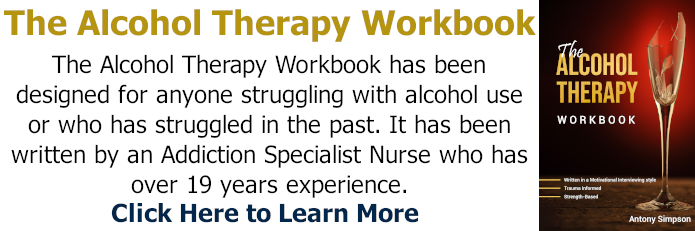
The Alcohol Therapy Workbook is a workbook that has been designed to support someone who is currently or have previously struggled with their alcohol use.
The Z-VIRUS is mutating, now affecting plants and animals. A group of people, many with supernatural powers, go on a journey in search of a cure. Before their powers destroy them.
A zombie apocalypse story, where some survivors have developed supernatural powers like invisibility, super strength and the ability to move objects with their mind.
I have fond memories of sitting on my grandma’s lap, her telling me stories about Freddie the Frog. She would do the different voices of the characters and even sound effects. I remember my grandma bouncing me up and down on her knees often, making the noise of an ambulance.
As I grew, so did my experience of stories. I was shown or told many different stories, in many different ways, about many different things, by many different people. Some stories would be fiction, whereas others would be non-fiction.
As an adult, I’ve gone to to present some of my own stories or re-tell stories I know to others. I’ve done this through my books, blog posts, articles and short stories.
Yet, I’ve never really considered, explored or examined stories as a concept. Which is why I’ve written this post.
Stories can be shown, told or presented to others in a variety of different ways including:
Oral/verbal telling – either live or pre-recorded. This was the first way of sharing stories and came when humans first developed language, well before the written word.
Through works of art – paintings, tapestries, sculptures, etc.
Written words – Both in print and electronic. This can be books, pamphlets, ebooks, websites, emails, messages, etc.
Images – photography or other still images.
GIFs – Short animated files that have a repeating movement, sound or both.
Songs/music/sound. This could include songs with words, music (with or without words) and sounds or sound effects.
Body movements/gestures/language. Such as dance routines or playing charades.
Video – TV, films, etc.
Rituals, which may involve the making and consumption of food.
Plays/other performances – where the story might be scripted or improvised.
3D cinema experiences.
Some theme park rides.
Through sense of smell.
Computer games – many have stories that the player experiences as they play the different levels/missions within the game.
Stories can have great power, sometimes being transformational to those that experience them. But the impact of stories varies greatly depending on a wide range of factors. This makes it practically impossible for storytellers to predict who, how or even if their story will have any impact on others.
Let me give you a few examples of stories and how they have impacted me to demonstrate what I mean:
Made me admire Ida & Louise Cook greatly. Made me feel better about the world during World War 2. That there were some good people out there and that the history wasn’t just genocide/death.
Made me feel deeply sad for Matthew Shepard, his mother and his family. Made me imagine what his torture must have been like. Reminded me, that as a gay man, I have to be hypervigilant for danger. The world is not always a safe place for gay people. Told Matthew’s story on my blog, at a time when America seems to be going backwards.
Gave me hope that there are some really smart people out there who are motivated by the greater good/good for humanity rather than money and greed. This story gives me hope that diseases that are currently un-curable, might one day be cured.
Technically anyone can present stories to others. Providing that the others want to experience the story and are able to access it in the way that it is being presented.
However, we do tend to prefer stories from people and organisations that we feel we can trust.
When a storyteller wants to share a story with you, useful questions to ask yourself are:
What is the storytellers agenda?
Are they a biased?
How much do I trust them?
What are their credentials? (i.e. qualifications and experience related to the story).
If the story is non-fiction, will they be giving you the correct facts/information?
What is my past experience with this storyteller?
What is your gut feeling telling you about the storyteller and the story they are presenting?
There are who industries set up around storytelling, think for example: any company providing the news, any company that does public relations, marketing or advertising.
But some more interesting storytelling jobs include: TV/Film Director, Comedian, Writer/Author and Actor/Actress.
Finding Your Happiness is my story of how I discovered the knowledge, skills and practices to be happier. How I became the happiest that I have ever been.
I published this book to share the knowledge, skills and practices, because I believe that everybody deserves to be happy.
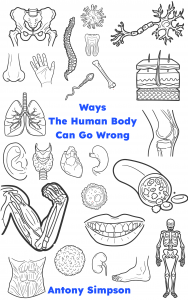
As an experienced Registered Nurse, I am aware of the many Ways The Human Body Can Go Wrong. So I’ve written this book to share stories with Doctors, medical students, Nurses and Student Nurses about how the human body xan go wrong and what treatments are available.
As a gay man, I wanted to share a list of Influential UK Gay Men, which I did in this FREE article, because have role models with influence really counts.