change

Two Change Theories – The Cycle of Change by Prochaska and DiClemente & The Three Stages of Change by Lewin

Reading Time: 4 minutes

Everyone and everything changes. As the Greek Philosopher, Heraclitus of Ephesus once said:

Change is the only constant in life.

Understanding how change happens is key to changing any of your thought patterns, emotions or behaviours. It is also key to changing the thought patterns, emotions or behaviours of others.

Here I present two of my favourite change theories:

The Cycle of Change by Prochaska and DiClemente
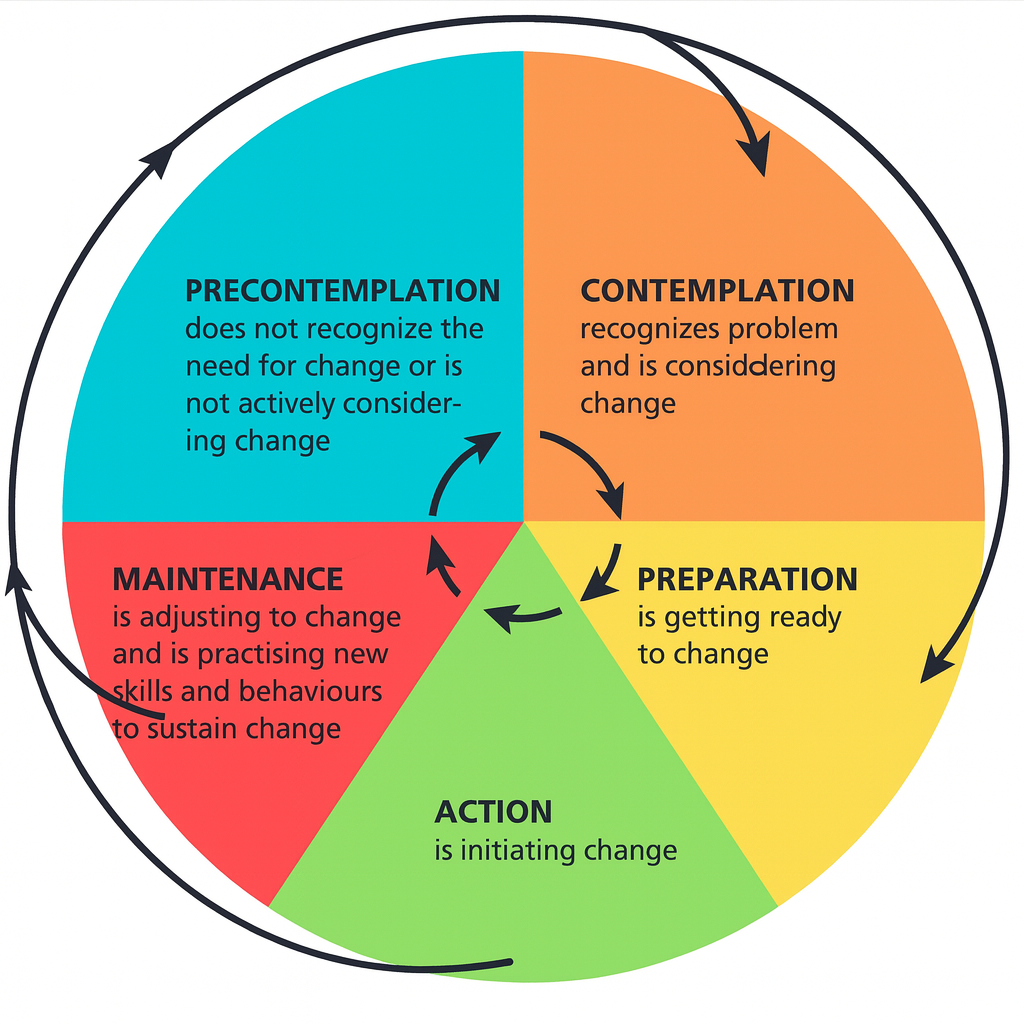
Click on the image above for full size image.

The Cycle of Change was developed by Prochaska and DiClemente in the 1980s looking at how smokers in America stopped smoking.

Prochaska and DiClemente identified that change happens in distinct stages and that these stages can be considered a cycle. They created a diagram to demonstrate this cycle, which I have recreated on the left.

Here is a more information about each stage:

1. Precontemplation
Precontemplation is the first stage in the Cycle of Change. If you are in this stage of change you don’t have any desire or thoughts around changing any of your thought or behavioural patterns.

2. Contemplation
In the contemplation stage you will be thinking about changing either a single thought or behavioural pattern or any number of them. You will be considering the good and bad aspects of the patterns. You will be thinking about how you could change the patterns and the impact you expect changes would have on you and others.

By the time you reach the end of the contemplation stage, you have made the decision to either change or not.

If you have decided to change, you progress to the next stage.

If you have decided not to change your behaviour then you go back to the precontemplative stage.

Some people can get stuck in the contemplation stage for a long time. Always try to be aware of which stage of change you are in and how long you have been there. This will prevent you from getting stuck in any stage of the change process for a prolonged period of time.

3. Preparation
The preparation stage is all about planning to make the change to your thought or behavioural patterns. You will begin to take some actions for the change you want, such as setting goals, making a plan, etc.

For example, say you wanted to change the amount of physical activity you undertake, by increasing it. In this stage you may:

  • Join a gym.
  • Join a local sports club.
  • Plan a new routine which will give you more time for physical activity.
  • Recruit a friend who will also take part in some or all of your physical activities.

4. Action
The action stage is where you stop the old patterns of thoughts or behaviours and start the new patterns. This stage of change is hard and initially takes a lot of conscious effort, energy and motivation.

However with repetition and the passage of time, the new patterns of thoughts or behaviours become easier, take less conscious effort, energy and motivation to complete.

5. Maintenance
In the maintenance stage, you maintain the new patterns of thoughts or behaviours by regular repetition. The aim is to make the new patterns become your new way of being and functioning.

Prochaska and DiClemente theorised that the maintenance stage takes 3-6 months to complete. After this time, what was once a change is the new normal for you.

Neuroscience suggests that it takes 3-6 months for neurons (brain cells) to reorganise and become fully established to support a new thought or behavioural pattern. This neuroscience idea is called Neuroplasticity. This means that neuroscience supports Prochaska and DiClemente’s theory that it takes 3-6 months for you to change thought or behavioural patterns.

Neuroscientists have discovered evidence to suggest that Neuroplasticity occurs throughout a person’s life. This means that no matter your stage of life or age, you can make changes to your thought or behavioural patterns at any time.

6. Lapse or Relapse
Prochaska and DiClemente described going back to old thoughts or behavioural patterns as an essential part of the process of how change happens.

They described a lapse as an event of going back to old thoughts or behavioural patterns for a short time, recognising that you have done this and still having a desire to change to the new patterns. In a lapse, you go back to the new thought or behavioural quickly.

Lapses are part of the process of change. A lapse can be a great learning opportunity for you. By reflecting on a lapse you can learn what triggered you to revert back to your old patterns and prevent it from happening again in the future. This can lead to your next attempt at change being more or completely successful.

Prochaska and DiClemente described a relapse as going back to the old thought or behavioural pattern in the longer term. The danger with a relapse is that you could lose your desire, energy or motivation for change and go back to the pre-contemplation stage of the cycle.

I give much more information, practical advice and tips for change in my book FINDING YOUR HAPPINESS:
The Three Stages of Change by Lewin

The Three Stages of Change by Lewin was developed in the 1940s. His theory consists of three distinct stages:
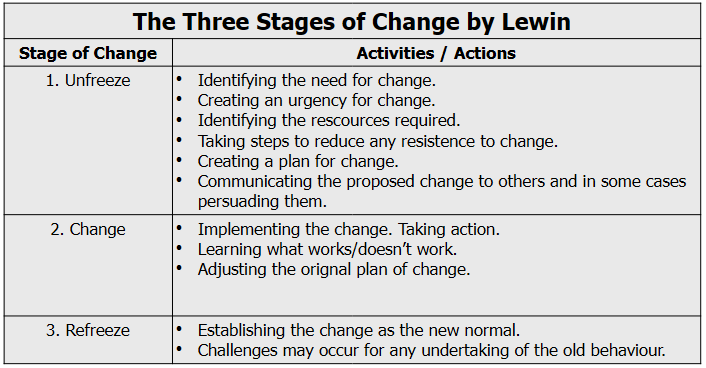
Both of these theories can help you change your thinking or behavioural patterns.

Write soon,

Antony
Share on Social Media:
Life, Thinking, , , , ,

Why I Wrote FINDING YOUR HAPPINESS

Reading Time: 3 minutes

Dearest Reader,

I recently released my latest book FINDING YOUR HAPPINESS. I wanted to share with you why I wrote it. To do so, I need to tell you part of my story. So, here goes:

Nearly 2 years ago now, after two years of being physically and mentally ill, I was diagnosed with Vasculitis.

Vasculitis is an autoimmune disease, where your immune system wrongly mistakes small blood vessels for foreign cells and attacks them. The vasculitis diagnosis came with a reduced average life expectancy.

The average life expectancy for someone with Vasculitis is 20 years from the point of diagnosis. This meant I had just 20 years of life left. I was 38 years old at the time of diagnosis.

This shortened life expectancy caused me to ask myself: Are you happy? The answer was no.

I have Type 1 Diabetes and was slightly overweight. My blood sugars were always too high. I had high blood pressure and high cholesterol. I was on two different antidepressants and an antipsychotic medication. I didn’t have time, energy or motivation to exercise. I didn’t eat well or sleep well.

I was working in the National Health Service (NHS) as an Alcohol Specialist Nurse. I enjoyed my face to face work supporting people with addiction issues. But the ever increasing workload and other stressors made me unhappy at work.

My relationships with family or friends were good. Or at least, at the time, I thought so. I spent a lot of my time with family or friends trying to meet their expectations of me – to be entertaining and funny, to be there to support them in difficult times, to take care of them. This is what I thought a good relative or friend did.

I didn’t have a partner. I didn’t go out on dates. In truth, I’d given up on romantic love. I’d decided that I just wasn’t lucky in that department.

Despite being a Specialist Nurse on a decent salary, money was always tight. When I really thought about it: I was very unhappy. I felt like I was existing, rather than living.

I decided to use my own counselling skills developed in the 18+ years working with people with addiction issues to counsel myself. I decided to look at my entire life, every aspect of it, and ask myself: What would make you happier?Then I would make the necessary changes. It was a daunting task.

Sometimes, it is easier to be stuck in an unhappy and unfulfilling rut, rather than be brave and face the truth. Especially when facing and accepting where I was in my life. This involved acknowledging the unhappiness and beginning to make changes.

Change is always uncomfortable and sometimes even difficult. Our brains like patterns of behaviour, they are key to our survival as a species. But patterns of behaviour are not key to a healthier and happier life.

So I got counselling. In my eyes, the Counsellor had two roles. The first was to ensure I kept being honest with myself. The second was to ensure that I made the changes that needed to be made.

I explored every aspect of my life. I started making changes. After nearly two years of hard work, I can finally say that: I am the happiest I have ever been.

Transformation complete? No. True happiness is a constantly evolving and ever changing process. One that requires daily checking in with yourself, navigating through the challenges of life and continuous work to ensure you stay as healthy and happy as possible.

Take a moment to think about a time your past when you were truly happy. Imagine living every day with that same feeling of happiness. This is why I wrote FINDING YOUR HAPPINESS, because everyone deserves to live a happy life.

Take care,

Antony

Share on Social Media:
Books & Authors, Creativity, Friends & Family, Happiness & Joy, Health, Life, , , , , , , , , , , , , , , , , , , , ,

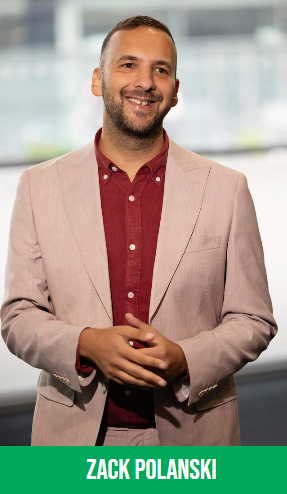
Zack Polanski, The New Leader of The Green Party Is Someone I Would Like Add To My Influential Gay Men Article

Reading Time: 4 minutes
Image From & Copyright © The Green Party UK.

In Early 2025, I released an article titled Influential UK Gay Men, which you can download for free as a PDF document here.

In the article, I listed all the UK gay men that I thought were influential, by profession, including Politicians.

I spent many hours researching and writing my Influential UK Gay Men article. I was really happy with it.

I concluded the article by writing that I didn’t think we’d get a Prime Minister that identifies as a gay man in my lifetime.

Well, my conclusion might have been wrong.

Indeed, I am starting hope that I was completely wrong about that.

Back in March 2025, when I researched, wrote and published my Influential UK Gay Men article, I had never heard of  Zack Polanski, who is the new leader of The Green Party UK and happens to be a gay man.

Zack has seemingly appeared from nowhere to become the leader of the party and is already making a massive impact on the political world here in the UK.

Zack has expanded The Green Party UK‘s agenda to include the things that ordinary people are worried about such as the ongoing cost of living crisis, the dire state of our public services (schools, NHS, social care, local authorities, Police, etc.), the problems with our sold-off utilities (with Zack advocating for bringing them back into public ownership) and uncontrolled immigration.

What really appeals to me about Zack, from the information I read and the interviews I’ve seen, is that unlike most other politicians, he actually answers questions asked. In a straight-forward manner, displaying honesty, integrity and with an opinion backed by data.

Zack’s approach to talking politics and leaning into his values is something very rarely seen in UK politics today. I think it’s both an amazing and fresh approach that is desperately needed in UK politics. Using this approach Zack comes across as being his authentic self. Zack displays great confidence and charisma in the interviews I’ve seen and is never flummoxed by any question asked. He never fluffs an answer or avoids answering the question. Zack doesn’t use interviews as an opportunity to parrot a pre-prepared speech.

My Influential UK Gay Men Article
I have a rule about my creative works: Once they are done, they are done. I never go back and edit or change them once they’re released/published. I feel that if I started editing my work, it would be a never ending task. That I’d never have the time to create new work. It would become a quest for perfection. All creative people will know that perfection is impossible and unachievable.

But if I were writing my Influential UK Gay Men article now, Zack Polanski would definitely be included among the influential gay men. I’d also remove my conclusion that there will never be a Prime Minister (PM) that identifies as gay in my lifetime. As from what I’ve seen so far, I really think Zack Polanski could become our next PM.

But who exactly is Zack Polanski and what’s his story?
I decided to do a little research and this is what I found:

Zack Polanski, was born in Salford (North West England) in 1982 (making him 42 years old at the time of writing this article). His name at birth was David Paulden. His parents are Jewish and actually chose to change their family’s surname. They did this to avoid being identified as Jewish and potentially discriminated against. Zack’s parents divorced when he was a young child.

Zack’s education years were generally unremarkable, he attended both private and public schools at different points in his life.

At 18 years old, Zack changed his name. It is reported that he felt that he didn’t want to hide his Jewish roots and wanted to find a sense of pride in this part of his identity.

In Zack’s working life, he has previously been involved with theatre and the arts. Zack has previously also worked as a Hypnotherapist, which caused him some controversy when The Sun sent an undercover reporter for a session with him.

In Zack’s political life, he started off associated with The Liberal Democrats, before becoming involved in The Green Party. In The Green Party he has held a number of different roles, but most recently and most notably he was the Deputy Leader of the party in the years 2022-2025. This leadership role no doubt gave him the experience and skills that he is now using to lead the party.

Zack is an openly out gay man, who is in a relationship with a man. He currently resides in London, UK.

What to Know More? Check out these links.
His website: www.zackpolanski.com
The Green Party UK – Our People: www.greenparty.org.uk/about/people/

Hope
In a world that is ever increasingly on the right side of the political spectrum, it is great to see a political party that is proudly left wing. That has values and wants to make every person’s life better, not just the ultra wealthy.

This can be evidenced in The Green Party UK‘s desire to implement a 1% wealth tax on the ultra wealthy. I personally think a 1% wealth tax, for ultra wealthy people, is far too low and should start at 5% at the minimum.

What are you thoughts on Zack Polanski and The Green Party? Feel free to let me know by getting in touch or leaving a comment on this post.

Write soon,

Antony

Share on Social Media:
Political, Thinking, , , , , , , ,

The Happiest I Have Ever Been

Reading Time: 2 minutes

Just over a year ago, I felt numb and like I was coasting through life. I was existing, rather than living. I hadn’t been well for a while and had recently been diagnosed with vasculitis.

People with vasculitis have a significantly reduced life expectancy when compared to that of the average person. This diagnosis caused me to re-think every aspect of my life. It caused me to ask myself: Are you happy? The answer was no.

So then I started asking myself: What would make you happier? I had to look at everything: my health, my work, my relationships with others, my passions (including writing), my finances, my home life, my mental & emotional health.

It was a daunting task. Sometimes, it is easier to be stuck in an unhappy and unfulfilling rut, rather than be brave and face the truth. Especially when facing and accepting where I was in my life involved acknowledging the unhappiness and beginning to make changes.

Change is always hard. Our brains like patterns of behaviour. They are key to our survival as a species, but not key to a healthier and happier life.

So I got counselling. I explored every aspect of my life. I started making changes: prioritising my health, changing jobs, working with others to improve relationships – resetting of expectations and putting in boundaries, getting back on the dating apps, working on a more balanced approach to pursuing my passions, reducing my financial outgoings were possible and trying harder to stick to a budget, getting rid of excess clutter at home and generally taking better care of my mental and emotional health.

None of it was easy. And I’m still not where I want to be. But I’m pleased to say my health has improved in some areas such as my diabetes management & mental health. I am also happier than I can ever remember being.

Write soon,

Antony

mental-health-wisdom-banner
Share on Social Media:
Creativity, Friends & Family, Gay, Health, Life, Love & Relationships, Money / Finances, Thinking, , , , ,
Scroll to Top
×