Here are some of the most difficult questions in life, along with my current partial answers to them. None of these complex questions have simple answers. If you have a better answer than the one I have, or would like to share your answer to these questions, please leave a comment below.
Who am I?
Who I am is fluid rather than fixed and changes constantly. It encompasses my thoughts, feelings, intentions, actions, omissions, behaviours and my soul. Who I am changes as quickly as each encompassed element can change.
What is consciousness?
Consciousness is a result of billions of neurons in the brain firing electrical signals to other neurons. Our body allows us to sense the world (through taste, sight, touch, smell, sound and psychic intuition) and then create thoughts and feelings based on the now, memory and past experiences, dreams and hopes for the future.
What’s the meaning of life?
I have no idea what the meaning of life is. But I’ve got a feeling that it’s different for every life. I do know that you should decide on the purpose or ideally purposes of your life.
Purposes may include: dedication to family/friends, goals/achievements of your own, contribution to the wellbeing of others, learning/studying/growth, to create or destroy, to consume and enjoy, to travel, to adventure and experience, to improve humanity, to love, the list goes on and on.
Where does creativity come from?
Perhaps the question should read: what inspires creativity? A large number of things can inspire creativity, including: nature, research, other people’s creative works (art, music, literature, sculpture, etc.), curiosity, questions, past experiences, daily life, failures, logic/illogic, other people’s ideas, emotions, procrastination, through play, again the list goes on and on.
Does God exist?
Pagans are polytheistic, meaning that they worship many Gods and Goddesses. I personally believe that these Gods and Goddesses represent humanistic aspects of a Divine Energy.
This Divine Energy is infinitely complex and incomprehensible by the limited human mind. This Divine Energy is within everything that ever was, is and will ever be. It is timeless, interconnects everything and keeps the universe in balance through constant creation, change and destruction.
Why do bad things happen to good people?
We all have a sense of fair play. When we see bad things happen to good people, we notice it as it feels unfair. We notice it more because the person is a good person. But life events are simply what they are.
Sometimes bad things appear at random and sometimes they are methodological. They can be difficult to accept and it is normal to feel a sense of injustice and unfairness.
Reframing your thoughts to acknowledge that bad things happen regardless of whether a person is good or not is a way to balance your thinking. It is also useful in breaking the association between behaviours (being a good person) and negative life events (the bad things).
What happens after we die?
The cells, tissues and organs in your body die (necrosis). Your body decays until the point that only your skeleton is left (skeletonisation).
But when most people ask this question, they are referring to what happens to the soul after death. Well most believe in heaven or an afterlife of some sort. Others believe in reincarnation (being reborn as another person, animal or plant).
I personally believe in both an afterlife and reincarnation. I think that your soul is energy and is released from your body on your death. It travels to another plane of existence (the astral plane).
The astral plane is like an afterlife but not like a traditional version of heaven. You are reunited with other souls that you have known (possibly over several lifetimes and the times in-between). You have the choice of if and when (although there is no concept of time in this place) you want to be reincarnated.
The purpose of being reincarnated is so that you can grow as a soul, but also so you can do some of the things that only physical entities can do (such as enjoy food, music, dance, sex).
What is love?
Poets, Writers, Musicians and Artists have all been exploring what love is and how it is expressed since humans were first able to feel and think. I think any type of love starts with vulnerability, connection and intimacy. From there it grows into trust, warmth and attachment.
For me there are different types of love:
Love shared with friends. Familiarity, shared interests, shared values and loyalty.
Love shared with family. Familiarity, growing together, mutual respect and unconditional acceptance.
Love shared with a lover. Romance, possibility, comfort, sensuality and sex. (I should note here that I am single.)
Unexpressed love. Fantasy, a crush, desire and longing.
Have I met Mr/Mrs Right?
How the heck should I know? But I would ask yourself: Does he/she make you laugh? Can you tell them anything? Does he/she build you up and support you? Does he/she add something to your life? Does he/she have their own life, with their own friends, dreams and ambitions? What do your friends and family honestly think about them and you as a couple?
Hopefully answering these questions will give you more insight.
Can love last a lifetime?
Yes. As long as both partners continue to grow independently as well as growing together. And as long as they continue to love one another. I believe love can last, not just a lifetime, but into the afterlife and beyond.
Dyspraxia, Dyslexia and Dyscalculia all affect the way people learn. Some people may have one of these conditions diagnosed, whereas others may have two or even all three of these conditions diagnosed.
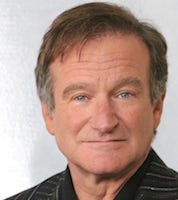
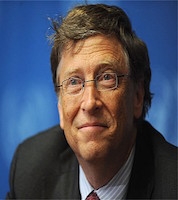
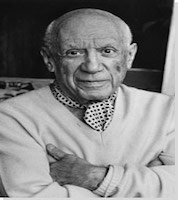
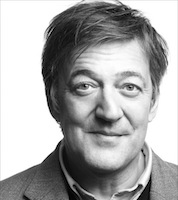
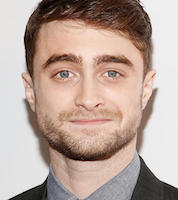
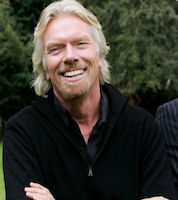
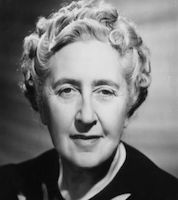
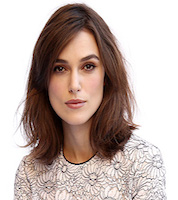
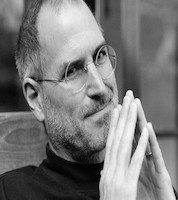
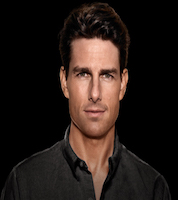
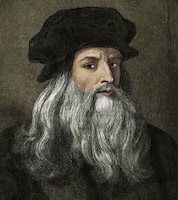
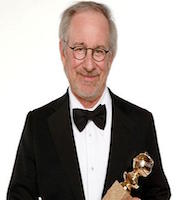
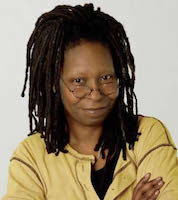
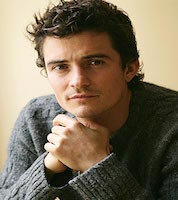
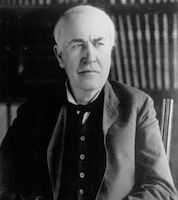
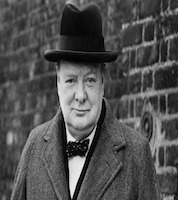
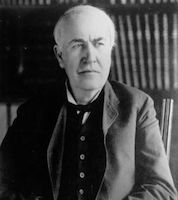
I have been diagnosed primarily with Dyspraxia, with some Dyslexia and more than a touch of Dyscalculia. But with determination, support and self-belief I have overcome adversity to be relatively successful. I am not alone. Many famous people have Dyspraxia, Dyslexia and/or Dyscalculia and have managed to be successful at what they do.
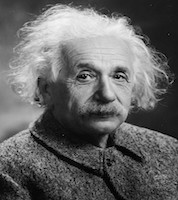
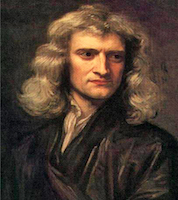
Below is a definition of Dyspraxia, Dyslexia and Dyscalculia, along with a list of famous people (in alphabetical order) with each condition:
Dyspraxia is:
…a form of developmental coordination disorder (DCD) is a common disorder affecting fine and/or gross motor coordination in children and adults…DCD is a lifelong condition, formally recognised by international organisations including the World Health Organisation…[DCD] occurs across the range of intellectual abilities. Individuals may vary in how their difficulties present: these may change over time depending on environmental demands and life experiences.
* Apologies for the lack of females on this list. No famous females found to have Dyspraxia online. Know a famous female with Dyspraxia? Leave a comment below.
Dyslexia is:
…a common learning difficulty that can cause problems with reading, writing and spelling.
It’s a “specific learning difficulty”, which means it causes problems with certain abilities used for learning, such as reading and writing. Unlike a learning disability, intelligence isn’t affected.
…is usually perceived of as a specific learning difficulty for mathematics, or, more appropriately, arithmetic.
Developmental Dyscalculia (DD) is a specific learning disorder that is characterised by impairments in learning basic arithmetic facts, processing numerical magnitude and performing accurate and fluent calculations. These difficulties must be quantifiably below what is expected for an individual’s chronological age, and must not be caused by poor educational or daily activities or by intellectual impairments.
*According to Dyscalculia Blog, Dyscalculia is rarer than Dyslexia. Dyscalculia is not as well known as Dyspraxia or Dyslexia. This means that it’s likely that less people are assessed for Dyscalculia and therefore less people diagnosed with it. This would go someway to explaining the lack of famous people with Dyscalculia on the list above.
Write soon,
Antony
More Content From Antony
Here are the books that Antony has published, click any cover to learn more:
Reading Time: 2minutesAt the beginning of the year I wrote a list of New Experiences for 2013. It’s nearly half way through the year, a scary thought I know. So I thought I’d re-look at the list:
January – Do something that makes you feel uncomfortable. Done, see Something Uncomfortable.
March – Be honest. Don’t lie, not even those little white lies. I found this one difficult to measure, as I’m generally quite honest anyway.
April – Socialise in new places and meet new people. I had a look for local writing groups, but couldn’t find any and gave up. I’m going to Pagan Con 2013 in July which will definitely be a new place to socialise and I’ll get to meet some new people as well.
May – See the sun rise & set (not necessarily on the same day). I’ve have had a think and need to see the sun rise & set somewhere beautiful. I hope to see a sun rise & set in July.
June – Do something for someone else that is completely selfless. I’ve not planned anything yet, but I’m sure an opportunity will come along.
July – Visit a site of historical significance. Done. I’ve visited The Druid Circle and Millom Castle with Simon. See Cumbria Adventure for photos.
August – Try a food that you would usually turn you’re nose up at saying you don’t like it before you’ve even tried it. I’ve not even thought about this one yet.
October – See Wicked (the Musical). I’ve booked tickets to see with Steve. We’ve also booked tickets to see The Rocky Horror Picture Show and Up4aMeet.
November – Have a “pamper” night in. I’ve not even thought about this one yet.
December – Rest & Relax. Despite the busy pace this time of year, take plenty of time for R&R. I’ve not even thought about this one yet.
The phrase: could do better, comes to mind. Still at least I’ve got most planned.