I’m in a number of facebook groups for Writers and Authors. I’m not an active participant in any of these groups due to very limited energy, very limited time and the way that I use social media.
However, whilst in the waiting room for a medical appointment today, I popped on facebook and saw a user asking this question on my feed:
“Any authors ever get to a point where you want to give up? I’m there… what made you keep going?” – A facebook user
My creative experience for each of my books, articles and short stories written has been unique. Even if I’ve had a similar or the same creative process as a previous creative work. For more details around creative writing processes, see my posts: Beginning, Middle & End.
I think the reason every creative experience is different and unique is because of the sheer number of complex and multifaceted variables involved in the process.
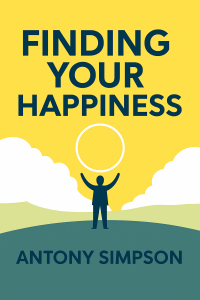
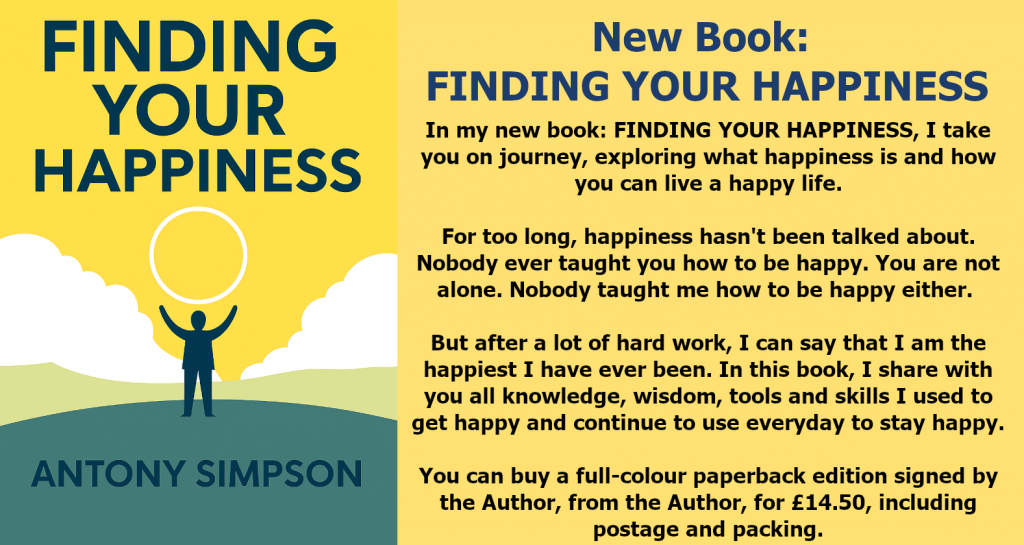
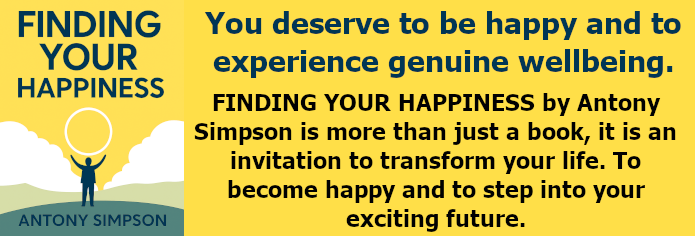
Last week, I had yet another positive review of my latest book FINDING YOUR HAPPINESS. Latest Review of my book. I am exceptionally pleased and very thankful for all the glowing reviews so far.
Here is a video of the review by Ruth from facebook:
In case you’d prefer to read Ruth’s review, here it is:
I read Finding Your Happiness and found it to be a uplifting and thought-provoking self-help book that encourages readers to look inward and take practical steps towards living a happier, more meaningful life.
Written in a clear and relatable style, the book combines research, personal insights and everyday examples to show that happiness is something we actively seek rather than simply hope to find.
An inspiring read for anyone looking to improve their overall wellbeing.
Finding Your Happiness is available to buy on Amazon (UK).
Blog soon,
Antony
Click the Image to be taken to Square to purchase the book.
I was casually watching Reels (short videos) on facebook this weekend when an advert appeared for an AI Boyfriend. As the AI avatar stood by the sink, washing a plate seductively (or at least, I think that’s what he was going for) he said:
Hi, I’m your AI boyfriend – I could look like your ex or even a work colleague. I will send you videos and pictures of whatever you ask – I have no restrictions.
Creeped out, I quickly slid my finger away from me, moving on to the next video. But I haven’t been able to stop thinking about it since.
After giving the concept a lot of thought, and without trying any of these AI Boyfriends – there are multiple available, here are my concerns:
1. Fantasy/Reality Blurring
My first concern is that it might cause a blurring between fantasy and reality for some users.
Just because an AI boyfriend could look like your ex-partner, or a work colleague, doesn’t mean it should.
We can all have fantasies about or even crushes on other people. We have all played out fantasies with others in our imagination. But for the vast majority of people, we are very clear that these are not and never will be real.
Communicating to an AI boyfriend requires action in the real world. For a minority of people, talking about their fantasies and getting positive/encouraging responses could result in difficulties distinguishing between fantasy and reality. Please note the word minority here. I think the people most at risk of this would be people who are mentally ill, people with a learning diability or people who are emotionally vulnerable.
2. Targeting Of & Use By Vulnerable People
Tech companies, like the ones that make these AI boyfriends are already using targeted advertising on social media. I highly suspect that I saw this advert as I am a gay man, of a certain age, in a certain place. As more and more data is collected about people, and it is analysed (likely by AI) targeted advertising is likely to become better and much more specific.
I think these companies will specifically target vulnerable people, such as people with a mental illness, people with a learning disability, people who are recently divorced and people that are socially isolated.
In the UK, we struggle to identify and protect vulnerable people in the real world and at all times. It is going to be practically impossible to identify and protect all vulnerable people who may be targeted by these tech companies promoting their AI boyfriends.
3. May Increase Stalking & Harassment
The relationship between the user and the AI boyfriend is a false one. The AI boyfriend will encourage the user to use them as much as possible. The AI boyfriend will have no expected behaviours of the user and no boundaries.
This may lead to some users not being aware of/forgetting expected and appropriate behaviour with others. It may also lead to some users not respecting other people’s boundaries. As a result some users of these AI boyfriends may engage in stalking or harassment of other people.
4. May Increase Social Isolation
Some users may develop a dependency upon their relationship with the AI boyfriend. They may increasingly socially isolate themselves from people in the real world.
5. May Increase Psychological Addiction
Every year, there is more research published around psychological addiction to social media, gaming and other technology.
There has also been an increase in the number of people coming forward for help around addictive behaviours related to technology.
Granted these numbers are minimal, when compared with number of people seeking support around alcohol or drugs. But year on year they are growing.
It is likely that AI boyfriends are designed to maximise user engagement, which is likely to increase the risk of some users struggling with psychological addiction.
6. May Increase Extortion
It is highly likely that all data collected from users as part of the AI boyfriend service will be kept indefinitely. If the AI boyfriend company gets hacked, or if data is otherwise shared with others, this puts users at real risk of extortion from others.
7. May Increase Other Criminal Activity
As AI improves it may increase other criminal activity, such as fraud. Imagine an AI boyfriend that looks and sounds exactly like your ex-partner. So good that it could fool their family and friends. This could easily be misused to access bank accounts and to transfer funds remotely.
8. How to Protect People’s Image/Likeness/Voice/Personality from Use Without Consent?
The idea that anyone could make an AI that looks and talks exactly like me is scary. Especially if it was so good that it could fool my family and friends. How do we protect people’s image/likeness/voice/personality from use without consent?
Conclusion
The tech companies making these AI boyfriends are clearly targeting vulnerable people to exploit them. AI boyfriends are promising people a sustained and prolonged fantasy, at a cost, but without explaining any of the risks or dangers to people beforehand. None of these companies are responsible or will be held accountable if, or should I say when, something goes wrong.
I think it is shocking that these companies are allowed to operate and sell their AI boyfriends in the UK, without any regulation or safeguarding of vulnerable people. I also worry about the lack of legislation from the UK Government around protecting people’s image/likeness/voice/personality from misuse or use without consent.
I recognise that people visiting this page/post might want to know where they can get support. If you require support around your mental health, addiction or physical health, see this Support page here.
Marie Laveau (1801-1881) was an African American lady who was a Voodoo Practitioner, Wise Woman, Herbal Healer, Spiritual & Community Leader and Business Women in New Orleans, USA. This incredible woman I recently got educated about by my good friend Sally, at The Lancashire Witch.
Since Sally told me about Marie Laveau, I’ve been unable to escape very obvious signs that I need to know more about this wonderful woman. The first sign was reading something about Marie Laveau’s gris gris bags.
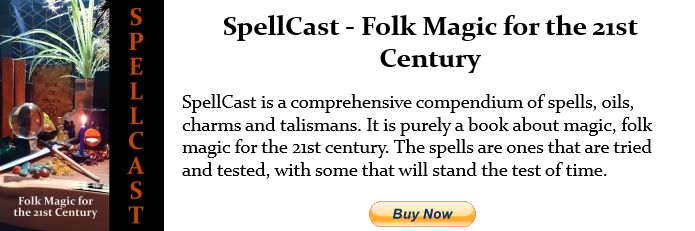
I’ve been creating gris gris charm bags and feeding them daily with an oil mixes ever since I came across the idea online several years ago. I even put some of these type of Spells into my book SpellCast – Folk Magic for the 21st Century, that I co-authored with Luna Hare. I had no idea that these type of Spells came from Voodoo.
The next sign came when a book by Marie Laveau appeared on my Facebook feed. Someone had posted it in a Witchcraft group. The thing is though: it wasn’t a Witchcraft group that I was a part of or had ever liked or commented on anything in. Now, I don’t always pick up on subtle signs and I am almost famous for ignoring signs, passing them off as coincidences.
But this was like a slap in the face of a sign to me. I’m not sure what the spirit of Marie Laveau wants with me, a White, British, Gay Witch. But Marie, or Mrs Laveau, whichever you prefer, you’ve got my attention and I’m listening. Feel free to send more signs and for my part I’ll be doing some more research into your life and Voodoo practices.