trust

Life Hiatus – My Mental Health In-Patient Admission and Diagnosis of a ‘Mood Disorder’
Reading Time: 6 minutes
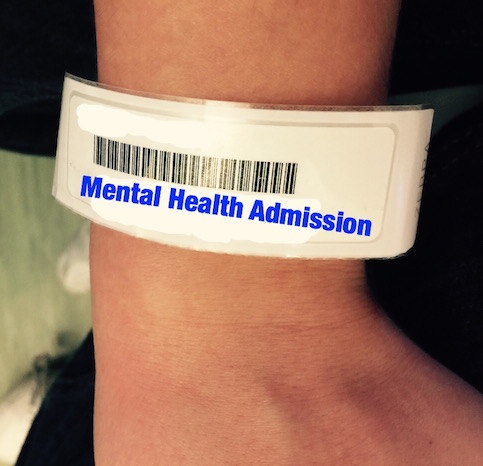
mental-health-admission-nameband
My Nameband.
Recently, I had to take an unexpected what-I-call Life Hiatus. My mental health had gradually deteriorated to the point were I was having severe and erratic mood swings. Everyone’s mood fluctuates throughout the day, but not to the extremes I was experiencing.

People talk about good and bad days with depression. I was having good, bad, okay or mixed mood states lasting between 45 minutes to 4-6 hours. These mood swings were unpredictable with no pattern. They didn’t have triggers and were not related to a critical inner voice.

These mood swings were torturous. See My Mood Swing Table below for details of what these mood swings were like.

I felt desperate for the mood swings to end. To the point of having suicidal ideation and a clear plan of action.

I had thought that I was objective about my mental health. But because the mood swings had gradually got worse I hadn’t realised how unwell I was. I sought help because three people close to me said that I wasn’t well. Luckily I had these people around me and knew that could trust them, even if I couldn’t trust myself.

So I went to my local A&E. I was assessed by a Mental Health Nurse and together we decided that I needed admission. I stayed on the A&E Ward overnight, whilst I waited for an available bed on a mental health ward.

The next evening, I was transferred to a mental health ward. On arrival at the ward, my possessions were searched and Nursing Staff took my shoe laces, belt, hoodie (due to cord in hood), phone charger, lighters and medication. The ward layout was a square shaped main corridor with dormitories, individual rooms and many other rooms that where behind locked doors.

The first night was frightening. Everything about the place was frightening. The environment. The locked doors. The routine. The rules I hadn’t been told. The other patients. The staff. I even found my own mood swings frightening. At one point, I was physically shaking uncontrollably due to the fear and anxiety.

I was assessed by a Psychiatrist and commenced on 10 minute observations. It would be a few days before I was reviewed. At the time, I couldn’t understand why they appeared to be doing very little to help me and my state of mind. But afterwards, I realised that they had wanted to observe me and see my mood swings for themselves.

The Consultant Psychiatrist diagnosed me with a ‘Mood Disorder.’ Here is a definition of a ‘mood disorder:’

mood disorder
noun
a psychological disorder characterized by the elevation or lowering of a person’s mood, such as depression or bipolar disorder.

(From: Google, Last Accessed: Friday 27th November 2015.)
The Consultant Psychiatrist informed me that they were reluctant to give a more specific diagnosis on the first admission to a mental health ward. I told the Consultant Psychiatrist that I didn’t care what they called it, as long as they gave me some medication that worked. I explained that with some stability in mood, I could make further psychological and behavioural changes to help myself to get well and stay well.

I was started on Quetiapine, an antipsychotic and mood stabiliser medication. It was to help to take the edge off my mood swings and give me some stability of mood. I was also started on Mirtazapine, an antidepressant. This was to help to manage the depression/low moods.

Overall, I was an in-patient on the mental health ward for about 12 days. During this time, my Mum and good friend Steve were superb. They took over all my responsibilities and made sure that everything in the outside world was sorted, meaning that I didn’t have to worry about anything – apart from getting better.

I will never be able to thank Mum and Steve enough for what they have done for me, but I have repeatedly thanked them anyway. I will never be able to explain how much I appreciate them for everything that they have done for me, but I have tried to explain anyway.

I feel that I got to this crisis point because I waited so long to get referred to and assessed by Community Mental Health Services. It feels like Community Mental Health Services are designed to keep people out, rather than let people in to get the help and support that they need and in most cases are asking for. This is probably because of a lack of resources in mental health services. But this really doesn’t help and support people with mental health problems to get and stay well.

I have been discharged from the hospital and am and engaged with Community Mental Health Services. Recovery will be a slow and progressive one. I am taking the medication as prescribed, attending appointments with community services and setting myself daily goals that I am currently achieving.

Write soon,

Antony

My Mood Swing Table
Highs
Okays
Lows
Mixed Mood States
Physical Symptoms
  • High energy levels.
  • Very productive.
  • Difficulty in getting/staying asleep.
  • Head aches.
  • Speaking Quickly.
  • Hypersexualised.
  • Relatively symptom free. Considering the extreme High and Low physical symptoms.
  • Exhaustion – despite sleeping for many, many hours.
  • Back pain and stomach pain that doesn’t resolve with appropriate treatments.
  • Head aches.
  • Constipation.
  • Physical anxiety symptoms: raised pulse and blood pressure.
  • A mix of high, low and okay physical symptoms to varying degrees of severity.
Mental / Cognitive Symptoms
  • Racing thoughts – lots of ideas, but struggling to focus on one for long enough.
  • Difficulty in concentrating.
  • A rush of ideas for creative projects.
  • Saying whatever I think without considering the implications of what I’m saying.
  • Grandiose thinking – Thinking I can do anything to a level beyond the level of an expert.
  • Thinking that I understand things on a much deeper level than everyone else.
  • Short-term memory loss.
  • Insomnia and night terrors.
  • Slower mental and cognitive functioning, compared to when I was well.
  • Limited/no concentration span.
  • Short-term memory loss.
  • Critical inner voice.
  • Thoughts about what other people negatively think about me.
  • Insomnia and night terrors.
  • Concern about loosing my mind.
  • A mix of high, low and okay mental / cognitive symptoms to varying degrees of severity.
  • Concern about loosing my mind.
  • Concern about what mood would come next and its severity.
Emotional Symptoms
  • Excessively joyful with no reason for this state of mood.
  • Super confident. Loads of self-esteem.
  • Excessively excited again without reason.
  • Feeling like I can do anything.
  • Feeling frustrated or irritable without a reason.
  • Varying levels of anxiety, from worried to outright panic.
  • Void of any emotion.
  • Zombified. Feeling like what I imagine a zombie feels like.
  • Going through the motions.
  • Despair and hopelessness.
  • No confidence and rockbottom self-esteem.
  • Feeling frustrated or irritable without a reason.
  • Feeling like I am falling down a dark bottomless pit.
  • Feeling guilt, inadequacy and feeling like a failure.
  • Varying levels of anxiety, from worried to outright panic.
  • Desperation – wanting the mental and emotional anguish to end.
  • Feeling like my mind, body and soul are being devoured and destroyed.
  • A mix of high, low and okay emotional symptoms to varying degrees of severity.
Behavioural Examples
  • Being super productive.
  • Being overtly social.
  • Take on too many commitments, thinking that I can do everything.
  • Impulsive behaviours – including excessive shopping, even when I don’t have the money.
  • Unfinished tasks – sometimes being unable to focus for long enough on tasks to complete them.
  • Able to function, but only just.
  • Loss of interest in leisure activities.
  • Unable to watch TV, read or do other leisure activities.
  • Overeating or forcing myself to eat despite having no appetite.
  • Poor personal hygiene.
  • No motivation.
  • Reckless spending of money – mostly through online shopping.
  • Social anxiety – isolating myself and avoiding social situations.
  • A mix of high, low and okay behaviours to varying degrees of severity.

mental-health-wisdom-banner


I aim for posts on this blog to be informative, educational and entertaining. If you have found this post useful or enjoyable, please consider making a contribution by Paypal:


Share on Social Media:
Friends & Family, Happiness & Joy, Health, Life, Money / Finances, Shopping, Thinking, , , , , , , , , , , , , , , , , , , , , , , , , , , , , , , , , , , , , , , , , , , , , , , , , , , , , , , , , , , , , , , , , , , , , , , , , , , ,

Import: 14 Reasons It’s Great To Be In A Relationship

Reading Time: 2 minutes

Being in a relationship can be great. Here are 14 reasons why it’s great to be in a relationship:

14. The financial benefits. If you’re in a relationship it’s someone to share the bills with. Plus married or civil partnered couples get tax reductions.

13. Someone to share the housework with.

12. You double the size of your wardrobe. Providing that you’re both the same size.

11. You learn what you want from a relationship and from Mr Right. As well as what you don’t. These are important things to know.

10. Seeing him smile will make your day.

9. You learn more about yourself.

8. Sex. You’ll regularly have sex, with someone that you’ll feel conformable with. He’ll even know what you like and what you don’t. Vice versa. Sex with someone you’ve been with for a while becomes increasingly intimate, as you get an emotional bond with him. Some people say that the strengthening of the emotional bond over time can make sex an almost borderline spiritual experience. Plus a monogamous relationship reduces the risks of Sexually Transmitted Infections (STIs) such as hepatitis and HIV.

7. Being in a relationship can be fun, and not just in the sack! You’ll do loads of fun things together and it’s even more fun because there’s always someone to share it with.

6. You’ll have someone who’ll listen to you ramble on about your day. He’ll be there to enjoy the highs and lows of the rollercoaster ride we call life.

5. You’ll never be lonely. You’ll always have someone around for company. Going to weddings, looking at the happy couple and wishing you had that what they have and weren’t alone- will never happen again.

4. A boost to your confidence and self-esteem. Knowing that someone finds you attractive, especially when they give you complements will boost your confidence and self-esteem.

3. You’ll be with someone that you trust and that you can to go to for support.

2. Someone who gets you. We all want someone who gets the real us. Truly understands who we are, sometimes knowing us better than we know ourselves. Being in a relationship can give you this and even help you to understand yourself a little better.

1. Being in love is awesome. It’s a life-changing experience, that’s why most songs are about love. Love is like a drug; it’ll make you feel high – bringing joy, happiness and lots of laughter into your life. But it can also make you feel low – bringing sadness, anger and jealousy into your life. Sometimes making you feel elated and disheartened all in one day. But most people find that the occasional low is worth the high.

Published by: The Gay UK on Tuesday 18th November 2014.


I aim for posts on this blog to be informative, educational and entertaining. If you have found this post useful or enjoyable, please consider making a contribution by Paypal:


Share on Social Media:
Creativity, Journalism, , , , , , , , , , , , , , , , , , , , , , , , , ,

DVD Review: 28 Days and HELP

Reading Time: < 1 minute

I recently bought 28 Days [DVD] [2000] as I’m a fan of Sandra Bullock. The story is about the always drunk and drugged up Gwen Cummings who at her sisters wedding is dancing and falls on the wedding cake. Gwen, determined to fix things gets in to the Wedding limo in search of a cake shop. Gwen rather dramatically drives in to an house and gets sentenced to 28 days in a rehabilitation centre out in the country.

You follow Gwen as she sets out on her path to recovery from her drug and alcohol misuse. Starting with her being unconvinced that she had a problem at all, to acceptance and starting on the path to recovery. From the outset you realise that this is a budget film – were most of the budget went on Sandra. The other actors feel false and unconvincing.

The overwhelming theme that is interwoven in to the story is about asking for help. This film made me look at myself, do I ask for help? Especially when I need it? The answer is a residing No. I’m not sure why this is, perhaps a desire to be independent? Perhaps not wanting to put on anyone? Maybe fear of being let down by those I ask?

Something for me to think about and work on.

Write soon,

Antony

Share on Social Media:
Reviews, TV, Online Streaming & Films, , , ,

What makes a relationship work?

Reading Time: 4 minutes

Hi All,

Missed me? I’ve been away at David’s for the first whole week ever. He doesn’t have the internet, hense no opportunity to blog. The week reminded me what I have learn’t about What makes a relationship work from past relationships as well as the present one with David. So here’s what I’ve learn’t:

Expectations
In order to make a relationship work you must know what you want out of it. Your expectations. Many relationship experts recommend if your single you make a list, so you know what your looking for. What these relationship experts often for get to tell you is that you also need to find out what your partner expects out of the relationship too. There’s two people in a relationship you know!

Issues
First you need to recognise your internal issues and then you need to start to deal with them. Whether it’s letting go of the past or dealing with your insecurities you need to deal with the psychological baggage we pick up as we go through life. One of the issues that many people have is confidence.

You must have confidence in yourself and who you are as a person. Someone once said to me: How can you expect anyone to love you if you don’t love yourself? Confidence is a difficult thing to quantify but you know if you have it or not in a relationship. It is also equally difficult to build confidence, but it is doable.

Your partner will also have some of the psychological baggage or ‘issues’ that we all pick up in life. You can help by discussing both of your issues together and dealing with them together.

Communication
Communication that clear and honest is vital in any relationship. David and I have had a few arguements (see Job Interview & David and A mad week!) and they are always to do with unclear communication.

A recent example of unclear communication between David and I was the Monday (the 2nd night staying at his apartment). He was tired and had to wait for me to get in. I had forgot to mention to him that I was going to a friend’s and when I did I didn’t let him know when I would be home.

Result: an arguement. My issue getting my level of independance right (one of my ‘issues’) and his the lack of clear communication.

A Mental and Physical Connection
A mental connection also called companionship or friendship. Many people say “my partner is my best friend.” Now whereas I probably wouldn’t say they should be your best friend (as it would make you too reliant on them), they should come close. Mutal interests aid this mental connection. As does sharing the same personality characteristics (such as both playful, serious, artistic, etc.).

A physical connection, passion is also vital. You must fancy them, as much as they fancy you. Couples are strange. Some spend the whole ‘honeymood period’ in bed whereas other couples physical connection enhances as time goes by and they get comfortable with one another.

All couples will have their own way this area of their relationship develops. Your fine as long as it continually developing and not becoming routine or worse none exisistant. If this happens there are plenty of books that will give you advice on how to spice up the bedroom department.

Trust
I have seen many relationships break down due to a lack of trust between and in one another. Trust is a odd thing, it is a feeling of utter secure-ness. Like a duvet rapped tightly around yourself making you feel all warm, snug and secure. One of the wonderful things about being in a relationship with David is that I trust him 100%. In addition to this, the duvet feeling he immitates when he hugs me tightly in bed.

A Sense of Humour
For me one of the most wonderful thing is laughter. Laughter to me is the verbalised form of happiness. So a relationship with humour is a relationship with happiness. We all have essentially a sense of humour but sometimes we keep it locked inside. So every now and again, release it and let it out to play!

Individuality & Independance
Getting the right balance of individuality and independance is important. And definitately (from my own experience) not easy. Individuality is about remaining who you are. You are bound to pick up character traits, sayings and little ways off your partner but it is essential that you are you. Your partner fell for you, not for a clone of themselves.

Independance is about doing your own thing. This is benefical in as it gives you space and allows you not to become dependant on your significant other. Both you and your partner need your space in order to continue to grow and develop as individuals and neither of you wants to be completely dependant up on the other.

Rituals
I’m not talking pagan here (see Pagan Festivals). Rituals are little routines that you and your partner do together. Whether it’s Wednesday night take away night or staying in bed till late Sunday these routines allow you spend quality time together and bring your closer together.

Support
We all need support at times, whether we like to admit it or not. There will be hard times when you need support in a variety of senses: beit emotional stress, financial stress, ill health, etc. You need to realise when your partner needs support and he does you (this is made much easier with open, honest, clear communication).

Support can be offered in many ways. Being a sounding board for him, practical support (shopping for him during a stressful move), but even just being there with a calm stress-free energy can help.

So…
So this is what I’ve learn’t. I hope it is useful for your relationship. And if your single – I hope it helps you when you meet someone.

Blog soon,

Antony


I aim for posts on this blog to be informative, educational and entertaining. If you have found this post useful or enjoyable, please consider making a contribution by Paypal:


Share on Social Media:
Life, Love & Relationships, Thinking, , , , , , , , , , , , , ,
Scroll to Top
×