Happiness & Joy

All About Stories: What, How, Why, Power, Where, Who, Jobs, My Stories & Useful Websites

Reading Time: 7 minutes

I was very young when I was introduced to stories.

My mum would read me stories out of books at bedtime. Books like The Magic Faraway Tree & The Wishing-Chair Again.

I have fond memories of sitting on my grandma’s lap, her telling me stories about Freddie the Frog. She would do the different voices of the characters and even sound effects. I remember my grandma bouncing me up and down on her knees often, making the noise of an ambulance.

As I grew, so did my experience of stories. I was shown or told many different stories, in many different ways, about many different things, by many different people. Some stories would be fiction, whereas others would be non-fiction.

As an adult, I’ve gone to to present some of my own stories or re-tell stories I know to others. I’ve done this through my books, blog posts, articles and short stories.

Yet, I’ve never really considered, explored or examined stories as a concept. Which is why I’ve written this post.

What Are Stories?

According to the Cambridge Dictionary, a story (singular of stories) is:
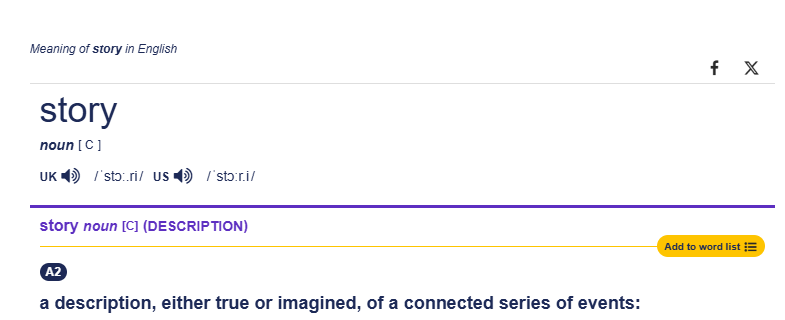
Story word definition from Cambridge Dictionary.

How Are Stories Presented?

Stories can be shown, told or presented to others in a variety of different ways including:

  • Oral/verbal telling – either live or pre-recorded. This was the first way of sharing stories and came when humans first developed language, well before the written word.
  • Through works of art – paintings, tapestries, sculptures, etc.
  • Written words – Both in print and electronic. This can be books, pamphlets, ebooks, websites, emails, messages, etc.
  • Images – photography or other still images.
  • GIFs – Short animated files that have a repeating movement, sound or both.
  • Songs/music/sound. This could include songs with words, music (with or without words) and sounds or sound effects.
  • Body movements/gestures/language. Such as dance routines or playing charades.
  • Video – TV, films, etc.
  • Rituals, which may involve the making and consumption of food.
  • Plays/other performances – where the story might be scripted or improvised.
  • 3D cinema experiences.
  • Some theme park rides.
  • Through sense of smell.
  • Computer games – many have stories that the player experiences as they play the different levels/missions within the game.

Why Stories?

Stories can have many purposes and many potential benefits including:

  • Knowledge – helps people to remember information in a meaningful way. This is required for them to share this information with others.
  • Can be used to teach others.
  • Helps to create connection between people.
  • Helps to create empathy between people.
  • Helps people to consider new ideas.
  • Helps people to experience new or different emotions.
  • Helps people to express their thoughts, ideas and emotions to others.
  • Entertains people.
  • Helps develop imagination/imaginative play and can stimulate creativity.
  • Develops problem solving skills.
  • Helps people remember historic events, both good and bad, and the lessons from these events.
  • Can help people to know their own story and share it with others.
  • A way of sharing beliefs, values and cultural practices.
  • Helps people to explore a range of concepts such as morals, values, beliefs, identify, etc.
  • Can be used to process and heal from traumatic experiences.
  • A way of safely sharing life experiences, without the other people having to directly experience the event(s) for themselves.
  • A way to test someone’s cognitive functioning.
  • Can improve vocabulary, concentration and listening.
  • Can be used to influence others.
  • Can be used to earn money for people to live on.
  • Can provide a world for people to escape to when they have a difficult reality. Other words for this could be distraction or disassociation.
  • Can help people feel less alone and isolated.
  • Can give people hope for their future.
  • Can help to reduce anxiety, stress and tension.
  • Can improve relationships within communities.
  • Can improve confidence and self-esteem.

The Power of Stories

Stories can have great power, sometimes being transformational to those that experience them. But the impact of stories varies greatly depending on a wide range of factors. This makes it practically impossible for storytellers to predict who, how or even if their story will have any impact on others.

Let me give you a few examples of stories and how they have impacted me to demonstrate what I mean:

Impact on Me

Made me admire Ruth Cocker Burks greatly. Made my share her story on my blog. Made me buy her book.

Made me admire Ida & Louise Cook greatly. Made me feel better about the world during World War 2. That there were some good people out there and that the history wasn’t just genocide/death.

Made me feel deeply sad for Matthew Shepard, his mother and his family. Made me imagine what his torture must have been like. Reminded me, that as a gay man, I have to be hypervigilant for danger. The world is not always a safe place for gay people. Told Matthew’s story on my blog, at a time when America seems to be going backwards.

Gave me hope that there are some really smart people out there who are motivated by the greater good/good for humanity rather than money and greed. This story gives me hope that diseases that are currently un-curable, might one day be cured.

Where Are Stories Shared?

As well as stories being presented in different ways, they can also be shared in different places, including:

  • Traditional media – newspapers, TV, radio.
  • Social media – all platforms.
  • On messaging apps or via telephone.
  • On other apps, such as ones for audiobooks.
  • Websites – including Amazon, YouTube, Netflix, etc.
  • At specific events, both work-related and social.
  • In any community settings where two or more people can gather – coffee shops, supermarkets, libraries, community centres, pubs, etc.
  • Within workplaces.
  • Cinemas.
  • At theatres, clubs and stadiums.
  • At gyms, sport/leisure centres.
  • On public transport.
  • In a car.
  • Practically any where and at any time, depending on how the story is being presented.

Who Can Present Stories?

Technically anyone can present stories to others. Providing that the others want to experience the story and are able to access it in the way that it is being presented.

However, we do tend to prefer stories from people and organisations that we feel we can trust.

When a storyteller wants to share a story with you, useful questions to ask yourself are:

  1. What is the storytellers agenda?
  2. Are they a biased?
  3. How much do I trust them?
  4. What are their credentials? (i.e. qualifications and experience related to the story).
  5. If the story is non-fiction, will they be giving you the correct facts/information?
  6. What is my past experience with this storyteller?
  7. What is your gut feeling telling you about the storyteller and the story they are presenting?

Storytelling Jobs

There are who industries set up around storytelling, think for example: any company providing the news, any company that does public relations, marketing or advertising.

But some more interesting storytelling jobs include: TV/Film Director, Comedian, Writer/Author and Actor/Actress.

Some of My Stories

Here are just a few of my stories:
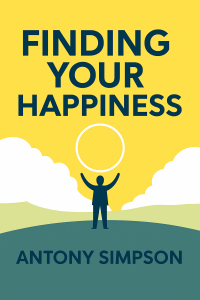
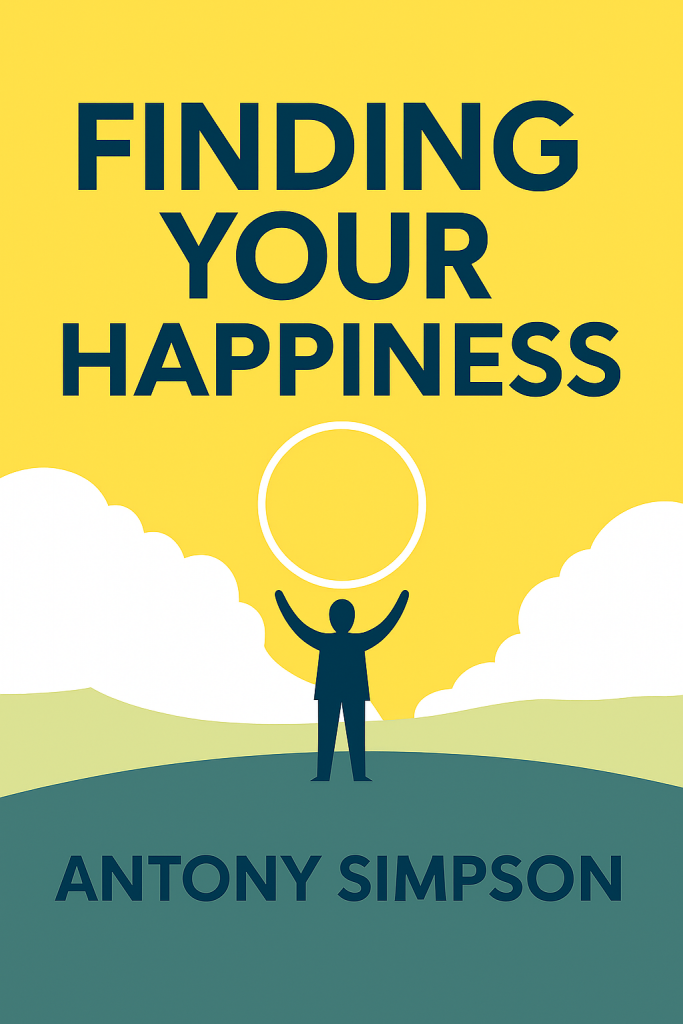
Finding Your Happiness is my story of how I discovered the knowledge, skills and practices to be happier. How I became the happiest that I have ever been.

I published this book to share the knowledge, skills and practices, because I believe that everybody deserves to be happy.
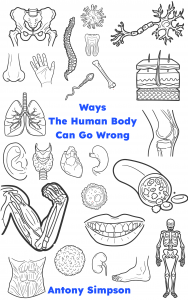
As an experienced Registered Nurse, I am aware of the many Ways The Human Body Can Go Wrong. So I’ve written this book to share stories with Doctors, medical students, Nurses and Student Nurses about how the human body xan go wrong and what treatments are available.

As a gay man, I wanted to share a list of Influential UK Gay Men, which I did in this FREE article, because have role models with influence really counts.

Useful Websites

Write soon,

Antony

Share on Social Media:
Amazon, Books & Authors, Creativity, Friends & Family, Gay, Happiness & Joy, Inspiration, Life, Thinking, , , , , , , , , , , , , , , , , ,

The First Review of FINDING YOUR HAPPINESS

Reading Time: 2 minutes

Dear all,

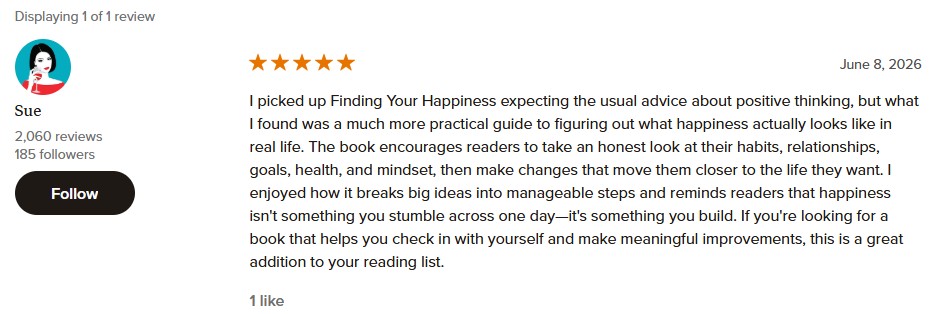
It is my absolute delight to share the first review of my latest book, FINDING YOUR HAPPINESS, with you:

This review was posted on goodreads.

FINDING YOUR HAPPINESS is also gaining a number of 5 star ratings without reviews on various websites. Here is what the book is about:

FINDING YOUR HAPPINESS

You deserve to be happy and to experience genuine wellbeing.

You deserve to feel positive and joyful.

But you weren’t taught what happiness truly is or how to create a happy life for yourself.

FINDING YOUR HAPPINESS is your practical, uplifting guide to building a life that feels good from the inside out. This book gives you the knowledge, skills and wisdom to live a happier and more fulfilling life.

Inside you will:

  • Discover the secret to happiness.
  • Learn to understand yourself on a deeper level.
  • Identify where you are in life right now and where you want to be.
  • Develop a plan for happiness.
  • Take meaningful actions towards a happy life.
  • Maintain your happiness, whatever is happening in your life.
  • Navigate adversity and challenges to your happiness successfully.

This book is an invitation to transform your life. To become happy. To step into your exciting future, one that’s filled with happiness and joy.

Happiness is lived in full colour, and this book embraces that spirit. Printed in full colour from cover to cover, it costs more to produce than the average book, and its price reflects that commitment to quality. This book takes approximately 5.5 hours to read from cover to cover.

You can see the content pages and read the first chapter for FREE here. Here is a video flick through of the book:

Click here to display content from YouTube.
Learn more in YouTube’s privacy policy (opens in a new tab).

If you liked this post, you might also like:

Write soon,

Antony

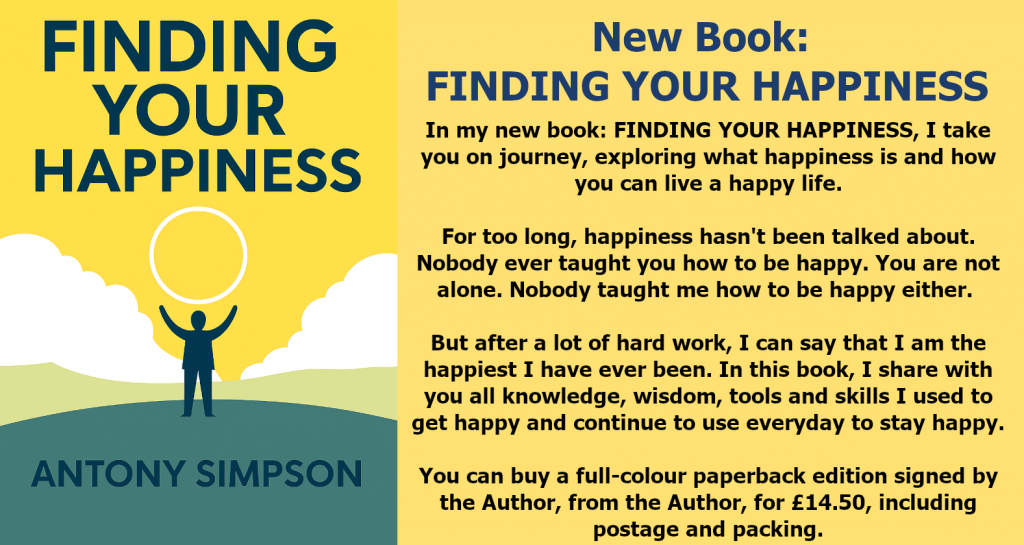
In the UK? Buy a signed, full colour, paperback copy by clicking the image below:

Click the Image to be taken to Square to purchase the book.
Share on Social Media:
Amazon, Books & Authors, Happiness & Joy, Reviews, , , , , , , ,

Parts of the ‘Self’ – A Short Extract From FINDING YOUR HAPPINESS

Reading Time: 3 minutes

Here is a small extract from my book FINDING YOUR HAPPINESS:

A core aspect to finding your happiness is to understand who you are, what drives you and most importantly: What will make you happy. These are unique to the individual, just like your fingerprints.

Parts of the ‘Self’

Everyone has different parts of the ‘Self’ that make up the whole of who they are. The different parts of your Self include:

★ The Physical Self – your body.
★ The Mental Self – your thoughts.
★ The Emotional Self – your emotions.
★ The Spiritual Self – your soul.

All these parts contribute to who you are and are interconnected.

All of these parts contribute to your behaviour – what you say and do.

Your spiritual self or soul is perhaps the most mysterious of all the parts. We know very little about souls. What is their purpose? How do they operate? The truth is that nobody can answer these questions with absolute certainty.

There are plenty of theories about souls. Just look at the many religious and spiritual systems in the world today. I personally believe that any work we do to understand our spiritual self, helps us to more deeply understand the universe and how everything is interconnected.

The interaction between these different parts of the Self, the influence they have on one another and our behaviour is very complex and constantly changing.

But a couple of example scenarios here will help you to understand that the different parts of your Self can and do influence one another:

Example Scenario 1: Anxiety

A really good example of the interaction between the different parts of the Self in action, is the state of anxiety. Anxiety starts through a trigger. A trigger is an event or experience that causes something to happen.

Imagine you have been triggered. In your mind anxious thoughts start to form. Then you start to feel the emotion of fear. Your physical self responds to these thoughts and emotions. Your heart beats faster, you become more alert and your appetite decreases.

In the scenario above, your thoughts influenced your emotional state. Then your physical body responded to both your thoughts and your emotional state.

It is important to know that just because you’re currently focused on one part of your Self, it doesn’t mean that the other parts are inactive.

Let’s look at another example scenario to illustrate my point:

Example Scenario 2: Exercise

Imagine you have gone for a run. Your physical self is firing on all cylinders – your heart beats fast, your lungs inhale oxygen rapidly and your muscles propel you forwards. But as you run, the other parts of your Self are not inactive.

In your mind, you may be thinking about events earlier in your day. You may think about something that triggers your emotions. These thoughts or emotions may cause you to run faster, run slower or stop running altogether.

To summarise, all parts of your Self (Physical, Mental, Emotional & Spiritual) interact with one another. They can influence one another. This in turn can influence your behaviour – what you say, do and omit to do.

In terms of happiness, it is really important to consider each part of your Self. Happiness can only be achieved when all parts of you are working in tandem with one another. All parts of your Self must be in a state of unity.

You can read more in my book FINDING YOUR HAPPINESS, which is available to buy on Amazon here.

Blog soon,

Antony

Learn more about lifetime Fanatic membership.
Share on Social Media:
Amazon, Books & Authors, Happiness & Joy, Health, Life, , , , ,

Author Interview: Antony Simpson in 2026

Reading Time: 3 minutes

In 2025, I did an Author Interview with Wigan Literature Festival. Author interviews are a great way for readers or potential readers to get to know you. But they are only current at their time of publish and soon become outdated. So I’ve decided to update this author interview for 2026 here:

Published Works: FINDING YOUR HAPPINESS (2026), Funny Emails To My Friend (2025), Z-VIRUS Monsters (2025), Z-Virus Powers (2024), Ways The Human Body Can Go Wrong (2024), My Royal Navy Friend (2024), The Alcohol Therapy Workbook (2023), SpellCast – Folk Magic for the 21st Century (2021) & Mental Health Wisdom – Developing Understanding & Empathy (2019).

Tell me a bit about yourself?
My name is Antony Simpson and I am an Author, Blogger, Nurse & Witch. I’m 40 years old, a gay man and live in the North West of England.

What sort of literature do you write?
I write books, articles, blog posts and very occasionally the odd short story.

In terms of my books, they are mostly non-fiction and on a variety of topics including all aspects of health – physical, mental and emotional, a book that is general humour and a book that is about paganism.

My two fiction books are about a group of teenagers that develop powers after the world has been overrun by zombies. Their powers help them to survive at first, but then get increasingly out of control and dangerous, so they go on a journey to try and find the cure for the Z-VIRUS. The Z-VIRUS is responsible for both their powers and the zombies.

What inspires you to write?
A wide range of things inspire me to write, including: my passions and interests, anything that I find inspirational, my life experiences, my family and friends.

Tell me what your latest creative work is about?
My latest book is titled FINDING YOUR HAPPINESS and is an invitation to the reader to learn the knowledge and skills that they need to be happier. It is partly inspired the journey I have been on in the last few years and partly inspired by the work I do as a Nurse, helping people with addiction issues to become healthier and happier.

About 2 years ago, I was diagnosed with a medical condition that would significantly reduce my life expectancy. That diagnosis made me rethink every aspect of my life. I made the decision that I wanted however long I have left to be as happy as possible. I started to immediately plan for and take action to improve my happiness. Today, I can honestly say, after a lot of work on myself and change, I am the happiest that I have ever been.

What do you hope your readers will get from your latest creative work?
I hope that anyone who reads FINDING YOUR HAPPINESS uses the knowledge and skills in the book to transform their lives. To become happier and to be excited about what their future holds for them.

What is the most exciting thing and the most challenging thing about writing?
The whole creative process is exciting. Getting an initial spark of an idea, developing it and eventually holding in your hand something that you have written, edited and published. I also get really excited by meeting readers or potential readers of my work.

The most challenging thing for me is marketing and promoting my creative works so that they sell. Although I do make small amounts of money from book sales here and there, so far, none of my published books could be considered a commercial success.

Luckily, I write for my enjoyment and pleasure, not to make money. I currently have a full time job as a Nurse, which I love. But balancing a full time job, writing, medical appointments and other commitments can be challenging at times. It can leave me with limited time, energy and motivation to write. But that said, I am still managing to create on average 1 book a year, plus other content including blog posts and articles.

What advice would you give to anyone who wants to be a writer? 
Writing is a skill, and like any skill, it has to be practiced regularly for you to get good at it. So don’t just say you want to be a writer, do it! Start today.

Reading is also a good way of learning how other writers write. So read as often as you can, ideally, work by a wide variety of writers.

Where can readers learn more?
I have a website: www.antonysimpson.com, which has a blog that I regularly post on. I also have a monthly email newsletter, so if you’re interested in me, my work, or both, subscribe to that.

Social Media Links: 
Facebook: Antony Simpson – Page | Antony Simpson’s Blog
X: @antonysimpson
Instagram: @antonysimpsonuk
Threads: @antonysimpsonuk
TikTok: @antonysimpsonuk

Oh and I’m on goodreads too: https://www.goodreads.com/antonysimpson

Take care,

Antony

Share on Social Media:
Books & Authors, Creativity, Happiness & Joy, Health, Inspiration, , , , , , , , , ,
Scroll to Top
×