10. It allows LGBT people to be visible and celebrated as part of society. This is great for young people who are LGBT. It gives them hope and positive role models.
9. It helps to create safe spaces for LGBT people to be themselves. Without the risk of verbal or physical attack.
8. It helps bring the community together, as LGBT are a minority group.
7. It raises money for LGBT people with HIV or who have been made homeless due to being an LGBT person.
6. It allows businesses, public institutions/organisations and charities the opportunity to show their support to the LGBT community. In the past, some of these organisations may have treated LGBT people appallingly.
5. It is an opportunity to remember the LGBT people that came before. Those that campaigned for the rights that LGBT people have today.
4. It is an opportunity to show others that what we all have in common. What brings us together as a society.
3. It is an opportunity for our straight allies to celebrate with us.
2. LGBT people still face disproportionately high health issues, such as issues with poor mental health and addictions.
1. We still haven’t got equality for LGBT people in the UK yet. Never mind globally.
I’ve decided to giveaway two chapters of The Alcohol Therapy Workbook, so that people interested in the book can learn more about it. The first chapter was Emotions, which you can read here.
The second chapter is Your Support Networks, Read/Download below:
Click here to display content from docs.google.com.
I recognise that people visiting this page/post might want to know where they can get support. If you require support around your mental health, addiction or physical health, see this Support page here.
How do you know if you’re in a healthy relationship or not?
Find out more below.
If you are in a healthy relationship you should tick most of the boxes on the checklist below: You can do things independently, without getting a hard time from your partner. You can explore interests, have hobbies, etc. You can communicate openly and honestly with your partner without negative judgement or fear. You never have to hide anything from your partner. You get support from your partner when you are vulnerable. Your partner encourages and supports you in everything that you do. You have shared your dreams and hopes with your partner. You and your partner have shared ambitions for your life together. You feel safe: physically, mentally and emotionally. You have regular contact with friends and family members. Your partner never makes you feel bad for spending time with others. Your partner always shows you respect. You and your partner laugh together. You and your partner listen to one another. You and your partner both approach the relationship as a learning experience. Your relationship adds something to both you and your partner’s life. Your partner speaks to you with kindness. Your friends and family honestly think your relationship is a healthy one. Your relationship started with vulnerability, connection and intimacy. You would use these words to describe your relationship: trust, warmth and attachment. Your partner never belittles you. Neither your partner or yourself displays contempt for the other. No eye rolling. No squinting at them as if to say what are you talking about? You don’t feel controlled or manipulated. Your partner is never aggressive or violent towards anyone or anything. This includes: you, any children and any pets or animals. Your partner knows where the line is and doesn’t cross it. Either accidentally or purposefully. You feel equal to your partner in the relationship. You like the way you grown and changed while you’ve been in the relationship. You and your partner express appreciation and admiration for one another. You have fun together. Your partner offers comfort, love and support when you’re upset, stressed or fearful. You make decisions jointly. You are intimate. By intimate I mean hugs, cuddles, kisses, holding hands, being close to one another and sex. You and your partner don’t argue constantly. Your partner loves and likes you when you look and feel at your worst. Your family and friends like your partner.
If you think or feel that you maybe in an unhealthy or abusive relationship, the following websites have useful information on:
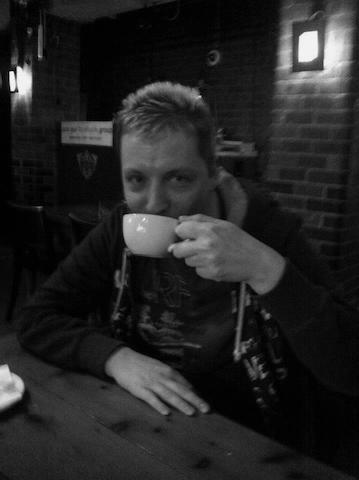
Me Drinking Coffee. Slowly Getting Back to Life 🙂
In January, everything stopped. I stopped being able to function and was ill. The truth is that I had been ill for a long time before this, but that I had continued to solider on – hoping that I would start to feel better.
Here were some of my symptoms: No concentration span. I wasn’t able to watch TV or films, read or write. I didn’t feel safe to drive, so I didn’t. Short term memory loss.
Feeling constantly exhausted despite sleeping for many, many hours. Some insomnia and night terrors. Back pain – despite resting and regularly completing physiotherapy exercises. Head aches. Stomach ache/constipation despite eating a reasonably good diet. Poor personal hygiene and not cleaning my home environment. Overeating or forcing myself to eat despite feeling that I didn’t want to. No motivation – I found it extremely difficult and tiring to do the smallest of tasks. Reckless spending of money – mostly through online shopping. Any extremely variable mood which changed throughout the day and night. From being void of any feelings to a tornado of fast swirling feelings including: guilt, inadequacy and feeling like a failure. Anxiety – resulting in becoming antisocial and finding it difficult to leave home. Worry and panic about what people would think of me. Feeling hopeless, which is the worst feeling in the world. Feeling like I was loosing my mind. Feeling like I was falling down a dark bottomless pit. Feeling frustrated at not being able to snap out of it and that nothing I did made a difference to how I felt or my ability to function. Overly self-critical thoughts and zero self esteem. A critical inner voice that was loud and repetitive. At two particularly bad points I suffered from compulsions to end my life. In short, feeling like my mind, body and soul were being devoured and destroyed by this illness.
So I went to see my GP who completed the PHQ depression test and diagnosed me with severe clinical depression. At several points throughout my treatment, this test was repeated to check on my progress. At one point, I was scoring 24 out of a possible 27. My GP started me on antidepressants and encouraged me to self-refer for counselling.
The first antidepressant didn’t work, despite gradually increasing the dose to the maximum. Apparently this is really common, happening to at least 50% of people. So my GP gradually withdrew the first antidepressant and then started me on another – which thankfully is working. I self-referred to counselling, had an assessment and to this date am still on the waiting list.
January to May has felt like a write-off in every sense of the word. But I feel extremely lucky to have made it through this dark and difficult time. What’s that phrase? Ah yes…I believe I made it through by the skin on my teeth.
Looking back, I’ve had depressive tendencies for at least the last few years. I’ve been rubbish at spotting the symptoms in myself, but am much more aware of signs, symptoms and triggers now.
I’m still in recovery and it is a gradual process. I’m still on the antidepressants and will be for sometime. I’ve started taking multivitamins to make sure my body and mind is getting what it needs. But now I’m feeling good, better than I have felt in years. I’ve even started laughing again, proper belly laughs, which I haven’t done for what feels like forever.
Now I’m getting back to life. I’ve thanked those close to me for their support, love, care and kindness. I’ve gone back to work and realised that I have the most brilliant, amazing and fantastic work colleagues. They’ve been so supportive and I feel so lucky to work with such wonderful people.