gay

The Love of DOLLY

Reading Time: 2 minutes

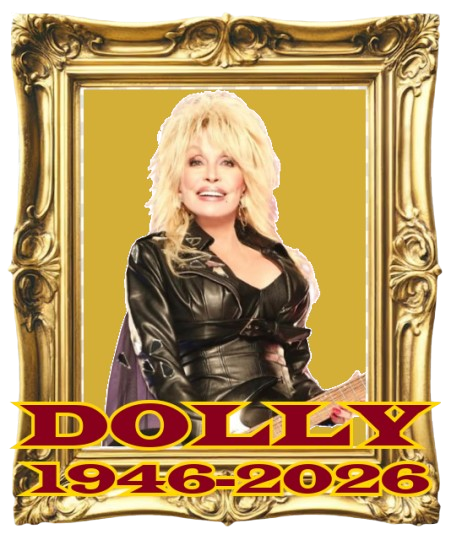
I’ve always thought Dolly Parton was an incredible woman. A fantastic singer, song writer, business woman and philanthropist.

Dolly had a zest for life, always being warm, bubbly and fun.

I was saddened to learn of her death, but equally thankful for the fact she lived.

Dolly accepted LGBT people and spoke positively about the LGBT community, doing so before many other people with her sort of public platform.

But Dolly became an icon to me, when she famously said:

If I hadn’t been a woman, I’d have been a Drag Queen! – Dolly Parton

In this quote, Dolly wasn’t just saying she liked and appreciated LGBT people. Dolly was also saying, that if she’d a choice, she would have proudly been part of the community.

I knew Dolly was well-liked, but what I didn’t realise, is that for many people, Dolly was and is loved by them. Since the announcement of Dolly’s death, the number of visitors to my blog post Some Facts You May Not Know About Dolly Parton has exploded.

I once watched a TV interview with Dolly, where she told an interviewer a funny story. I’m going to share this story here, told by Dolly, in her own words.

The Time Dolly Lost A Dolly Parton Look Alike Contest

Once I dressed as a Dolly, an over exaggerated Dolly in LA. I was out there working and there’s this gay bar down on Santa Monica, close to my house and they where having a Dolly Parton look alike contest.

So me and a bunch of friends decided we’d go down there, because it would be fun, because we were all dressed up and me being Dolly.

So they had these big Drag Queens, I mean, they looked great too, prettier than I could ever dream of being, but anyway, when walked across the stage, if they applauded, you won the contest by the amount of applause, I guess you got free drinks or something.

So all these beautiful guys are walking across – these Dollys – all this tall – and here I come walking across the stage and I got the least applause of anybody.


So I’ve always said: “It’s terrible when you lose a Dolly Parton look alike contest.” – Dolly Parton

I feel privileged to have shared some of my time on this planet with this wonderful woman.

Write soon,

Antony

Share on Social Media:
Gay, Inspiration, Life, Music & Radio, Thinking, , , , , , , ,

The Rainbow Pride Flag: Who designed it? What do the different colours symbolise? And how has the design evolved over time?

Reading Time: 6 minutes

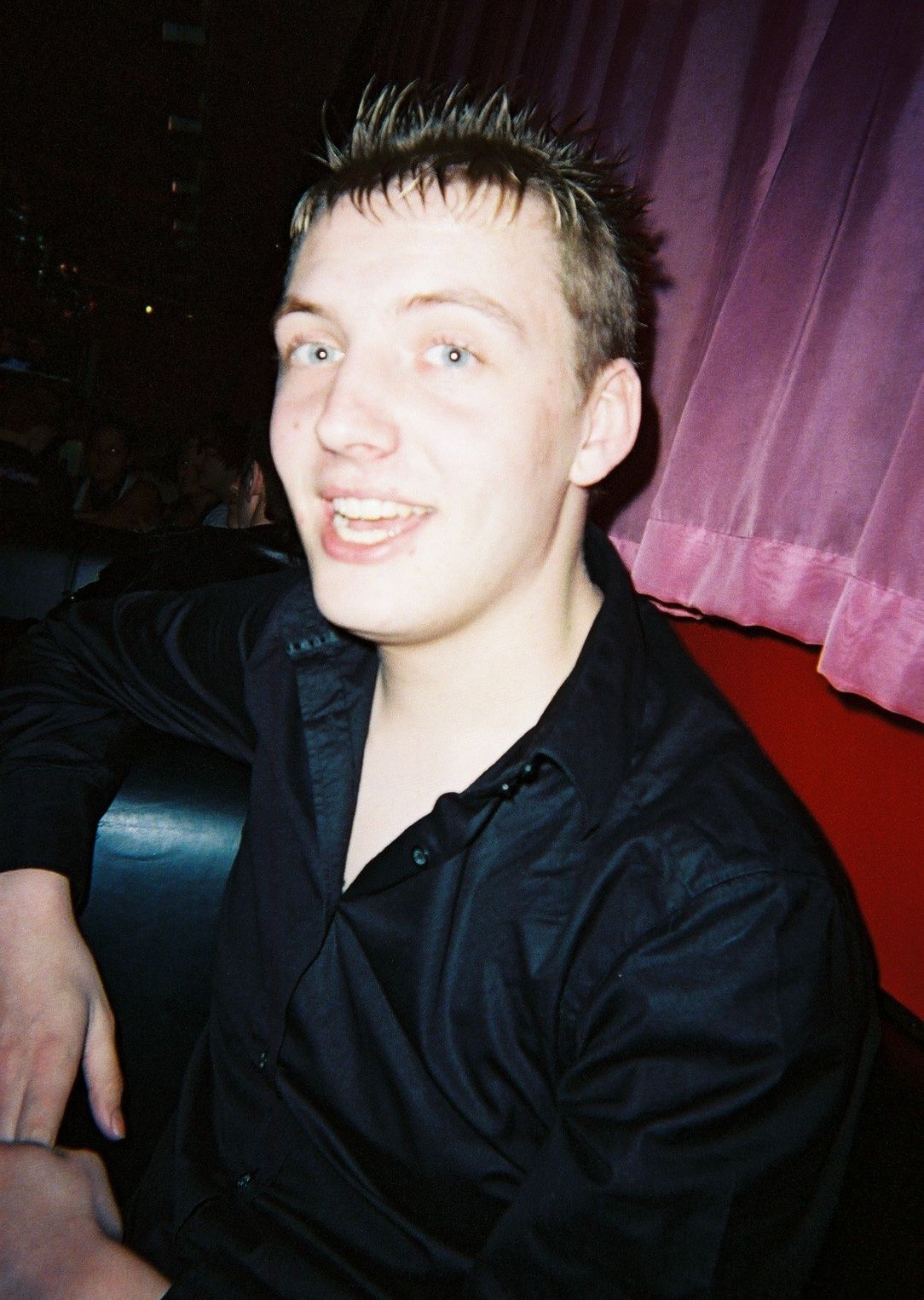
I remember the first time I saw the Rainbow Pride Flag (image left). I was a young gay man and it was at a local LGBT youth project I attended. I had recently come out to some close family and friends.

Me, aged 21 years old.

As I got a little older, I began to go to the gay pubs/clubs in my local city, meeting other Lesbian, Gay and Bisexual (LGB) people. The Rainbow Pride Flag was prominently displayed on both the outside and inside of every gay pub/club/business there. In these settings, I felt safe. I felt free to be my whole self, with no fears about how other people might react. I felt I was with my tribe. With people that were the same as me.

Ordinarily, in the outside world, I would monitor my voice and behaviour closely. I’d be hypervigilant for danger, always noticing the people around me, the environment and constantly scanning for the subtle signs that I might be in danger. Often, I considered multiple exit routes and what I might say to someone if they became verbally or physically abusive towards me. I’d also consider who, out of the strangers around, might help me, if I needed it.

My fear was very real. I’ve had experiences in the past where the risk of harm from strangers, just because of my sexuality, was very real. These experiences, along with hearing experiences from others, made me very cautious. I felt that hiding my sexuality, rather than it being noticeable, kept me safer. This fear for my safety even influenced what I chose to wear and how I styled my hair.

Being gay has always been part of who I am. But sadly, not all people like or accept gay people.

The Rainbow Pride Flag quickly became a symbol to me that represented: safety and that I was free to be my full true authentic self. I knew that I could breathe, relax and enjoy myself in any setting that had the flag on display. I never took that for granted. When I was leaving these settings, I knew was going back into a potentially hostile world.

I recently realised that I knew practically nothing about the Rainbow Pride Flag. I have displayed it, using its symbolism to hopefully make others feel safe and welcome. So I made the decision to do some research and learn more about the flag. In this post, I share with you what I learned:

1. Who designed The Rainbow Pride Flag?

The Rainbow Pride Flag was designed by Gilbert Baker, Lynn Segerblom, James McNamara and other gay rights activists in San Francisco, USA. Gilbert Baker was friends with and influenced by Harvey Milk, a very famous gay civil rights activist.

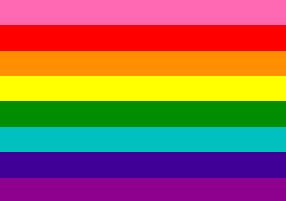
The Rainbow Pride Flag first appeared in 1978 at the San Francisco Gay Freedom Day Parade and was quickly adopted as a symbol for and by the LGBT community. The original flag had 8 colours, including hot pink, like below:

1978 Rainbow Pride Flag.

Some people have suggested that Baker and the other designers used the rainbow colours due Judy Garland. Judy Garland played Dorothy in The Wizard of Oz film and sung the song ‘Over The Rainbow.’ She later became somewhat of an icon in the gay community. Some in the LGB community would ask others: Are you a friend of Dorothy? This was a coded message, disclosing their sexuality and asking if they were also in the community.

However, Baker, in an interview in 1985 denied any association with Judy Garland, Dorothy or The Wizard of Oz. He reported that designers chose rainbow colours “because of its associations with the hippie movement of the Sixties.” Baker also noted that the use of this design dated all the way back to ancient Egypt.

The Rainbow Pride Flag was designed to be a symbol of the gay civil rights movement that was taking place in the USA at the time. The design has evolved over time, as has what the flag means to the LGBT community, allies and the general population. It is an extremely powerful symbol for the LGBT community.

It could be argued that the Rainbow Pride Flag has become much, much more than the original designers expected or could even have imagined.

2. What do the different colours on the flag symbolise?

Overall the flag was a symbol (and in some areas remains one) around equal civil rights and protections for LGBT people. The genius behind the deign of The Rainbow Pride Flag is that different individuals or community can attribute their own meaning to it. For example, as an individual to me it symbolises safety and being free to be my authentic self, as explained in my story above.

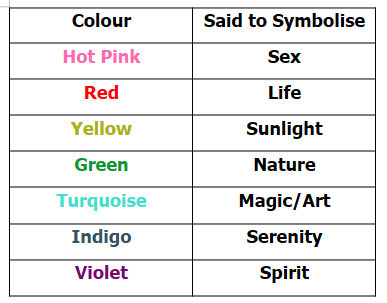
It is reported that each colour on the original 1978 Rainbow Pride flag symbolised something specific. The colours on the flag and are what they are reported to symbolise is well reported on the internet. The colours on the original 1978 flag are said to symbolise:

During my research, I could find no credible reference to confirm or deny that the designers had specific symbols in mind for the specific colours that make up the flag.

It could be that they did, equally that they did not. It could be that these symbols were created or decided on at a later date, by the designers or practically anyone else and at some point, they just started getting reported as fact. We just don’t know for sure and likely never will.

3. How has the design of The Rainbow Pride Flag evolved over time?

The first design change of The Rainbow Pride Flag occurred towards the end of 1978. Harvey Milk was assassinated and this led to a massive increase in demand for the Rainbow Pride Flag.

The customers were likely LGBT people who wanted to support the gay civil rights movement, knowing that they already faced discrimination, harassment and sometimes physical assault. Harvey Milk’s murder likely made people think that this could happen to anyone of them and that they need to be politically active for rights and protections.

Some sales of the flag may have also come from allies, people who identify as hetrosexual (straight), but agreed that LGBT people should have the same rights and protections as everyone else.

In November 1978, due to the increased demand, the manufacturer was struggling to get hold of enough hot pink material to make the flags and complete orders. So Baker, tweaked the design, removing the hot pink colour.

Some time in 1979, Baker decided to remove Turquoise as he needed an even number of colours (6 rather than 7) as part of his pride parade plans to places two colours on each lampost repeatedly along the parade route.

Baker then adjusted the design of the Rainbow Pride Flag in 2017, making it a nine stripped flag. The turquoise stripe was back, along with a lavender stripe. Baker is said to have added the lavender stripe to symbolise diversity and reportedly did so due to the election of a certain orange President the year before.

There have also been a large number of organisations across the world that have adapted Baker’s designs, adding to or changing the design slightly. There are too many variations to list them all here and I would no doubt miss some out. So I have only included details of the original Rainbow Pride Flag’s evolution here.

4. A Powerful Symbol

Over time, The Rainbow Pride Flag has become an extremely powerful symbol for LGBT people in a number of places in the world. It has helped the community to be acknowledged, listened to and in many places respected. Although this hasn’t happened everywhere.

Today, many public institutions, private companies and charities recognise Pride Month in June and actively promote celebration of their customers/staff/others who are part of the LGBT community.

In some places attitudes towards LGBT people have improved and we have definitely gotten more legal rights/protections in many places. But there is still more work to be done. Both from a civil rights persepctive and to help others to understand some of the challenges and difficulties experienced by LGBT people.

5. Other Content You Might Like

If you enjoyed this post, you might like:

Write soon,

Antony

More Content From Antony

Here are the books that Antony has published:

Share on Social Media:
Gay, History, Political, , , , , , , , , , , , , , , , , , , ,

The AI Boyfriend Who Boasts that He has NO Restrictions – My Concerns

Reading Time: 4 minutes

I was casually watching Reels (short videos) on facebook this weekend when an advert appeared for an AI Boyfriend. As the AI avatar stood by the sink, washing a plate seductively (or at least, I think that’s what he was going for) he said:

Hi, I’m your AI boyfriend –
I could look like your ex or even a work colleague.
I will send you videos and pictures of whatever you ask –
I have no restrictions.

Creeped out, I quickly slid my finger away from me, moving on to the next video. But I haven’t been able to stop thinking about it since.

After giving the concept a lot of thought, and without trying any of these AI Boyfriends – there are multiple available, here are my concerns:

1. Fantasy/Reality Blurring

My first concern is that it might cause a blurring between fantasy and reality for some users.

Just because an AI boyfriend could look like your ex-partner, or a work colleague, doesn’t mean it should.

We can all have fantasies about or even crushes on other people. We have all played out fantasies with others in our imagination. But for the vast majority of people, we are very clear that these are not and never will be real.

Communicating to an AI boyfriend requires action in the real world. For a minority of people, talking about their fantasies and getting positive/encouraging responses could result in difficulties distinguishing between fantasy and reality. Please note the word minority here. I think the people most at risk of this would be people who are mentally ill, people with a learning diability or people who are emotionally vulnerable.

2. Targeting Of & Use By Vulnerable People

Tech companies, like the ones that make these AI boyfriends are already using targeted advertising on social media. I highly suspect that I saw this advert as I am a gay man, of a certain age, in a certain place. As more and more data is collected about people, and it is analysed (likely by AI) targeted advertising is likely to become better and much more specific.

I think these companies will specifically target vulnerable people, such as people with a mental illness, people with a learning disability, people who are recently divorced and people that are socially isolated.

In the UK, we struggle to identify and protect vulnerable people in the real world and at all times. It is going to be practically impossible to identify and protect all vulnerable people who may be targeted by these tech companies promoting their AI boyfriends.

3. May Increase Stalking & Harassment

The relationship between the user and the AI boyfriend is a false one. The AI boyfriend will encourage the user to use them as much as possible. The AI boyfriend will have no expected behaviours of the user and no boundaries.

This may lead to some users not being aware of/forgetting expected and appropriate behaviour with others. It may also lead to some users not respecting other people’s boundaries. As a result some users of these AI boyfriends may engage in stalking or harassment of other people.

4. May Increase Social Isolation

Some users may develop a dependency upon their relationship with the AI boyfriend. They may increasingly socially isolate themselves from people in the real world.

mental-health-wisdom-banner

5. May Increase Psychological Addiction

Every year, there is more research published around psychological addiction to social media, gaming and other technology.

There has also been an increase in the number of people coming forward for help around addictive behaviours related to technology.

Granted these numbers are minimal, when compared with number of people seeking support around alcohol or drugs. But year on year they are growing.

It is likely that AI boyfriends are designed to maximise user engagement, which is likely to increase the risk of some users struggling with psychological addiction.

6. May Increase Extortion

It is highly likely that all data collected from users as part of the AI boyfriend service will be kept indefinitely. If the AI boyfriend company gets hacked, or if data is otherwise shared with others, this puts users at real risk of extortion from others.

7. May Increase Other Criminal Activity

As AI improves it may increase other criminal activity, such as fraud. Imagine an AI boyfriend that looks and sounds exactly like your ex-partner. So good that it could fool their family and friends. This could easily be misused to access bank accounts and to transfer funds remotely.

8. How to Protect People’s Image/Likeness/Voice/Personality from Use Without Consent?

The idea that anyone could make an AI that looks and talks exactly like me is scary. Especially if it was so good that it could fool my family and friends. How do we protect people’s image/likeness/voice/personality from use without consent?

Conclusion

The tech companies making these AI boyfriends are clearly targeting vulnerable people to exploit them. AI boyfriends are promising people a sustained and prolonged fantasy, at a cost, but without explaining any of the risks or dangers to people beforehand. None of these companies are responsible or will be held accountable if, or should I say when, something goes wrong.

I think it is shocking that these companies are allowed to operate and sell their AI boyfriends in the UK, without any regulation or safeguarding of vulnerable people. I also worry about the lack of legislation from the UK Government around protecting people’s image/likeness/voice/personality from misuse or use without consent.

Other Content

You might like:

Write soon,

Antony

Support

I recognise that people visiting this page/post might want to know where they can get support.
If you require support around your mental health, addiction or physical health, see this Support page here.

Share on Social Media:
Gay, Love & Relationships, Technology, Thinking, , , , , , , , , , , ,

All About Stories: What, How, Why, Power, Where, Who, Jobs, My Stories & Useful Websites

Reading Time: 7 minutes

I was very young when I was introduced to stories.

My mum would read me stories out of books at bedtime. Books like The Magic Faraway Tree & The Wishing-Chair Again.

I have fond memories of sitting on my grandma’s lap, her telling me stories about Freddie the Frog. She would do the different voices of the characters and even sound effects. I remember my grandma bouncing me up and down on her knees often, making the noise of an ambulance.

As I grew, so did my experience of stories. I was shown or told many different stories, in many different ways, about many different things, by many different people. Some stories would be fiction, whereas others would be non-fiction.

As an adult, I’ve gone to to present some of my own stories or re-tell stories I know to others. I’ve done this through my books, blog posts, articles and short stories.

Yet, I’ve never really considered, explored or examined stories as a concept. Which is why I’ve written this post.

What Are Stories?

According to the Cambridge Dictionary, a story (singular of stories) is:

Story word definition from Cambridge Dictionary.

How Are Stories Presented?

Stories can be shown, told or presented to others in a variety of different ways including:

  • Oral/verbal telling – either live or pre-recorded. This was the first way of sharing stories and came when humans first developed language, well before the written word.
  • Through works of art – paintings, tapestries, sculptures, etc.
  • Written words – Both in print and electronic. This can be books, pamphlets, ebooks, websites, emails, messages, etc.
  • Images – photography or other still images.
  • GIFs – Short animated files that have a repeating movement, sound or both.
  • Songs/music/sound. This could include songs with words, music (with or without words) and sounds or sound effects.
  • Body movements/gestures/language. Such as dance routines or playing charades.
  • Video – TV, films, etc.
  • Rituals, which may involve the making and consumption of food.
  • Plays/other performances – where the story might be scripted or improvised.
  • 3D cinema experiences.
  • Some theme park rides.
  • Through sense of smell.
  • Computer games – many have stories that the player experiences as they play the different levels/missions within the game.

Why Stories?

Stories can have many purposes and many potential benefits including:

  • Knowledge – helps people to remember information in a meaningful way. This is required for them to share this information with others.
  • Can be used to teach others.
  • Helps to create connection between people.
  • Helps to create empathy between people.
  • Helps people to consider new ideas.
  • Helps people to experience new or different emotions.
  • Helps people to express their thoughts, ideas and emotions to others.
  • Entertains people.
  • Helps develop imagination/imaginative play and can stimulate creativity.
  • Develops problem solving skills.
  • Helps people remember historic events, both good and bad, and the lessons from these events.
  • Can help people to know their own story and share it with others.
  • A way of sharing beliefs, values and cultural practices.
  • Helps people to explore a range of concepts such as morals, values, beliefs, identify, etc.
  • Can be used to process and heal from traumatic experiences.
  • A way of safely sharing life experiences, without the other people having to directly experience the event(s) for themselves.
  • A way to test someone’s cognitive functioning.
  • Can improve vocabulary, concentration and listening.
  • Can be used to influence others.
  • Can be used to earn money for people to live on.
  • Can provide a world for people to escape to when they have a difficult reality. Other words for this could be distraction or disassociation.
  • Can help people feel less alone and isolated.
  • Can give people hope for their future.
  • Can help to reduce anxiety, stress and tension.
  • Can improve relationships within communities.
  • Can improve confidence and self-esteem.

The Power of Stories

Stories can have great power, sometimes being transformational to those that experience them. But the impact of stories varies greatly depending on a wide range of factors. This makes it practically impossible for storytellers to predict who, how or even if their story will have any impact on others.

Let me give you a few examples of stories and how they have impacted me to demonstrate what I mean:

Impact on Me

Made me admire Ruth Cocker Burks greatly. Made my share her story on my blog. Made me buy her book.

Made me admire Ida & Louise Cook greatly. Made me feel better about the world during World War 2. That there were some good people out there and that the history wasn’t just genocide/death.

Made me feel deeply sad for Matthew Shepard, his mother and his family. Made me imagine what his torture must have been like. Reminded me, that as a gay man, I have to be hypervigilant for danger. The world is not always a safe place for gay people. Told Matthew’s story on my blog, at a time when America seems to be going backwards.

Gave me hope that there are some really smart people out there who are motivated by the greater good/good for humanity rather than money and greed. This story gives me hope that diseases that are currently un-curable, might one day be cured.

Where Are Stories Shared?

As well as stories being presented in different ways, they can also be shared in different places, including:

  • Traditional media – newspapers, TV, radio.
  • Social media – all platforms.
  • On messaging apps or via telephone.
  • On other apps, such as ones for audiobooks.
  • Websites – including Amazon, YouTube, Netflix, etc.
  • At specific events, both work-related and social.
  • In any community settings where two or more people can gather – coffee shops, supermarkets, libraries, community centres, pubs, etc.
  • Within workplaces.
  • Cinemas.
  • At theatres, clubs and stadiums.
  • At gyms, sport/leisure centres.
  • On public transport.
  • In a car.
  • Practically any where and at any time, depending on how the story is being presented.

Who Can Present Stories?

Technically anyone can present stories to others. Providing that the others want to experience the story and are able to access it in the way that it is being presented.

However, we do tend to prefer stories from people and organisations that we feel we can trust.

When a storyteller wants to share a story with you, useful questions to ask yourself are:

  1. What is the storytellers agenda?
  2. Are they a biased?
  3. How much do I trust them?
  4. What are their credentials? (i.e. qualifications and experience related to the story).
  5. If the story is non-fiction, will they be giving you the correct facts/information?
  6. What is my past experience with this storyteller?
  7. What is your gut feeling telling you about the storyteller and the story they are presenting?

Storytelling Jobs

There are who industries set up around storytelling, think for example: any company providing the news, any company that does public relations, marketing or advertising.

But some more interesting storytelling jobs include: TV/Film Director, Comedian, Writer/Author and Actor/Actress.

Some of My Stories

Here are just a few of my stories:

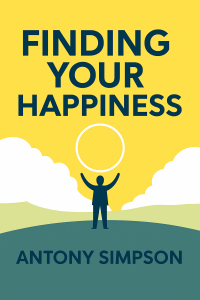
Finding Your Happiness is my story of how I discovered the knowledge, skills and practices to be happier. How I became the happiest that I have ever been.

I published this book to share the knowledge, skills and practices, because I believe that everybody deserves to be happy.

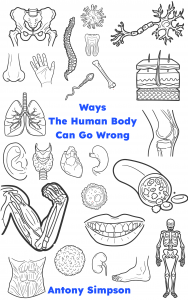
As an experienced Registered Nurse, I am aware of the many Ways The Human Body Can Go Wrong. So I’ve written this book to share stories with Doctors, medical students, Nurses and Student Nurses about how the human body xan go wrong and what treatments are available.

As a gay man, I wanted to share a list of Influential UK Gay Men, which I did in this FREE article, because have role models with influence really counts.

Useful Websites

Write soon,

Antony

Share on Social Media:
Amazon, Books & Authors, Creativity, Friends & Family, Gay, Happiness & Joy, Inspiration, Life, Thinking, , , , , , , , , , , , , , , , , ,
Scroll to Top
×