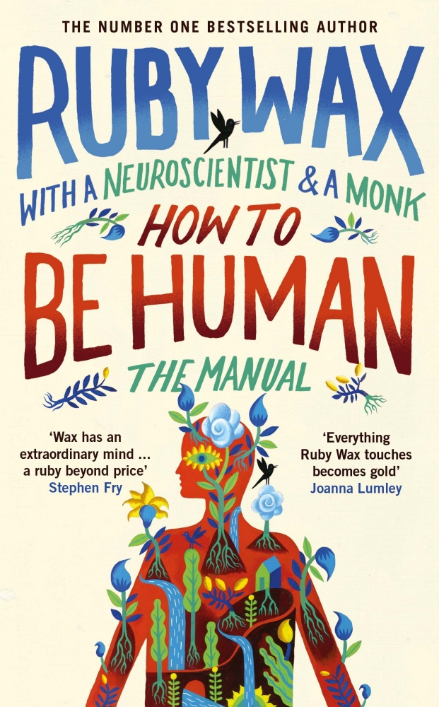
Ruby Wax’s latest book is called How To Be Human – The Manual. It’s insightful, funny, warm and engaging. A pleasure to read. It’s like somebody is pouring wisdom into your head while you’re having a chat with them.
Each chapter covers a topic and is wittily written by Wax. For each chapter Wax has consulted with Ash Ranpura, a Neuroscientist and Gelong Thubten, a Buddhist Monk.
At the end of each chapter are fascinating transcripts of these discussions.
Interspersed throughout How To Be Human Wax shares some of her own mental illness story.
So what exactly does Wax cover in How To Be Human? Pretty much everything. Here is each chapter title:
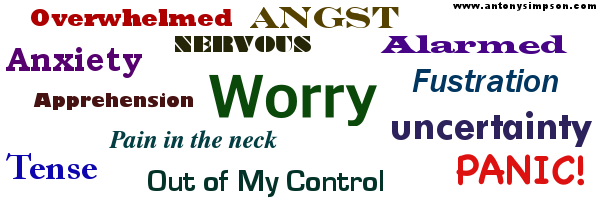
I have been filled with worry and anxiety this last week. There were two main sources: my boiler breaking and money.
I managed to get my boiler repaired. But it took all week and almost everything that could go wrong with getting it repaired did. Moneywise, I’m skint. In the last two months I’ve had to find more than £700 for unexpected but essential expenditure.
I’ve been meditating for years. But I was so worried and anxious this week that I have been unable to meditate each of the three times I’ve tried.
Of course recognising that you’re anxious is the first step to addressing it.
Here are the signs and symptoms of anxiety according to MIND:
Effects on your body:
a churning feeling in your stomach
feeling light-headed or dizzy
pins and needles
feeling restless or unable to sit still
headaches, backache or other aches and pains
faster breathing
a fast, thumping or irregular heartbeat
sweating or hot flushes
problems sleeping
grinding your teeth, especially at night
nausea (feeling sick)
needing the toilet more or less often
changes in your sex drive
having panic attacks.
Effects on your mind:
feeling tense, nervous or unable to relax
having a sense of dread, or fearing the worst
feeling like the world is speeding up or slowing down
feeling like other people can see you’re anxious and are looking at you
feeling like you can’t stop worrying, or that bad things will happen if you stop worrying
worrying about anxiety itself, for example worrying about when panic attacks might happen
wanting lots of reassurance from other people or worrying that people are angry or upset with you
worrying that you’re losing touch with reality
rumination – thinking a lot about bad experiences, or thinking over a situation again and again depersonalisation – feeling disconnected from your mind or body, or like you’re watching someone else (this is a type of dissociation)
derealisation – feeling disconnected from the world around you, or like the world isn’t real (this is a type of dissociation)
worrying a lot about things that might happen in the future
There’s lots of advice out there about what you can do to deal with worry and anxiety. But what actually helped me deal with my worry and anxiety? Doing these:
Off-load to a supportive friend – This gave a voice to my worries. The simple act of telling someone helped me sort through my worries and realise what was and wasn’t within my control.
Remind yourself what is outside of your control – I was worried about a lot of things outside of my control. It helped to constantly remind myself to try not to worry about things I had no control over. That I should focus on doing things that were within my control.
Double or triple relaxation time – This was something I did to reduce my heightened stress levels because of the worry and anxiety. At first I did feel guilty spending so much of my time relaxing. But each time I felt guilty, I reminded myself that this self-care was essential in order to prevent mental illness.
Distraction – This is something I did repeatedly during my relaxation time. Intruding thoughts and emotions of worry and anxiety would often enter my head and it was my job to ignore those thoughts and distract myself from them.
Write down all worries – It helped to get the worries out out of my head where they were going round and round like a circulating CD stuck on repeat. It also put my worries into perspective, helped me face them and sort through them. This cleared my mind, giving me clarity that allowed me to start planning what needed to be done. Anyone that’s been worried or anxious will know that the emotions make it difficult to think clearly. So this strategy was really helpful.
I’m proud I managed to get through this week. I’m hoping I wont have another week like it for some time.
I recognise that people visiting this page/post might want to know where they can get support. If you require support around your mental health, addiction or physical health, see this Support page here.
Today (Wednesday 11th October 2017) is National Coming Out Day. Coming out is when a gay man or lesbian woman disclose that they are attracted to the same sex to someone. Coming out for a bisexual is when they disclose that they are attracted to both sexes to someone.
National Coming Out Day – Wednesday 11th October 2017.
Coming out is a process, rather than a singular experience and is a life long one. Gay, lesbian and bisexual people come out in all areas of their lives including: to family, to friends, to work colleagues, to health & social care professionals, etc. Coming out is diverse, some are out to everyone, some are only out to some people in their lives and some aren’t out at all.
All gay, lesbian and bisexual people remember their first coming out experience and sometimes choose to share their intimate stories with one another. These shared experiences, along with associated emotions can create strong empathetic bonds.
Trans people also go through the process of coming out. I’m not Trans, so this article will only focus on coming out for gay, lesbian and bisexual people.
This article gives 5 great reasons to come out as gay, lesbian or bisexual. But only come out if you feel that it is safe to do so. Don’t put yourself at risk of harm in any way. If you live in a country that mistreats, or persecutes, or where homophobia and biphobia is evident it may be safer not to come out.
Here’s 5 great reasons to come out:
5. More Chance of Meeting Mr or Ms Right
Being out will switch on your gaydar. Suddenly you’ll start to notice attractive gay men, or lesbian women or both sexes everywhere. Being out and becoming part of the out world will lead to more opportunities to meet Mr or Ms Right.
4. A New Lease of Life
Coming out will give you a new lease of life. You’ll become part of the gay community, which is rich with its own unique culture and many sub-cultures. There’s something for everyone in the gay community. You’ll make new friends, lovers and partners.
3. Acceptance
Gay, lesbian and bisexual people going through a process of self-acceptance prior to coming out to others. Part of coming out to others is about gaining acceptance from those you hold dear. Acceptance and tolerance for difference is something that has always been a struggle for humans. But slowly, in more and more countries around the world, we are becoming more tolerant, inclusive and accepting.
LGB (Lesbian, Gay & Bisexual) people in some places gave gained more rights and protections. In some places they have been given truer equality, just think about the legal right marry their partners.
In history most LGB were not able to marry their partners because they were of the same sex. Yet straight people have always been able to marry their partners. By allowing all to marry their partners, irrespective of gender, is true equality. You can read more about The History of Marriage (in the UK) here.
2. Happier and Healthier
You’ll be happier not keeping the secret from people. Keeping your sexuality is a secret is a lot of work: watching what you say, watching what you do and watching how you behave.
Add to the above saying, doing and behaving like others would expect a straight person to. Analysing situations in your head for a long time after they’ve happened, wondering if your act was good enough?
You will be mentally healthier as well. Those who are not out are more at risk of depression, anxiety and other mental health illnesses due to feelings of isolation and the burden of keeping the secret.
1. Be Yourself
Coming out gives you the chance to be your whole self, without having to hide one of the most important aspects of yourself.
Are there any other great reasons to come out? Leave a comment below.
Reading Time: 4minutesTuesday 10th October 2017 – World Mental Health Day
Today (Tuesday 10th October 2017) is World Mental Health Day. So here’s 10 easy ways to improve your mental health:
10. Regular Exercise
I don’t mean becoming a gym bunny or taking up running. Start walking. Walking is the easiest form of exercise. Take it slow and easy. Do it regularly, a couple of times a week. Gradually build up the distance. It’s even better if you can walk in places of natural beauty, as you’ll have the scenery to enjoy.
Research shows that physical activity can also boost self-esteem, mood, sleep quality and energy, as well as reducing your risk of stress, depression…
(From: NHS Choices, last accessed: Thursday 28th September 2017)
9. A Better Diet
We could all do with eating a bit better right? Add more fruit and vegetables to your diet – aim for five a day. Cut down on the amount of sugar and salt in your food. Try to drink 6-8 glasses of fluid per day (roughly 1.2 litres). You can learn more about diet on the NHS Choices – Eatwell Guide website.
8. Go Smoke-Free
Despite many smokers saying that a cigarette reduces their stress levels, Nicotine is a stimulant which means it has the opposite effect. It increases anxiety and stress levels, especially when those nicotine receptors in the brain need feeding. Becoming smoke-free has loads of other benefits as well.
7. Drink Less Alcohol
Alcohol is a depressant drug and affects your brain chemistry. Drinking a small amount of alcohol decreases inhibitions and can make you feel happier. But drinking heavily can lead to a lowered mood. It’s also not a good idea to drink if you are angry or upset, as it can make you feel worse and do things that you wouldn’t do sober.
You don’t have to stop drinking alcohol, just cut down on the amount. A good tip is to buy less alcohol. If you buy less alcohol you’ll have less to drink.
6. Meditate
Meditation is about clearing your mind and focusing on the present or a particular thought or emotion. Research suggests that daily meditation for just 20 minutes per day has benefits to mental health after just five days. Benefits of meditation include: lower stress levels, feeling more positive, improved concentration, improves the ability to be in the moment and helps with clarity of thought.
Start slow with meditation. Set an alarm for a short period of time, say 5-10 minutes and gradually build up the time. Gradually build up the frequency of meditation sessions to, so start with a couple of times a week and work towards daily practice. Like anything, your ability to meditate will get better with practice. So don’t be surprised if you struggle with intruding thoughts initially and don’t let them discourage you.
5. Recognise the Signs of Stress
Recognise when your stressed and take steps to de-stress. You can do this by taking a deep breath, focusing on your body, mind and feelings and look for signs of stress. I call this checking-in with myself and try to do it a few times a day. Signs of stress include:
How you may feel emotionally
overwhelmed
irritable and “wound up”
anxious or fearful
lacking in self-esteem
How you may feel mentally
racing thoughts
constant worrying
difficulty concentrating
difficulty making decisions
How you may feel physically
headaches
muscle tension or pain
dizziness
sleep problems
feeling tired all the time
eating too much or too little
(From: NHS Choices, last accessed: Friday 29th September 2017)
4. It’s okay to say NO
When we think about saying no to people, we imagine the world will end. But the reality is nothing like our imagination. In fact, most of the time, people are okay about it. Remember that it is okay to say no and say it when you need to.
Sometimes it’s better to say no rather than say yes. Otherwise we risk over committing ourselves and spread our limited energy too thinly.
3. Sleep
Sleep is so important for good mental health. Sleep allows our bodies to rest and repair. The average adult needs eight hours of sleep. But children and teenagers need much more. But it’s not just about the amount of the sleep you get, it’s also about the quality. Poor quality sleep lowers resilience and increases the risk of physical and mental illness. Get your shut-eye in and try to have a good sleep routine.
2. Off-Load
We all need people to talk to and to off-load to at times. Some off-load to their families, their spouses, their friends or their therapists. Find some people in your life who you can off-load to.
Important characteristics in people you choose to off-load to: they should give you a feeling of trust, they should have the ability to actively listen to what you say, they should be non-judgemental, they should be empathetic and they should challenge you when needed.
1. Relaxation
Write a list of things that help you relax. Then do some of the things on the list on a regular basis. For example, reading really relaxes me. So every night before bed, I read, even if it’s just for ten minutes.