safety

The Rainbow Pride Flag: Who designed it? What do the different colours symbolise? And how has the design evolved over time?

Reading Time: 6 minutes

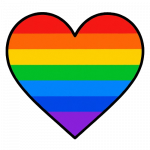
I remember the first time I saw the Rainbow Pride Flag (image left). I was a young gay man and it was at a local LGBT youth project I attended. I had recently come out to some close family and friends.

Me, aged 21 years old.

As I got a little older, I began to go to the gay pubs/clubs in my local city, meeting other Lesbian, Gay and Bisexual (LGB) people. The Rainbow Pride Flag was prominently displayed on both the outside and inside of every gay pub/club/business there. In these settings, I felt safe. I felt free to be my whole self, with no fears about how other people might react. I felt I was with my tribe. With people that were the same as me.

Ordinarily, in the outside world, I would monitor my voice and behaviour closely. I’d be hypervigilant for danger, always noticing the people around me, the environment and constantly scanning for the subtle signs that I might be in danger. Often, I considered multiple exit routes and what I might say to someone if they became verbally or physically abusive towards me. I’d also consider who, out of the strangers around, might help me, if I needed it.

My fear was very real. I’ve had experiences in the past where the risk of harm from strangers, just because of my sexuality, was very real. These experiences, along with hearing experiences from others, made me very cautious. I felt that hiding my sexuality, rather than it being noticeable, kept me safer. This fear for my safety even influenced what I chose to wear and how I styled my hair.

Being gay has always been part of who I am. But sadly, not all people like or accept gay people.

The Rainbow Pride Flag quickly became a symbol to me that represented: safety and that I was free to be my full true authentic self. I knew that I could breathe, relax and enjoy myself in any setting that had the flag on display. I never took that for granted. When I was leaving these settings, I knew was going back into a potentially hostile world.

I recently realised that I knew practically nothing about the Rainbow Pride Flag. I have displayed it, using its symbolism to hopefully make others feel safe and welcome. So I made the decision to do some research and learn more about the flag. In this post, I share with you what I learned:

1. Who designed The Rainbow Pride Flag?

The Rainbow Pride Flag was designed by Gilbert Baker, Lynn Segerblom, James McNamara and other gay rights activists in San Francisco, USA. Gilbert Baker was friends with and influenced by Harvey Milk, a very famous gay civil rights activist.

The Rainbow Pride Flag first appeared in 1978 at the San Francisco Gay Freedom Day Parade and was quickly adopted as a symbol for and by the LGBT community. The original flag had 8 colours, including hot pink, like below:
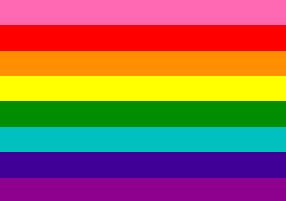
1978 Rainbow Pride Flag.

Some people have suggested that Baker and the other designers used the rainbow colours due Judy Garland. Judy Garland played Dorothy in The Wizard of Oz film and sung the song ‘Over The Rainbow.’ She later became somewhat of an icon in the gay community. Some in the LGB community would ask others: Are you a friend of Dorothy? This was a coded message, disclosing their sexuality and asking if they were also in the community.

However, Baker, in an interview in 1985 denied any association with Judy Garland, Dorothy or The Wizard of Oz. He reported that designers chose rainbow colours “because of its associations with the hippie movement of the Sixties.” Baker also noted that the use of this design dated all the way back to ancient Egypt.

The Rainbow Pride Flag was designed to be a symbol of the gay civil rights movement that was taking place in the USA at the time. The design has evolved over time, as has what the flag means to the LGBT community, allies and the general population. It is an extremely powerful symbol for the LGBT community.

It could be argued that the Rainbow Pride Flag has become much, much more than the original designers expected or could even have imagined.

2. What do the different colours on the flag symbolise?

Overall the flag was a symbol (and in some areas remains one) around equal civil rights and protections for LGBT people. The genius behind the deign of The Rainbow Pride Flag is that different individuals or community can attribute their own meaning to it. For example, as an individual to me it symbolises safety and being free to be my authentic self, as explained in my story above.

It is reported that each colour on the original 1978 Rainbow Pride flag symbolised something specific. The colours on the flag and are what they are reported to symbolise is well reported on the internet. The colours on the original 1978 flag are said to symbolise:
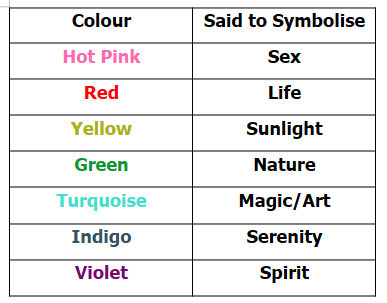
During my research, I could find no credible reference to confirm or deny that the designers had specific symbols in mind for the specific colours that make up the flag.

It could be that they did, equally that they did not. It could be that these symbols were created or decided on at a later date, by the designers or practically anyone else and at some point, they just started getting reported as fact. We just don’t know for sure and likely never will.

3. How has the design of The Rainbow Pride Flag evolved over time?

The first design change of The Rainbow Pride Flag occurred towards the end of 1978. Harvey Milk was assassinated and this led to a massive increase in demand for the Rainbow Pride Flag.

The customers were likely LGBT people who wanted to support the gay civil rights movement, knowing that they already faced discrimination, harassment and sometimes physical assault. Harvey Milk’s murder likely made people think that this could happen to anyone of them and that they need to be politically active for rights and protections.

Some sales of the flag may have also come from allies, people who identify as hetrosexual (straight), but agreed that LGBT people should have the same rights and protections as everyone else.

In November 1978, due to the increased demand, the manufacturer was struggling to get hold of enough hot pink material to make the flags and complete orders. So Baker, tweaked the design, removing the hot pink colour.

Some time in 1979, Baker decided to remove Turquoise as he needed an even number of colours (6 rather than 7) as part of his pride parade plans to places two colours on each lampost repeatedly along the parade route.

Baker then adjusted the design of the Rainbow Pride Flag in 2017, making it a nine stripped flag. The turquoise stripe was back, along with a lavender stripe. Baker is said to have added the lavender stripe to symbolise diversity and reportedly did so due to the election of a certain orange President the year before.

There have also been a large number of organisations across the world that have adapted Baker’s designs, adding to or changing the design slightly. There are too many variations to list them all here and I would no doubt miss some out. So I have only included details of the original Rainbow Pride Flag’s evolution here.

4. A Powerful Symbol

Over time, The Rainbow Pride Flag has become an extremely powerful symbol for LGBT people in a number of places in the world. It has helped the community to be acknowledged, listened to and in many places respected. Although this hasn’t happened everywhere.

Today, many public institutions, private companies and charities recognise Pride Month in June and actively promote celebration of their customers/staff/others who are part of the LGBT community.

In some places attitudes towards LGBT people have improved and we have definitely gotten more legal rights/protections in many places. But there is still more work to be done. Both from a civil rights persepctive and to help others to understand some of the challenges and difficulties experienced by LGBT people.

5. Other Content You Might Like

If you enjoyed this post, you might like:

Write soon,

Antony

More Content From Antony

Here are the books that Antony has published:
Share on Social Media:
Gay, History, Political, , , , , , , , , , , , , , , , , , , ,

My Law of Attraction Wishes & Goals

Reading Time: 2 minutes

In my last post: My View on The Law of Attraction – Including Pro/Cons Lists, I discussed The Law of Attraction in great detail. Thinking about The Law of Attraction was useful in terms of me developing some wishes and goals for my life. Here they are, some may not appear to be realistic, but The Law of Attraction encourages you to think and feel big, so that’s exactly what I’ve done here:

Health:

  1. My Diabetes is in perfect control.
  2. I sleep well. I have plenty of energy.
  3. I’m healthy and happy.
  4. I relax regularly.
  5. I always have plenty of food available to me.

Money:

  1. I have millions of pounds in the bank.
  2. I am financially secure and prosperous.
  3. I have active subscriptions to Disney+, Amazon Prime, Amazon Music and Netflix.

Home:

  1. I own a home with a garage and garden.
  2. I always feel safe and love at home.
  3. I live near Rivington.
  4. My home is always clean and tidy. I have a cleaner that helps with this.

Career:

  1. I spend my days writing books, blog posts and articles, working 7am to 3pm, Monday to Wednesday (3 days a week).
  2. I spend one day a week (Thursday) doing addiction counselling.

Social / Romantic Relationships:

  1. I have a secure and happy relationship with a handsome, kind and funny man. I marry this man.
  2. My family, friends and husband are happy and supportive of me.
  3. I regularly do fun things with family, friends and my husband including: theatre trips, music gigs and comedy shows.
  4. I go on holiday twice a year, one holiday in the UK and one holiday abroad. Both holidays are enjoyable, places of beauty with lots of fun things to do.

Spirituality:

  1. I feel connected to the universe. 
  2. All of my spells are successful.

Blog soon,

Antony

Share on Social Media:
Books & Authors, Creativity, Friends & Family, Gay, Gigs & Shows, Happiness & Joy, Health, Home, Inspiration, Life, Love & Relationships, Money / Finances, Music & Radio, Nature, Paganism, Thinking, TV, Online Streaming & Films, , , , , , , , , , , , , , , , , , , , , , , , , , ,

The Cycle of Life

Reading Time: 6 minutes

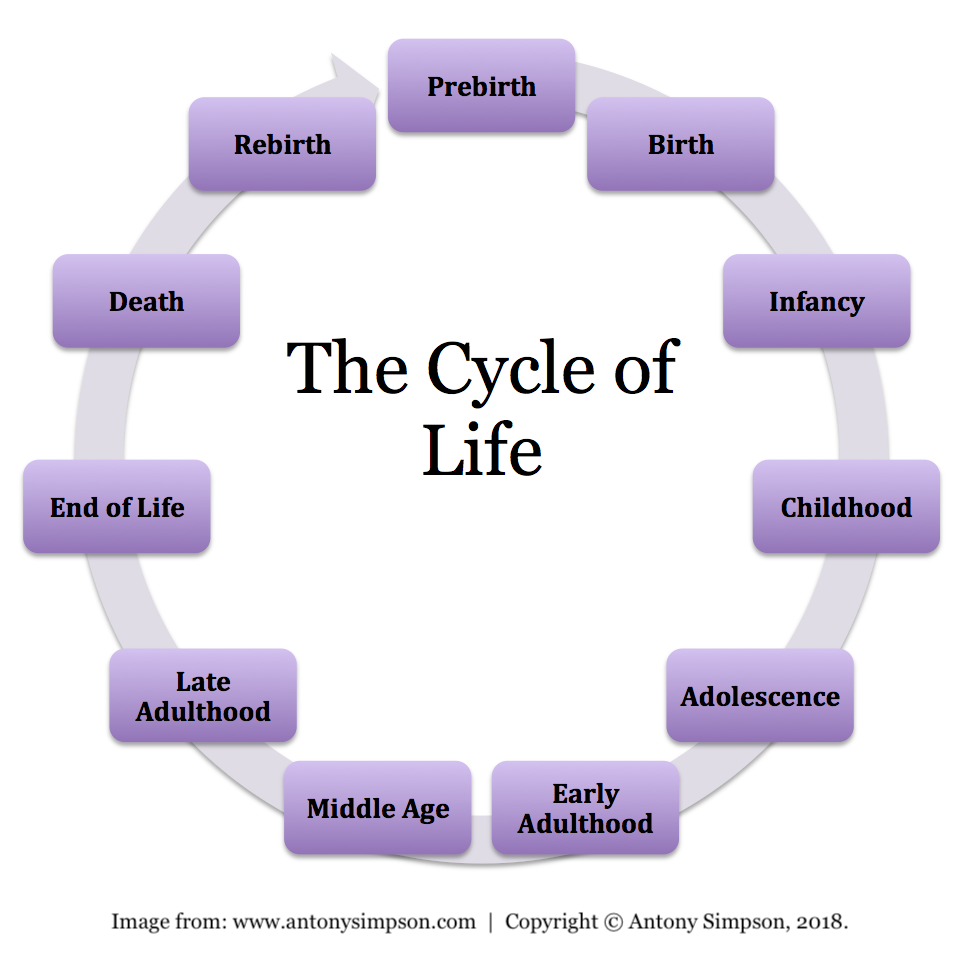
Life is a cycle. It has stages or distinct periods, associated with age and these ages are also associated with key events. Everyone who lives a full life cycle will goes through each of these stages. They are:

cycle-of-life-diagram-by-Antony-Simpson
The Cycle of Life Diagram by myself.

Prebirth

There is some debate between Scientists, Doctors, Religious Leaders and Philosophers about when human life actually begins. Some say it begins at conception or fertilisation (generally most Religious Leaders), whereas Scientists and Doctors in the UK state that human life begins once a fertilised egg has implanted its self into the uterus wall, based on medical research and legal judgements.

Whichever you believe to be correct, this stage of life goes from 0-40 weeks. In this time you grow from a single cell into an embryo (from day four of fertilisation to week eight of pregnancy) and then into a foetus (from week eight of pregnancy till birth). Your mother will go through the three trimesters of pregnancy. You will be called a baby from birth.

Birth

You come into this world as a baby that is fully dependent on your mother, father and/or other carers to meet your needs for: milk, hygiene, warmth, sleep, safety, stimulation and love (emotional attachment and bonding). This is a period of rapid physical growth.

By 3-6 months old you will need to be weaned on to solid foods to satisfy your hunger and to give you enough nutrients to continue this rapid period of growth. Between 6-9 months old you will begin exploring your environment by crawling.

By 1 year old you begin to walk and enter into the infancy stage of your life cycle.

Infancy

In this stage you learn through exploration and play. This stage is usually between the ages of 1 to 5.You develop in all sorts of ways including:

  • Physically – you continue to grow, develop gross and fine motor skills.
  • Cognitively – you develop your ability to solve basic problems and begin to develop your imagination.
  • Language – You learn to communicate verbally through speech. You will go from knowing a handful of words to hundreds.
  • Socially – You learn to parallel play, share and social rules.
  • Emotionally – You learn to identify what you feel and eventually to emotionally regulate yourself.
  • Moral – You begin to notice what is perceive as right and wrong.

In infancy, a significant phase for most parents or carers is the terrible twos. To call it the terrible twos is a bit deceptive though, as it starts from around 18 months and can carry on until the infant is 2 and a half years old.

You say ‘No’ often and temper tantrum if you don’t get your way. In the terrible twos you are learning what the boundaries are, what you can get away with and how to regulate your feelings of frustration and anger when you don’t get what you want.

Childhood

Personality begins to develop in childhood, including likes and dislikes. Childhood starts at around 5 years old and ends around 12 years old (its ending being marked by the beginning of puberty – see Adolescence below).

As well as your personality developing, you become much less dependent on your parents or carers for your basic needs. You start structured learning at school, which leads to a more structured way of thinking. But conversely you are able to think abstractly.

You increase the number social relationships you have by making friends. You continue to grow – both physically and intellectually and continue to develop new skills. You may master some of these new skills. You have thing that pique your curiosity and things that don’t. You have passions and interests.

Adolescence

The stage of adolescence or the teenage years starts around 12-13 years old and lasts until around 18-20 years old. The end of childhood and beginning of adolescence is marked by the start of puberty.

In adolescence your body and brain are going through massive changes. These changes mean that you need more sleep and may well be found sleeping in till midday or later.

In the body, high levels of hormones rage creating physical changes, increasing emotional intensity and a fierce need for independence. The emotional intensity explains why you are more likely to be rebellious in your thinking and actions as an adolescent.

If you’re a male physical changes include: body hair grows (public, underarm, facial & legs), voice breaks – becoming deeper, Adam’s apple becomes prominent, acne, penis growth, lowering of testis lower, growing taller and broader.

If you’re female physical changes include: growth of breasts, menstrual cycle, body hair grows (public, underarm & legs), acne, weight gain, change of body shape and growing taller.

In the brain, hormones make you more likely to act on impulse and take risks. This explains why you are more likely to try alcohol and/or drugs in adolescence.

Both the body and brain make you aware of those you feel sexually attracted to. You notice them. You want to get to know them and ultimately you want to have sex with them. You may start to have sexual and/or romantic relationships.

Your thinking is egocentric – you are only or mostly concerned about you. This egocentric thinking explains a lot of your thinking and behaviour including why you are so concerned about how you look.

Puberty takes around 4 years from the early signs to completion. As well as all the puberty changes, you have the pressures of high school including peer groups and exams.

mental-health-wisdom-banner

Early Adulthood

18-40 years old is the Early Adulthood stage of the cycle of life. Adults are physically fully grown and must use the life skills that they acquired in earlier stages to fend for themselves. In these few short years a lot happens in life.

You may move out of home, you may go to college and/or university, you may learn to drive a car, you go out into the world of work and start your career, you may make a commitment to a partner through marriage, you may end a relationship through divorce, you may buy your own home, you may have children of your own, you may travel, you may become more involved in community activities.

You feel enthusiastic about making your mark on the world. You continue to develop your passions and interests. Days, months and years pass quickly by at this stage of your life. You have little time to contemplate your life and the past choices you have made that have lead you to where you are.

Middle Age

Contemplation is the keyword in middle age, which starts around 45 years old till around 65 years old. Physical signs of ageing are present and women will have gone through menopause by the end of this stage. People talk about having a midlife crisis in this stage.

You think about your life and if you are happy with it or not. You may feel that your life is stale and stagnant. This contemplation can cause you to make major changes in your life. However you may be perfectly content with your life and choose to continue on without making any major changes.

In this stage of your life you may need to care for your now elderly parents. You will have attended christenings, birthdays, weddings and funerals. You will have met and know people at all stages of the cycle of life.

Late Adulthood

Retirement from work will have occurred by the time a person reaches late adulthood. Late adulthood is a stage for people aged 65-75 years old. By this point they have got a wealth of wisdom as a result of life experiences.

You physically and mentally begin to slow down. You have great wisdom from a lifetime of experience and regularly replay memories from your past.

End of Life

At the end of life the reflection continues. Most people will be 76+ years old. If people are happy with their life, they will feel satisfaction. However some people may have regrets.

People regret things like: not spending enough time with family and friends, not being the best parent/grandparent that they could have been, not having taken enough risks and playing it safe.

You will think about your life. You will ask yourself if you spent enough time with loved ones, if you did good enough, if you’re happy with your life up to now.

Death

According to The Office of National Statistics the average life expectancy for a man is 79 years old and for a woman 83 years old, so death comes between 79-83 years old for most.

Your family and friends will grief for the loss of you in their lives. Hopefully they will celebrate your life as well.

Rebirth

Rebirth hasn’t been scientifically proven at this point. But several religions and spiritual paths believe in reincarnation or rebirth. This is where you would be reborn either as another human or as an animal after death.

Even more fascinating is that some religions and spiritual paths even believe that it is your choice to be reincarnated or remain on an astral/spiritual/energy-based plane of existence.

The Future
A healthier lifestyle including: a good diet, regular exercise, not smoking, not drinking alcohol, not misusing substances, working/living in better environments with conditions that promote good health; along with ever-improving healthcare and technology will extend the life cycles of current and future people.

This extended life cycle will mean that some of the ages people enter the stated stages in this article will be incorrect in the future.

Blog soon,

Antony

More Content From Antony

Here are the books that Antony has published:

Share on Social Media:
Life, Thinking, , , , , , , , , , , , , , , , , , , , , , , , , , , , , , , , , , , , , , , , , , , , , , , , , , , , , , , , , , , , , , , , , , , , , , , , , , , , , , ,

5 Great Reasons to Come Out as Gay, Lesbian or Bisexual

Reading Time: 3 minutes

Today (Wednesday 11th October 2017) is National Coming Out Day. Coming out is when a gay man or lesbian woman disclose that they are attracted to the same sex to someone. Coming out for a bisexual is when they disclose that they are attracted to both sexes to someone.

national-coming-out-day-2017
National Coming Out Day – Wednesday 11th October 2017.

Coming out is a process, rather than a singular experience and is a life long one. Gay, lesbian and bisexual people come out in all areas of their lives including: to family, to friends, to work colleagues, to health & social care professionals, etc. Coming out is diverse, some are out to everyone, some are only out to some people in their lives and some aren’t out at all.

All gay, lesbian and bisexual people remember their first coming out experience and sometimes choose to share their intimate stories with one another. These shared experiences, along with associated emotions can create strong empathetic bonds.

Trans people also go through the process of coming out. I’m not Trans, so this article will only focus on coming out for gay, lesbian and bisexual people.

This article gives 5 great reasons to come out as gay, lesbian or bisexual. But only come out if you feel that it is safe to do so. Don’t put yourself at risk of harm in any way. If you live in a country that mistreats, or persecutes, or where homophobia and biphobia is evident it may be safer not to come out.

Here’s 5 great reasons to come out:

5. More Chance of Meeting Mr or Ms Right

Being out will switch on your gaydar. Suddenly you’ll start to notice attractive gay men, or lesbian women or both sexes everywhere. Being out and becoming part of the out world will lead to more opportunities to meet Mr or Ms Right.

4. A New Lease of Life

Coming out will give you a new lease of life. You’ll become part of the gay community, which is rich with its own unique culture and many sub-cultures. There’s something for everyone in the gay community. You’ll make new friends, lovers and partners.

3. Acceptance

Gay, lesbian and bisexual people going through a process of self-acceptance prior to coming out to others. Part of coming out to others is about gaining acceptance from those you hold dear. Acceptance and tolerance for difference is something that has always been a struggle for humans. But slowly, in more and more countries around the world, we are becoming more tolerant, inclusive and accepting.

LGB (Lesbian, Gay & Bisexual) people in some places gave gained more rights and protections. In some places they have been given truer equality, just think about the legal right marry their partners.

In history most LGB were not able to marry their partners because they were of the same sex. Yet straight people have always been able to marry their partners. By allowing all to marry their partners, irrespective of gender, is true equality. You can read more about The History of Marriage (in the UK) here.

2. Happier and Healthier

You’ll be happier not keeping the secret from people. Keeping your sexuality is a secret is a lot of work: watching what you say, watching what you do and watching how you behave.

Add to the above saying, doing and behaving like others would expect a straight person to. Analysing situations in your head for a long time after they’ve happened, wondering if your act was good enough?

You will be mentally healthier as well. Those who are not out are more at risk of depression, anxiety and other mental health illnesses due to feelings of isolation and the burden of keeping the secret.

1. Be Yourself

Coming out gives you the chance to be your whole self, without having to hide one of the most important aspects of yourself.

Are there any other great reasons to come out? Leave a comment below.

If you liked this post, you might like my FREE Influential UK Gay Men article or my All Love, Relationships & Gay Community Content page.

Blog soon,

Antony

More Content From Antony

Here are the books that Antony has published:

Share on Social Media:
Gay, , , , , , , , , , , , , , , , , , , , , , , , , , , , , , , , , , ,
Scroll to Top
×