Gay

All About Stories: What, How, Why, Power, Where, Who, Jobs, My Stories & Useful Websites

Reading Time: 7 minutes

I was very young when I was introduced to stories.

My mum would read me stories out of books at bedtime. Books like The Magic Faraway Tree & The Wishing-Chair Again.

I have fond memories of sitting on my grandma’s lap, her telling me stories about Freddie the Frog. She would do the different voices of the characters and even sound effects. I remember my grandma bouncing me up and down on her knees often, making the noise of an ambulance.

As I grew, so did my experience of stories. I was shown or told many different stories, in many different ways, about many different things, by many different people. Some stories would be fiction, whereas others would be non-fiction.

As an adult, I’ve gone to to present some of my own stories or re-tell stories I know to others. I’ve done this through my books, blog posts, articles and short stories.

Yet, I’ve never really considered, explored or examined stories as a concept. Which is why I’ve written this post.

What Are Stories?

According to the Cambridge Dictionary, a story (singular of stories) is:

Story word definition from Cambridge Dictionary.

How Are Stories Presented?

Stories can be shown, told or presented to others in a variety of different ways including:

  • Oral/verbal telling – either live or pre-recorded. This was the first way of sharing stories and came when humans first developed language, well before the written word.
  • Through works of art – paintings, tapestries, sculptures, etc.
  • Written words – Both in print and electronic. This can be books, pamphlets, ebooks, websites, emails, messages, etc.
  • Images – photography or other still images.
  • GIFs – Short animated files that have a repeating movement, sound or both.
  • Songs/music/sound. This could include songs with words, music (with or without words) and sounds or sound effects.
  • Body movements/gestures/language. Such as dance routines or playing charades.
  • Video – TV, films, etc.
  • Rituals, which may involve the making and consumption of food.
  • Plays/other performances – where the story might be scripted or improvised.
  • 3D cinema experiences.
  • Some theme park rides.
  • Through sense of smell.
  • Computer games – many have stories that the player experiences as they play the different levels/missions within the game.

Why Stories?

Stories can have many purposes and many potential benefits including:

  • Knowledge – helps people to remember information in a meaningful way. This is required for them to share this information with others.
  • Can be used to teach others.
  • Helps to create connection between people.
  • Helps to create empathy between people.
  • Helps people to consider new ideas.
  • Helps people to experience new or different emotions.
  • Helps people to express their thoughts, ideas and emotions to others.
  • Entertains people.
  • Helps develop imagination/imaginative play and can stimulate creativity.
  • Develops problem solving skills.
  • Helps people remember historic events, both good and bad, and the lessons from these events.
  • Can help people to know their own story and share it with others.
  • A way of sharing beliefs, values and cultural practices.
  • Helps people to explore a range of concepts such as morals, values, beliefs, identify, etc.
  • Can be used to process and heal from traumatic experiences.
  • A way of safely sharing life experiences, without the other people having to directly experience the event(s) for themselves.
  • A way to test someone’s cognitive functioning.
  • Can improve vocabulary, concentration and listening.
  • Can be used to influence others.
  • Can be used to earn money for people to live on.
  • Can provide a world for people to escape to when they have a difficult reality. Other words for this could be distraction or disassociation.
  • Can help people feel less alone and isolated.
  • Can give people hope for their future.
  • Can help to reduce anxiety, stress and tension.
  • Can improve relationships within communities.
  • Can improve confidence and self-esteem.

The Power of Stories

Stories can have great power, sometimes being transformational to those that experience them. But the impact of stories varies greatly depending on a wide range of factors. This makes it practically impossible for storytellers to predict who, how or even if their story will have any impact on others.

Let me give you a few examples of stories and how they have impacted me to demonstrate what I mean:

Impact on Me

Made me admire Ruth Cocker Burks greatly. Made my share her story on my blog. Made me buy her book.

Made me admire Ida & Louise Cook greatly. Made me feel better about the world during World War 2. That there were some good people out there and that the history wasn’t just genocide/death.

Made me feel deeply sad for Matthew Shepard, his mother and his family. Made me imagine what his torture must have been like. Reminded me, that as a gay man, I have to be hypervigilant for danger. The world is not always a safe place for gay people. Told Matthew’s story on my blog, at a time when America seems to be going backwards.

Gave me hope that there are some really smart people out there who are motivated by the greater good/good for humanity rather than money and greed. This story gives me hope that diseases that are currently un-curable, might one day be cured.

Where Are Stories Shared?

As well as stories being presented in different ways, they can also be shared in different places, including:

  • Traditional media – newspapers, TV, radio.
  • Social media – all platforms.
  • On messaging apps or via telephone.
  • On other apps, such as ones for audiobooks.
  • Websites – including Amazon, YouTube, Netflix, etc.
  • At specific events, both work-related and social.
  • In any community settings where two or more people can gather – coffee shops, supermarkets, libraries, community centres, pubs, etc.
  • Within workplaces.
  • Cinemas.
  • At theatres, clubs and stadiums.
  • At gyms, sport/leisure centres.
  • On public transport.
  • In a car.
  • Practically any where and at any time, depending on how the story is being presented.

Who Can Present Stories?

Technically anyone can present stories to others. Providing that the others want to experience the story and are able to access it in the way that it is being presented.

However, we do tend to prefer stories from people and organisations that we feel we can trust.

When a storyteller wants to share a story with you, useful questions to ask yourself are:

  1. What is the storytellers agenda?
  2. Are they a biased?
  3. How much do I trust them?
  4. What are their credentials? (i.e. qualifications and experience related to the story).
  5. If the story is non-fiction, will they be giving you the correct facts/information?
  6. What is my past experience with this storyteller?
  7. What is your gut feeling telling you about the storyteller and the story they are presenting?

Storytelling Jobs

There are who industries set up around storytelling, think for example: any company providing the news, any company that does public relations, marketing or advertising.

But some more interesting storytelling jobs include: TV/Film Director, Comedian, Writer/Author and Actor/Actress.

Some of My Stories

Here are just a few of my stories:

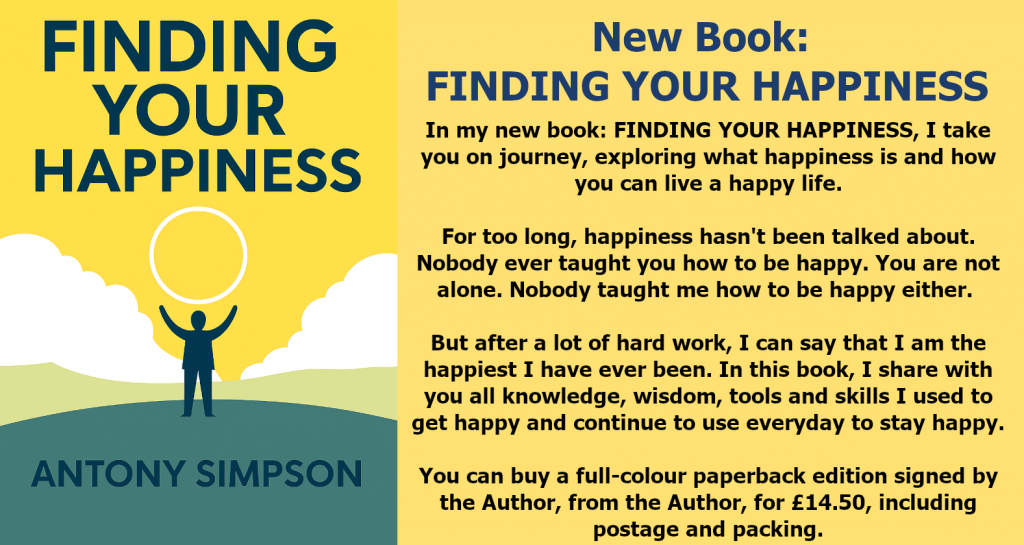
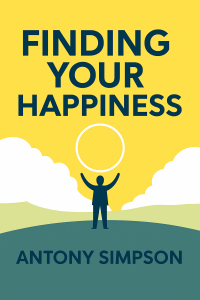
Finding Your Happiness is my story of how I discovered the knowledge, skills and practices to be happier. How I became the happiest that I have ever been.

I published this book to share the knowledge, skills and practices, because I believe that everybody deserves to be happy.

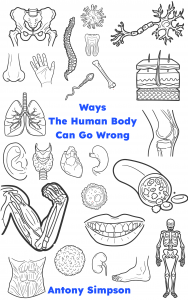
As an experienced Registered Nurse, I am aware of the many Ways The Human Body Can Go Wrong. So I’ve written this book to share stories with Doctors, medical students, Nurses and Student Nurses about how the human body xan go wrong and what treatments are available.

As a gay man, I wanted to share a list of Influential UK Gay Men, which I did in this FREE article, because have role models with influence really counts.

Useful Websites

Write soon,

Antony

Share on Social Media:
Amazon, Books & Authors, Creativity, Friends & Family, Gay, Happiness & Joy, Inspiration, Life, Thinking, , , , , , , , , , , , , , , , , ,

The Equality Act (2010) Explained

Reading Time: 2 minutes
Click on image for full-size.

The Equality Act (2010) is a UK law that is intended to protect people from discrimination, harassment and victimisation.

This is to ensure that everyone is treated with dignity and respect.

The Equality Act (2010) is about ensuring equality and fair treatment for all.

Before the Equality Act (2010) there were more than 100 pieces of other legislation that included details around protecting people from discrimination, harassment and victimisation.

The Equality Act (2010) starts by outlining the 9 protected characteristics:

  1. Sex
  2. Race
  3. Disability
  4. Sexual Orientation
  5. Gender Re-Assignment
  6. Religion or Belief
  7. Marriage or Civil Partnership
  8. Pregnancy and Maternity
  9. Age

Next the act goes on to define what is prohibited, including:

  • Direct discrimination of anybody with a protected characteristic.
  • Indirect discrimination of anybody with a protected characteristic.
  • Harassment of anybody with a protected characteristic.
  • Victimisation of anybody with a protected characteristic.

Equality Act (2010) applies to all public organisations, all private organisations and all third sector organisations, making it all encompassing.

It covers accessing or buying services, buying of products, all education establishments, the NHS, Social Care (plus all other local authority services), employment (all aspects) and pensions.

It places a responsibility on all organisations to make reasonable adjustments for anybody with a protected characteristic and outlines the potential legal consequences for not adhering to this legislation.

I am choosing to write about the Equality Act (2010) now because a certain right-wing political party is planning to abolish this Act and the legal protections it provides if the party gets into power. Scarily, this political party appears to be getting increasingly popular with every day that passes. It is looking like this political party might get into power at the next general election.

So I thought I would use this platform to explain what the Act offers and hopefully help people realise why it is important for every one. Regardless of whether you have a protected characteristic or not.

If you enjoyed this blog post, you might also like my post The Human Rights Act (1998) Explained.

Write soon,

Antony

Share on Social Media:
Gay, Political, Thinking, , , , , , , , , , , , , , , , , , , , , , , , , , , , , , , , ,

Scott Mills & His Sacking From The BBC

Reading Time: 2 minutes
Image From & Copyright © BBC.

Late last week the BBC announced that they had sacked Scott Mills, Radio DJ, due to ‘personal conduct.’ Almost immediate after this announcement, it was reported that his BBC colleagues where shocked by this news.

Since then, there have been countless reports in the media and an infinite number of discussions online about Scott Mills and why the BBC sacked him.

I’ve read a lot of speculation, many assumptions and an awful lot judgements made about both Scott Mills and the BBC. But what I haven’t read are many facts.

I’m not sure why more details haven’t been shared with the public. But this noticeable lack of factual information seems to have led to most people to assume Scott Mills is guilty of something. Many people are assuming that Scott Mills has done something heinous and potentially illegal.

It doesn’t help that the BBC hasn’t got a great track record when it comes to dealing with abuses and crimes by its Talent/Stars. Just think of Huw Edwards & Jimmy Savile as examples of this.

The truth of the matter is that right now, we just don’t know why Scott Mills was sacked. I think that as time progresses more facts will emerge. As facts are disclosed, I hope they justify the BBC’s sacking of Scott Mills and their handling of the situation.

Otherwise, the BBC will be highly criticised and rightly so. If Scott Mills has done nothing wrong, or something very minor, the BBC’s actions could potentially not just ruin his career, but his life too.

I am choosing to reserve any judgement of Scott Mills or the BBC’s actions until I have more information and I suggest you do too.

Blog soon,

Antony

Share on Social Media:
Gay, Music & Radio, , , ,

Year In Review: 2025 Blog Posts, 1 Article and 2 Books

Reading Time: 6 minutes

This year, I have written, edited and published 52 blog posts, 1 article and 2 books. Here are some of the best posts, information about the 1 article and 2 books, in case you missed them at the time they were originally published:

In January, I published The Heartbreaking Story of Matthew Shepard. The story of a young student who was tortured and then murdered for being gay in America.

The brutal murder of Matthew Shepard gained international news coverage at the time. I was reminded of his story because of Donald Trump’s targeting the LGBT community with his rhetoric.

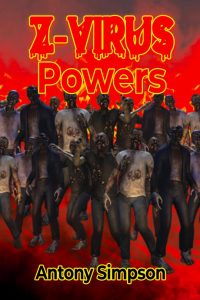
In February, I published my Z-VIRUS Powers: Map of Anglesey. This post is about my Z-Virus Powers novel, a story about a zombie apocalypse where some kids develop supernatural powers.

The wonderful array of young characters (some with powers and some without) decide to go on a quest for the cure, after their powers that once aided survival are now becoming destructive.

In February, I also published my Health & Future Plans Update: A Dramatic Reduction in HbA1c thanks to Medtronic Insulin Pump. I shared my dramatic reduction in my HbA1c blood test result due to starting the Medtronic Insulin Pump. It really has been life changing.

I shared my future plans for the year, most of which I am proud to say happened.

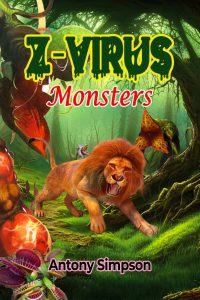
This included my plans with family and friends. It also included my plans to release Z-Virus Monsters, the next novel/installment of my Z-Virus Series.

In March, I published my FREE article, Influential UK Gay Men. This was an article all about UK Gay Men I find to be influential in society.

Just some of the men included in this list were: Mark Ashton, Jonathan Bailey, Rupert Everett, Paul O’Grady, Alan Turing.

There were many others, with the article dividing the gay men into categories.

I concluded by writing that there probably wouldn’t be a gay man who became Prime Minister of the UK in my lifetime, which I found sad.

In March, I published a post about Refreshing A Money Bowl, which was very popular. I also announced that I had secured a new job.

In April, I published a post titled: How Would You Survive A Zombie Apocalypse? It was a short blog post about the essential requirements for survival in a zombie apocalypse and was used to promote my two books: Z-Virus Powers and Z-Virus Monsters.

I also published a short blog post about the 10 Books I’ve Read That Have Stayed With Me. Each of these books has a special place in my heart. I linked previous reviews of these books in this post. Some of the books on this list include: Mum Can You Lend Me Twenty Quid? By Elizabeth Burton-Phillips, In His Secret Life by Mel Bossa, The Neuroscientist Who Lost Her Mind by Barbara K. Lipska and Diary of a Young Girl by Anne Frank.

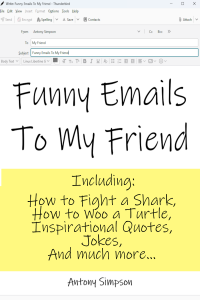
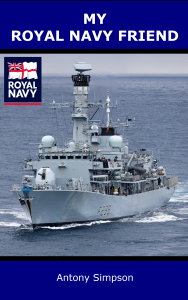
In May, I rebranded My Royal Navy Friend book with a new title (Funny Emails To My Friend) and with a new book cover. I published a post about why I rebranded this book here.

The decision to rebrand the book was driven by feedback, suggesting that people assumed that My Royal Navy Friend was about the Royal Navy. The book was never about the Royal Navy.

My Royal Navy Friend was about maintaining a friendship with a friend who followed their life long dream of joining the Royal Navy through funny, entertaining and occasionally serious emails. So I rebranded, to better reflect what the book is about.

In June, I attended Leigh Book Fest, which was a huge success. I also attended an event a Middleton Library, where I donated some signed copies of my books to the library.

I published blog posts about the importance of Finding Joy and my new old car.

July seemed to be all about animals, in some form or other.

My bengal cat, Dylan, sadly had to be put to sleep.

I had a fantastic time visiting Blackpool Zoo, sharing plenty of photos in a blog post I published.

You can see other recent photos on my regularly updated Photos page here.

In August, I published a post sharing the incredible story of Jonas Salk. In The Story of Jonas Salk and The Polio Vaccine, I shared Salk’s story of the development of the Polio Vaccine.

What is inspirational about this man, is not just that he developed the polio vaccine. But that he chose not to patent it. This meant that anyone could reproduce the polio vaccine without any payment to Salk.

If Salk had patented his polio vaccine, it would have made him several billionaire dollars. But he chose not to and in doing so, helped it become more widely available to the whole of humanity.

In August, I posted a blog post titled: Unsafe Places to be a Gay Man, detailing the places it isn’t safe to be an out gay man in the world.

To balance the above blog post, I later published a blog post titled: Safer Places to Live for Gay Men. In this post, I focused on places that are safer, more accepting and with better legal rights and protections for gay men in the world.

Safer Places to Live for Gay Men is a blog post I am really proud of publishing. I hope gay men looking for places where they are safer and more accepted in the world find this post. I hope they find this well researched blog post useful.

In September, I shared photos and essential information related to two castles in South Wales, in my published blog post: South Wales Castles – Raglan Castle & White Castle.

I also published a blog post explaining that despite on-going treatment for Vasculitis, I am the happiest I have ever been.

In September, I published a post titled: The Power of the Subconscious Mind.

In this blog post, I explain what the subconscious mind is, how it operates, how it communicates with our conscious mind and how to heal a troubled, disturbed or traumatised subconscious.

I give ways to help heal the subconscious mind and explain that it takes both work and time.

But that the hard work is totally worth the benefits of healing the subconscious mind.

In October, I published a blog post about the dangers associated with Emotional Support from an AI (Artificial Intelligence) App.

Dangers included: No Empathy, False Connection, Emotional Dependence, Bad Advice, Can Reinforce Negative Thoughts/Feelings/Behaviours, No Safeguarding, Lack of Emotional Growth & Data Privacy Breeches.

Given the dangers, as a minimum this apps should be regulated, if not banned.

In October, I also published this blog post: Zack Polanski, The New Leader of The Green Party Is Someone I Would Like Add To My Influential Gay Men Article.

Zack has seemingly appeared from nowhere to become the leader of the Green Party. In this blog post, I state that I wish I’d have known about him when doing research for my Influential UK Gay Men article, so that he could have been included in it.

In the post, I discuss Zack’s appeal, share his story (as available online) and state that I may have been wrong about there not being an out gay man as Prime Minister of the UK in my lifetime. In fact, I hope that I am wrong.

So there you have it. My Year In Review: 2025. I wonder what 2026 will bring?

Write soon,

Antony

Share on Social Media:
Adventures, Amazon, Books & Authors, Creativity, Friends & Family, Gay, Happiness & Joy, Health, History, Life, Thinking, , , , , , , , , , , , , , , , , , , , , , , , , , , , , , , , , , , , , , , , , , , , ,
Scroll to Top
×