Amazon

All About Stories: What, How, Why, Power, Where, Who, Jobs, My Stories & Useful Websites

Reading Time: 7 minutes

I was very young when I was introduced to stories.

My mum would read me stories out of books at bedtime. Books like The Magic Faraway Tree & The Wishing-Chair Again.

I have fond memories of sitting on my grandma’s lap, her telling me stories about Freddie the Frog. She would do the different voices of the characters and even sound effects. I remember my grandma bouncing me up and down on her knees often, making the noise of an ambulance.

As I grew, so did my experience of stories. I was shown or told many different stories, in many different ways, about many different things, by many different people. Some stories would be fiction, whereas others would be non-fiction.

As an adult, I’ve gone to to present some of my own stories or re-tell stories I know to others. I’ve done this through my books, blog posts, articles and short stories.

Yet, I’ve never really considered, explored or examined stories as a concept. Which is why I’ve written this post.

What Are Stories?

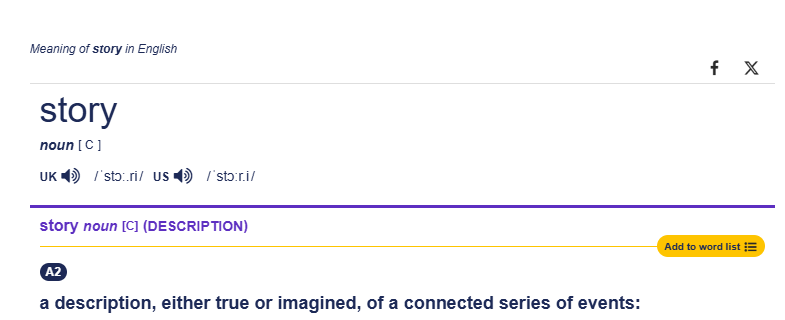
According to the Cambridge Dictionary, a story (singular of stories) is:

Story word definition from Cambridge Dictionary.

How Are Stories Presented?

Stories can be shown, told or presented to others in a variety of different ways including:

  • Oral/verbal telling – either live or pre-recorded. This was the first way of sharing stories and came when humans first developed language, well before the written word.
  • Through works of art – paintings, tapestries, sculptures, etc.
  • Written words – Both in print and electronic. This can be books, pamphlets, ebooks, websites, emails, messages, etc.
  • Images – photography or other still images.
  • GIFs – Short animated files that have a repeating movement, sound or both.
  • Songs/music/sound. This could include songs with words, music (with or without words) and sounds or sound effects.
  • Body movements/gestures/language. Such as dance routines or playing charades.
  • Video – TV, films, etc.
  • Rituals, which may involve the making and consumption of food.
  • Plays/other performances – where the story might be scripted or improvised.
  • 3D cinema experiences.
  • Some theme park rides.
  • Through sense of smell.
  • Computer games – many have stories that the player experiences as they play the different levels/missions within the game.

Why Stories?

Stories can have many purposes and many potential benefits including:

  • Knowledge – helps people to remember information in a meaningful way. This is required for them to share this information with others.
  • Can be used to teach others.
  • Helps to create connection between people.
  • Helps to create empathy between people.
  • Helps people to consider new ideas.
  • Helps people to experience new or different emotions.
  • Helps people to express their thoughts, ideas and emotions to others.
  • Entertains people.
  • Helps develop imagination/imaginative play and can stimulate creativity.
  • Develops problem solving skills.
  • Helps people remember historic events, both good and bad, and the lessons from these events.
  • Can help people to know their own story and share it with others.
  • A way of sharing beliefs, values and cultural practices.
  • Helps people to explore a range of concepts such as morals, values, beliefs, identify, etc.
  • Can be used to process and heal from traumatic experiences.
  • A way of safely sharing life experiences, without the other people having to directly experience the event(s) for themselves.
  • A way to test someone’s cognitive functioning.
  • Can improve vocabulary, concentration and listening.
  • Can be used to influence others.
  • Can be used to earn money for people to live on.
  • Can provide a world for people to escape to when they have a difficult reality. Other words for this could be distraction or disassociation.
  • Can help people feel less alone and isolated.
  • Can give people hope for their future.
  • Can help to reduce anxiety, stress and tension.
  • Can improve relationships within communities.
  • Can improve confidence and self-esteem.

The Power of Stories

Stories can have great power, sometimes being transformational to those that experience them. But the impact of stories varies greatly depending on a wide range of factors. This makes it practically impossible for storytellers to predict who, how or even if their story will have any impact on others.

Let me give you a few examples of stories and how they have impacted me to demonstrate what I mean:

Impact on Me

Made me admire Ruth Cocker Burks greatly. Made my share her story on my blog. Made me buy her book.

Made me admire Ida & Louise Cook greatly. Made me feel better about the world during World War 2. That there were some good people out there and that the history wasn’t just genocide/death.

Made me feel deeply sad for Matthew Shepard, his mother and his family. Made me imagine what his torture must have been like. Reminded me, that as a gay man, I have to be hypervigilant for danger. The world is not always a safe place for gay people. Told Matthew’s story on my blog, at a time when America seems to be going backwards.

Gave me hope that there are some really smart people out there who are motivated by the greater good/good for humanity rather than money and greed. This story gives me hope that diseases that are currently un-curable, might one day be cured.

Where Are Stories Shared?

As well as stories being presented in different ways, they can also be shared in different places, including:

  • Traditional media – newspapers, TV, radio.
  • Social media – all platforms.
  • On messaging apps or via telephone.
  • On other apps, such as ones for audiobooks.
  • Websites – including Amazon, YouTube, Netflix, etc.
  • At specific events, both work-related and social.
  • In any community settings where two or more people can gather – coffee shops, supermarkets, libraries, community centres, pubs, etc.
  • Within workplaces.
  • Cinemas.
  • At theatres, clubs and stadiums.
  • At gyms, sport/leisure centres.
  • On public transport.
  • In a car.
  • Practically any where and at any time, depending on how the story is being presented.

Who Can Present Stories?

Technically anyone can present stories to others. Providing that the others want to experience the story and are able to access it in the way that it is being presented.

However, we do tend to prefer stories from people and organisations that we feel we can trust.

When a storyteller wants to share a story with you, useful questions to ask yourself are:

  1. What is the storytellers agenda?
  2. Are they a biased?
  3. How much do I trust them?
  4. What are their credentials? (i.e. qualifications and experience related to the story).
  5. If the story is non-fiction, will they be giving you the correct facts/information?
  6. What is my past experience with this storyteller?
  7. What is your gut feeling telling you about the storyteller and the story they are presenting?

Storytelling Jobs

There are who industries set up around storytelling, think for example: any company providing the news, any company that does public relations, marketing or advertising.

But some more interesting storytelling jobs include: TV/Film Director, Comedian, Writer/Author and Actor/Actress.

Some of My Stories

Here are just a few of my stories:

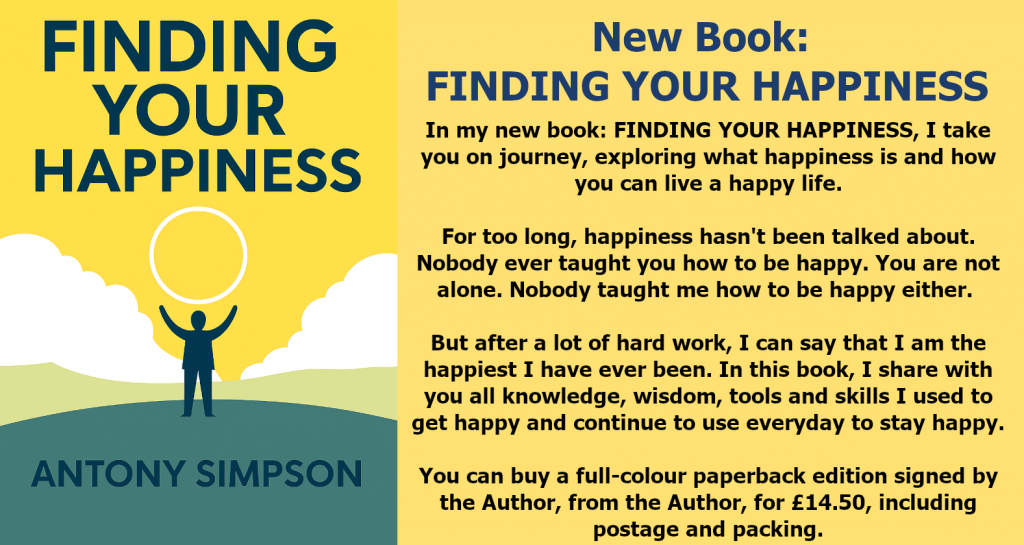
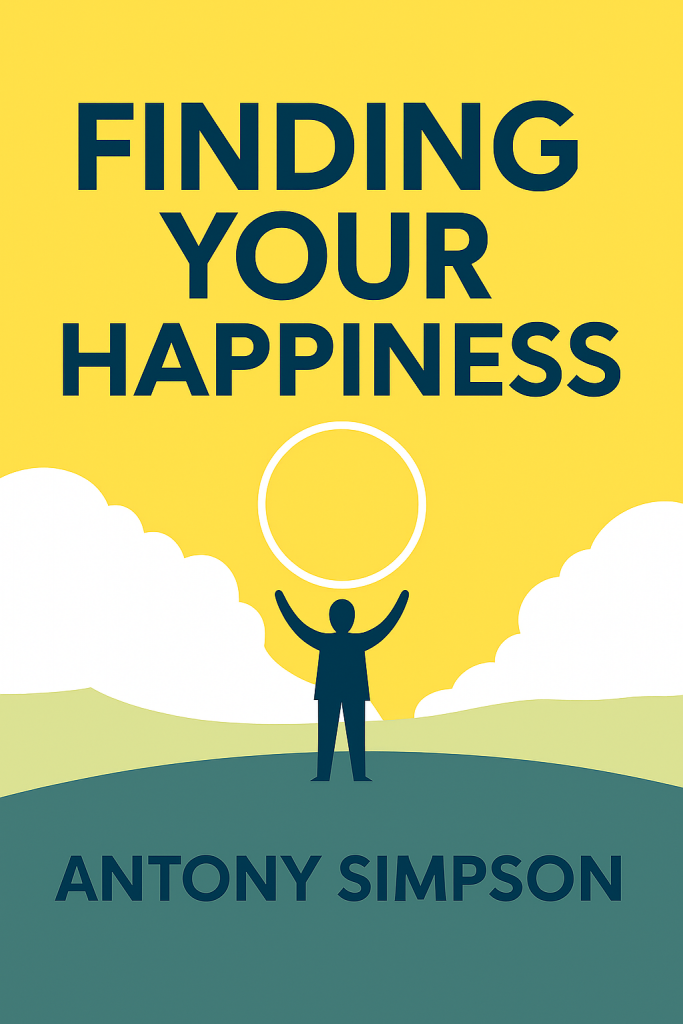
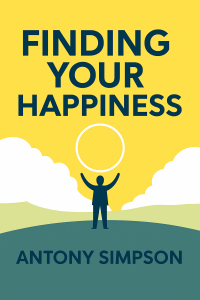
Finding Your Happiness is my story of how I discovered the knowledge, skills and practices to be happier. How I became the happiest that I have ever been.

I published this book to share the knowledge, skills and practices, because I believe that everybody deserves to be happy.

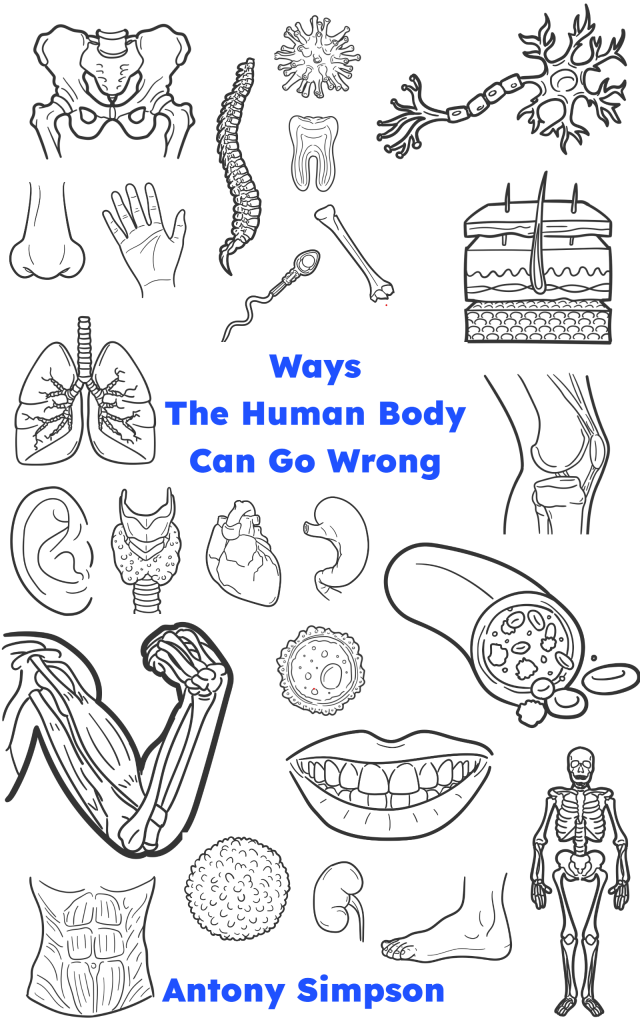
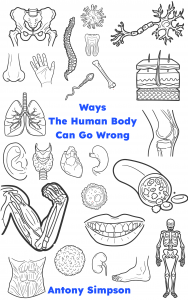
As an experienced Registered Nurse, I am aware of the many Ways The Human Body Can Go Wrong. So I’ve written this book to share stories with Doctors, medical students, Nurses and Student Nurses about how the human body xan go wrong and what treatments are available.

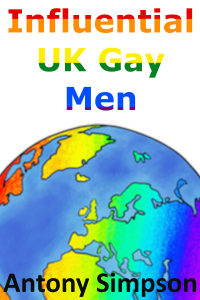
As a gay man, I wanted to share a list of Influential UK Gay Men, which I did in this FREE article, because have role models with influence really counts.
Useful Websites

Write soon,

Antony

Share on Social Media:
Amazon, Books & Authors, Creativity, Friends & Family, Gay, Happiness & Joy, Inspiration, Life, Thinking, , , , , , , , , , , , , , , , , ,

FREE 1st Chapters of All of My Books

Reading Time: 2 minutes

I currently have 9 books published, 7 are non-fiction and 2 are fiction.

Most people don’t realise, but I allow anyone to read the 1st chapter of any of my books for FREE, via a PDF download. So here are the links to the free 1st chapters PDFs, each book’s page/website and where you can find them on Amazon UK.

Non-Fiction Books

Fiction Books

Happy reading. Best Wishes,

Antony

Share on Social Media:
Amazon, Books & Authors, Creativity, , , , , , , , , , , , , , , , , , , , , , ,

Does Witchcraft, Spells & Magic Have A Scientific Explanation?

Reading Time: 8 minutes
Image is of the Wheel of the Year Sculpture I have on my wall, that I bought in 2019.

Many belief that paganism and witchcraft have been practiced for thousands of years, all the way back to ancient humans hunting and gathering on the Savannah plains.

First, starting as an oral tradition, before moving into pictograms painted on the walls of caves, then finally into words (both verbal and written) as language evolved.

There is documented evidence of pictograms painted on the walls of caves, which have been carbon dated to approximately 12,000 years ago. Most show the hunt, with an animal in the centre of stick figured people, the people carrying spears. But in truth, we don’t know if these pictograms were merely wall decoration, or if they were painted in hope of a successful hunt, to document one or possibly as a form of spell to make a successful hunt more likely to happen.

Before we discuss the science (or lack it) for witchcraft, spells and magic, let us first define the terms. For this blog post, I’ll be using these definitions:

Definitions of Terms

  • Witchcraft – A fairly recent name given to a much older practices, where spells are used to direct magic through thought (intention) and emotion (strong desire or longing) to achieve a desired outcome or result.
  • Spells – Different methods to deliberately direct your intention and strong desire in the form of magic (energy) into the universe. A spell maybe a simple one step process, or a more multi-step complex process. It may require specific herbs, crystals or oils, or not. It may require tools/instruments or not. It may involve candles, sometimes of a specific colour, or not. It may require you to complete the steps on a specific day, date or time or not. It may require specific sun or moon phases or not. It may require a specific constellation alignment or not. It may have specific words that have to be said, sung, either once or repeatedly or not. The most important part of a spell, is that the person performing the spell has a clear intention and strong desire of the desired outcome or result.
  • Magic – A form of energy present through everything that was, is, will be or will never be in the universe.
  • Witchcraft Practitioner/Practitioner – For the purposes of this blog post, is defined as anyone practicing any form of witchcraft, inclusive of completing spells or using magic in any way.
  • Science – A systematic approach to understanding the universe, how it works and everything within it. The Scientific Method is thought to contain the following steps:
    1. Observation
    2. Development of a Theory
    3. Experimentation
    4. Analysis of Experimentation Results/Data
    5. Consideration of Alternative Explanations or Influences on Results
    6. Theory Fits – Suggest & Share
    7. Theory Doesn’t Fit Evidence – Re-start Process

Witchcraft Versus Science

Witchcraft is definitely an observable phenomenon, as evidenced by the Census Data in 2021, from The Office for National Statistics, in England & Wales. 91,113 people identified their religion as pagan (I’ve grouped together here: Druids, Mysticism, New Age, Occult, Pagan, Wicca & Witchcraft), which raises to 155,858 people if you include people that described their religion as spiritual (I’ve grouped together here: all previous, plus Spiritual & Spiritualist).

In addition, there are large volume of books published about Witchcraft, you can see just some of these books listed on Amazon here.

The History of Witchcraft

In England, Witchcraft has a long history according to Philip Carr-Gomm & Richard Heygate, which they tell in their book: The Book of English Magic. I reviewed this excellent book here. It is available to buy on Amazon here. One of the great things about this book, is its extensive reference list. Most of what is written is referenced, making it a more reliable source to read or study.

I have also seen, but admit I’ve never read, books that detail the history of Witchcraft in many other parts of the world.

So the questions then become:

  1. Is Witchcraft a scientifically proven method to achieve a desired outcome or result?
  2. And if so, exactly how effective is it, compared with not practicing Witchcraft?

There is a theory to suggest that practicing Witchcraft may alter a person’s psychological and emotional state, which could impact on achieving a desired outcome or result. But there is no decent studies, published in scientific journals and that are peer reviewed. Most researchers tend to steer clear of Witchcraft due to fears for their academic reputation. They may also fear that researching this topic may result in fewer career opportunities in the future.

However, there are countless qualitative reports of people that have practiced Witchcraft (often on multiple occasions, over multiple years) to achieve a desired outcome or result with varying levels of success. Some say that success happens most of the time, others say success occurs some of the time, others state that success is less frequent – but that practicing Witchcraft has multiple other benefits.

Qualitative data is often seen in the scientific field as less reliable than quantitative data. However, where you to collect a wide range of these experiences from a wide range of people with randomised mixed different demographics, it would be difficult to theorise anything other than: Something is definitely going on. Especially if you compared experiences of people achieving a desired outcome or result with a control group (people who don’t practice Witchcraft).

Witchcraft is difficult to study because there is such variety and diversity of practices within the people that report using it. From a scientific stand point, this makes it incredibly difficult to study, as there are too many variables that could influence or impact the outcomes of practicing Witchcraft. To limit these variables, a scientific experiment could focus on a specific spell or type of spell.

Full Transparency

In the interest of full transparency, I have identified as a practicing Witch since 2004. I have written a book on Witchcraft practices, co-authored with Luna Hare, titled: SpellCast – Folk Magic for the 21st Century.

I have written this article as an genuine exploration of the question: Does Witchcraft, Spells & Magic Have A Scientific Explanation? This blog post is intended for others who may have pondered this same question and are my personal opinions only. Where possible, I have linked to any sources I have read or made reference to.

I would always strongly encourage anyone to do your own research, reading, experimentation and reach your own conclusions.

Spells Versus Science

A Spell is often completed by a Practitioner at a time of need or want of a specific outcome or result. Spell processes, ingredients used, tools used, time taken to complete, all vary on the individual Practitioner, depending upon how they work and the resources they have available. Some spells may come from existing sources (such as books or online) and completed as instructed, however, some Practitioners may amend or change the spell to suit them or their circumstances. Many Practitioners opt to create bespoke and personalised spells.

Add to this mix, the knowledge, past experience, skills and natural talents of the Practitioner or in some cases a group of Practitioners working together.

For example and totally andotally, I am better suited to instant magic, binding & banishings, spells around material gain, healing and protection. Whereas my good friend Luna Hare is better suited to blessings, cleansing spells, fertility, healing and happiness spells.

All of these variables make designing a suitable scientific experiment, with clear measurable objectives to demonstrate a spell’s success would be a practical impossiblilty. However, science has made some progress when it comes to measuring magic.

Missed Data!

Most Practitioners are very diligent when it comes to record keeping. What individual Practitioners record does vary, but generally most Practitioners keep a Book of Shadows which details:

  • Spell Name.
  • Ingredients used.
  • Tools used.
  • The process of the spell, including any words, movements, etc.
  • Date & time when the spell was completed.
  • Relevant corrospondents (see my Magical Properties page for more details).
  • Any reflections or learnings.
  • Most importantly: The outcome of each spell.

Traditionally, Practitioners have kept a hand written copy of their Book of Shadows. But as technology has evolved, so have some Practitioners’ record keeping practices.

Yet, to the best of my knowledge, no researchers have collected, analysed or intepreted this missing data.

It should be noted, that due to some historic persecution of Practitioners in some cultures, including in England & Wales, many choose to practice privately or secretly, with only those they are close to knowing that they practice Witchcraft.

However as the Census Data (2021) indicates, some Practitioners now feel safe to practice openly. But given that the number of Practitioners is unknown and has not been estimated, it is impossible to establish if any data gained would a representative sample for which conclusions could be scientifically drawn.

From a scientific point of view, some data is always better than none. Collecting some data about a observable phenomenon, usually leads to increased data collection over time, which would better inform possible theories and possibly lead to better understanding of what is happening when a Practitioner completes a spell.

Magic Versus Science

Scientific evidence is strongest if you consider magic as a form or forms of energy. So far, science has discovered:

  1. The existence of lay lines and auras.
  2. The existence of microorganisms and evidenced the impact they can have.
  3. The exsistence of atoms and subatomic particles.
  4. The theortical exisistance of dark matter and anti matter.
  5. And no doubt much more that could be used to support an old idea:

That everything and everyone are interconnected in a web of energy. That learning how to be able to influence and change, anything and everything is possible. As above, so below.

Conclusion

At this time, scientific evidence to support Witchcraft practices including spells that send a Practitioner’s intention and strong desire for a specific income via magic is extremely limited. This is likely due to:

  • Researchers fears for their academic reputation and future career opportunities.
  • A scientific belief: If we can’t measure it, it doesn’t exist. A belief, I might add that has been proven wrong time and time again, with the advancement of science and technological developments.
  • The variety and diversity in spell work by Practitioners creating many different variables, along with the Practitioner’s own unique knowledge, experience, skills and talents.
  • A history of Practitioners being ostracised, harassed and in many cases persecuted just for the suspicion of practicing Witchcraft.
  • Lack of data collection, sharing, analysis and a data quality/improvement processes.
  • A belief that we know more about everything, than our ancestors did. That no knowledge, skills or wisdom could have been lost along the way.

Witchcraft has been practiced consistently for approximately 12,000 years. Indeed, before Doctors and the medical profession came along, when we lived in tribes, if you go ill or injured, you would go to see the elder of your tribe who may have done some practical healing (such as using plants and herbs), as well as some magic. Both were equally respected and equally valued.

I can’t imagine the human race continuing to practice Witchcraft for 12,000 years, if it didn’t work or do something, at least some of the time. Then there’s the countless experiences that Practitioners have had and documented their successes and failures with magic.

Each Practitioner has undertaken a unique and very personal journey, learning about witchcraft, spells and magic. Learning how to connect to magic, how send their thoughts (intention) and emotional energy (strong desire) to change outcomes in their favour.

When I first started exploring spells and magic, I approached each spell like an experiment. The first time I did a spell it worked. I wondered if it was the placebo effect. The second spell I did also gave me the outcome I desired. I considered whether it might just be a coincidence or luck. But after a while, I just accepted that it did work, without the need for an explanation as to how.

Of course, not all of the spells I have done have worked, or worked in exactly the way I wanted. Usually when this happens, my intention wasn’t clear or I didn’t put enough emotional energy into the spell. Or later, it turns out that if I had got the outcome that I wanted when I performed the spell, it would have been harmful to me in some way.

If you enjoyed this post, you might like these pages: All Paganism, Witchcraft & Magic Content or Magical Properties. Please consider signing up to my Newsletter.

Best Wishes,

Antony

Share on Social Media:
Amazon, Books & Authors, Nature, Paganism, Thinking, , , , , , , , , , , , , , , , , ,

Two More Reviews of FINDING YOUR HAPPINESS

Reading Time: < 1 minute

Here are two more reviews of my book FINDING YOUR HAPPINESS:

Click on image for full size.

You can buy the book on Amazon UK here.

Write soon,

Antony

Learn more about lifetime Fanatic membership.
Share on Social Media:
Amazon, Books & Authors, Reviews, , , , , ,
Scroll to Top
×