addiction

The AI Boyfriend Who Boasts that He has NO Restrictions – My Concerns

Reading Time: 4 minutes

I was casually watching Reels (short videos) on facebook this weekend when an advert appeared for an AI Boyfriend. As the AI avatar stood by the sink, washing a plate seductively (or at least, I think that’s what he was going for) he said:

Hi, I’m your AI boyfriend –
I could look like your ex or even a work colleague.
I will send you videos and pictures of whatever you ask –
I have no restrictions.

Creeped out, I quickly slid my finger away from me, moving on to the next video. But I haven’t been able to stop thinking about it since.

After giving the concept a lot of thought, and without trying any of these AI Boyfriends – there are multiple available, here are my concerns:

1. Fantasy/Reality Blurring

My first concern is that it might cause a blurring between fantasy and reality for some users.

Just because an AI boyfriend could look like your ex-partner, or a work colleague, doesn’t mean it should.

We can all have fantasies about or even crushes on other people. We have all played out fantasies with others in our imagination. But for the vast majority of people, we are very clear that these are not and never will be real.

Communicating to an AI boyfriend requires action in the real world. For a minority of people, talking about their fantasies and getting positive/encouraging responses could result in difficulties distinguishing between fantasy and reality. Please note the word minority here. I think the people most at risk of this would be people who are mentally ill, people with a learning diability or people who are emotionally vulnerable.

2. Targeting Of & Use By Vulnerable People

Tech companies, like the ones that make these AI boyfriends are already using targeted advertising on social media. I highly suspect that I saw this advert as I am a gay man, of a certain age, in a certain place. As more and more data is collected about people, and it is analysed (likely by AI) targeted advertising is likely to become better and much more specific.

I think these companies will specifically target vulnerable people, such as people with a mental illness, people with a learning disability, people who are recently divorced and people that are socially isolated.

In the UK, we struggle to identify and protect vulnerable people in the real world and at all times. It is going to be practically impossible to identify and protect all vulnerable people who may be targeted by these tech companies promoting their AI boyfriends.

3. May Increase Stalking & Harassment

The relationship between the user and the AI boyfriend is a false one. The AI boyfriend will encourage the user to use them as much as possible. The AI boyfriend will have no expected behaviours of the user and no boundaries.

This may lead to some users not being aware of/forgetting expected and appropriate behaviour with others. It may also lead to some users not respecting other people’s boundaries. As a result some users of these AI boyfriends may engage in stalking or harassment of other people.

4. May Increase Social Isolation

Some users may develop a dependency upon their relationship with the AI boyfriend. They may increasingly socially isolate themselves from people in the real world.
mental-health-wisdom-banner

5. May Increase Psychological Addiction

Every year, there is more research published around psychological addiction to social media, gaming and other technology.

There has also been an increase in the number of people coming forward for help around addictive behaviours related to technology.

Granted these numbers are minimal, when compared with number of people seeking support around alcohol or drugs. But year on year they are growing.

It is likely that AI boyfriends are designed to maximise user engagement, which is likely to increase the risk of some users struggling with psychological addiction.
6. May Increase Extortion

It is highly likely that all data collected from users as part of the AI boyfriend service will be kept indefinitely. If the AI boyfriend company gets hacked, or if data is otherwise shared with others, this puts users at real risk of extortion from others.

7. May Increase Other Criminal Activity

As AI improves it may increase other criminal activity, such as fraud. Imagine an AI boyfriend that looks and sounds exactly like your ex-partner. So good that it could fool their family and friends. This could easily be misused to access bank accounts and to transfer funds remotely.

8. How to Protect People’s Image/Likeness/Voice/Personality from Use Without Consent?

The idea that anyone could make an AI that looks and talks exactly like me is scary. Especially if it was so good that it could fool my family and friends. How do we protect people’s image/likeness/voice/personality from use without consent?

Conclusion

The tech companies making these AI boyfriends are clearly targeting vulnerable people to exploit them. AI boyfriends are promising people a sustained and prolonged fantasy, at a cost, but without explaining any of the risks or dangers to people beforehand. None of these companies are responsible or will be held accountable if, or should I say when, something goes wrong.

I think it is shocking that these companies are allowed to operate and sell their AI boyfriends in the UK, without any regulation or safeguarding of vulnerable people. I also worry about the lack of legislation from the UK Government around protecting people’s image/likeness/voice/personality from misuse or use without consent.

Other Content

You might like:

Write soon,

Antony

Support

I recognise that people visiting this page/post might want to know where they can get support.
If you require support around your mental health, addiction or physical health, see this Support page here.
Share on Social Media:
Gay, Love & Relationships, Technology, Thinking, , , , , , , , , , , ,

Recovery Goals: Healthy & Happy

Reading Time: 2 minutes

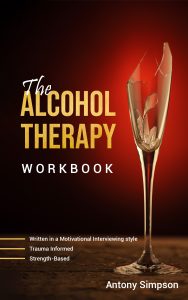
I’ve been thinking a lot about recovery from an addiction to alcohol or other substances. I’m a Specialist Addictions Nurse and author of The Alcohol Therapy Workbook.

For someone with an addiction professionals often ask them about their goals in relation to recovery. It’s an important question: What are your goals in relation to your drinking and/or substance use?

Afterall, everybody’s definition of addiction recovery is as unique as they are. Asking clients this question and developing a care plan that works towards these goals is at the heart of every treatment system.

But what I’ve been pondering lately is what about the professional’s goals? Are we open and upfront about our goals for the client with the client and their relatives?

We know that professional’s goals maybe influenced by many things including: the ethos of the organisation they work for, their individual values, their feelings about what would be in the best interests of the client, etc.

It got me thinking about my recovery goals for the clients that I work with. I have two goals when working with clients: To make them healthy and happy. These goals are no mean feat.

On first impression these goals don’t seem SMART. But when you explore what both health and happiness mean to the client and how they would like to live their life, they do break down into measurable SMART goals.

If you’ve got an addiction to alcohol or other substances, contact your GP or local community Drug and Alcohol Treatment Service for support.

My Best Wishes,

Antony

Support

I recognise that people visiting this page/post might want to know where they can get support.
If you require support around your mental health, addiction or physical health, see this Support page here.
More Content From Antony

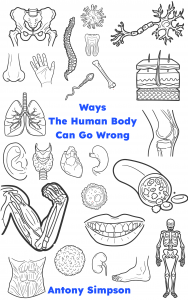
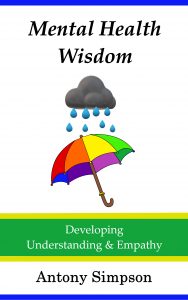
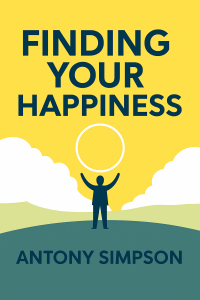
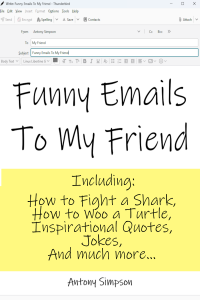
Here are the books that Antony has published, click any cover to learn more:

Share on Social Media:
Happiness & Joy, Health, Thinking, , , , , , ,

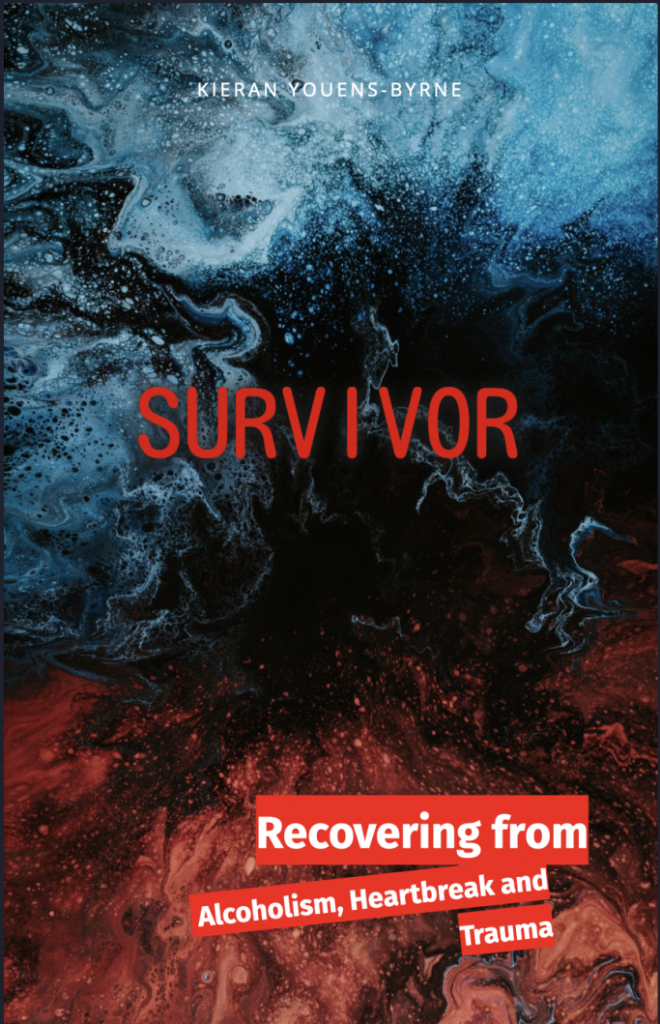
Book Review: Survivor – Recovering from Alcoholism, Heartbreak and Trauma by Kieran Youens-Byrne

Reading Time: 2 minutes

Survivor: Recovering from Alcoholism, Heartbreak and Trauma is an exceptional and heart touching memoir by Kieran Youens-Bryne.

In Survivor, Kieran shares his journey through addiction to alcohol, his heartbreak at ending his marriage to a narcissist and his emotional traumas from his earlier years.

It is a wonderfully inspiring read and includes literature in its various forms including poems, essays, quotes and even a playlist. The title of his book sums him up completely: Kieran is a survivor.

Kieran covers every aspect of where his addiction to alcohol took him, from his very first taste of an alcoholic drink, through the dark depths of active addiction and withdrawal and out the other end and into active recovery. Along the way he shared what worked for him, what didn’t and all the things he learned along the way.

Survivor is an brilliantly honest account of where addiction/dependency, a narcissistic partner and past traumas can lead to a person. But it is uplifting at the same time.

The book is written in an easy to read and engaging style. It demonstrates Kieran’s unique writers voice and is a piece of creative work that he should be very proud of.

I am pleased to report that Kieran’ story also has a satisfying happy ending. Kieran gets sober, at the time of writing this review he has been sober for more than a year. In the year sober, Kieran has completely transformed his life.

Kieran has rebuilt his confidence and self-esteem destroyed by his narcissistic ex-partner. Kieran has rediscovered his formally oppressed identity and learned to love himself once again. Kieran has faced past traumas and began working on healing and letting go of these traumas.

Kieran has gone on to write, edit and publish a further book titled Recovered, that I can’t wait to read. He is healthy and happy. I can’t wait to see what this amazing man does next.

Review soon,

Antony

Support

I recognise that people visiting this page/post might want to know where they can get support.
If you require support around your mental health, addiction or physical health, see this Support page here.
mental-health-wisdom-banner
Share on Social Media:
Amazon, Books & Authors, Reviews, , , , , , , , , , , , , , , , , , , , ,

The People that are Ignored or Forgotten – Homelessness in the UK

Reading Time: 3 minutes

Whenever the temperature really drops, like it has today, I think of people that are homeless. No scratch that, I think of people who I see as homeless – those that sleep on the streets.

I usually donate to my local homelessness project The Brick and hope that those sleeping on the street keep themselves warm enough to survive the bitter and bleak night.

If I’m totally honest: I find it utterly shocking that the UK, as one of the richest countries in the world, has homelessness and rough/street sleeping. At first glance homelessness could be easily resolved by ensuring suitable accommodation for everyone.

But the truth is that homelessness is a complex issue. Why? Because people are complex. There are also a range of complex issues that lead to people becoming and remaining homelessness.

The causes of homelessness or contributing factors include:

  • Poverty, being unemployed, being underemployed or losing source of income.
  • Unmanageable debt.
  • Addiction to alcohol, drugs or gambling.
  • Mental illness – including depression, anxiety, bipolar, post traumatic stress disorder (PTSD) and personality disorder.
  • Domestic Abuse – including violence.
  • Breakdown of relationships – both romantic and with family, friends or others.
  • Chronic physical illnesses or diseases.
  • Physical, emotional, sexual, financial abuse or neglect.
  • Having a family history of homelessness (according to Shelter).
  • Transformation or regeneration of areas – leading to unaffordable house prices, mortgages or rents.
  • Criminal and/or antisocial behaviour including being in prison.
  • Being in the care of Social Care or being in the Armed Forces.
  • Changes to benefits and social security administration and/or payments.
  • Poor social support networks or isolation.
  • Death of carers for dependents.
  • Having no right to work or claim benefits/social security.
  • A combination of the above.

There are two different types of homelessness: 1. People that are sleeping rough on the streets, park benches or doorways. 2. People that are living in temporary accommodation. People in temporary accommodation maybe housed by their local authority in a bed and breakfast or cheap hotel, or maybe sofa surfing staying with relatives or friends.

We don’t have a handle on homelessness in the UK. We don’t have accurate figures of people that are sleeping on the street. Local Authorities are once a year required to go out and survey the population of people who are sleeping rough in their communities.

mental-health-wisdom-banner

However in 2010 the Government changed the rules for local authorities (see Evaluating the Extend of Rough Sleeping by the Department for Communities and Local Government). These changes have impacted the annual reporting of homelessness, significantly reducing the numbers of people counted as rough sleeping or people that are sleeping in the street.

It is too easy to ignore or forget about people that are homeless. I’ve ignored people sat on the street when I’ve walked through the High Street of various town centres. The cold weather triggers me to think about people who are sleeping on the streets. But most of the time, if I don’t go into town centres, I forget about people who are homeless.

Here are some ways, that wont cost you a penny, to prevent people that are homeless from being ignored or forgotten:

  • Educate yourself and others around homelessness.
  • Use your skills, talents or hobbies to promote awareness of homelessness. A good example is this blog post, I’ve written it to raise awareness.
  • Email your local politician and ask them to campaign for people that are homeless and raise the issue in parliament. Politicians have the power to make positive changes to reduce and prevent homelessness.
  • Donate old items to charity shops that specifically support homelessness projects.
  • Volunteer your time in homeless projects.

I once heard someone say: You are only ever two paydays away from being homeless. I can’t remember who told me this, or the find the first person to say this on the internet. But I believe it to be true.

Like I believe that anyone could end up becoming homeless, it would just require the right causes or circumstances to become present in your life.

So take action for people that are homeless, because one day it could happen to you. Or to someone that you love. You wouldn’t want yourself or someone that you love to be ignored or forgotten.

Take care,

Antony

Share on Social Media:
Life, Thinking, , , , , , , , , , , , , , , , , , , , , , , , , , , , , , , , , , , , , , , , , , , ,
Scroll to Top
×