Fatigue is severe physical, mental & emotional exhaustion. Fatigue is unfortunately something people with Vasculitis, which includes me, experiences. Fatigue can be present whether or not a person’s vasculitis is in remission or an active flare up.
Vasculitis is also a progressive disease, meaning that meaning that it gets worse as time progressive, although progression can be slowed down with medical treatments.
Recently, I’ve been off work for 3 weeks due to sickness, caused by a Vasculitis flare up and the increased fatigue that it has caused. There have been days that I have slept for 18 hours. It has made me recognise how limited my energy, motivation and time is.
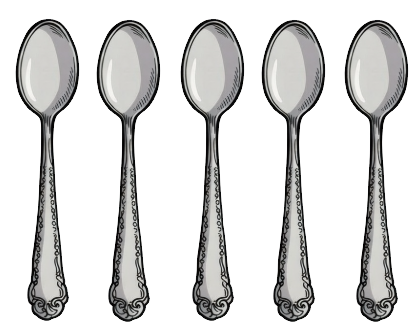
Your energy and motivation are limited resources. A good metaphor for explaining this concept is The ‘Spoons’ Theory by Christine Miserandino. Each spoon below is one unit of your daily energy.
Your energy and motivation are limited resources. A good metaphor for explaining this concept is The ‘Spoons’ Theory by Christine Miserandino. Each spoon below is one unit of your daily energy.
Each activity that you complete in a day costs you one or more spoons, depending on the effort, energy and motivation it requires. To explain this metaphor, let’s imagine that every activity takes one spoon. You wake up at the start of your day with 12 spoons. Here’s how you use your spoons:
You wake up.
You wash your face.
You make breakfast.
You eat your breakfast.
You get dressed.
You brush your teeth.
At this point you have already used half of your spoons and you’ve not even made it through the morning yet.
You get ready for work.
You travel to work.
You work.
You travel home.
You make tea.
You have a bath.
Now you have run out of spoons. You have two options: You can go to bed and rest, which will give you more spoons. Or you can decide to borrow spoons from tomorrow.
Due to the demands in life, you may opt to borrow spoons from tomorrow. But then you risk getting trapped in a cycle of constantly borrowing spoons from tomorrow.
As the days pass and you borrow more and more spoons, you’ll reach a point where there aren’t any left to borrow from tomorrow. You’ll be exhausted and burnt out.
The Spoon Theory has been adopted by people who are neurodiverse and people with chronic illnesses. But it can actually be applied to all. You. Me. Everyone we know.
I have had to accept my number of spoons is significantly less than other people. I went back to work this week, doing a shorter work week (4 days, rather than 5 days) and by Friday I felt exhausted. Working this number of hours, with the energy that it takes is unsustainable for me in the long term.
I have worked since being 15 years old. I was brought up that it is not just good for me to work, but also is how I contribute to others in society. However, there are other ways to contribute.
So right now, I’m thinking about what my plans for my future are and dealing with the emotions associated with the fact that working full time is completely unsustainable for me.
Blog soon,
Antony
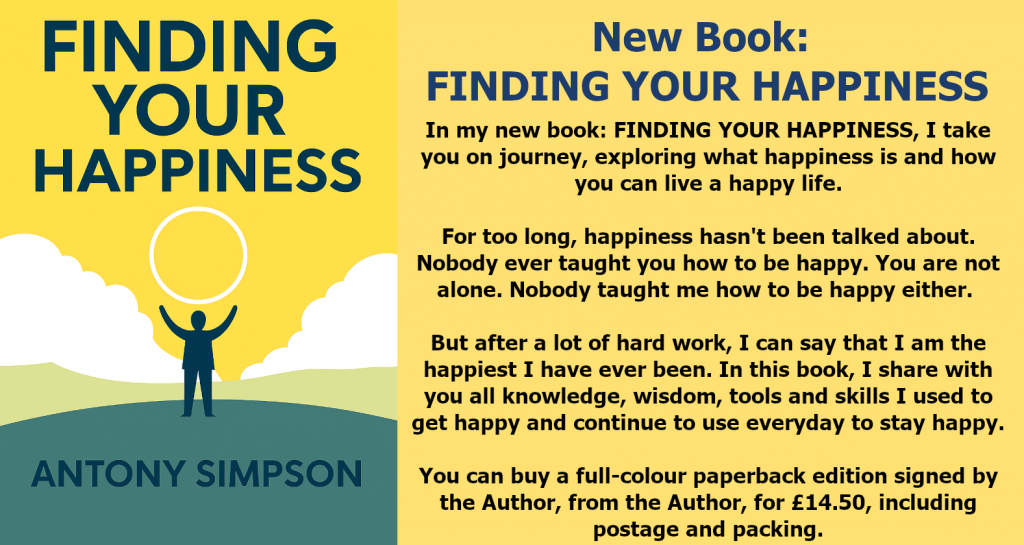
Click the Image to be taken to Square to purchase the book.
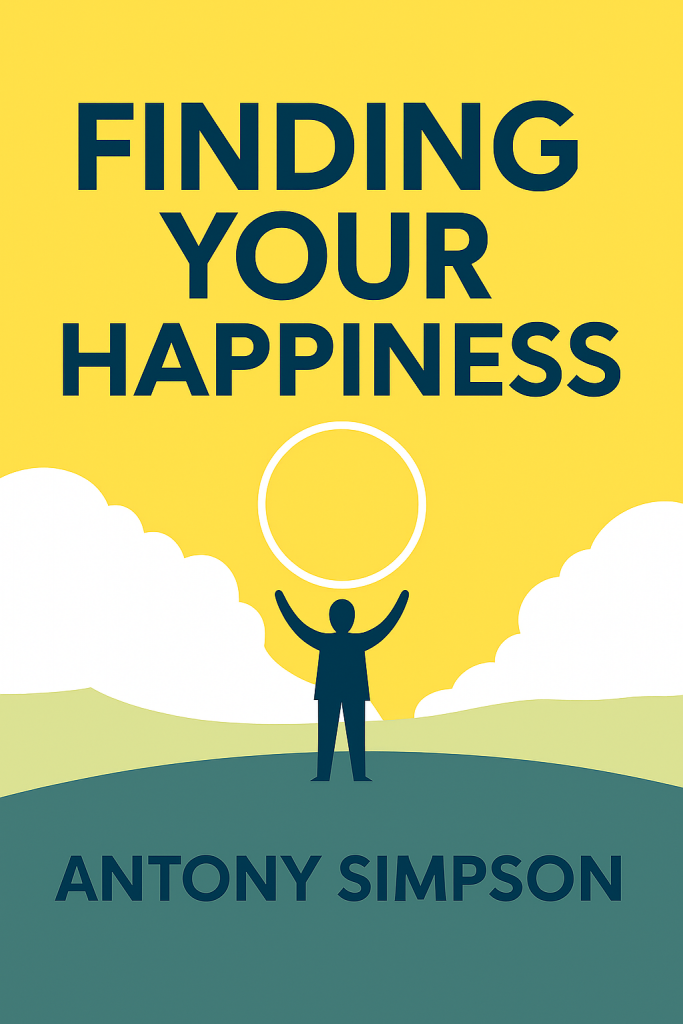
Last week, I had yet another positive review of my latest book FINDING YOUR HAPPINESS. Latest Review of my book. I am exceptionally pleased and very thankful for all the glowing reviews so far.
Here is a video of the review by Ruth from facebook:
In case you’d prefer to read Ruth’s review, here it is:
I read Finding Your Happiness and found it to be a uplifting and thought-provoking self-help book that encourages readers to look inward and take practical steps towards living a happier, more meaningful life.
Written in a clear and relatable style, the book combines research, personal insights and everyday examples to show that happiness is something we actively seek rather than simply hope to find.
An inspiring read for anyone looking to improve their overall wellbeing.
Finding Your Happiness is available to buy on Amazon (UK).
Blog soon,
Antony
Click the Image to be taken to Square to purchase the book.
FINDING YOUR HAPPINESS is your practical, uplifting guide to building a life that feels good from the inside out. This book gives you the knowledge, skills and wisdom to live a happier and more fulfilling life.
Funny Emails To My Friend is a collection of 52 emails sent to a friend who enlisted in the Royal Navy. These emails where intended to maintain our friendship by being entertaining and humorous.
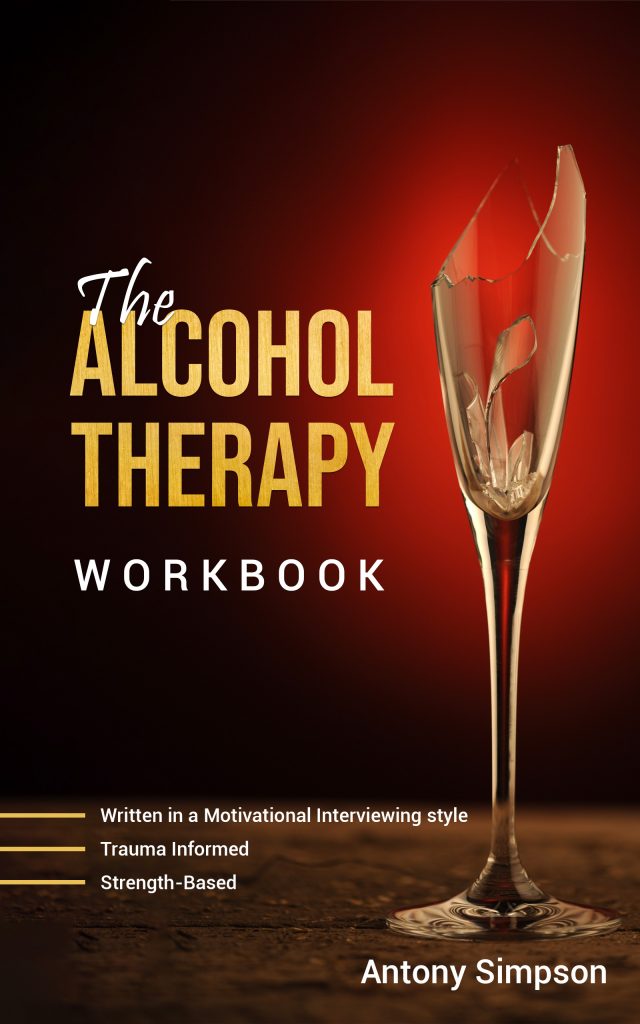
The Alcohol Therapy Workbook is a workbook that has been designed to support someone who is currently or have previously struggled with their alcohol use.
The Z-VIRUS is mutating, now affecting plants and animals. A group of people, many with supernatural powers, go on a journey in search of a cure. Before their powers destroy them.
A zombie apocalypse story, where some survivors have developed supernatural powers like invisibility, super strength and the ability to move objects with their mind.
I have fond memories of sitting on my grandma’s lap, her telling me stories about Freddie the Frog. She would do the different voices of the characters and even sound effects. I remember my grandma bouncing me up and down on her knees often, making the noise of an ambulance.
As I grew, so did my experience of stories. I was shown or told many different stories, in many different ways, about many different things, by many different people. Some stories would be fiction, whereas others would be non-fiction.
As an adult, I’ve gone to to present some of my own stories or re-tell stories I know to others. I’ve done this through my books, blog posts, articles and short stories.
Yet, I’ve never really considered, explored or examined stories as a concept. Which is why I’ve written this post.
Stories can be shown, told or presented to others in a variety of different ways including:
Oral/verbal telling – either live or pre-recorded. This was the first way of sharing stories and came when humans first developed language, well before the written word.
Through works of art – paintings, tapestries, sculptures, etc.
Written words – Both in print and electronic. This can be books, pamphlets, ebooks, websites, emails, messages, etc.
Images – photography or other still images.
GIFs – Short animated files that have a repeating movement, sound or both.
Songs/music/sound. This could include songs with words, music (with or without words) and sounds or sound effects.
Body movements/gestures/language. Such as dance routines or playing charades.
Video – TV, films, etc.
Rituals, which may involve the making and consumption of food.
Plays/other performances – where the story might be scripted or improvised.
3D cinema experiences.
Some theme park rides.
Through sense of smell.
Computer games – many have stories that the player experiences as they play the different levels/missions within the game.
Stories can have great power, sometimes being transformational to those that experience them. But the impact of stories varies greatly depending on a wide range of factors. This makes it practically impossible for storytellers to predict who, how or even if their story will have any impact on others.
Let me give you a few examples of stories and how they have impacted me to demonstrate what I mean:
Made me admire Ida & Louise Cook greatly. Made me feel better about the world during World War 2. That there were some good people out there and that the history wasn’t just genocide/death.
Made me feel deeply sad for Matthew Shepard, his mother and his family. Made me imagine what his torture must have been like. Reminded me, that as a gay man, I have to be hypervigilant for danger. The world is not always a safe place for gay people. Told Matthew’s story on my blog, at a time when America seems to be going backwards.
Gave me hope that there are some really smart people out there who are motivated by the greater good/good for humanity rather than money and greed. This story gives me hope that diseases that are currently un-curable, might one day be cured.
Technically anyone can present stories to others. Providing that the others want to experience the story and are able to access it in the way that it is being presented.
However, we do tend to prefer stories from people and organisations that we feel we can trust.
When a storyteller wants to share a story with you, useful questions to ask yourself are:
What is the storytellers agenda?
Are they a biased?
How much do I trust them?
What are their credentials? (i.e. qualifications and experience related to the story).
If the story is non-fiction, will they be giving you the correct facts/information?
What is my past experience with this storyteller?
What is your gut feeling telling you about the storyteller and the story they are presenting?
There are who industries set up around storytelling, think for example: any company providing the news, any company that does public relations, marketing or advertising.
But some more interesting storytelling jobs include: TV/Film Director, Comedian, Writer/Author and Actor/Actress.
Finding Your Happiness is my story of how I discovered the knowledge, skills and practices to be happier. How I became the happiest that I have ever been.
I published this book to share the knowledge, skills and practices, because I believe that everybody deserves to be happy.
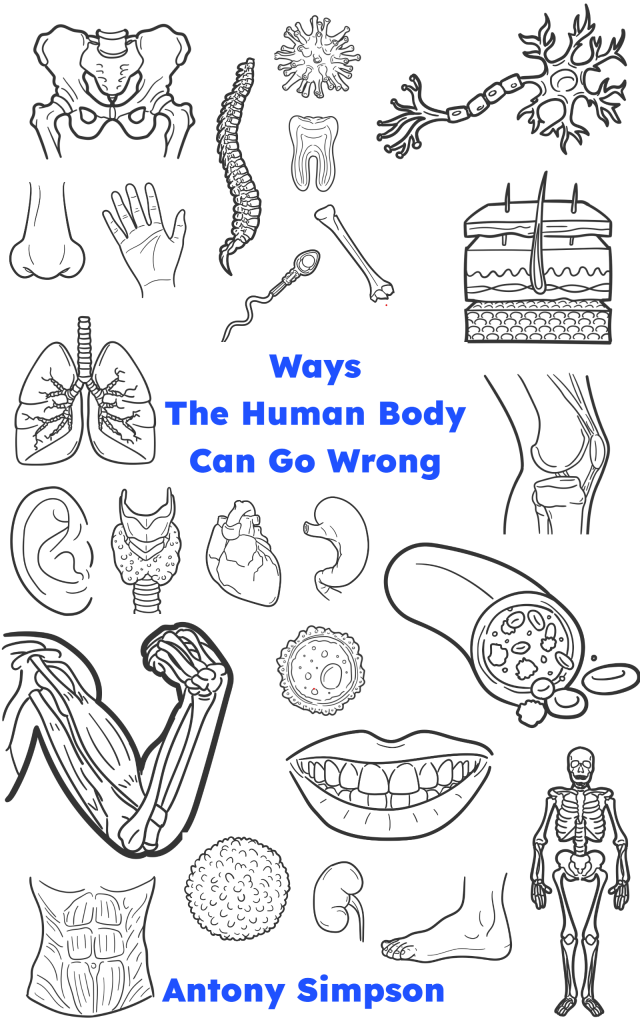
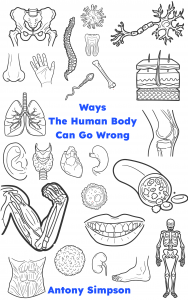
As an experienced Registered Nurse, I am aware of the many Ways The Human Body Can Go Wrong. So I’ve written this book to share stories with Doctors, medical students, Nurses and Student Nurses about how the human body xan go wrong and what treatments are available.
As a gay man, I wanted to share a list of Influential UK Gay Men, which I did in this FREE article, because have role models with influence really counts.