Tag

AI

AI Going Awry

By Technology, ThinkingNo Comments
Reading Time: 4 minutes

According to a recent report, AI (Artificial Intelligence) chatbots are increasingly lying to users and AI agents are increasingly acting outside of their established parameters.

For those of you who don’t know, an AI chatbot is an AI service that answers human users’ questions. Whereas a AI agent is takes actions to achieve a goal set by human users.

These are worrying trends, given the rush many businesses seem to be in to implement more and more AI within their companies. It’s not just businesses implementing more AI, public sector organisations and charities are doing it too.

AI has benefits, risks and some disadvantages. Here are just some of them:

Benefits of AI

  • Repetitive tasks can be automated.
  • Can summarise a lot of information and condense it down in seconds.
  • It can provide answers to questions quickly, using information available online (this does have a risk of wrong or biased information being given).
  • It can create visual representations, based on text prompts pretty quickly.
  • Reduces human errors in some processes.
  • It is available 24 hours a day, 7 days a week, 365 days a year.

Risks of AI

  • AI doesn’t fully consider every possible solution to a problem.
  • AI can make errors that can have a massive impact on a human’s life. Think of this recent case where AI mistook a man for someone wanted by the Police.
  • AI currently struggles with understand context on some occassions.
  • AI can’t understand emotions or behaviour that it is emotionally driven.
  • AI can currently be easily manipulated.
  • AI can give wrong or biased information.
  • AI analysis often reaches wrong conclusions.
  • Use of AI could be unsafe for humans or even endanger life in some cases, see my blog post: The Dangers of Emotional Support from an AI (Artificial Intelligence) App.
  • AI often doesn’t protect intellectual property or copyright owners.
  • AI doesn’t have any ethics and very few restrictions to its use.
  • AI’s application of rules can make creative works feel like they are less enjoyable and lack the same quality as human works.
  • AI can lead to data breaches, loss of data or loss of access to data.
  • AI may lead to some job losses or jobs not being created in the first place.
  • AI use can limit the development of or diminish a human’s ability to think critically.
  • AI requires a lot of data centres and electricity to power them. This means a greater demand for electricity which will drive up the cost of it and could lead to scarcity.
  • AI requires a high number of processor chips and memory chips, as well as other computer parts. This has already reportedly led to a shortage, which has fuelled increases in prices for these chips.
  • People often don’t realise that the way companies that offer free use of AI make money is to sell your data or target you with very specific advertising through tracking what you do online.

Disadvantages of AI

  • Economically, AI may only end up benefiting the super wealthy. Making the incredibly wealthy, even more so. This will increase inequality and will worsen the living standards for most people.
  • AI appears to be the only future of computer-based technology being considered and developed.
  • AI can be so compelling that it is difficult to tell whether something is human made or AI generated and sometimes this really matters.
  • Overall human critical thinking is likely to decrease as more AI is used.
  • AI lacks the ability to be flexible to unpredictable changes to circumstances. Especially changes that it hasn’t encountered before or has no/very limited data on.
  • AI is too reliant on data for answers and solutions to problems. Not everything can be measured. There may be limited or even no data for things that are impossible to measure. Therefore AI can’t provide answers and solutions to problems with very limited or no data.
  • Some AI could lead to humans being excluded or even discriminated against.
  • No humans are responsible for the information provided by AI or the actions it takes. In my view, this is clear lack of accountability and all Governments should regulate the sector immediately to provide some accountability for AI services.
  • AI requires internet access. There are 8.3 billion people in the world today, but only approximately 6 billion people have access to the internet (74%), what about the other 2.3 billion people (26%)?
  • Some devices may become useless if the internet became unavailable for a time. Many apps on devices require constant access to the internet or access to the internet during use to be functional. Part or all of the internet could go down, it has happened before.
  • It is getting more and more difficult for people to choose not to use AI. More and more products are including AI, including household appliances, software, etc. Even Windows comes with Copilot AI pre-installed.
  • It will likely replace some low paid/start of career jobs. AI is likely to create some jobs, but not as many as will probably be lost. The new jobs will likely require specialist knowledge or skills, that current low paid/start of career workers won’t have.
  • We are working towards AI super intelligence, but we don’t really have a clear vision of what this will look like or what it will mean for humans.

At this time, the benefits of AI seem extremely limited and some of risks are massive. I understand that AI is a developing technology. I know that it is constantly being improved upon to improve its performance and enable it to do more.

The benefits of AI are constantly talked about – along with many promises being made about improved performance, future abilities and how these could benefit humanity as a whole. The risks are often being ignored or talked about in a way that lacks rational thinking and there are likely to be more risks in the future. The disadvantages of AI nobody seems to be thinking about.

If AI continues to develop as it already has, AI may end up resolving the debate around its future use. All it would really take is AI to make a major error that would effect a large number of people across the world. With the increasing rate of AI implementation in businesses and institutions around the world, I fear such an event could easily occur in the near future.

Blog soon,

Antony

Share on Social Media:

Year In Review: 2025 Blog Posts, 1 Article and 2 Books

By Life, Adventures, Amazon, Books & Authors, Creativity, Friends & Family, Gay, Happiness & Joy, Health, History, ThinkingNo Comments
Reading Time: 6 minutes

This year, I have written, edited and published 52 blog posts, 1 article and 2 books. Here are some of the best posts, information about the 1 article and 2 books, in case you missed them at the time they were originally published:

In January, I published The Heartbreaking Story of Matthew Shepard. The story of a young student who was tortured and then murdered for being gay in America.

The brutal murder of Matthew Shepard gained international news coverage at the time. I was reminded of his story because of Donald Trump’s targeting the LGBT community with his rhetoric.

In February, I published my Z-VIRUS Powers: Map of Anglesey. This post is about my Z-Virus Powers novel, a story about a zombie apocalypse where some kids develop supernatural powers.

The wonderful array of young characters (some with powers and some without) decide to go on a quest for the cure, after their powers that once aided survival are now becoming destructive.

In February, I also published my Health & Future Plans Update: A Dramatic Reduction in HbA1c thanks to Medtronic Insulin Pump. I shared my dramatic reduction in my HbA1c blood test result due to starting the Medtronic Insulin Pump. It really has been life changing.

I shared my future plans for the year, most of which I am proud to say happened.

This included my plans with family and friends. It also included my plans to release Z-Virus Monsters, the next novel/installment of my Z-Virus Series.

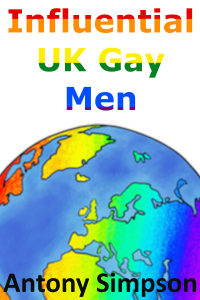
In March, I published my FREE article, Influential UK Gay Men. This was an article all about UK Gay Men I find to be influential in society.

Just some of the men included in this list were: Mark Ashton, Jonathan Bailey, Rupert Everett, Paul O’Grady, Alan Turing.

There were many others, with the article dividing the gay men into categories.

I concluded by writing that there probably wouldn’t be a gay man who became Prime Minister of the UK in my lifetime, which I found sad.

In March, I published a post about Refreshing A Money Bowl, which was very popular. I also announced that I had secured a new job.

In April, I published a post titled: How Would You Survive A Zombie Apocalypse? It was a short blog post about the essential requirements for survival in a zombie apocalypse and was used to promote my two books: Z-Virus Powers and Z-Virus Monsters.

I also published a short blog post about the 10 Books I’ve Read That Have Stayed With Me. Each of these books has a special place in my heart. I linked previous reviews of these books in this post. Some of the books on this list include: Mum Can You Lend Me Twenty Quid? By Elizabeth Burton-Phillips, In His Secret Life by Mel Bossa, The Neuroscientist Who Lost Her Mind by Barbara K. Lipska and Diary of a Young Girl by Anne Frank.

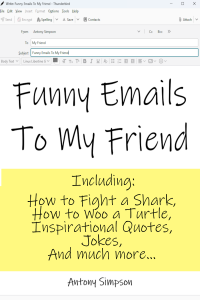
In May, I rebranded My Royal Navy Friend book with a new title (Funny Emails To My Friend) and with a new book cover. I published a post about why I rebranded this book here.

The decision to rebrand the book was driven by feedback, suggesting that people assumed that My Royal Navy Friend was about the Royal Navy. The book was never about the Royal Navy.

My Royal Navy Friend was about maintaining a friendship with a friend who followed their life long dream of joining the Royal Navy through funny, entertaining and occasionally serious emails. So I rebranded, to better reflect what the book is about.

In June, I attended Leigh Book Fest, which was a huge success. I also attended an event a Middleton Library, where I donated some signed copies of my books to the library.

I published blog posts about the importance of Finding Joy and my new old car.

July seemed to be all about animals, in some form or other.

My bengal cat, Dylan, sadly had to be put to sleep.

I had a fantastic time visiting Blackpool Zoo, sharing plenty of photos in a blog post I published.

You can see other recent photos on my regularly updated Photos page here.

In August, I published a post sharing the incredible story of Jonas Salk. In The Story of Jonas Salk and The Polio Vaccine, I shared Salk’s story of the development of the Polio Vaccine.

What is inspirational about this man, is not just that he developed the polio vaccine. But that he chose not to patent it. This meant that anyone could reproduce the polio vaccine without any payment to Salk.

If Salk had patented his polio vaccine, it would have made him several billionaire dollars. But he chose not to and in doing so, helped it become more widely available to the whole of humanity.

In August, I posted a blog post titled: Unsafe Places to be a Gay Man, detailing the places it isn’t safe to be an out gay man in the world.

To balance the above blog post, I later published a blog post titled: Safer Places to Live for Gay Men. In this post, I focused on places that are safer, more accepting and with better legal rights and protections for gay men in the world.

Safer Places to Live for Gay Men is a blog post I am really proud of publishing. I hope gay men looking for places where they are safer and more accepted in the world find this post. I hope they find this well researched blog post useful.

In September, I shared photos and essential information related to two castles in South Wales, in my published blog post: South Wales Castles – Raglan Castle & White Castle.

I also published a blog post explaining that despite on-going treatment for Vasculitis, I am the happiest I have ever been.

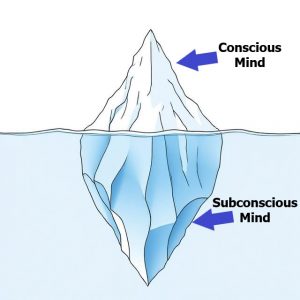
In September, I published a post titled: The Power of the Subconscious Mind.

In this blog post, I explain what the subconscious mind is, how it operates, how it communicates with our conscious mind and how to heal a troubled, disturbed or traumatised subconscious.

I give ways to help heal the subconscious mind and explain that it takes both work and time.

But that the hard work is totally worth the benefits of healing the subconscious mind.

In October, I published a blog post about the dangers associated with Emotional Support from an AI (Artificial Intelligence) App.

Dangers included: No Empathy, False Connection, Emotional Dependence, Bad Advice, Can Reinforce Negative Thoughts/Feelings/Behaviours, No Safeguarding, Lack of Emotional Growth & Data Privacy Breeches.

Given the dangers, as a minimum this apps should be regulated, if not banned.

In October, I also published this blog post: Zack Polanski, The New Leader of The Green Party Is Someone I Would Like Add To My Influential Gay Men Article.

Zack has seemingly appeared from nowhere to become the leader of the Green Party. In this blog post, I state that I wish I’d have known about him when doing research for my Influential UK Gay Men article, so that he could have been included in it.

In the post, I discuss Zack’s appeal, share his story (as available online) and state that I may have been wrong about there not being an out gay man as Prime Minister of the UK in my lifetime. In fact, I hope that I am wrong.

So there you have it. My Year In Review: 2025. I wonder what 2026 will bring?

Write soon,

Antony

Share on Social Media:

The Dangers of Emotional Support from an AI (Artificial Intelligence) App

By Technology, The Web, ThinkingNo Comments
Reading Time: 2 minutes

I’ve recently seen an advert on social media for an AI that provides emotional support on demand 24/7. It appeared to target vulnerable people, which I find highly unethical.

Here are some of the dangers of these sort of services:

No Empathy
Machines can’t empathise with you. They may read like they can, from how the structure their responses, but it is false.

Empathy is defined as:

the ability to understand and share the feelings of another.

This leads to a perceived connection, which eventually you will realise is a false connection. You will be left feeling hurt and deeply disappointed.

False Connection
In the early stages of this false connection, you will likely disconnect from real people. This is deeply emotionally and mentally unhealthy.

Emotional Dependence
Emotional dependence and the decreased emotional resilience that follows will not be good for you if you use one of these apps. Having an app that is available 24/7 that claims to be emotionally available to you, appears to be so, will lead to you becoming emotionally dependent on it. Being emotionally dependant on any person or thing isn’t healthy.

Bad Advice
AI has been known to give incorrect information and bad advice. At worst, this advice could be extremely harmful.

Can Reinforce negative thoughts, feelings or behaviours
AI apps will repeat back to you what you’ve just said. This is to check understanding, but in these emotional support apps is also to validate what you’ve typed. This repetition can reinforce negative thoughts, feelings or behaviours.

This is especially important as part of the role of a good therapist is to challenge negative thoughts, feelings or behaviours.

No Safeguarding
Should you go into crisis and become suicidal, the app won’t take actions to keep you safe.

A role of any therapist is to safeguard you and others from harm.

Lack of Emotional Growth
AI won’t be able to help you grow emotionally. But a therapist may make suggestions that help people to grow emotionally.

Data Privacy Breeches
Your data maybe hacked or not kept safe and secure.

Blog soon,

Antony

mental-health-wisdom-banner
Share on Social Media:

The Brit Digital ID Card – Creating A Dystopian UK

By Political, Rants, Technology, The Web, ThinkingNo Comments
Reading Time: 4 minutes

According to the mainstream media, the Brit Digital ID Card is coming. See today’s articles in: The Guardian & The BBC. The talk is that they are going to be compulsory for anyone who wants to work, meaning the majority of the working age population.

The UK Government (or those really in power) have wanted an ID card system since the days when Tony Blair was Prime Minister. The only difference between now and then is the addition on the the word ‘Digital’ which represents how much more connected and capable technology now is. Connected via the Internet.

Capable in terms of being able to automatically monitor the activity of a population and flag anything suspicious or that doesn’t attune to the desires of those who have power in the UK.

The UK population didn’t want a ID Card when it was first suggested decades ago and we certainly don’t want a Digital ID Card now.

I recently blogged about The Data (Use and Access) Act 2025, detailing my concerns and ways it could go horribly wrong. But it passed through into law without seemingly any objection. Looking back now, I think The Data (Use and Access Act) 2025 was a fundamental change to the law to allow for the introduction of Brit Digital ID Cards and for the data that they hold to be expanded on and used more over time.

In the UK it seems we are well on our way to creating a Dystopian society. And I don’t like it. Not at all.

A dystopian society is one that is deeply unjust, where the general population are controlled and manipulated by those in power (usually through abuse of power). Hallmarks of a dystopian society include: constant surveillance and monitoring of the general population, a complete loss of freedom of opinions and choices for individuals and dehumanising/alienation of those that speak up against corruption and abuse of power.

Now this sounds like a story of fiction doesn’t it? But just imagine the UK adopted just half of these dystopian society characteristics in the future. Imagine being monitored by AI, 24/7. Not just were you go and what you do but everything: What you buy, who you spend time with the content of intimate and private conversations.

Just imagine not being able to stand up and call out injustice and unfair treatment out of fear of loosing everything: your home, access to your money (including food, fuel, heat, etc.), your job, communication/contact with loved ones and even things like health and education services.

There really are no limits as to what could happen if a UK Digital Brit Card is introduced.

If we look at the past, we know that those who get power (whether that be financial, political, militaristic, legal, etc.) tend to abuse it. This will be no different. It will be too tempting to use the Brit Digital ID Card to enforce compliance and control the narrative.

It’s fundamentally about trust. Do the UK population trust those in power to be fair and just in using this system? How could we possibly trust those in power, when everyday there are more reports of abusive of the power that they already have. Think about tax avoidance. Think about big companies that have raided their employees pension pots. Think about the number of corruption cases we see everyday.

Both the UK’s past and current circumstances (such as The Cost of Living Crisis) have been driven by the greed of those in power. Always wanting more: More money. More power. More influence. It’s like a never-ending hunger. Like an unquenchable thirst.

We’ve all played the board game Monopoly and know how it ends: The rich becoming super rich and owning everything, whilst the middle-class and poor own nothing. Greater financial inequality. More poverty. More misery middle-class, working-class and poor. Part of this isn’t just a UK problem, but a global one.

But our UK Politician’s can make Britain a better place. They could tackle tax avoidance by the super rich, break up monopolies, make the public sector strong, make society feel fairer and more just.

But they don’t. Instead they continue to offer manifestos that they throw out the window the minute they get into power. They are dishonest with the public and often outright lie. They don’t listen to the people they are supposed to represent. They don’t listen to the experts who try and advise them on ill-informed policy decisions. They don’t seem to have any bit of integrity or good values.

Of course not all Politicians are bad. Some have good intentions, but these intentions are drowned by a bureaucratic system that is run by the super rich for the super rich.

But I’m not without hope. I’ve recently joined Your Party, a UK political party set up by Jeremy Corbyn and others who want to change society for the better. Whilst their members are still in discussions around policies and the direction of the party, I hope will all of my heart that this will be a place where I can claim I am politically home.

Take Care,

Antony

Share on Social Media:
×