gay men

All About Stories: What, How, Why, Power, Where, Who, Jobs, My Stories & Useful Websites

Reading Time: 7 minutes

I was very young when I was introduced to stories.

My mum would read me stories out of books at bedtime. Books like The Magic Faraway Tree & The Wishing-Chair Again.

I have fond memories of sitting on my grandma’s lap, her telling me stories about Freddie the Frog. She would do the different voices of the characters and even sound effects. I remember my grandma bouncing me up and down on her knees often, making the noise of an ambulance.

As I grew, so did my experience of stories. I was shown or told many different stories, in many different ways, about many different things, by many different people. Some stories would be fiction, whereas others would be non-fiction.

As an adult, I’ve gone to to present some of my own stories or re-tell stories I know to others. I’ve done this through my books, blog posts, articles and short stories.

Yet, I’ve never really considered, explored or examined stories as a concept. Which is why I’ve written this post.

What Are Stories?

According to the Cambridge Dictionary, a story (singular of stories) is:
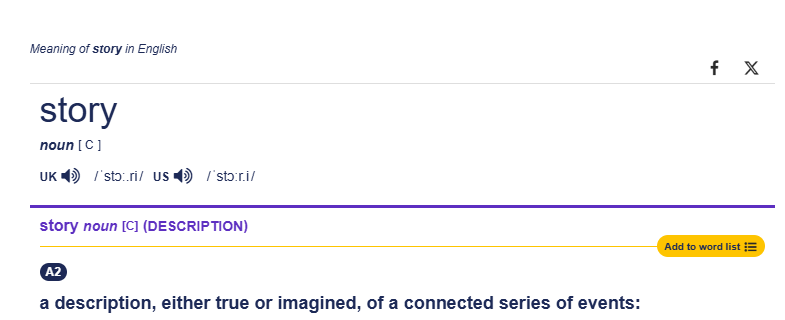
Story word definition from Cambridge Dictionary.

How Are Stories Presented?

Stories can be shown, told or presented to others in a variety of different ways including:

  • Oral/verbal telling – either live or pre-recorded. This was the first way of sharing stories and came when humans first developed language, well before the written word.
  • Through works of art – paintings, tapestries, sculptures, etc.
  • Written words – Both in print and electronic. This can be books, pamphlets, ebooks, websites, emails, messages, etc.
  • Images – photography or other still images.
  • GIFs – Short animated files that have a repeating movement, sound or both.
  • Songs/music/sound. This could include songs with words, music (with or without words) and sounds or sound effects.
  • Body movements/gestures/language. Such as dance routines or playing charades.
  • Video – TV, films, etc.
  • Rituals, which may involve the making and consumption of food.
  • Plays/other performances – where the story might be scripted or improvised.
  • 3D cinema experiences.
  • Some theme park rides.
  • Through sense of smell.
  • Computer games – many have stories that the player experiences as they play the different levels/missions within the game.

Why Stories?

Stories can have many purposes and many potential benefits including:

  • Knowledge – helps people to remember information in a meaningful way. This is required for them to share this information with others.
  • Can be used to teach others.
  • Helps to create connection between people.
  • Helps to create empathy between people.
  • Helps people to consider new ideas.
  • Helps people to experience new or different emotions.
  • Helps people to express their thoughts, ideas and emotions to others.
  • Entertains people.
  • Helps develop imagination/imaginative play and can stimulate creativity.
  • Develops problem solving skills.
  • Helps people remember historic events, both good and bad, and the lessons from these events.
  • Can help people to know their own story and share it with others.
  • A way of sharing beliefs, values and cultural practices.
  • Helps people to explore a range of concepts such as morals, values, beliefs, identify, etc.
  • Can be used to process and heal from traumatic experiences.
  • A way of safely sharing life experiences, without the other people having to directly experience the event(s) for themselves.
  • A way to test someone’s cognitive functioning.
  • Can improve vocabulary, concentration and listening.
  • Can be used to influence others.
  • Can be used to earn money for people to live on.
  • Can provide a world for people to escape to when they have a difficult reality. Other words for this could be distraction or disassociation.
  • Can help people feel less alone and isolated.
  • Can give people hope for their future.
  • Can help to reduce anxiety, stress and tension.
  • Can improve relationships within communities.
  • Can improve confidence and self-esteem.

The Power of Stories

Stories can have great power, sometimes being transformational to those that experience them. But the impact of stories varies greatly depending on a wide range of factors. This makes it practically impossible for storytellers to predict who, how or even if their story will have any impact on others.

Let me give you a few examples of stories and how they have impacted me to demonstrate what I mean:

Impact on Me

Made me admire Ruth Cocker Burks greatly. Made my share her story on my blog. Made me buy her book.

Made me admire Ida & Louise Cook greatly. Made me feel better about the world during World War 2. That there were some good people out there and that the history wasn’t just genocide/death.

Made me feel deeply sad for Matthew Shepard, his mother and his family. Made me imagine what his torture must have been like. Reminded me, that as a gay man, I have to be hypervigilant for danger. The world is not always a safe place for gay people. Told Matthew’s story on my blog, at a time when America seems to be going backwards.

Gave me hope that there are some really smart people out there who are motivated by the greater good/good for humanity rather than money and greed. This story gives me hope that diseases that are currently un-curable, might one day be cured.

Where Are Stories Shared?

As well as stories being presented in different ways, they can also be shared in different places, including:

  • Traditional media – newspapers, TV, radio.
  • Social media – all platforms.
  • On messaging apps or via telephone.
  • On other apps, such as ones for audiobooks.
  • Websites – including Amazon, YouTube, Netflix, etc.
  • At specific events, both work-related and social.
  • In any community settings where two or more people can gather – coffee shops, supermarkets, libraries, community centres, pubs, etc.
  • Within workplaces.
  • Cinemas.
  • At theatres, clubs and stadiums.
  • At gyms, sport/leisure centres.
  • On public transport.
  • In a car.
  • Practically any where and at any time, depending on how the story is being presented.

Who Can Present Stories?

Technically anyone can present stories to others. Providing that the others want to experience the story and are able to access it in the way that it is being presented.

However, we do tend to prefer stories from people and organisations that we feel we can trust.

When a storyteller wants to share a story with you, useful questions to ask yourself are:

  1. What is the storytellers agenda?
  2. Are they a biased?
  3. How much do I trust them?
  4. What are their credentials? (i.e. qualifications and experience related to the story).
  5. If the story is non-fiction, will they be giving you the correct facts/information?
  6. What is my past experience with this storyteller?
  7. What is your gut feeling telling you about the storyteller and the story they are presenting?

Storytelling Jobs

There are who industries set up around storytelling, think for example: any company providing the news, any company that does public relations, marketing or advertising.

But some more interesting storytelling jobs include: TV/Film Director, Comedian, Writer/Author and Actor/Actress.

Some of My Stories

Here are just a few of my stories:
Finding Your Happiness is my story of how I discovered the knowledge, skills and practices to be happier. How I became the happiest that I have ever been.

I published this book to share the knowledge, skills and practices, because I believe that everybody deserves to be happy.
As an experienced Registered Nurse, I am aware of the many Ways The Human Body Can Go Wrong. So I’ve written this book to share stories with Doctors, medical students, Nurses and Student Nurses about how the human body xan go wrong and what treatments are available.
As a gay man, I wanted to share a list of Influential UK Gay Men, which I did in this FREE article, because have role models with influence really counts.

Useful Websites

Write soon,

Antony

Share on Social Media:
Amazon, Books & Authors, Creativity, Friends & Family, Gay, Happiness & Joy, Inspiration, Life, Thinking, , , , , , , , , , , , , , , , , ,

Year In Review: 2025 Blog Posts, 1 Article and 2 Books

Reading Time: 6 minutes

This year, I have written, edited and published 52 blog posts, 1 article and 2 books. Here are some of the best posts, information about the 1 article and 2 books, in case you missed them at the time they were originally published:

In January, I published The Heartbreaking Story of Matthew Shepard. The story of a young student who was tortured and then murdered for being gay in America.

The brutal murder of Matthew Shepard gained international news coverage at the time. I was reminded of his story because of Donald Trump’s targeting the LGBT community with his rhetoric.

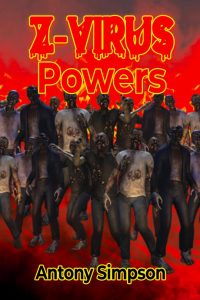
In February, I published my Z-VIRUS Powers: Map of Anglesey. This post is about my Z-Virus Powers novel, a story about a zombie apocalypse where some kids develop supernatural powers.

The wonderful array of young characters (some with powers and some without) decide to go on a quest for the cure, after their powers that once aided survival are now becoming destructive.

In February, I also published my Health & Future Plans Update: A Dramatic Reduction in HbA1c thanks to Medtronic Insulin Pump. I shared my dramatic reduction in my HbA1c blood test result due to starting the Medtronic Insulin Pump. It really has been life changing.

I shared my future plans for the year, most of which I am proud to say happened.

This included my plans with family and friends. It also included my plans to release Z-Virus Monsters, the next novel/installment of my Z-Virus Series.

In March, I published my FREE article, Influential UK Gay Men. This was an article all about UK Gay Men I find to be influential in society.

Just some of the men included in this list were: Mark Ashton, Jonathan Bailey, Rupert Everett, Paul O’Grady, Alan Turing.

There were many others, with the article dividing the gay men into categories.

I concluded by writing that there probably wouldn’t be a gay man who became Prime Minister of the UK in my lifetime, which I found sad.

In March, I published a post about Refreshing A Money Bowl, which was very popular. I also announced that I had secured a new job.

In April, I published a post titled: How Would You Survive A Zombie Apocalypse? It was a short blog post about the essential requirements for survival in a zombie apocalypse and was used to promote my two books: Z-Virus Powers and Z-Virus Monsters.

I also published a short blog post about the 10 Books I’ve Read That Have Stayed With Me. Each of these books has a special place in my heart. I linked previous reviews of these books in this post. Some of the books on this list include: Mum Can You Lend Me Twenty Quid? By Elizabeth Burton-Phillips, In His Secret Life by Mel Bossa, The Neuroscientist Who Lost Her Mind by Barbara K. Lipska and Diary of a Young Girl by Anne Frank.

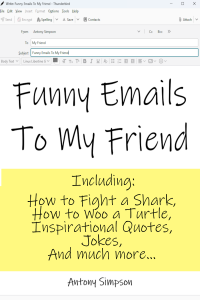
In May, I rebranded My Royal Navy Friend book with a new title (Funny Emails To My Friend) and with a new book cover. I published a post about why I rebranded this book here.

The decision to rebrand the book was driven by feedback, suggesting that people assumed that My Royal Navy Friend was about the Royal Navy. The book was never about the Royal Navy.

My Royal Navy Friend was about maintaining a friendship with a friend who followed their life long dream of joining the Royal Navy through funny, entertaining and occasionally serious emails. So I rebranded, to better reflect what the book is about.

In June, I attended Leigh Book Fest, which was a huge success. I also attended an event a Middleton Library, where I donated some signed copies of my books to the library.

I published blog posts about the importance of Finding Joy and my new old car.

July seemed to be all about animals, in some form or other.

My bengal cat, Dylan, sadly had to be put to sleep.

I had a fantastic time visiting Blackpool Zoo, sharing plenty of photos in a blog post I published.

You can see other recent photos on my regularly updated Photos page here.

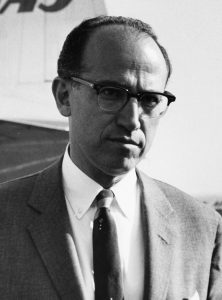
In August, I published a post sharing the incredible story of Jonas Salk. In The Story of Jonas Salk and The Polio Vaccine, I shared Salk’s story of the development of the Polio Vaccine.

What is inspirational about this man, is not just that he developed the polio vaccine. But that he chose not to patent it. This meant that anyone could reproduce the polio vaccine without any payment to Salk.

If Salk had patented his polio vaccine, it would have made him several billionaire dollars. But he chose not to and in doing so, helped it become more widely available to the whole of humanity.

In August, I posted a blog post titled: Unsafe Places to be a Gay Man, detailing the places it isn’t safe to be an out gay man in the world.

To balance the above blog post, I later published a blog post titled: Safer Places to Live for Gay Men. In this post, I focused on places that are safer, more accepting and with better legal rights and protections for gay men in the world.

Safer Places to Live for Gay Men is a blog post I am really proud of publishing. I hope gay men looking for places where they are safer and more accepted in the world find this post. I hope they find this well researched blog post useful.

In September, I shared photos and essential information related to two castles in South Wales, in my published blog post: South Wales Castles – Raglan Castle & White Castle.

I also published a blog post explaining that despite on-going treatment for Vasculitis, I am the happiest I have ever been.

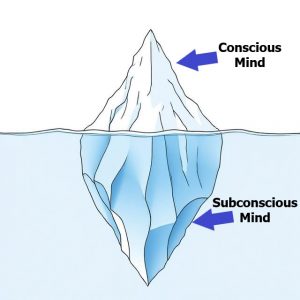
In September, I published a post titled: The Power of the Subconscious Mind.

In this blog post, I explain what the subconscious mind is, how it operates, how it communicates with our conscious mind and how to heal a troubled, disturbed or traumatised subconscious.

I give ways to help heal the subconscious mind and explain that it takes both work and time.

But that the hard work is totally worth the benefits of healing the subconscious mind.

In October, I published a blog post about the dangers associated with Emotional Support from an AI (Artificial Intelligence) App.

Dangers included: No Empathy, False Connection, Emotional Dependence, Bad Advice, Can Reinforce Negative Thoughts/Feelings/Behaviours, No Safeguarding, Lack of Emotional Growth & Data Privacy Breeches.

Given the dangers, as a minimum this apps should be regulated, if not banned.

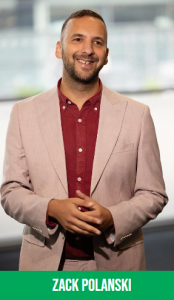
In October, I also published this blog post: Zack Polanski, The New Leader of The Green Party Is Someone I Would Like Add To My Influential Gay Men Article.

Zack has seemingly appeared from nowhere to become the leader of the Green Party. In this blog post, I state that I wish I’d have known about him when doing research for my Influential UK Gay Men article, so that he could have been included in it.

In the post, I discuss Zack’s appeal, share his story (as available online) and state that I may have been wrong about there not being an out gay man as Prime Minister of the UK in my lifetime. In fact, I hope that I am wrong.

So there you have it. My Year In Review: 2025. I wonder what 2026 will bring?

Write soon,

Antony

Share on Social Media:
Adventures, Amazon, Books & Authors, Creativity, Friends & Family, Gay, Happiness & Joy, Health, History, Life, Thinking, , , , , , , , , , , , , , , , , , , , , , , , , , , , , , , , , , , , , , , , , , , , ,

10 Influential & Inspirational UK Gay Men

Reading Time: 8 minutes

Here is a list of 10 influential & inspirational UK Gay Men from my free article, Influential UK Gay Men:

10. Peter Thatchell (1952-Present)

Peter Thatchell played in politics as a Member of Parliament (MP) for the Labour Party before setting up LGBT+ charity Outrage!


Thatchell has worked on various LGBT+ campaigns including those that have led to legislation that supports equality and fair treatment for all. Tatchell is an atheist and lover of outdoor activities.

Notably, Thatchell has attempted a citizen’s arrest on two occasions of President Robert Mugabe for his mistreatment of the Zimbabwean people.


Thatchell set up human rights organisation The Peter Thatchell Foundation. Thatchell has focused on human rights in recent years, believing these to be universal and that all humans are entitled to them across the world.


A famous Thatchell quote is:

“Don’t accept the world as it is, dream what the world could be and then make it happen.”

9. Jonathan Bailey (1988-Present)

Jonathan Bailey is a star of stage and screen, who is perhaps most famous for his portrayal of Anthony, 9th Viscount of Bridgerton and Fiyero in Wicked (the film with the musical of the same name.

In terms of speaking about his sexuality Bailey has said:

“If I can fill spaces that I didn’t have growing up then I feel like that’s a really brilliant thing.”
And:

“I hope queer kids will see my work and know that things will be okay.”


Bailey recalled learning that one of his fellow actors was told:

“There’s two things we don’t want to know: if you’re an alcoholic or if you’re gay.”

8. Julian Clary (1959-Present)

Julian Clary is a comedian, theatre performer, film actor, Presenter and Writer. Clary incorporates music into his comedy performances and is a proud gay man. Some people complain Clary is too much, but I think he’s just perfect and being himself.


Sadly for Clary, his partner Christopher died of AIDS in 1991. But after some time, he got a new partner Ian Mackley and they got married.

7. Mawann Rizwan (1992-Present)

Mawann Rizwan is an out gay man who is both British-Pakistani and Muslim. Rizwan would have demonstrated great bravery in coming out, with the risk of not only losing his family but also his community.


Luckily, his family have been accepting and he’s turned his story into a comedy series called Juice on the BBC. He’s even employed some of his family in the filming of it, giving it a true authenticity. Prior to this comedy he did a documentary titled: How Gay is Pakistan?


Rizwan is unconventional and quirky, yet exceptionally funny. Juice is well worth a watch. I foresee great things for Rizwan.

6. Alan Turing (1912-1954)

Alan Turing’s story is a sad one. These days his face resides on a £50 banknote and is celebrated as a hero. Turing was for all intents and purposes a genius. He is described as a creator of modern computing, a mathematician, a computer scientist, a cryptanalyst, a philosopher and a theoretical biologist. Turning studied at the top universities in both the UK and in the USA.


Turing’s story starts out quite positively. In 1936, he published a paper that outlines the ‘Universal Machine’ code that forms the basis of modern computers, even today.


Then in 1939 Turning broke the German Enigma code, giving the British a significant advantage in the Second World War. But he didn’t stop there, continuing to help break other codes that were vital to the success of the war efforts against the Germans.


After the war, in 1952 Turing was convicted of gross indecency due to all male homosexual activities being illegal until as late as 1967. Turning was made an example of. He was chemically castrated using hormones, denied the ability to work on the intellectual projects that he had done so previously and publicly shamed. Turing was hounded and harassed by the Police. They were instructed to monitor him closely, in case he became a security risk, given his previous level of security clearance.


In 1954, Turing ended his life by cyanide poisoning. He was just 41 years old at the time. Turing no doubt felt like his life was over. He was no longer allowed to do his work and he was under constant surveillance.. Like there was nothing left worth living for.


Despite those in power knowing about Turing’s contributions to the War efforts and his other great works, it took a Royal Pardon in 2013 to decriminalise him and many others who had been treated the same way for illegal homosexual acts. Just goes to show that just because something is law, doesn’t mean it’s right.


I wish so many things for Alan Turing. I wish he had lived to see the decriminalisation of homosexuality/homosexual acts.


I wish Turning had got to see the civil rights movement that followed and the strides towards equality that we have made.


I wish that they had continued to let him work, imagine what other great works he could have achieved.


I wish that he’d found acceptance from his peers, society and most importantly found love.

I wish he could see that he’s on every £50 note.


Andrew Bailey, the governor of the Bank of England, said about Turing:

“Turing was a leading mathematician, developmental biologist, and a pioneer in the field of computer science.


“He was also gay, and was treated appallingly as a result. By placing him on our new polymer £50 banknote, we are celebrating his achievements, and the values he symbolises.”


I would like to hope that this would never happen again in the UK.


But across the world, there are still many places where being gay is a crime with severe punishments for those caught. Some gay people are still oppressed and discriminated against for who they love. It’s so wrong.

5. Stephen Fry (1957-Present)

Legendary Stephen Fry is considered by some to be a National Treasure. Fry is a TV presenter, comedian and author. Fry famously Presented QI on the BBC.

Fry has authored several books of both the non-fiction and fiction variety, including books on Greek Myths.

In addition to being out as a gay man and married to Elliot Spencer. See the Comedian section of this work for details on Elliot Spencer.


Fry has been out as a gay man forever. He said about it:

“I suppose it all began when I came out of the womb. I looked back up at my mother and thought to myself, ‘That’s the last time I’m going up one of those.’”


Fry is also very open about his struggles with his mental health and since 2011 has been President of MIND, a mental health charity.

4. Jake Daniels (2005-Present)

In 2022, Jake Daniels was the 2nd professional football player to ever come out as gay and he did so at the age of just 17 years old.


Daniels showed great courage and bravery in coming out. He also demonstrated with this action that young gay people want acceptance and to be treated equally.


What’s great about Daniels is that he continues to play football professionally and do well at it. Demonstrating that playing football well is a result of talent and training and nothing to do with a person’s sexuality.

3. Sir Ian McKellen (1939-Present)


Ian McKellen is an actor that has played a diverse number of roles including: X-Men’s Magneto and Gandalf in Lord of the Rings. He has many awards and much recognition for his work as an actor.

McKellen came out as a gay man on national radio in 1988, despite the negative impact that it could have on his career. His reason for coming out? To speak against a piece of legislation that he didn’t agree with.


This piece of legislation was Section 28 of the Local Government Act 1988, which stated that local authorities in the UK “shall not intentionally promote homosexuality or publish material with the intention of promoting homosexuality” or “promote the teaching in any maintained school of the acceptability of homosexuality as a pretended family relationship.”


What I personally love about this gorgeously kind man is that he co-founded the charity Stonewall – that fights for gay rights and is patron to many gay organisations such as London Pride, LGBT History Month, FFLAG and more.

A famous Ian McKellen quote:

“I have been reluctant to lobby on other issues I most care about—nuclear weapons (against), religion (atheist), capital punishment (anti), AIDS (fund-raiser) because I never want to be forever spouting, diluting the impact of addressing my most urgent concern; which is the legal and social equality for gay people worldwide.”


What an incredible role model Ian McKellen is!

2. Sir Elton John (1947-Present)


The incredible Sir Elton John is an absolute gay icon. Incredibly talented, out and fabulous gay man. He lives life on his own terms and has contributed to the LGBT community relentlessly throughout his life. Let me tell you more about him.


John is his stage name, his real name is actually Reginald Kenneth Dwight. He started working on music in the 60s, starting to have some success in the 70s that only grew to become the iconic man he is now.


John started working with charities as early as 1986 and continues to this day. John founded The Elton John AIDS Foundation that does some amazing work supporting people who are HIV positive. John has also dragged some very famous hetrosexual performers into this work, which is brilliant and how gay people get straight allies.


John was drawn to this charitable work due to deaths of his dear friends, including Freddie Mercury. The Elton John AIDS Foundation doesn’t just work here in the UK, but internationally in the effort to ensure good, high quality and safe treatment for people that are HIV positive.


John hasn’t stopped there. He with his husband David Furnish has set up the Elton John Charitable Trust, which supports over 100 smaller charities.


John actually came out in 1992, but was said to be very comfortable with his sexuality well before this. He met Furnish in 1993.


John has spoken about having faith and belief, but not in the traditional Christian sense of the words. For example, he has said about Jesus:

“I think Jesus was a compassionate, super-intelligent gay man who understood human problems. On the cross, he forgave the people who crucified him. Jesus wanted us to be loving and forgiving. I don’t know what makes people so cruel. Try being a gay woman in the Middle East — you’re as good as dead.”

And about organised religion:

“Religion promotes the hatred and spite against gays. From my point of view, I would ban religion completely. Organised religion doesn’t seem to work. It turns people into really hateful lemmings and it’s not really compassionate.”


I love this John quote about same sex relations:

“There is nothing wrong with going to bed with someone of your own sex. People should be very free with sex–they should draw the line at goats.”


John is a truly remarkable guy that is now raising children with his husband Furnish. I can only imagine what wonderful human beings John and Furnish’s children will turn out to be. With the money and influence to continue their fathers’ work.

1. Freddie Mercury (1946-1991)

Freddie Mercury once declared:

“’I’m as gay as a daffodil, my dear!’”


Freddie Mercury is the stage name of Farrokh Bulsara. Mercury is a singer, songwriter and lead vocalist of the legendary rock band Queen.


Mercury was iconic in every sense of the word. His fashion style, singing and lyrics are all truly unique to him.


To give you a sense of who he was, here are some quotes, before I tell his story:

“I always knew I was a star, and now the rest of the world seems to agree with me.”
“I think my melodies are superior to my lyrics.”
“I certainly don’t have any aspirations to live to 70. It would be so boring.”
“I’m just a musical prostitute, my dear.”
“I like to be surrounded by splendid things.”
“The whole point of Queen was to be original.”


In 1967 homosexual acts between two men were decriminalised, but there was still a lot of stigma to being gay in the 70s. Queen released its first album in 1973 and during an interview with Mercury in 1974, he was asked about being gay. Mercury hinted at his sexuality, but didn’t go into detail. Even in the 80s Mercury kept a safe distance during his male partner of the time at public events.


Reviewers of Queen’s live performances in the 80s noted Mercury’s campness and openness on stage. He was without a doubt a flamboyant performer. But was he gay? Despite Mercury’s direct quote above, there are some that question his sexuality. So was he gay? Most likely yes. But living in a time where gay men faced stigma and open discrimination he sometimes only hinted at it. There are some theories that he could have been bisexual and liked women as well.


What makes me think he was gay, apart from his direct quote above was his reported relationships with men. Afterall, if a man has sex and a relationship with men, but doesn’t identify as gay, this would be highly unusual wouldn’t it? Not impossible. Just unusual.


In 1982 Mercury began displaying symptoms of being HIV positive. It is unclear when exactly Mercury was diagnosed with HIV, but at the time treatments weren’t like they are today. Today, someone with HIV can live to the same life expectancy as someone without HIV and can even have such a low viral load that they are undetectable.

However when Mercury was diagnosed treatment hadn’t progressed that far. In 1991, Mercury caught pneumonia as a complication of AIDS and sadly died. By this time Mercury had become what he had intended: A musical legend.

“I won’t be a rock star. I will be a legend.” – Freddie Mercury

Write soon,

Antony

Learn more about lifetime Fanatic membership.
Share on Social Media:
Gay, Thinking, , , ,

Influential UK Gay Men Quotes – Video

Reading Time: < 1 minute

Click here to display content from YouTube.
Learn more in YouTube’s privacy policy.

Read the full FREE article here.

Blog soon,

Antony

Share on Social Media:
Creativity, Gay, Happiness & Joy, History, Life, Political, , , ,
Scroll to Top
×