Mark Ashton (1960-1987)

History: Lesbians & Gays Support The Miners (LGSM)
Reading Time: 4 minutes

The Miners Strike

In the UK, in the 1980s (1984 to 1985 to be precise) Miners went on a strike that would last for a whole year, organised by National Union of Mineworkers (NUM). The Union was opposed the announcement of plans to close 20 pits/mines, starting with Cortonwood Colliery in South Yorkshire. The Union predicted that these 20 pits/mines closures would just be the start. Union Leaders suspected that there were plans to close up to 75 pits/mines and that this could lead to more than 20,000 people loosing their jobs.

Margaret Thatcher’s Conservative Government were in political control at the time of the strike. The Government felt that the Union had too much power and that the industry needed to become economically more efficient. Thatcher and her Government felt it was their duty to dilute the power of the Union and that efficiency could only be achieved through privatisation.

It wasn’t just the coal mining industry Thatcher and her Government wanted to dilute union powers and implement privatisation in. There were others too. Thatcher and her Government used the Police as their state enforcement arm, using the Police to aggressively reduce picketing, crush civil disobedience and to protect workers willing to work during the strike. This did an unimaginable damage to the relationship and trust between mining communities and the Police.
mental-health-wisdom-banner

The Lesbians & Gay Men Support The Miners (LGSM) Groups
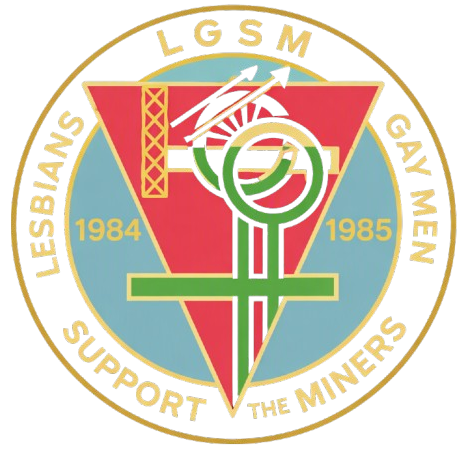
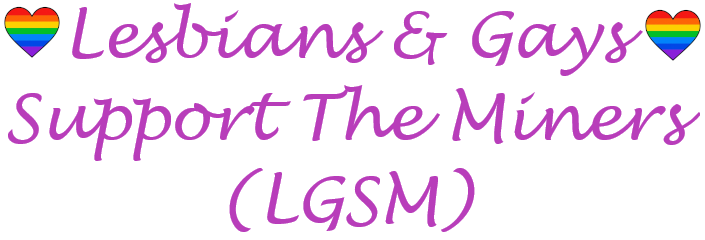
LGSM logo. Copyright © LGSM (1984).

Two Activists, Mark Ashton and Mike Jackson, attended a talk by a striking miner and were inspired to set up the first LGSM group. Both Mark and Mike realised that the LGB community and mining community had a lot in common.

Both the LGB and mining communities were being vilified by the press, mistreated by the Government and Police, facing regular stigma and discrimination and were fighting for their communities. It made sense for both communities to support the other.

Mark and Mike started by collecting donations for the miners at London Pride. It should be noted, that in the 1980s, Pride events where not like they are today. They would be better described as Activist rallies, sometimes with a protest march. The community would come together and listen to speakers. Speakers would inspire and give hope – that things will get better for LGB people. Mark and Mike gave the money they raised to people in the mining community, helping them to survive with the very basics, such as food, housing and clothing.

Over time, the LGSM grew, with more LGB activists participating and higher amounts of donations being received. Both meant that the LGSM was able to support more miners and their families. The LGSM started in London, but soon, a further 10 LGSM groups were set up across the UK, by lesbians and gay men to support striking miners.
The Political Landscape

LGB people and striking miners may not seem like natural political allies. Even though, as I have written above, they had a lot of the same challenges (bad press, mistreatment by Government/Police and stigma/discrimination).

The are some reports that at the time many of the LGB community identified themselves as socialists, left wing or of similar views. This political leaning is not surprising really, given the daily challenges LGB people faced in the 1980s.

If you think about it, supporting the miners and their families would sit well and comfortably with LGB people’s believes and values.
What Happened Next?

The LGSM groups gave support and resources to the miners and their families freely and without any conditions or expectation of reciprocation. What happened next between the two communities was wonderful.

Members of the two communities got to know one another and develop meaningful connections. Prejudice and homophobia lessened. Lesbians and gay men gradually became not just tolerated, but accepted, fully, for who they are including their romantic and sexual attractions. For whom they love.

It is likely that societal attitude changes towards LGB people would have happened with or without LGB people supporting the miners. But supporting the miners likely massively increased the speed of this societal and cultural change in some parts of the Uk.
Why Is Knowing This History Important?

This history can remind us of the need to help one another, to be active within our communities and to reach beyond our communities for allies.

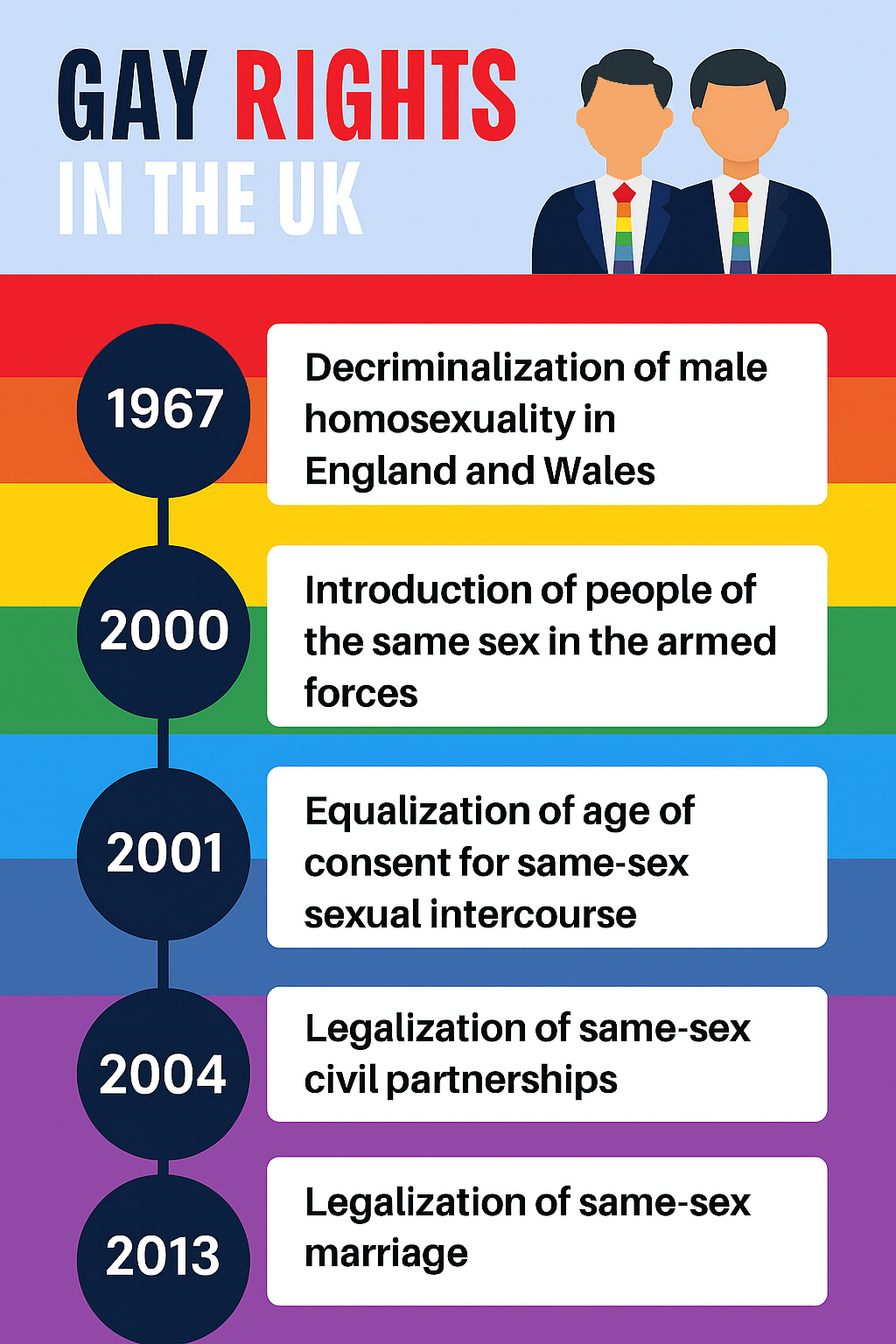
If we think about LGB people’s rights, we have only gained these due to having many straight allies. Rights including:
References

  1. People’s History Museum (2024) ‘Miners’ Strike 1984 to 1985’
  2. LGSM (2015) ‘Our Story’
  3. People’s History Museum (2024) ‘What was LGSM?’
  4. London Museum (2026) ‘How London Pride began’
Other Content

If you liked this post, you might like:

Best Wishes,

Antony

Learn more about lifetime Fanatic membership.
Share on Social Media:
Gay, History, , , , , , , , , , , , , , , , ,

Year In Review: 2025 Blog Posts, 1 Article and 2 Books

Reading Time: 6 minutes

This year, I have written, edited and published 52 blog posts, 1 article and 2 books. Here are some of the best posts, information about the 1 article and 2 books, in case you missed them at the time they were originally published:

In January, I published The Heartbreaking Story of Matthew Shepard. The story of a young student who was tortured and then murdered for being gay in America.

The brutal murder of Matthew Shepard gained international news coverage at the time. I was reminded of his story because of Donald Trump’s targeting the LGBT community with his rhetoric.

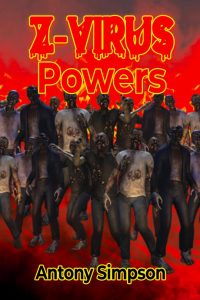
In February, I published my Z-VIRUS Powers: Map of Anglesey. This post is about my Z-Virus Powers novel, a story about a zombie apocalypse where some kids develop supernatural powers.

The wonderful array of young characters (some with powers and some without) decide to go on a quest for the cure, after their powers that once aided survival are now becoming destructive.

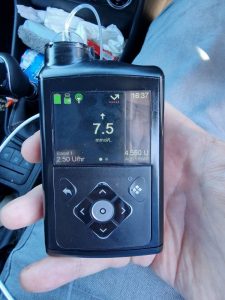
In February, I also published my Health & Future Plans Update: A Dramatic Reduction in HbA1c thanks to Medtronic Insulin Pump. I shared my dramatic reduction in my HbA1c blood test result due to starting the Medtronic Insulin Pump. It really has been life changing.

I shared my future plans for the year, most of which I am proud to say happened.

This included my plans with family and friends. It also included my plans to release Z-Virus Monsters, the next novel/installment of my Z-Virus Series.

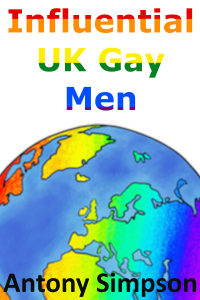
In March, I published my FREE article, Influential UK Gay Men. This was an article all about UK Gay Men I find to be influential in society.

Just some of the men included in this list were: Mark Ashton, Jonathan Bailey, Rupert Everett, Paul O’Grady, Alan Turing.

There were many others, with the article dividing the gay men into categories.

I concluded by writing that there probably wouldn’t be a gay man who became Prime Minister of the UK in my lifetime, which I found sad.

In March, I published a post about Refreshing A Money Bowl, which was very popular. I also announced that I had secured a new job.

In April, I published a post titled: How Would You Survive A Zombie Apocalypse? It was a short blog post about the essential requirements for survival in a zombie apocalypse and was used to promote my two books: Z-Virus Powers and Z-Virus Monsters.

I also published a short blog post about the 10 Books I’ve Read That Have Stayed With Me. Each of these books has a special place in my heart. I linked previous reviews of these books in this post. Some of the books on this list include: Mum Can You Lend Me Twenty Quid? By Elizabeth Burton-Phillips, In His Secret Life by Mel Bossa, The Neuroscientist Who Lost Her Mind by Barbara K. Lipska and Diary of a Young Girl by Anne Frank.

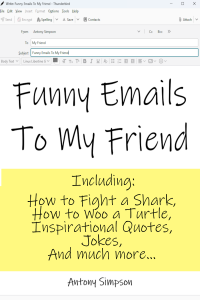
In May, I rebranded My Royal Navy Friend book with a new title (Funny Emails To My Friend) and with a new book cover. I published a post about why I rebranded this book here.

The decision to rebrand the book was driven by feedback, suggesting that people assumed that My Royal Navy Friend was about the Royal Navy. The book was never about the Royal Navy.

My Royal Navy Friend was about maintaining a friendship with a friend who followed their life long dream of joining the Royal Navy through funny, entertaining and occasionally serious emails. So I rebranded, to better reflect what the book is about.

In June, I attended Leigh Book Fest, which was a huge success. I also attended an event a Middleton Library, where I donated some signed copies of my books to the library.

I published blog posts about the importance of Finding Joy and my new old car.

July seemed to be all about animals, in some form or other.

My bengal cat, Dylan, sadly had to be put to sleep.

I had a fantastic time visiting Blackpool Zoo, sharing plenty of photos in a blog post I published.

You can see other recent photos on my regularly updated Photos page here.

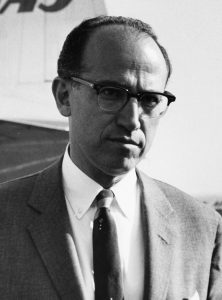
In August, I published a post sharing the incredible story of Jonas Salk. In The Story of Jonas Salk and The Polio Vaccine, I shared Salk’s story of the development of the Polio Vaccine.

What is inspirational about this man, is not just that he developed the polio vaccine. But that he chose not to patent it. This meant that anyone could reproduce the polio vaccine without any payment to Salk.

If Salk had patented his polio vaccine, it would have made him several billionaire dollars. But he chose not to and in doing so, helped it become more widely available to the whole of humanity.

In August, I posted a blog post titled: Unsafe Places to be a Gay Man, detailing the places it isn’t safe to be an out gay man in the world.

To balance the above blog post, I later published a blog post titled: Safer Places to Live for Gay Men. In this post, I focused on places that are safer, more accepting and with better legal rights and protections for gay men in the world.

Safer Places to Live for Gay Men is a blog post I am really proud of publishing. I hope gay men looking for places where they are safer and more accepted in the world find this post. I hope they find this well researched blog post useful.

In September, I shared photos and essential information related to two castles in South Wales, in my published blog post: South Wales Castles – Raglan Castle & White Castle.

I also published a blog post explaining that despite on-going treatment for Vasculitis, I am the happiest I have ever been.

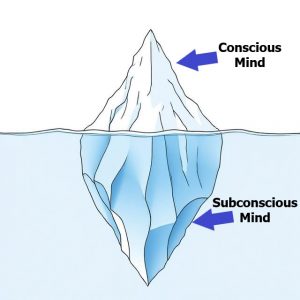
In September, I published a post titled: The Power of the Subconscious Mind.

In this blog post, I explain what the subconscious mind is, how it operates, how it communicates with our conscious mind and how to heal a troubled, disturbed or traumatised subconscious.

I give ways to help heal the subconscious mind and explain that it takes both work and time.

But that the hard work is totally worth the benefits of healing the subconscious mind.

In October, I published a blog post about the dangers associated with Emotional Support from an AI (Artificial Intelligence) App.

Dangers included: No Empathy, False Connection, Emotional Dependence, Bad Advice, Can Reinforce Negative Thoughts/Feelings/Behaviours, No Safeguarding, Lack of Emotional Growth & Data Privacy Breeches.

Given the dangers, as a minimum this apps should be regulated, if not banned.

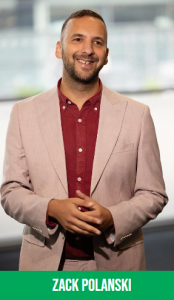
In October, I also published this blog post: Zack Polanski, The New Leader of The Green Party Is Someone I Would Like Add To My Influential Gay Men Article.

Zack has seemingly appeared from nowhere to become the leader of the Green Party. In this blog post, I state that I wish I’d have known about him when doing research for my Influential UK Gay Men article, so that he could have been included in it.

In the post, I discuss Zack’s appeal, share his story (as available online) and state that I may have been wrong about there not being an out gay man as Prime Minister of the UK in my lifetime. In fact, I hope that I am wrong.

So there you have it. My Year In Review: 2025. I wonder what 2026 will bring?

Write soon,

Antony

Share on Social Media:
Adventures, Amazon, Books & Authors, Creativity, Friends & Family, Gay, Happiness & Joy, Health, History, Life, Thinking, , , , , , , , , , , , , , , , , , , , , , , , , , , , , , , , , , , , , , , , , , , , ,

Some of My Favourite Influential UK Gay Men

Reading Time: 5 minutes

To celebrate the release of my Influential UK Gay Men article, which you can read in full for FREE here, here are some of my favourites:

Mark Ashton (1960-1987)
Mark Ashton was a lifelong activist for equality. He helped found Lesbian, Gay Support the Miners (LGSM) charity. He volunteered at the Switchboard and LGBT+ charity.

In addition to fighting for LGBT+ equality Ashton also campaigned for nuclear disarmament.
Towards the end of Ashton’s life, he advocated for young people’s involvement in politics, using music and art as engagement strategies.

Ashton sadly died of AIDS, a short period of time after diagnosis in the late 80s.

A famous Ashton quote is:
“Why should gay people like me support the
miners? Because miners dig for coal, which
produces power, which allows gay people like us
to dance to Bananarama till 3 o’clock in the
morning.”

mental-health-wisdom-banner

Next we have my future husband Jonathan Bailey:

Jonathan Bailey (1988-Present)
Jonathan Bailey is a star of stage and screen, who is perhaps most famous for his portrayal of Anthony, 9th Viscount of Bridgerton and Fiyero in Wicked (the film with the musical of the same name).

In terms of speaking about his sexuality Bailey has said:

“If I can fill spaces that I didn’t have growing up then I feel like that’s a really brilliant thing.”

And:
“I hope queer kids will see my work and know that things will be okay.”

Bailey recalled learning that one of his fellow actors was told:
“There’s two things we don’t want to know: if you’re an alcoholic or if you’re gay.”

Rupert Everett (1959-Present)
Rupert Everett came out as gay when it wasn’t popular to do so. This takes great bravery and courage and for that this man has a special place in my heart.

Everett has played various roles in films, on TV and in theatre productions. But only recently being recognised with winning awards. These days Everett is married to his partner Henrique.

Everett has been criticised for some of his views. But he explained in an interview:
“For me, being gay was about wanting to do the opposite of the straight world, so I think that’s
where my problems in this particular area come from. But that’s me, just me. I’m not having a
go at gay couples who do. I think if Elton (John) and David (Furnish) want to have babies, that’s
wonderful. I think we should all do what we want.”

Paul O’Grady (1955-2023)
It is no exaggeration to say that Paul O’Grady was loved by millions thanks to his prime time TV show: The Paul O’Grady Show. On this show, he chatted with guests, shared his love of dogs and had a warmth that radiated through television sets up and down the country.

Gay people will particularly remember council dweller Lily Savage, a character played and created by O’Grady. O’Grady was known for his quick wit whether as Lily Savage or as himself.

In addition to his work, O’Grady did a lot for charities including ones that support children, animals and
dementia. These were all causes close to his heart.

O’Grady was proud of his working class roots and often supported The Labour Party.

O’Grady has been declared by some to be a national treasure and I completely agree. O’Grady had a settled married life with a husband on a farm in Kent. Returning to London for work purposes.

O’Grady wrote his autobiography in two parts. He died quite suddenly of a heart attack. O’Grady had struggled with an addiction to cigarettes all of his adult life and probably before then, which contributed to his cause of death.

One thing I’ve noticed when talking with others about O’Grady, is that they never say anything bad. It’s always positive.

Alan Turing (1912-1954)
Alan Turing’s story is a sad one. These days his face resides on a £50 banknote and is celebrated as a hero. Turing was for all intents and purposes a genius. He is described as a creator of modern computing, a mathematician, a computer scientist, a cryptanalyst, a philosopher and a theoretical biologist. Turning studied at the top universities in both the UK and in the USA.

Turing’s story starts out quite positively. In 1936, he published a paper that outlines the ‘Universal Machine’ code that forms the basis of modern computers, even today.

Then in 1939 Turning broke the German Enigma code, giving the British a significant advantage in the Second World War. But he didn’t stop there, continuing to help break other codes that were vital to the success of the war efforts against the Germans. 

After the war, in 1952 Turing was convicted of gross indecency due to all male homosexual activities being illegal until as late as 1967. Turning was made an example of. He was chemically castrated using hormones, denied the ability to work on the intellectual projects that he had done so previously and publicly shamed. Turing was hounded and harassed by the Police. They were instructed to monitor him closely, in case he became a security risk, given his previous level of security clearance. 

In 1954, Turing ended his life by cyanide poisoning. He was just 41 years old at the time. Turing no doubt felt like his life was over. He was no longer allowed to do his work and he was under constant surveillance.. Like there was nothing left worth living for. 

Despite those in power knowing about Turing’s contributions to the War efforts and his other great works, it took a Royal Pardon in 2013 to decriminalise him and many others who had been treated the same way for illegal homosexual acts. Just goes to show that just because something is law, doesn’t mean it’s right.

I wish so many things for Alan Turing. I wish he had lived to see the decriminalisation of homosexuality/homosexual acts. 

I wish Turning had got to see the civil rights movement that followed and the strides towards equality that we have made. 

I wish that they had continued to let him work, imagine what other great works he could have achieved. 

I wish that he’d found acceptance from his peers, society and most importantly found love. 

I wish he could see that he’s on every £50 note. 

Andrew Bailey, the governor of the Bank of England, said about Turing: 

“Turing was a leading mathematician, developmental biologist, and a pioneer in the field of computer science.

“He was also gay, and was treated appallingly as a result. By placing him on our new polymer £50 banknote, we are celebrating his achievements, and the values he symbolises.”

I would like to hope that this would never happen again in the UK. 

But across the world, there are still many places where being gay is a crime with severe punishments for those caught. Some gay people are still oppressed and discriminated against for who they love. It’s so wrong.

Want to read the full list? You can for FREE here without any subscription, payment or sign up. You may also like to sign up to my newsletter here. Please consider buying one of my books if you like this creative work:

Best Wishes,

Antony

Share on Social Media:
Gay, Inspiration, , , , , , , , ,
Scroll to Top