gay

Book Review: Family Pride by Michael Shelton
Reading Time: 2 minutes
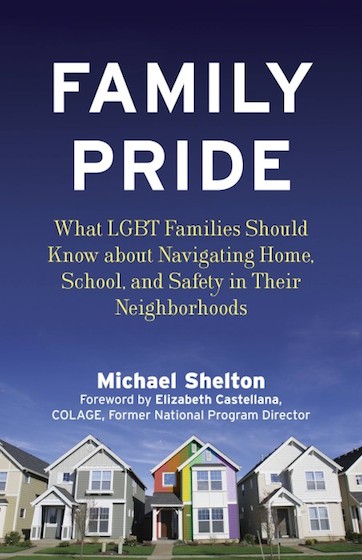
Family Pride Michael Shelton Book Cover Family Pride by Michael Shelton is written like a research article and has an extensive list reference list. Shelton highlights early on that there is a lack of representation of ethic minorities and economically disadvantaged LGBT families in the research. The book is clearly structured and styled as an educational textbook. No definition of an LGBT family is made or attempted; probably because LGBT families are so diverse in their make up and scope. Just like ‘straight’ families.

Shelton interviewed some LGBT parents and even some of their children from across America for this book. I would have enjoyed reading more of these interviews; particularly around their coping strategies for dealing with homophobia, perceived hertrosexism and subtle prejudices. I would have enjoyed reading about these LGBT families hopes for the future.

Family Pride starts with an introduction, explaining the history of gay rights movement and the extreme rightwing (anti-gay) response to this agenda. How the progress of gay rights movement has had an unintended backlash on LGBT families and put many of them in the spotlight in their communities.

I should point out, at this point, that this book is completely Americanised and lacks any international perspective. However many of the issues faced by LGBT families in America will apply to LGBT families in the UK.

Then Family Pride gives a comprehensive review of the issues LGBT families face including:

  • Internalised homophobia.
  • Stages of coming out as an LGBT to children, families and the community.
  • The facade of the perfect family.
  • Issues in schools such as the other same-sex parent not being recognised and bullying of the children by other children (and potentially some of the school staff).
  • Access and engagement with physical and mental health services.
  • The ability to access and enjoy leisure activities (including the all American Summer Camps).
  • Religious Institutions.
  • and the Police & Legal System.

In the conclusion there’s a small section dedicated to how to improve attitudes and acceptance of LGBT families, which will enable better community integration and to give LGBT families a sense of belonging.

Overall Family Pride has good, evidenced-based content. The writing style could have been more engaging and I felt that Shelton over-explained his point at times. This book is ideal for Students or Practitioners in the disciplines of Social Work, Nursing, Mental Health, Youth Work, Housing, the Police, Prison Officers and other public service institutions. It will give Students and Practitioners an awareness of the issues LGBT families face with accessing and engaging with institutions in a way that is dignified, respected and valued.

Family Pride by Michael Shelton is available to buy on Amazon.

I recently interviewed two LGBT parents for The Gay UK; so you might like to read FEATURE: Coming Out to The Kids – Paul’s Story and FEATURE: Coming Out to The Kids – Linda’s Story.

Review soon,

Antony
mental-health-wisdom-banner

Share on Social Media:
Amazon, Books & Authors, Gigs & Shows, Reviews, , , , , , , , , , , , , , , , , , , , , , , , , , , , , , , , , , , ,

Proud of Tom Daley

Reading Time: 3 minutes

I know it’s old news now; but Tom Daley recently revealed that he is in a relationship with a man. He made this disclosure on this YouTube video:

Click here to display content from YouTube.
Learn more in YouTube’s privacy policy (opens in a new tab).

My initial reaction was pride. All out gay or bisexual men have had to have these difficult conversations at some point, so I definitely empathised. These conversations are hard enough, but for Tom it must have been even more difficult given his position.

Tom is an Athlete in the Sporting Profession; and how many out gay professional Athlete’s or sports people do you know? Gareth Thomas the retired Rugby Player comes to mind, but he only came out as gay after he retired.

Then there’s Robbie Rogers a US Football Player, who used to play in the UK but no longer does. It is unbelievable that of the estimated 4,500 professional Football Players in the UK, he is the only gay or bisexual one. Statistics apparently show that 1 in 10 men are gay or bisexual, so it is likely that there are many professional footballers as well as other Athlete’s and sports people that haven’t come out.

The reason Athlete’s and sports people don’t come out is the stigma still attached with being gay in the sport industry. Professional sports people worry about losing fans, sponsors and ultimately their jobs. Tom will have been aware of all this and is very brave for risking all.

Tom  Daley  Christmas

I’ve read many journalistic reactions and opinion pieces on his disclosure. I’ve also read many supportive messages to him, along with some quite blatantly homophobic ones.

I wasn’t just proud that Tom had come out as being in a relationship with a man, but that he had put himself in a position of emotional vulnerability in search for acceptance. Acceptance is an innate human desire and in order to gain acceptance you have to let people know you.

Tom  Daley  Working I have pondered if Tom deliberately avoided using the words gay or bisexual, or even if these words needed to be said. I’m sure that Tom coming out will be a great role model to any gay teens struggling with their sexuality – what it means for them and their life.

If I were to give a message to Tom it would be this:

Thank you for sharing who you are. I wish you every happiness, you deserve it. Keep the people in your life that accept, love and care for you. The people that don’t this feel this way – don’t worry or waste your time thinking about them. Just keep working, living and loving who you are.

Published by: The Gay UK on Friday 17th January 2014.

Take care,

Antony


I aim for posts on this blog to be informative, educational and entertaining. If you have found this post useful or enjoyable, please consider making a contribution by Paypal:


Share on Social Media:
The Web, Thinking, , , , , , , , , , , , , , , , , , , , , , , , , , , , , , , , , , ,

Book Review: Faitheist by Chris Stedman

Reading Time: 3 minutes
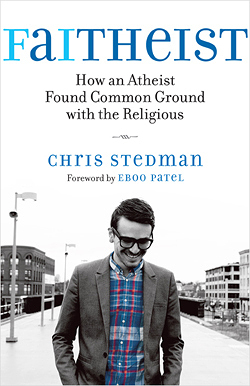
faitheist-chris-stedman-book-cover Chris Stedman is an atheist with a humanistic ethical code. Stedman, through his interfaith work, encourages the religious and nonreligious to come together and share their stories to humanise and understand one another for the greater good. He is the Assistant Humanist Chaplain at Harvard University and writes on his blog NonProphet Status, for the Huffington Post as well as on various other media platforms.

In Faitheist, Chirs Stedman shares the story of his life (so far). The full title of the book is longwinded (Faitheist: How an Atheist Found Common Ground with the Religious) and the introduction is off-putting. The introduction is full of terminology that is unfamiliar, unless you’re an Atheist Activist or an Interfaith Worker/Volunteer. This terminology and the elongated words are both unnecessary.

But get past the introduction and Stedman’s story is fascinating. Told in his warm and engaging writers voice his story is educational, enlightening, completely honest and emotionally resonant.

Stedman starts with his childhood; describing it as ‘not particularly religious.’ He discusses his search for a place to belong and a community to be a part of. Towards the end of his childhood he joins a church and becomes a Christian.

Stedman moves into his adolescence and tells us of his developing homosexuality. He describes a difficult time in his life, one where his sexuality and his extreme Christian beliefs are at odds. He discusses his self-hate, guilt and his loss of faith in God. He reveals how his mum discovered that he was gay and how she supported him. Lost, Stedman sets out on journey to find himself.

Stedman tells of his early adulthood; describing his journey to find himself and what he wants to do with his life. He tells that through Voluntary & Community Work he served others (a recurring theme throughout his entire life), he realised that the religious and nonreligious need to work together (interfaith working). He explains that he realised this has to start with understanding one another’s perspective.

Stedman writes about his set and strong convictions towards the end of this book, clearly promoting humanism. However he has a history of changing some of his views, based on his life experiences. So this left the question as to whether some of his views may change over time. Not his core values, those have always remained a constant, but some of his views on complex ‘grey’ areas in life.

As Stedman shares his story he describes his patchwork of tattoos and their meaning to him and his life. Stedman demonstrates his wonderful ability to reflect on his own experiences and learn from them. He reveals his unique passion, vibrant personality and how so alive he is. A gorgeous man with a beautiful, caring soul.

Stedman concludes his book, not surprisingly, advocating the bringing together of the religious and the nonreligious (atheists). He suggests that they should share their life stories with one another. This he states will lead to a better understanding of one another, so that they can work better together. He encourages the reader to open a dialogue with people from all walks of life, to listen to their stories and share yours.

Stedman could have included some glossy photo pages to match his autobiographical style of story sharing, which would have been great for visual learners.

Faitheist by Chris Stedman is a thought-provoking read and will appeal to anyone who is interested in the study of religious or atheism, the effect of religion on homosexuality, humanism, philosophy, ideology, interfaith work and/or bringing communities together.

Faitheist: How an Atheist Found Common Ground with the Religious by Chris Stedman is available to buy on Amazon.

Review soon,

Antony


I aim for posts on this blog to be informative, educational and entertaining. If you have found this post useful or enjoyable, please consider making a contribution by Paypal:


Share on Social Media:
Books & Authors, Gay, Reviews, Thinking, , , , , , , , , , , , , , , , , , , , , , , , , , , , , , , , , , , , , ,

World AIDS Day 2013

Reading Time: < 1 minute
World Aids Day HIV (Human Immunodeficiency Virus) is a virus which attacks the body’s immune system — the body’s defence against diseases. AIDS (Acquired Immunodeficiency Syndrome) is the final stage where the immune system being depleted of its cells by HIV. Once enough of the immune system cells have been destroyed by HIV, the body is not capable of fighting off other bacteria and viruses as easily, particularly opportunistic infections. Infections like pneumonia are usually the cause of death for someone who has HIV/AIDS’.

HIV is passed on through infected bodily fluids, most commonly via sex without a condom or by sharing infected needles, syringes or other injecting drug equipment. Only 1% of mothers with HIV give birth to HIV positive babies.

Did you know that around 100,000 are currently living with HIV in the UK and that 1 in 5 don’t know they’ve got it? World AIDS Day is all about raising awareness about HIV/AIDS.

So do one simple thing for World AIDS Day, take this HIV Awareness Quiz.

I scored 9 out of 12:
HIV-aware-quiz-result

Blog soon,

Antony

Share on Social Media:
Life, , , , , , , ,
Scroll to Top
×