In the past few months, despite being ill (see Let Me Explain About The Monetising), I’ve managed to added significantly more content to my website. I’ve also made it much easier for both new and returning visitors to find content that they might like.
New Content
In this post, I’ll share both details of all the new content and how I’ve organised it. For new visitors I have added the Discover page that provides a list of links for new people to learn about me, my creative works and ways they can support me.
After YouTube recently removed my channel and videos, I decided to set up my own video channel page right here on this website. All of my video content can now be watched here: My Video Channel.
Improved Organisation
I’ve always been interested by and written content about a wide range of topics. I love the variety of topics that I write about. But I have come to realise that different content will appeal to different groups of readers/website visitors.
The amount of content I have created, along with how it was organised, made it difficult for readers/visitors to find the content that interests them. So I’ve developed the following Topic Content pages:
Each page contains a paragraph briefly explaining the topic, then a list of: Creative Works, Pages, Blog Categories/Tags and Blog Posts. Each page contains a gallery of Related Images and where available Related Videos. I am hoping that these Topic Content pages, help readers/visitors to easily find content around their interests.
Increased Interactivity
When I have analysed the statistical data around visitors to my website, I noticed that visitors are only spending a short amount of time on my website/blog. So I have made a real effort to make my website more interactive. I already had the newsletter, social media and contact pages. But I’ve also added:
A form where readers/visitors can tell me what’s good about this website/blog, what could be improved and allows them to star rate their overall experience. I am hoping that with a bit of promotion, many readers/visitors will complete this form, giving me a valuable insight to the sort of content they would like in the future.
Future Content
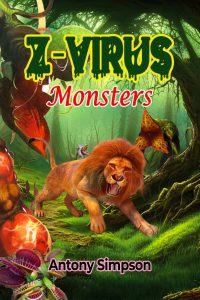
I currently have a list of ideas for future blog posts, pages and other content. I am also intending to start the planning and writing of Z-VIRUS Cure & Restore, which is due for release some time in 2027.
I recently learned about the existence of substack. Substack is a platform that allows anyone to share creative content, including: written articles, images, audio (such as podcasts) and videos with the world. It allows people to subscribe to content creators accounts, in a model that allows both free and paid subscriptions.
Substack’s unique selling point (I hate that phrase!) seems to be that it is easy for creators to grow an audience and to make money from the content they create. Substack boasts that it only takes 10% of creators earnings from paid subscribers, giving the content creators 90% of their earnings. As substack is currently free for content creators to use, it means that substack only make money when content creators do.
As a Writer, I can see the advantages of substack, which include:
It is currently FREE, there is no monthly subscription cost, meaning that content creators won’t be left out of pocket. This means that content creators won’t have to pay for domain names, hosting, etc.
It appears quick and easy for content creators to set up, use and maintain.
No technical knowledge required by the content creators – no knowledge of website design and functionality.
It has features that are designed to grow a content creator’s audience, such as notification of new content to subscribers.
Substack claim tens of millions of content consumers every week, which in theory means a massive audience. However, they don’t state how many paid subscribers they have on the platform.
It allows a variety of different types of content in one post.
Substack allows quick reactions (love heart icon) to content, re-posting/sharing content on the platform and discussion via comments.
But substack also has a number of disadvantages, which include:
Substack isn’t the only company to have this idea. Patreon is its direct competitor, who have been around longer (Patreon launched in 2013, substack launched in 2017). In some cases Patreon takes less of a percentage of subscription earnings from content creators than substack.
The market for paid content through a subscription is uncertain. As is the amount of money that content creators could make. When I refer to content here, I refer to content that is not of an adult-only nature (by this I mean not pornographic). It is safe to say the market for adult-only content exists and that some content creators are currently making good money from this sort of content. However even with this sort of content, some content creators are saying that the market is saturated and that they are making less money than they used to.
Substack is a business with costs and a pressure to make a profit. This could mean that at some point it stops being free and content creators get a monthly subscription fee, even if content creators aren’t making any money from the platform.
Substack could may also decide to look for other ways to generate revenue, including but not limited to advertising.
Substack could go out of business and creators could loose the platform and possibly some or all of the content they created.
Substack allows any creator to post any content. This means that content posted on substack will have less credibility with the audience and may erode the content creators credibility and reputation.
Substack doesn’t have any quality controls. This means that content could be factually incorrect, biased, misleading or completely inappropriate.
Substack has a history (at least according to Wikipedia) of not taking enough steps to protect users data due to privacy breach in 2020 and then a security breach in late 2025.
Substack lacks the ability for content creators to customise much of how their content is viewed. This might not be that important for written words, but could be incredibly important for other types of content.
Substack appears to let AI generated content on its platform, which will significantly impact human content creators. AI content may also make a number of content consumers avoid the platform all together.
For both content creators and content consumers there are more disadvantages to using substack, than advantages. But in order for me to justify my opinion that substack won’t replace WordPress, I need to write about WordPress.
WordPress (WordPress.com & WordPress.org) was launched in 2003 as a blogging platform. It has grown and developed over the years. Today 40-60% of all websites use WordPress.
I have used WordPress for my personal blog and website since 2008, although I remember experimenting with it well before then. WordPress can do everything that substack can, although some functions/features would require plugins.
WordPress initially started as a community platform, but as it grew it became more commercialised as it pivoted towards business users. This brought paid themes and paid plugins. Later, it brought paid subscriptions for some themes and plugins, paid on either a monthly or annual basis.
The choice WordPress developers and other non-official developers made to pivot towards businesses meant that they could earn money from their work, which you could liken to a content creator. This is great, they should be paid for their work.
But it means that the core WordPress platform, without any of the paid themes or plugins is limited for content creators. Content creators, especially those trying to build an audience that are willing to pay for their content (like myself) just don’t have the money to spend to get the functionality/features currently being offered for free by platforms like substack.
I am a Writer. I write this blog, books, articles and short stories. I write this blog because I enjoy writing. Writing this blog is a hobbie and I am happy to give away the content for free.
But my more substantial content like my books, articles and short stories, take me a considerable amount of time, energy and work to create. I believe that they have monetary value and that it is fair to ask for a small amount of money in return for them.
I am truly appreciative of everyone who reads something that I write, whether that be on my blog, or through one of my books, articles or short stories.
But the WordPress platform, without the paid plugins makes it difficult or in some cases impossible for content creators to:
Help you to find your audience.
Help you to grow your audience.
Help you to keep in touch with your audience.
Help you to take payments for products (whether that be physical or digital).
Help you to offer subscription services.
WordPress has dominated the market when it comes to Writers, for a number of years. But one of my hopes, is that services like substack cause WordPress developers to add some functionality/features into the platform that address some of the difficulties faced by content creators who can’t afford to buy the paid plugins.
Conclusion
I use the WordPress platform through a self-hosting company and have a domain name to help people to find my website. This costs me £25 per month. But due to the lack of functionality/features in the WordPress platform (without paying more money for plugins), this website costs more to run than any money I’ve ever generated through it.
But despite WordPress’ limitations, I think it will be around long after substack is a distant memory. Substack appears very good at marketing to content creators. But to me its business model seems to have far too many flaws. Their business model is based on an idea that people are willing to pay for content. But there isn’t any good data on:
Whether people are willing to pay for content.
What sort of content people are willing to pay for.
The number of people who are willing to pay for content.
How much people are willing to pay (or can afford to pay given the global economy) for content.
If substack can generate enough income to not only meet the costs of operating, but also make a profit.
The impact AI will have on content creators and their audiences.
I recently visited Wroclaw in Poland with my brother and his friends for his stag do and his birthday. It was the first time I had met many of my brother’s friends and they are a great bunch of lads. In this post I’ll be discussing my experience of being in Wroclaw.
The first thing to write is that the architecture is aesthetically pleasing. There are many buildings with a Georgian style and many churches that are exquisitely designed. Here is an example of one such church:
Wroclaw is vibrant, youthful and has an upbeat feel. It is a clean city, only being let down by graffiti that is everywhere. There are plenty of places to eat and drink, with some even having English menus upon request. The cost of living is cheap with roughly 10 slotty (about £2) buying a double vodka and diet coke. I did have difficulties getting zero sugar drinks in a number of places, which was a bit of an issue with me being diabetic.
The only Polish word I managed to learn was Kawa, which means coffee. The main square is huge and has flower market stalls that appear to be open 24/7. I found myself listening to Polish conversations as I walked around and appreciating the beautiful sound of the language. Some Polish spoke English exceptionally well whereas others didn’t speak any English at all. I found the Google Translate App really useful.
Without doubt it is people that make a city. All appeared happy, content and liberal. Polish people had less inhibitions when it came to dancing than we English have. Polish people will quite happily bump into anyone in their way in pubs and clubs. This is normal to the Polish, but being British I found it a little rude.
As Poland is known for being Roman Catholic and as such conservative when it comes to gay people and their rights. I decided to test the waters with a Polish man who I had been talking to and getting on with whilst smoking a cigarette. I came out and asked his views on gay people. He said:
“I don’t care, I don’t give a fuck. That’s your choice. We’re all just friends here.”
He described himself as not being religious, male, heterosexual and was in his mid twenties.
Overall Wroclaw is a beautiful city, with wonderful people and a place that I will be visiting again.
I’m in the process of importing all of the content from my Writer’s website to this blog. This is because I intend on doing away with my writers website. I’ll continue to write, but I just don’t feel the need for two separate websites. Especially when a lot of the content overlaps.