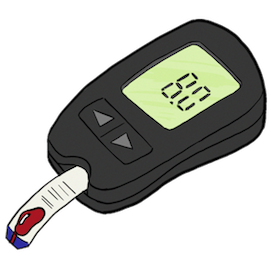
I was diagnosed with type 1 diabetes 19 years ago (in January 2007). I remember feeling really overwhelmed and isolated. Type 1 Diabetes is:
“a serious autoimmune condition that occurs when your immune system mistakenly attacks beta cells within the pancreas, which then stop producing insulin. As a result, glucose levels in your blood start to rise, and your body can’t function unless you replace the insulin.”
A type 1 diabetes diagnosis is life changing. Most people grieve for the loss of their health, whilst trying to learn to manage this complex medical condition. At times, managing Type 1 Diabetes can feel like a full-time job.
Despite around 270,000 people in England (NHS England – 2024, last accessed: 13/06/26) being diagnosed and living with Type 1 Diabetes, many people can still feel isolated and alone.
So I decided to create a list of famous people with Type 1 Diabetes. Hopefully it will make someone feel less alone and realise that anyone can be diagnosed with Type 1 Diabetes. It doesn’t matter a person’s age, gender, ethnicity, sexuality, social class or religion.
An even more comprehensive list of famous people diagnosed with Type 1 Diabetes, mostly populated by people from the USA, can be found on Wikipedia here.
So you’d think I would be excited by this announcement, but I’m not. Instead of being excited, I’m very concerned. I’m concerned about:
1. Smartphone Control
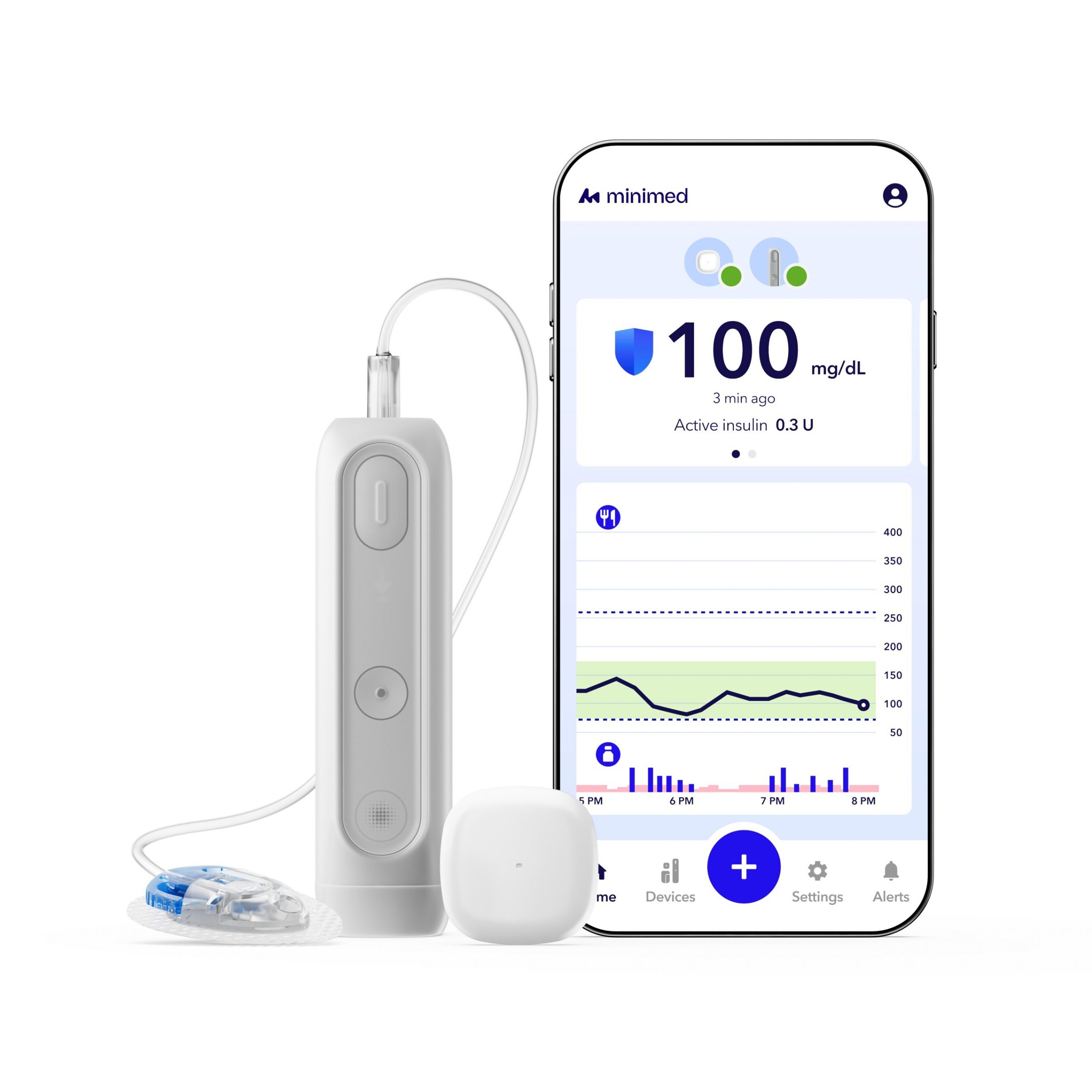
The new MiniMed Flex pump will be controlled by smartphone. This means if my battery dies on my smartphone and I’m out, I’ll have no way of knowing my current blood sugar, no way of delivering insulin, no way of adjusting settings for exercise and no telling my pump what I need it to do. Bluetooth could also fail on my smartphone or the pump itself.
Currently on the MiniMed 780G insulin pump, I can control the pump through use of the screen and buttons on the actual device.
2. The Update Cycle of Medtronic’s App
Historically Medtronic’s update cycle of the App has been painfully slow. Everytime I have an Android software update on my phone it can take Medtronic a month or longer to update their App.
This has meant on some occasions in the past, I have been unable to get my phone to pair with my pump, sometimes for a number of weeks. Imagine if this happened with the MiniMed Flex, it would literally be unusable until Medtronic updated their App.
3. Lack of a Screen
Lack of a screen = lack of information. Especially if the bluetooth connection or pairing to a smartphone failed for some reason. My blood sugars could be going high or low without my knowledge. This could lead to a failure or delay in me taking appropriate actions.
4. No Information about Sound / Vibration / Flashing Light Notifications
There is currently no information about the MiniMed Flex pump’s ability to deliver sound, vibration or flashing light notifications. The MiniMed 780G insulin pump does all these and to different volume, intensity and number of repeats (depending on settings). I find these are extremely useful, especially when I am asleep at night.
4. A New Algorithm
The press release mentions a new algorithm for SmartGuard. This could lead to better or worse blood sugar control for me. I know the algorithm on my current MiniMed 780G insulin pump works for me. It helps me to spend much more time in range and is proven to lower my HbA1c. I have a real fear that this new algorithm might not be as effective for me.
5. How it is Powered
There is no information currently available on how the new pump is powered. Some people have suggested a button battery, others that it could be rechargeable and others have suggested it could be powered by an AA battery, like my current pump. Rechargeable would be a nightmare and I would definitely prefer a battery that can be replaced.
But again, I would be reliant on it being connected to a smartphone (and the smartphone being operational) to know the charge of the battery.
6. Whether I’ll be Forced to Upgrade
I get my current insulin pump from my local Diabetes Centre, provided by the NHS. This is the only way to get any sort of insulin pump in the UK. Privately funded or funding through an insurance model isn’t even an option.
It is likely that my local NHS Trust has an agreement with Medtronic for the latest tech and for free upgrades. According to the press release, users of the MiniMed 780G insulin pump in the USA will get a free upgrade to the MiniMed Flex.
But what if I don’t want the free upgrade and would rather stay on the MiniMed 780G insulin pump, will that be an option?
Conclusion
I am not alone in having concerns. There is a reddit post about it here. With the information I’ve currently got available and what I’ve learned from past experiences, I would 100% choose not to upgrade at this time. I only hope that I am given that option.
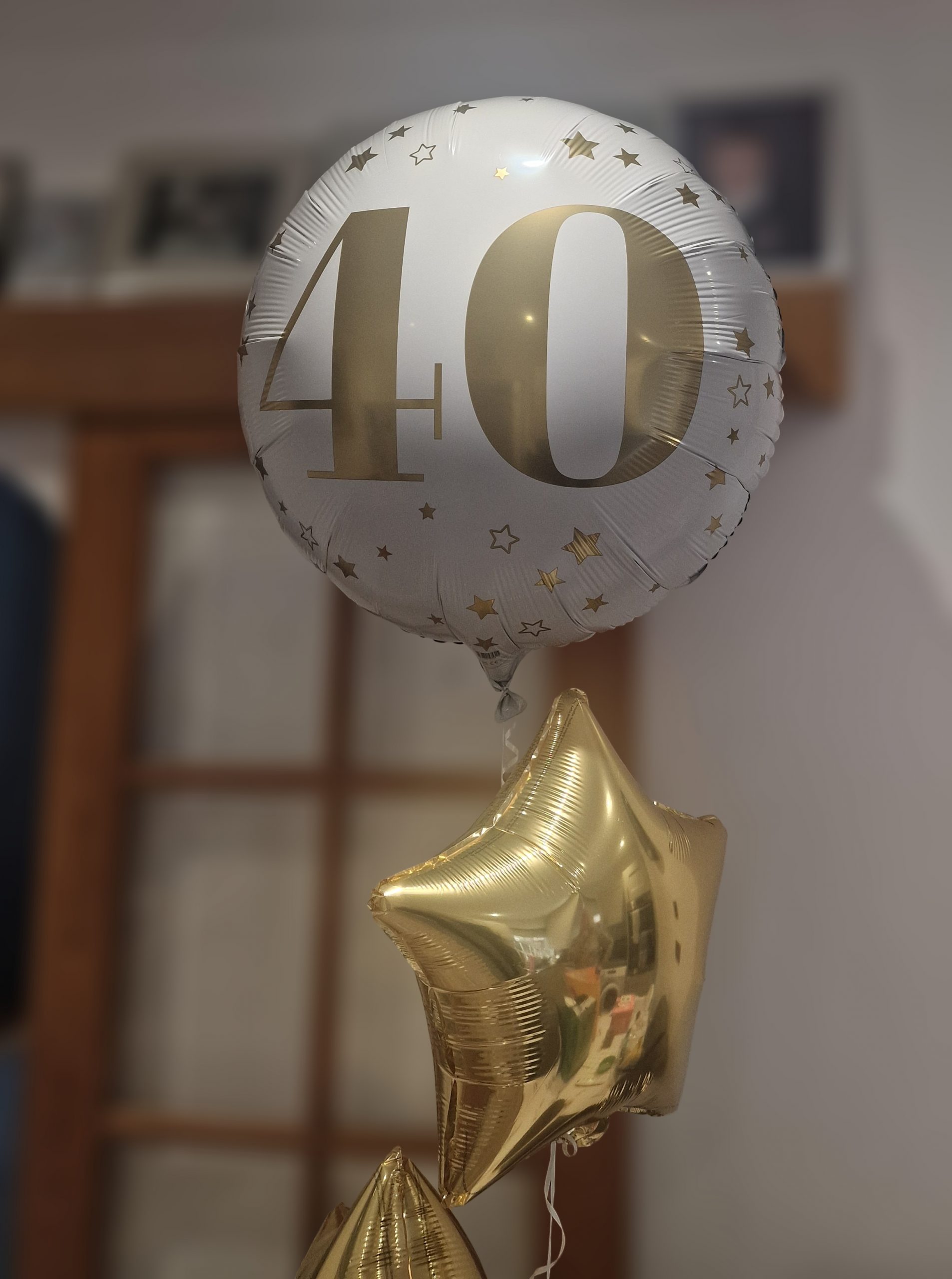
Last week was my 40th birthday. Just before my birthday, I’d had some good news about my vasculitis. My birthday celebrations were low-key this year, mum, papa and I went out for a meal, followed by unicorn cake.
I’m going to be honest, I never thought I’d make it to the BIG 4-0. But I am pleased that I have. I am as healthy as I can be (given my type 1 diabetes and vasculitis) and the happiest I have ever been.
My hope is that FINDING YOUR HAPPINESS leads readers to transform their lives, giving readers the knowledge and skills to lead a life filled with happiness and joy. The 167 page, full-colour book will take an average reader 5.5-7.5 hours to read.
Write soon,
Antony
More Content From Antony
Here are the books that Antony has published, click any cover to learn more:
I am pleased to announce that my vasculitis is in remission (see this page on Vasculitis UK for more information). This means that there are no active signs of the disease and my blood results show no signs of inflammation.
This is thanks to the excellent care of the Specialist Doctors in the NHS and the Rituximab infusions provided by the NHS.
All of the care I have received from NHS Staff has been nothing short of exceptional. Staff have been kind and compassionate. They have delivered safe, high quality and evidenced-based care.
The care has been driven by clinical need, without staff having to worry about the cost and without me having to worry about my ability to pay. I am beyond grateful.
My blood sugars have continued to reduce with my Hba1C currently being 52. My Hba1C was 58 in February 2025 and 99 before that. My Medtronic insulin pump (the MiniMed 780G) has played a massive role in this reduction, but so have better diet, increased exercise and loss of a bit of weight.
I have come off all medications, apart from insulin. This includes medications for high blood pressure, high cholesterol and mental health medications. I have made a number of changes to my life to become the happiest that I have ever been.
The hole in the roof of my mouth has gotten slightly bigger, now being about 1cm in size. However given the improvements to my overall health and the fact that the vasculitis is now in remission, the surgeon is keen to repair the hole in the roof of my mouth in the coming months.