Antony Simpson

Antony Simpson is an Author, Blogger, Nurse & Witch.

Parts of the ‘Self’ – A Short Extract From FINDING YOUR HAPPINESS

Reading Time: 3 minutes

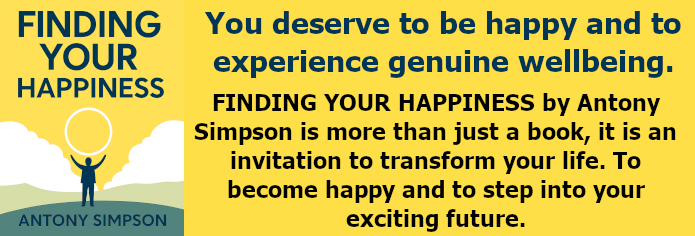
Here is a small extract from my book FINDING YOUR HAPPINESS:

A core aspect to finding your happiness is to understand who you are, what drives you and most importantly: What will make you happy. These are unique to the individual, just like your fingerprints.

Parts of the ‘Self’

Everyone has different parts of the ‘Self’ that make up the whole of who they are. The different parts of your Self include:

★ The Physical Self – your body.
★ The Mental Self – your thoughts.
★ The Emotional Self – your emotions.
★ The Spiritual Self – your soul.

All these parts contribute to who you are and are interconnected.

All of these parts contribute to your behaviour – what you say and do.

Your spiritual self or soul is perhaps the most mysterious of all the parts. We know very little about souls. What is their purpose? How do they operate? The truth is that nobody can answer these questions with absolute certainty.

There are plenty of theories about souls. Just look at the many religious and spiritual systems in the world today. I personally believe that any work we do to understand our spiritual self, helps us to more deeply understand the universe and how everything is interconnected.

The interaction between these different parts of the Self, the influence they have on one another and our behaviour is very complex and constantly changing.

But a couple of example scenarios here will help you to understand that the different parts of your Self can and do influence one another:

Example Scenario 1: Anxiety

A really good example of the interaction between the different parts of the Self in action, is the state of anxiety. Anxiety starts through a trigger. A trigger is an event or experience that causes something to happen.

Imagine you have been triggered. In your mind anxious thoughts start to form. Then you start to feel the emotion of fear. Your physical self responds to these thoughts and emotions. Your heart beats faster, you become more alert and your appetite decreases.

In the scenario above, your thoughts influenced your emotional state. Then your physical body responded to both your thoughts and your emotional state.

It is important to know that just because you’re currently focused on one part of your Self, it doesn’t mean that the other parts are inactive.

Let’s look at another example scenario to illustrate my point:

Example Scenario 2: Exercise

Imagine you have gone for a run. Your physical self is firing on all cylinders – your heart beats fast, your lungs inhale oxygen rapidly and your muscles propel you forwards. But as you run, the other parts of your Self are not inactive.

In your mind, you may be thinking about events earlier in your day. You may think about something that triggers your emotions. These thoughts or emotions may cause you to run faster, run slower or stop running altogether.

To summarise, all parts of your Self (Physical, Mental, Emotional & Spiritual) interact with one another. They can influence one another. This in turn can influence your behaviour – what you say, do and omit to do.

In terms of happiness, it is really important to consider each part of your Self. Happiness can only be achieved when all parts of you are working in tandem with one another. All parts of your Self must be in a state of unity.

You can read more in my book FINDING YOUR HAPPINESS, which is available to buy on Amazon here.

Blog soon,

Antony

Learn more about lifetime Fanatic membership.
Share on Social Media:
Amazon, Books & Authors, Happiness & Joy, Health, Life, , , , ,

The 7 Love Languages Theory by Dr Gary Chapman

Reading Time: 3 minutes

Dr Gary Chapman is an American Minister who came up with The 7 Love Languages Theory.

Dr Chapman theorised that we all have 1 or 2 ways in which we show our love to others and that we prefer others to show their love for us in these same ways.

Dr Chapman called these expressions of love ‘languages’ and suggested that there are 7 of these love languages:

The 7 Love Languages

  1. Words of Affirmation.
  2. Quality Time.
  3. Receiving Gifts.
  4. Acts of Service.
  5. Physical Touch.
  6. Shared Experiences.
  7. Emotional Security.

It should be noted here that Dr Chapman originally suggested only the first 5 love languages, adding the 6th & 7th love languages later.

Dr Chapman theorised that when couples have difficulties in their relationship it is because they are expressing their love for one another in their own preferred love language, rather than the language that their partner prefers. Let’s look at these love languages in more detail:

1. Words of Affirmation

People who prefer the words of affirmation love language want their partner to compliment them, praise them and say positive things about them and their relationship to them regularly. They value words and what is said or written over actions.

2. Quality Time

People who prefer this love language want to complete activities and share experiences with their partner often. If they perceive that a partner is giving too much of their attention and time to others or to working, their partner may feel neglected or unloved.

3. Receiving Gifts

People who prefer the receiving gifts love language, like presents, but that doesn’t mean that they are materialistic. Often these people don’t care about the cost of the gifts. It’s more about their partner thinking of them, appreciating them and providing evidence through a small gift.

4. Acts of Service

Acts of Service always reminds me of the saying: Actions speak louder than words. People who prefer this love language will complete selfless acts of service to demonstrate their love for a partner and want their partner to do the same for them.

5. Physical Touch

People who prefer this love language require regular physical contact with their partner to express their love and in return feel loved. Physical touch is not about intimacy or sex, but instead any sort of physical contact with their partner. Such as: holding hands, hugs, resting their hand of their partner’s leg and kissing.

6. Shared Experiences

For people who have shared experiences as their preferred love language, they must engage in regular activities, experiences and adventures that are fully shared with their partner in order to express their love and to feel loved by their partner. People who prefer this love language will always be planning their next shared experience with their partner.

7. Emotional Security

For people who prefer the emotional security love language, they show and feel loved if they and their partner feel safe, can fully trust one another and are given reassurance when required. For these people, how they feel is extremely important and they value honesty and kindness greatly.

Conclusion

Dr Chapman’s love languages theory is worth knowing about. It could be used to navigate some difficulties in some relationships. It could even be used to strengthen some relationships. But Dr Chapman’s theory doesn’t consider external factors that could cause difficulties in a relationship. Two things are clear: Both people and relationships are complex and multifaceted.

Blog soon,

Antony

I write about love, in all its forms, and how it contributes to people’s happiness in my book FINDING YOUR HAPPINESS:

Share on Social Media:
Love & Relationships, , , , , , , , ,

A Request for Reviews

Reading Time: < 1 minute

Dear all,

I have a small request. Please can you leave a review for any of my books that you’ve read on Amazon and goodreads? A review should be honest and can be just a few words long. It really helps others readers to discover my books.

Here are the relevant links:

Thank you in advance,

Antony

More Content From Antony

Here are the books that Antony has published, click any cover to learn more:

Share on Social Media:
Amazon, Books & Authors, Reviews, , , , , ,

There’s Nothing Quite Like Tooth Pain

Reading Time: 3 minutes

Last weekend, I had a Rituximab infusion aimed at keeping my vasculitis in remission. Then on Tuesday I started with pain in my lower jar and noticed that part of one of my wisdom teeth had broken away. I got an emergency Dentist appointment on Wednesday and had to have the tooth extracted.

Before the extraction and since, I’ve had pain in my lower jaw and face. There’s nothing quite like tooth pain is there? This actually reminds me what I’ve written about pain, in FINDING YOUR HAPPINESS:

Your Pain

Part of being alive is experiencing pain. There are different types of pain. Pain can be physical, mental or emotional. Any type of pain reduces your quality of life and will make you less happy.

You should address any pain promptly, to prevent it from getting worse and to promote healing.

Physical Pain
Physical pain is often managed, rather than cured or healed. Pain management can involve medications, exercises and sometimes surgery. Physical pain can be acute (coming on suddenly and is short term) or chronic (long term).

Acute physical pain is a sign that something is wrong inside your body. Chronic pain is caused by diseases and disorders inside your body. If you’re in physical pain, I highly recommend that you see your GP.

Your GP will complete an assessment, tests/investigations to work out the cause of the pain and work with you to develop a treatment plan.

A good example of physical pain is a broken leg. Imagine you fall and break your leg. You are in pain and seek medical attention. You have an x-ray that confirms the broken bone. You have surgery to repair it.
After surgery you have a period of immobilisation to allow the bone to heal and then have physiotherapy to regain muscle strength.

Within 3-6 months you are back to doing everything you used to do before the injury. Walking, running and dancing. Your leg is healed. You are healed.

Mental Pain
We don’t know enough about mental pain. Sometimes mental pain is managed, sometimes it is healed.

Mental pain is caused by mental illnesses. Sometimes mental illnesses run in families, suggesting that the cause could be genetic. Sometimes mental illnesses are caused by life events.

There are many different types of mental illnesses, some are acute and some are chronic. Examples of mental illnesses include anxiety, depression, bipolar and schizophrenia.

It can be difficult for a doctor to diagnose mental illnesses due to similar symptoms. Even Psychiatrists (doctors that specialise in mental health) have difficulty diagnosing mental illnesses.

Diagnosis of mental illnesses can take a significant amount of time. There’s no blood test or scans that can be completed to confirm whether an individual has mental illnesses or not, let alone which specific mental illness they have.

I would highly recommend that you see your GP if you are experiencing mental pain.

If you’re experiencing mental pain, don’t wait for a diagnosis. Start to manage your symptoms immediately, to the best of your ability.

In some cases people can fully recover from mental pain/illnesses. Whereas in other cases it is about long term management of symptoms.

Recovery from mental pain/illnesses doesn’t have set timescales. It usually takes months to years, depending on the individual and the circumstances. But every year many people do recover from mental pain/illnesses.

Emotional Pain
A conversation about emotional pain in western healthcare is not currently happening, but it needs to.

Symptoms of Pain
With all types of pain you will have a combination of physical, mental and emotional symptoms. Let me give you an example of this from my own life.

I once had severe stomach pains. They’d come and go, but were incredibly painful when present. I went to see my GP and had a range of tests/investigations. Everything came back normal.

However physically, my body always felt tight. Sometimes my chest felt tight, like it was difficult to breathe. At these times, my heart beat fast and I sweated excessively.

Eventually my GP diagnosed me with anxiety, a mental illness. I was prescribed medication and referred for therapy. It took several years, but I came to realise that my anxiety was often caused by my emotional state. Fear seemed to frequently trigger my anxiety.

I realised that in order to effectively treat my anxiety, I needed to address the fear. So that’s what I did.

Whatever symptoms of pain you have it is essential that you work out what it is and address the cause(s).

(From: FINDING YOUR HAPPINESS by Antony Simpson, 2026, pages 55-57.)

I’m currently on antibiotics and prescription painkillers. So I will be taking it easy this weekend.

Blog soon,

Antony

Share on Social Media:
Health, , , , , , , , , , , , , , , , , , , ,
Scroll to Top