antibiotics

There’s Nothing Quite Like Tooth Pain
Reading Time: 3 minutes

Last weekend, I had a Rituximab infusion aimed at keeping my vasculitis in remission. Then on Tuesday I started with pain in my lower jar and noticed that part of one of my wisdom teeth had broken away. I got an emergency Dentist appointment on Wednesday and had to have the tooth extracted.

Before the extraction and since, I’ve had pain in my lower jaw and face. There’s nothing quite like tooth pain is there? This actually reminds me what I’ve written about pain, in FINDING YOUR HAPPINESS:

Your Pain

Part of being alive is experiencing pain. There are different types of pain. Pain can be physical, mental or emotional. Any type of pain reduces your quality of life and will make you less happy.

You should address any pain promptly, to prevent it from getting worse and to promote healing.

Physical Pain
Physical pain is often managed, rather than cured or healed. Pain management can involve medications, exercises and sometimes surgery. Physical pain can be acute (coming on suddenly and is short term) or chronic (long term).

Acute physical pain is a sign that something is wrong inside your body. Chronic pain is caused by diseases and disorders inside your body. If you’re in physical pain, I highly recommend that you see your GP.

Your GP will complete an assessment, tests/investigations to work out the cause of the pain and work with you to develop a treatment plan.

A good example of physical pain is a broken leg. Imagine you fall and break your leg. You are in pain and seek medical attention. You have an x-ray that confirms the broken bone. You have surgery to repair it.
After surgery you have a period of immobilisation to allow the bone to heal and then have physiotherapy to regain muscle strength.

Within 3-6 months you are back to doing everything you used to do before the injury. Walking, running and dancing. Your leg is healed. You are healed.

Mental Pain
We don’t know enough about mental pain. Sometimes mental pain is managed, sometimes it is healed.

Mental pain is caused by mental illnesses. Sometimes mental illnesses run in families, suggesting that the cause could be genetic. Sometimes mental illnesses are caused by life events.

There are many different types of mental illnesses, some are acute and some are chronic. Examples of mental illnesses include anxiety, depression, bipolar and schizophrenia.

It can be difficult for a doctor to diagnose mental illnesses due to similar symptoms. Even Psychiatrists (doctors that specialise in mental health) have difficulty diagnosing mental illnesses.

Diagnosis of mental illnesses can take a significant amount of time. There’s no blood test or scans that can be completed to confirm whether an individual has mental illnesses or not, let alone which specific mental illness they have.

I would highly recommend that you see your GP if you are experiencing mental pain.

If you’re experiencing mental pain, don’t wait for a diagnosis. Start to manage your symptoms immediately, to the best of your ability.

In some cases people can fully recover from mental pain/illnesses. Whereas in other cases it is about long term management of symptoms.

Recovery from mental pain/illnesses doesn’t have set timescales. It usually takes months to years, depending on the individual and the circumstances. But every year many people do recover from mental pain/illnesses.

Emotional Pain
A conversation about emotional pain in western healthcare is not currently happening, but it needs to.

Symptoms of Pain
With all types of pain you will have a combination of physical, mental and emotional symptoms. Let me give you an example of this from my own life.

I once had severe stomach pains. They’d come and go, but were incredibly painful when present. I went to see my GP and had a range of tests/investigations. Everything came back normal.

However physically, my body always felt tight. Sometimes my chest felt tight, like it was difficult to breathe. At these times, my heart beat fast and I sweated excessively.

Eventually my GP diagnosed me with anxiety, a mental illness. I was prescribed medication and referred for therapy. It took several years, but I came to realise that my anxiety was often caused by my emotional state. Fear seemed to frequently trigger my anxiety.

I realised that in order to effectively treat my anxiety, I needed to address the fear. So that’s what I did.

Whatever symptoms of pain you have it is essential that you work out what it is and address the cause(s).

(From: FINDING YOUR HAPPINESS by Antony Simpson, 2026, pages 55-57.)

I’m currently on antibiotics and prescription painkillers. So I will be taking it easy this weekend.

Blog soon,

Antony

Share on Social Media:
Health, , , , , , , , , , , , , , , , , , , ,

The Story of Sir Alexander Fleming and his Accidental Discovery of Penicillin

Reading Time: 2 minutes
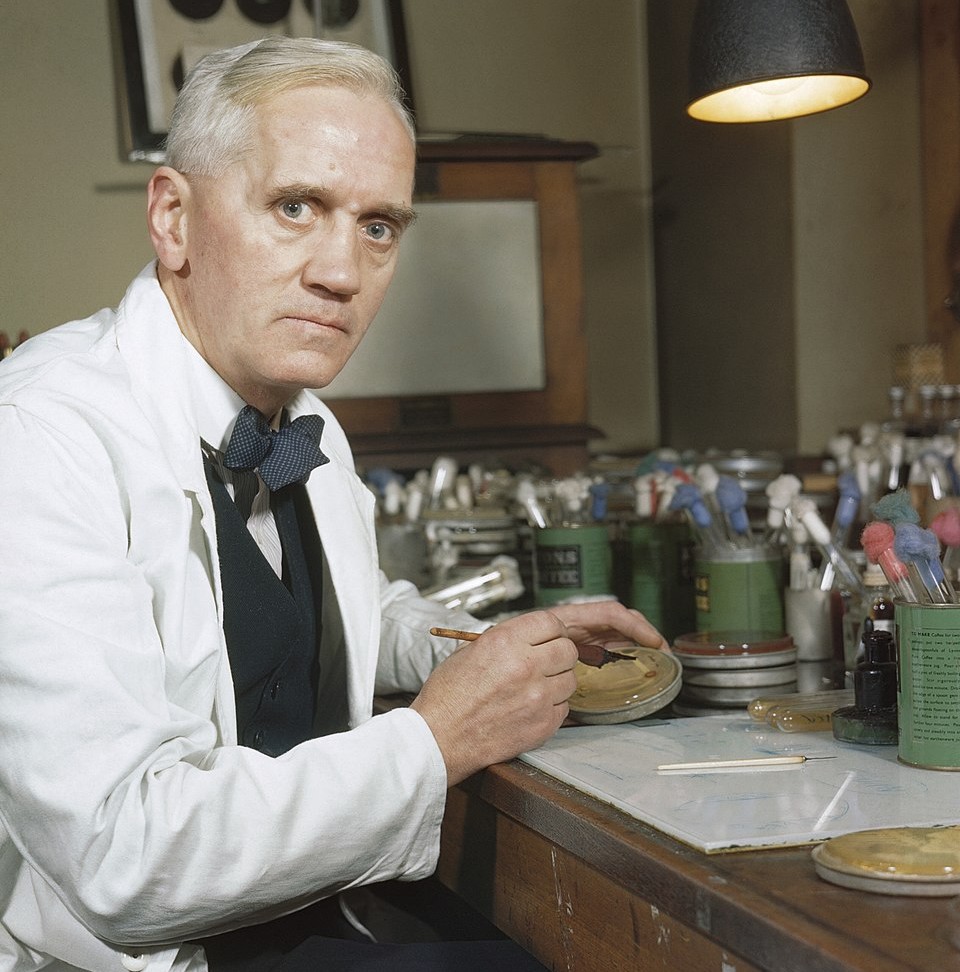
(Image From & Copyright © Wikipedia, 2026.)

Sir Alexander Fleming was a Doctor and Microbiologist who discovered the first antibiotic, Penicillin, by accident.

In 1928, Fleming was studying the bacterial organism Staphylococcus. Fleming accidentally left some petri dishes containing Staphylococcus uncovered in his lab before going away on holiday.

When Fleming returned to his lab, he discovered one of the petri dishes had developed mold. On examination, he discovered that all the Staphylococcus bacteria had been eliminated. Fleming discovered that this mold had produced a substance that had eliminated the bacteria. He identified the mold as Penicillium notatum, which is where he got the name Penicillin from.

The following year, Fleming reported his discovery in a talk to a Medical Research Club and wrote a paper which was published in the British Journal of Experimental Pathology. But it took nearly a decade for the scientific community to realise the implications and potential of Fleming’s discovery.

Fleming later reflected on his accidental discovery:

One sometimes finds what one is not looking for. When I woke up just after dawn on September 28, 1928, I certainly didn’t plan to revolutionise all medicine by discovering the world’s first antibiotic, or bacteria killer. But I suppose that was exactly what I did.
– Sir Alexander Fleming

Discovering Penicillin was not Fleming’s only achievement, but his most notable one. He was knighted in 1944 and shared the 1945 Nobel Prize in Physiology or Medicine. Knighted is when the reigning King or Queen bestows a knighthood, meaning that your title becomes Sir, rather than Mr or Dr.

Fleming was not exaggerating when he stated that he revolutionised all medicine. Antibiotics save many millions of lives across the world each year.

However, according to the NHS we are now seeing bacterial organisms that are resistant to some antibiotics. This means that some antibiotics no longer kill some harmful bacterial organisms. The NHS has been running a Keep Antibiotics Working campaign for a number of years, which has included this TV advert:

Click here to display content from YouTube.
Learn more in YouTube’s privacy policy.

Antibiotics don’t just save human lives. They can also be used to treat bacterial infections in animals too.

I find Fleming’s story incredible and inspiring. I hope you did too. If you enjoyed this post, you might like: The Story of Jonas Salk and The Polio Vaccine or Ida & Louise Cook: An Extraordinary & Inspirational Story.

Blog soon,

Antony

Share on Social Media:
Health, History, Inspiration, , , , , , , , , , , , , , ,

I Didn’t Know Whether to Laugh or Cry

Reading Time: 2 minutes

Sometimes in life, we don’t know whether to laugh or cry. I had one of these moments recently.

I woke up in the morning to go to my private appointment with an Ear, Nose & Throat Surgical Consultant. I didn’t feel at all well. The left side of my face (under my eye) had started to swell and my nose was fully congested to the point I couldn’t breathe through it at all.

But I had an appointment to go to. So off I went, my face continuing to swell and my left eye constantly tearing due to the pressure.

In the Consultant’s office, I explained my medical history, symptoms and prescribed medications. The Consultant looked up my nose and then delivered the news that would make want to laugh or cry.

I had a severe sinus/nasal infection. The Consultant said there was both dried and fresh blood, mucus and swelling up my nose. The Consultant said that he couldn’t remove my nasal polyps at the moment. This was because he would be unable to get the camera up my nose to see or remove the polyps due to the swelling and congestion.

The course of treatment: Doxycycline (antibiotic type number 9 for 2023, see 2023 – The Year of Antibiotics), Prednisolone and x2 Nasal Sprays for 6 weeks. Then for a review to see if my nose has improved, so the polyp surgery then can be arranged.

I didn’t know whether to laugh or cry. But I will always, were possible, choose to laugh. So I telephoned family and friends and told them that they wouldn’t be getting a polyp with googly eyes and a sparkly wig for Christmas.

Write soon,

Antony

Share on Social Media:
Health, , , ,

2023 – The Year of Antibiotics

Reading Time: 2 minutes

For most of 2023, I’ve been unwell with bacterial infections. I’ve had an infected knee, an abscess on my arm, pneumonia, a dental abscess, tonsilitis and sinusitis. As my mum would say: I’m surprised you don’t look like an antibiotic, with the amount you’ve taken.

Here is a list of antibiotics I’ve taken in 2023:

It is known that people living with Type 1 Diabetes, like me, have a weakened immune system. But to spend the majority of the year fighting bacterial infections and taking antibiotics is exhausting.

I’ve been trying really hard with the self-care including: regularly washing my hands, getting plenty of rest and sleep, drinking plenty of fluids, eating well, getting vaccinated for COVID-19 (plus boosters). I’ve even tried taking Vitamin C supplements. But nothing has seemed to make any difference. It’s like my white blood cells see bacteria coming and decide to go for a nap instead of fighting. Either that, or my immune system is made up of passivists, rather than warriors.

Every time I get an infection, it spikes my blood sugars. They go high and as much as I try to manage this by eating less and injecting more insulin, managing diabetes feels like having a full time job, on top of having a full time job and out of work commitments.

These regular periods of illness have affected my work and home life. I’m so lucky that Type 1 diabetes is classed as an unseen disability under The Equality Act (2010), otherwise I’d probably be out of a job.

I’ll be really honest, 2023 for me has been about managing illness after illness, whilst trying to maintain my employment. These two tasks haven’t left room for doing the things that I like to do, such as reading, writing, seeing friends and family, etc. That’s why the blog has been pretty quiet as of late.

Being on these different antibiotics has also got me worried. I’ve noticed that some of them haven’t been as effective for me as they previously have been at dealing with bacterial infections. Antibiotic resistance is something I’m noticing and with no new antibiotics on the horizon, what’s going to happen when antibiotics stop working altogether?

Blog soon,

Antony

Share on Social Media:
Health, , , , , , , , , , , , , , ,
Scroll to Top
×