Category

Gay

Import: The History of Marriage in the UK

By Creativity, Gay, JournalismNo Comments
Reading Time: 7 minutes

In this article we look at the history of marriage in the UK. Our history starts at 410AD, as before this time there were no written records of the history of marriage. Before written records, history was past down orally from the older generation to the younger one, unfortunately over time this oral history has been lost.

410AD – The Anglo-Saxons and Other Tribal Groups
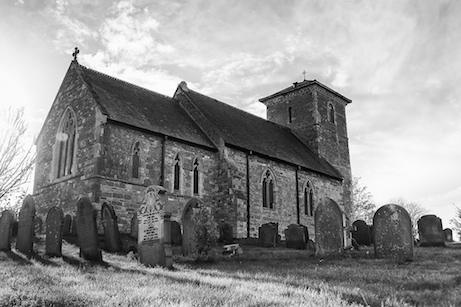
For many people marriage is strongly associated with religion, but this wasn’t always the case. Straight marriages at this time were about peace and prosperity rather than religion. Marriages encouraged good diplomatic relations and the development of trade between two (or more) tribal groups.

It was the fathers who decided who their daughters married and the wishes of the couple were seen as irrelevant.

gm-consent

(Image Credit: Andrew Brooks @ Flickr)

12th Century – Consent
In 1140 Decretum Grantiani wrote a canon textbook were he introduced the concept of verbal consent to straight marriage and the requirement for a couple to consummate their union to validate their marriage.

In the 12th century the Roman Catholic Church made verbal consent and consummation necessary for the church to view the straight marriage as legitimate. Some Roman Catholic writers at the time also describe marriage as a spiritual experience tied to God’s presence. While this is not surprising, prior to this very little mention of marriage as a spiritual experience.

gm-the-vows

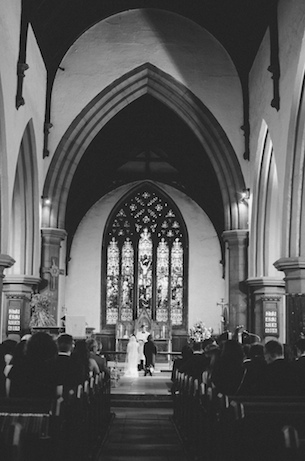
(Image Credit: Stuart Wrightson @ Flickr)

1549 – The Vows
The tradition of vows came from Thomas Cranmer’s Book of Common Prayer. Although the book was updated later on, many of Thomas Cranmer’s words are still used in religious ceremonies today.

These vows laid the foundation for how the Roman Catholic & Protestant churches viewed straight marriage at the time as: a partnership.

Thomas Cranmer must have reflected the views of the mainstream population about marriage at the time; otherwise it would have been unlikely that the church institutions would have accepted and taken on these views.

Roman Catholic Priests at this time were still delivering marriage ceremonies (as all other religious services) in Latin.

However, the Protestant’s began delivering their services in the English language. This is significant as English was the common language and this change made marriage ceremonies (as well as all other religious services) accessible to all.

Today, Protestantism is one the most popular religions practiced in the UK. Many historians believe that changing the ceremonies to English played a huge part in making Protestantism a dominant religion.

1563 – Sacramental Marriage
The Roman Catholic Church officially declared that straight marriage was one of the seven sacraments in this year; meaning that it was something undertaken in the presence of god. The other sacraments are: Baptism, Confirmation, Holy Communion, Confession, Ordination and Last Rites.

The Protestant Church didn’t see straight marriage as a sacrament at this time.

1753 – State Involvement
The Clandestine Marriage Act (1753) set out what the state expected in order for a straight marriage to be seen as legal. It required the couple to get married in a church by a minister and issue a formal marriage announcement or to obtain a marriage license.

1836 – Civil Marriages
In 1836 it became legal for straight couples to get civil marriages, which were generally held in Register Offices. This was to accommodate both the religious and nonreligious.

For the religious it meant that they could get married in a neutral place, if for some reason they couldn’t get married in their church. For the nonreligious it gave them a place void of religion. Prior to this, nonreligious straight couples had to go through a ceremony in a church and undertake practices & traditions that they didn’t believe in.

In 1837 the civil registration of straight marriages started.

1837 – It’s All About Straight Love
Between 1837-1901 it was the Victorian Era. It is said by contemporary historians that the Victorian Era is when marriage became about love, but still only the love between a man and a women. Gay people weren’t treated well in the Victorian Era in the UK, with laws against sexual acts.

gm-oscar-wild-grave

(Image Credit: Nik Mortimer @ Flickr)

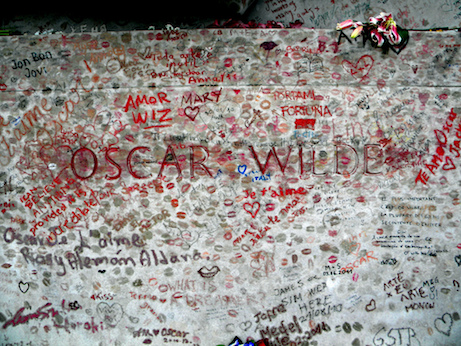
Oscar Wilde – widely regarded as one of the most talented writers of all time; was accused of sodomy by the father of his male lover. He lost the trial and was sent to prison. It was rumored that he could have escaped to France, but he didn’t. Once he’d served his sentence, he moved to France.

Left: Oscar Wilde’s grave in France, covered in Graffiti by gay people from across the world.

gm-divorce

(Image Credit: melbelleinsc @ Flickr)

1858 – Divorce
Between the 17th – 19th Centuries there were 300 cases of people wanting to end their marriages. The only way to do this was for an Act of Parliament for each marriage, as there was no accommodation for divorce in marriage law. So in 1858 the government of the time finally made divorce a legal process.

The legal process that meant those who wanted or needed a divorce could have one. But it also signified a shift in the focus of marriage from being a lifetime commitment – for better or worse, to a commitment that could be changed if life’s circumstances changed.

19th Century – Birth Control
By the 19th Century, both the Roman Catholic and Protestant Church’s had promoted procreation as the main reason for straight marriage. But as more children survived childhood, families got bigger and there was a need to use some form of contraception.

In the 1930s the Protestant Church accepted contraception, viewing it as necessary and not a sin or something God would be unhappy with. But the Roman Catholic Church has remained against any form of contraception, as they continue to see the procreation of children as a fundamental aspect of straight marriage.

gm-rings

(Image Credit: Viviana Hurtado @ Flickr)

2005 – Civil Partnerships
In 2005 the first gay civil partnerships took place, a year after The Civil Partnership Act came into law.

It allowed gay people to have legally recognised relationships, which granted them the same rights, protections and benefits of a married straight couple. This included legal rights, such as being one another’s Next of Kin; rights related to their partner’s children and the benefits including those of taxation reductions.

In terms of the actual act, the gay couple could have a civil partnership ceremony that could consist of anything they wanted (within the law). This could be vows, the exchange of rings, their choice in music, etc.

The Civil Partnership Act included a legal process for those gay people who may want to end their civil partnership. It is called ‘dissolution’ and works on similar legal principles to divorce.

This was the first time that the state in the UK legally recognised gay relationships. In the first five there were 42,778 gay civil partnerships.

Peter Tatchell (Gay Rights Activist) as well as others criticised The Civil Partnership Act, saying that it wasn’t complete equality as it excluded straight people from being able to be civil partners.

gay-marriage

(Image Credit: Gary Dunne @ Flickr)

2013 – Gay Marriage
This year The Marriage (Same Sex Couples) Act has been passed in England and Wales. The first gay marriages are expected in March 2014.

Stonewall said of The Marriage (Same Sex Couples) Act:

‘This is an historic moment for lesbian, gay and bisexual people, their families and their friends. This Act will mean that, for the first time, children growing up to be gay in England and Wales will have full equality in law. We can now proudly claim to be a beacon to the world for gay equality.’

In ancient history marriage had nothing to do with religion, but helped tribes to live and thrive together. Then Christian institutions (both Roman Catholic & Protestant Churches) influenced the definition and meaning of marriage. In the last century the state has got involved for marriage, allowing marriage to be more flexible and much more inclusive.

Marriage as a concept has evolved to meet the needs and desires of society. Currently there is some debate as to what role the churches and state play within marriage. It is likely that over the next century the Churches will continue to reside over the spiritual aspect of marriage, whereas the state will continue to be involved with the legal and administrative side of marriage.

Antony Simpson, Writer of this article would like to acknowledge the following sources that supported putting together this article based on fact:

BBC – Ten key moments in the history of marriage
http://www.bbc.co.uk/news/magazine-17351133

Office for National Statistics – Civil Partnerships Five Years On
http://www.ons.gov.uk/ons/rel/…rd/…/ard-pt145-civil-partnerships.pdf‎

Office for National Statistics – Video Summary: What does the Census tell us about religion in 2011?
http://www.ons.gov.uk/ons/rel/census/2011-census/detailed-characteristics-for-local-authorities-in-england-and-wales/video-summary-religion.html

Peter Tatchell – A setback for equality
http://www.petertatchell.net/lgbt_rights/partnerships/Straight-civil-partnerships-defeated.htm

Stonewall – Equal Marriage to become law – Thank You!
https://www.stonewall.org.uk/what_we_do/parliamentary/5714.asp

Stonewall – Get Hitched! A Guide to Civil Partnership
http://www.stonewall.org.uk/documents/get_hitched_a_guide_to_civil_partnership_english_3.pdf

Published by: The Gay UK Feb/March 2014 Magazine (priced £1.49)

mental-health-wisdom-banner


I aim for posts on this blog to be informative, educational and entertaining. If you have found this post useful or enjoyable, please consider making a contribution by Paypal:


Share on Social Media:

Book Review: Faitheist by Chris Stedman

By Books & Authors, Gay, Reviews, ThinkingNo Comments
Reading Time: 3 minutes
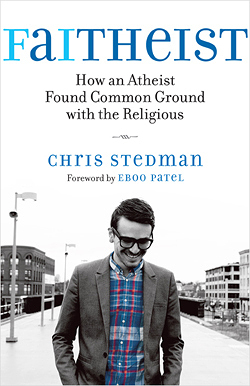
faitheist-chris-stedman-book-cover Chris Stedman is an atheist with a humanistic ethical code. Stedman, through his interfaith work, encourages the religious and nonreligious to come together and share their stories to humanise and understand one another for the greater good. He is the Assistant Humanist Chaplain at Harvard University and writes on his blog NonProphet Status, for the Huffington Post as well as on various other media platforms.

In Faitheist, Chirs Stedman shares the story of his life (so far). The full title of the book is longwinded (Faitheist: How an Atheist Found Common Ground with the Religious) and the introduction is off-putting. The introduction is full of terminology that is unfamiliar, unless you’re an Atheist Activist or an Interfaith Worker/Volunteer. This terminology and the elongated words are both unnecessary.

But get past the introduction and Stedman’s story is fascinating. Told in his warm and engaging writers voice his story is educational, enlightening, completely honest and emotionally resonant.

Stedman starts with his childhood; describing it as ‘not particularly religious.’ He discusses his search for a place to belong and a community to be a part of. Towards the end of his childhood he joins a church and becomes a Christian.

Stedman moves into his adolescence and tells us of his developing homosexuality. He describes a difficult time in his life, one where his sexuality and his extreme Christian beliefs are at odds. He discusses his self-hate, guilt and his loss of faith in God. He reveals how his mum discovered that he was gay and how she supported him. Lost, Stedman sets out on journey to find himself.

Stedman tells of his early adulthood; describing his journey to find himself and what he wants to do with his life. He tells that through Voluntary & Community Work he served others (a recurring theme throughout his entire life), he realised that the religious and nonreligious need to work together (interfaith working). He explains that he realised this has to start with understanding one another’s perspective.

Stedman writes about his set and strong convictions towards the end of this book, clearly promoting humanism. However he has a history of changing some of his views, based on his life experiences. So this left the question as to whether some of his views may change over time. Not his core values, those have always remained a constant, but some of his views on complex ‘grey’ areas in life.

As Stedman shares his story he describes his patchwork of tattoos and their meaning to him and his life. Stedman demonstrates his wonderful ability to reflect on his own experiences and learn from them. He reveals his unique passion, vibrant personality and how so alive he is. A gorgeous man with a beautiful, caring soul.

Stedman concludes his book, not surprisingly, advocating the bringing together of the religious and the nonreligious (atheists). He suggests that they should share their life stories with one another. This he states will lead to a better understanding of one another, so that they can work better together. He encourages the reader to open a dialogue with people from all walks of life, to listen to their stories and share yours.

Stedman could have included some glossy photo pages to match his autobiographical style of story sharing, which would have been great for visual learners.

Faitheist by Chris Stedman is a thought-provoking read and will appeal to anyone who is interested in the study of religious or atheism, the effect of religion on homosexuality, humanism, philosophy, ideology, interfaith work and/or bringing communities together.

Faitheist: How an Atheist Found Common Ground with the Religious by Chris Stedman is available to buy on Amazon.

Review soon,

Antony


I aim for posts on this blog to be informative, educational and entertaining. If you have found this post useful or enjoyable, please consider making a contribution by Paypal:


Share on Social Media:

Changes to The Pink List (2013)

By Gay, History, ThinkingNo Comments
Reading Time: 2 minutes

Pink List 2013 Logo

The Independent on Sunday has been producing their annual Pink List since 2000. The Pink List is a list of influential gay, lesbian, bisexual and trans gay people in the UK. Each year The Independent assembles a panel of Judges, opens up for nominations from the public and then decides who to award the 100 places to and in which order.

This year’s Pink List 2013 has been published and with some interesting changes. No longer is it enough to be gay and a well known public figure whose a role model to gay youth. This year people on the list have to have contributed or made a difference in some way.

The Independent on Sunday have created two separate lists in addition to the main pink list; one for National Treasures and one for Politicians. On the National Treasures list is the likes of Russell T Davies, Paul O’Grady, Sir Elton John, Stephen Fry, Sir Ian McKellen and John Barrowman. On the Politicians list is various Westminster Peeps.

I am disappointed by the creation of these separate lists for National Treasures and Politicians. I think it is enough to be gay and a role model, so I’d have kept the one Pink List. I’d have just put people who have contributed more in the last year higher up on the list.

I would have extended the list to accomodate the increasing number gay people coming out. It shows that we are out there in numbers and contributing to society. For easy reading, I would have split the list into parts: 1-10, 11-30, 31-50, 51-100 and 101+.

The Pink List has always missed out people that are not in the media spotlight. I think the Pink List could be massively improved by including these people who are contributing a great deal to their local communities and society as a whole. These ‘ordinary’ LGBT people are doing amazing things. Such as those Workers/Volunteers for The Albert Kennedy Trust & George House Trust, Students who’ve set up LGBT Societies in Universities and Employees that set up or run LGBT forums within their employers organisations.

The Pink List should include out LGBT parents. Its very difficult to be an out LGBT parent. Many LGBT parents worry about the impact of their sexuality/gender identity on their children, in terms of some schools institutional homophobia and bullying by other children. I discovered this through two interviews with LGBT parents for a feature article for The Gay UK. The first interview was with Paul and the other with Linda.

Finally, I think there should be a list of influential straight people who support gay rights. The gay marriage bill would have never been passed into law, if it wasn’t for the many straight people who voted in favour of the bill.

Blog soon,

Antony

mental-health-wisdom-banner

Share on Social Media:

Import: Celebrities and Others Record Video Messages to Gay Teens to tell them: It Gets Better

By Gay, Inspiration, JournalismNo Comments
Reading Time: 3 minutes

November is anti-bullying month. In 2010 there were a few high profile cases of gay teens committing suicide as a result of homophobic bullying both in school and in their communities in the USA. Dan Savage and his partner Terry Miller uploaded a video on YouTube titled ‘It Gets Better.’ The aim of this video, as you may have guessed, was to encourage gay teens to hang in there, as it does get better.

it-gets-better-logo

It Gets Better Logo

From this sprang the It Gets Better Project, an international campaign that aims to communicate the ‘it gets better’ message to gay teens to give them hope. The It Gets Better Project also aims to inspire and bring about change, so that there is less homophobia, more tolerance and more acceptance of gay teens.

Celebrities have voiced support for the It Gets Better Project with the likes of Zachary Quinto and Adam Lambert making their own ‘it gets better’ videos.

zachary-quinto-video-screen-shot

Zachary Quinto Video Screenshot

Zachary Quinto in his emotional video said: ‘The are countless other teens and young adults that are struggling to find a sense of identify and belonging in a chaotic and often unforgiving world…and to you I say it gets better.’

Click here to display content from YouTube.
Learn more in YouTube’s privacy policy.

adam-lambert-video-screen-shot

Adam Lambert’s Video Screenshot

Adam Lambert in his upbeat video said: ‘You have to be strong…and you have to pay attention to the positive… and in doing so you will push through and you will rise up and you will live your life to the fullest. It gets better but its up to you.’

Click here to display content from YouTube.
Learn more in YouTube’s privacy policy.

President Obama, other American politicians and employees from the likes of Apple, Google, Microsoft and Dell have added their videos. Employees and students from Universities, Sports Clubs and other institutions have added supportive videos.

Thousands of people have used their webcams, video editing software and internet connections to uploaded their own individual videos aiming to give hope to gay teens.

The success of the ‘It Gets Better Project’ has been phenomenal. Seth Levy, Chairman of the Board of Directors for the project says that they’ve had success, but recognises that there’s still much more work to be done:

‘The It Gets Better Project works globally to share message of hope with LGBT youth and to make things better for them. The Project has already had great success through its international efforts in the Americas, Australia, Western Europe and the Carribbean. We are now beginning to work in more regions where, at times, the circumstances for LGBT youth are especially challenging and LGBT-focused resources are scarce. Moldova has historically been such a place. We are very excited to have partnered with our local affiliate, Egali, to help improve things for LGBT youth in Moldova. ‘

To learn more about the It Gets Better Project, visit their website: http://www.itgetsbetter.org/ .

Published by: The Gay UK on Friday 8th November 2013.


I aim for posts on this blog to be informative, educational and entertaining. If you have found this post useful or enjoyable, please consider making a contribution by Paypal:


Share on Social Media:
×