Today is World AIDS Day. To raise awareness of HIV and AIDS here some facts:
Over 36 million people have HIV across the world. This number is increasing year on year, partly because people with HIV are living longer due to better treatment.
There are around 103,000 people with HIV in the UK.
Continued below…
Groups of people most at risk of getting HIV include: those who have regular sex without a condoms, those men that have sex with men, those who are of a black African ethnicity, those whom sex work and those who inject drugs.
Although there is no cure for HIV, treatment is better than it has ever been. Anti-retroviral therapy (ART) is very effective at preventing HIV from replicating and can lead to someone with HIV having an undetectable HIV load. But treatment does come with side effects including: depression, anxiety, diarrhoea, nausea, vomiting, tiredness, exhaustion and rashes.
As well as the physical effects of HIV and its treatment, there are many social impacts to. Stigma is still experienced by too many people whom are HIV positive today. People whom are positive report experiencing stigma at their places of work, shamefully in the NHS, by family and friends, on social media and sometimes from the mainstream media.
The best way to prevent the spread of HIV is to always use a condom when having sex; know your HIV status (by regular testing in sexual health clinics) and the status of your sexual partner(s); if you inject drugs don’t share needles or other injecting equipment.
If you think you’ve been exposed to HIV, to take post-exposure prophylaxis (PEP) treatment if available.
Here are is a video were someone shares their experiences of being HIV positive, it is well worth a watch and only about a minute long:
A lot happened in November. Some of it was good and some of it was bad. Here were the key events:
4th November 17 – I went Smoke-Free, Day 1.
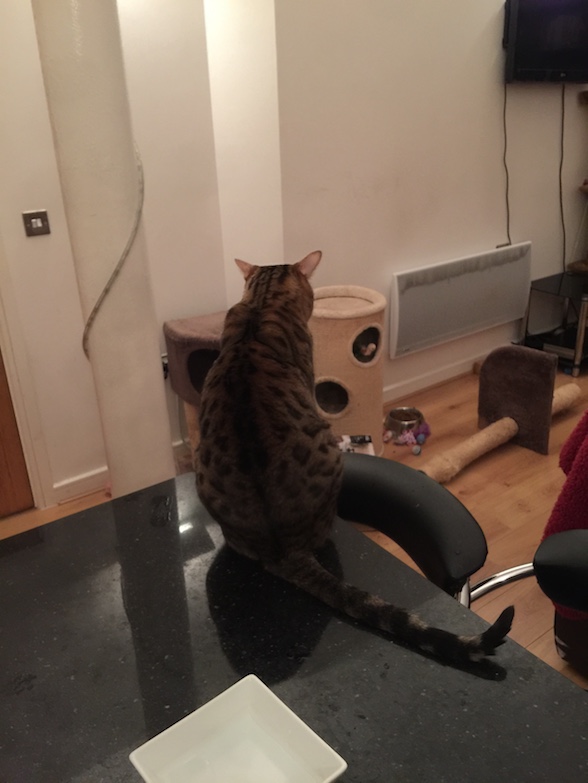
5th November 17 – I was given the cold shoulder by Dylan. He just walked away from attention to sit with his back towards me. I called him by his name and was ignored.
Blanked by Dylan.
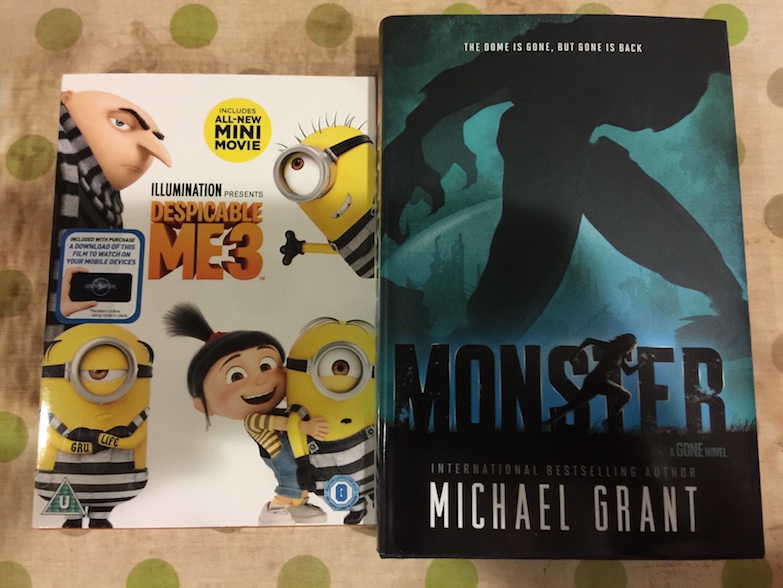
6th November 17 – My week made with the arrival of my pre-orders from Amazon.
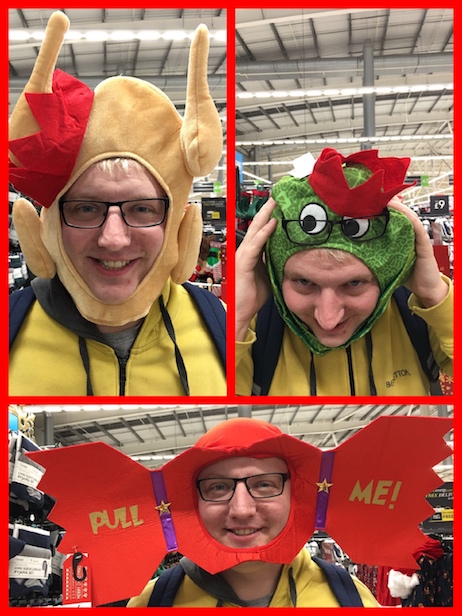
11th November 17 – I tried on silly Christmas hats!
Silly Christmas Hats!
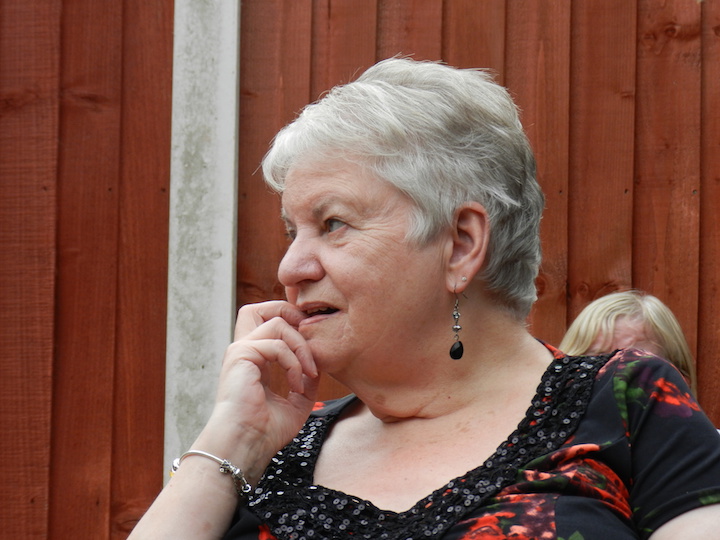
12th November 17 – My lovely Grandma passed away. I am sure she is missed dearly by all who knew her. I am also very lucky to have some wonderful memories with her.
My Lovely Grandma.
14th November 17 – I went to the GP about an abscess in my groin. I was given oral antibiotics and told if it gets any bigger I must go to A&E to see a Surgeon.
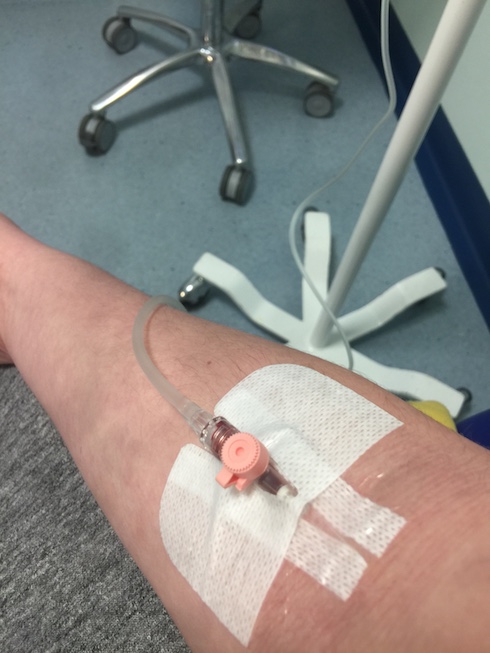
15th November 17 – The abscess had doubled in size. So went to A&E, was given a dose of IV antibiotics and eventually saw a Surgeon. They decided to operate first thing the following morning.
I had been Nil By Mouth since arriving in A&E at around 1PM and had not eaten since breakfast. They let me go home well after 9pm to eat, rest and with instructions to fast from 3am and be back at the hospital for 8am.
Oh pink…just my colour.
16th November 17 – The day of the surgery. All of the NHS staff were kind, compassionate and understanding. But communication could have been better.
I arrived on the ward at 07:50am and was instructed by a Nurse on the night shift to wait in the waiting room, while the early staff had handover. The night shift Nurse didn’t tell the day staff that I had arrived and meant I ended up waiting over an hour. Apparently staff had been looking for me everywhere.
After the surgery, I didn’t know whether my open wound had been packed or not, because it wasn’t documented in my notes.
It has been uncomfortable, a bit tender and at times painful. I have thanked my family and Steve who have been amazing in supporting me pre and post surgery.
The surgery and waiting for the open to heal has been very frustrating for me.
Everything has had to be put on hold. I’ve had to rest and haven’t been able to do very much apart from watching Netflix, reading and napping. A huge positive is that I have remained Smoke-Free throughout.
17th November 17 – I became super excited after watching a video clip that revealed the title of the new Fantastic Beasts (Harry Potter) film: The Crimes of Grindelwald on Twitter @BeastsMovieUK. The film will be released on 16.11.18.
22nd November 17 – The day of Grandma’s funeral, which was really a celebration of her life. The service was touching and well attended. Grandma’s family and friends came together afterwards to share memories and the many things they will miss about her.
25th November 17 – Day 21 of being Smoke-Free.
29th November 17 – Last day working at my old job. I will miss the people and liked the work, but am excited to start my new job.
Reading Time: 4minutesTuesday 10th October 2017 – World Mental Health Day
Today (Tuesday 10th October 2017) is World Mental Health Day. So here’s 10 easy ways to improve your mental health:
10. Regular Exercise
I don’t mean becoming a gym bunny or taking up running. Start walking. Walking is the easiest form of exercise. Take it slow and easy. Do it regularly, a couple of times a week. Gradually build up the distance. It’s even better if you can walk in places of natural beauty, as you’ll have the scenery to enjoy.
Research shows that physical activity can also boost self-esteem, mood, sleep quality and energy, as well as reducing your risk of stress, depression…
(From: NHS Choices, last accessed: Thursday 28th September 2017)
9. A Better Diet
We could all do with eating a bit better right? Add more fruit and vegetables to your diet – aim for five a day. Cut down on the amount of sugar and salt in your food. Try to drink 6-8 glasses of fluid per day (roughly 1.2 litres). You can learn more about diet on the NHS Choices – Eatwell Guide website.
8. Go Smoke-Free
Despite many smokers saying that a cigarette reduces their stress levels, Nicotine is a stimulant which means it has the opposite effect. It increases anxiety and stress levels, especially when those nicotine receptors in the brain need feeding. Becoming smoke-free has loads of other benefits as well.
7. Drink Less Alcohol
Alcohol is a depressant drug and affects your brain chemistry. Drinking a small amount of alcohol decreases inhibitions and can make you feel happier. But drinking heavily can lead to a lowered mood. It’s also not a good idea to drink if you are angry or upset, as it can make you feel worse and do things that you wouldn’t do sober.
You don’t have to stop drinking alcohol, just cut down on the amount. A good tip is to buy less alcohol. If you buy less alcohol you’ll have less to drink.
6. Meditate
Meditation is about clearing your mind and focusing on the present or a particular thought or emotion. Research suggests that daily meditation for just 20 minutes per day has benefits to mental health after just five days. Benefits of meditation include: lower stress levels, feeling more positive, improved concentration, improves the ability to be in the moment and helps with clarity of thought.
Start slow with meditation. Set an alarm for a short period of time, say 5-10 minutes and gradually build up the time. Gradually build up the frequency of meditation sessions to, so start with a couple of times a week and work towards daily practice. Like anything, your ability to meditate will get better with practice. So don’t be surprised if you struggle with intruding thoughts initially and don’t let them discourage you.
5. Recognise the Signs of Stress
Recognise when your stressed and take steps to de-stress. You can do this by taking a deep breath, focusing on your body, mind and feelings and look for signs of stress. I call this checking-in with myself and try to do it a few times a day. Signs of stress include:
How you may feel emotionally
overwhelmed
irritable and “wound up”
anxious or fearful
lacking in self-esteem
How you may feel mentally
racing thoughts
constant worrying
difficulty concentrating
difficulty making decisions
How you may feel physically
headaches
muscle tension or pain
dizziness
sleep problems
feeling tired all the time
eating too much or too little
(From: NHS Choices, last accessed: Friday 29th September 2017)
4. It’s okay to say NO
When we think about saying no to people, we imagine the world will end. But the reality is nothing like our imagination. In fact, most of the time, people are okay about it. Remember that it is okay to say no and say it when you need to.
Sometimes it’s better to say no rather than say yes. Otherwise we risk over committing ourselves and spread our limited energy too thinly.
3. Sleep
Sleep is so important for good mental health. Sleep allows our bodies to rest and repair. The average adult needs eight hours of sleep. But children and teenagers need much more. But it’s not just about the amount of the sleep you get, it’s also about the quality. Poor quality sleep lowers resilience and increases the risk of physical and mental illness. Get your shut-eye in and try to have a good sleep routine.
2. Off-Load
We all need people to talk to and to off-load to at times. Some off-load to their families, their spouses, their friends or their therapists. Find some people in your life who you can off-load to.
Important characteristics in people you choose to off-load to: they should give you a feeling of trust, they should have the ability to actively listen to what you say, they should be non-judgemental, they should be empathetic and they should challenge you when needed.
1. Relaxation
Write a list of things that help you relax. Then do some of the things on the list on a regular basis. For example, reading really relaxes me. So every night before bed, I read, even if it’s just for ten minutes.
This is the second in a series of Did You Know? blog posts. Each blog post will give ten fascinating facts on a particular topic. In part 1 the topic was science.
Today, I give you ten facts from history:
1. It took Thomas Edison 1,000 attempts to invent the lightbulb. He was once asked about the failure of the 999 attempts. He is said to have said “I didn’t fail 1,000 times. The light bulb was an invention with 1,000 steps.”
2. Between 87m-117m people are estimated to have died in World War 1 & 2. Approximately 37m people died in World War 1 and 50m-80m people in World War 2.
3. Ann Frank, her family and others lived in a Secret Annex for 2 years before being arrested by the Gestapo. Anne was sent to a concentration camp and died of typhus not long before the camp was liberated by the Allies. However Ann lives on in her diary published with the consent and permission of her father Otto Frank.
4. Queen Elizabeth I’s pinnacle of her rule was The Spanish Armada. King Philip II of Spain planned to send 130 ships to take Elizabeth I off the throne and seize England. However Elizabeth’s strategy beat The Spanish Armada. She sent Drake with a fleet of her own ships to attack Cadiz Harbour. Drake was successful destroying over 100 Spanish ships and returning with gold. Then when Philip sent the armada (or what remained of it), Elizabeth used fireships to scatter the formation of the Spanish ships. Then her ships picked off the Spanish ships one by one.
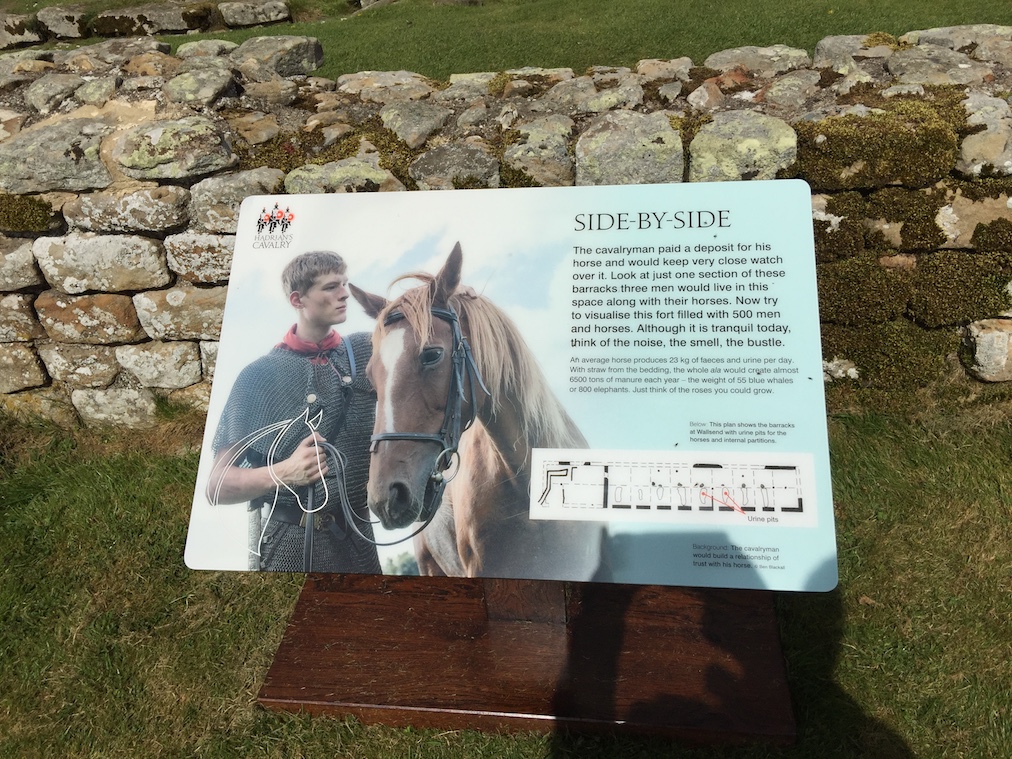
5. In each Roman Fort there were 500 men and horses. An average horse produces 23KGS of faeces and urine per day. That’s 11,500KGS of waste per day!
6. Winston Churchill is famous for being the Prime Minister during World War 2. But he was also an artist, starting his artistry in his forties. He created over 500 paintings over 48 years.
7. Between 75m-200m European people were killed by The Black Plague in the 14th century. This accounted 30%-60% of the total population in Europe. The Black Plague is thought to have been airborne and spread so quickly due to poor hygiene, poor living conditions (including disposal of human waste) and poor disposal of infected corpses.
8. The first black and white TV sold in the UK was around 1936. The first colour TV sold in the UK was around the late 1960s.
9. Britain first slaving expedition set out in 1562 by Sir John Hawkins. Slavery continued until 1807, when the UK passed legislation making slavery illegal and freeing all slaves. The slave trade was abandoned for moral reasons, rather than economic reasons, as at the time there was still a lot of money to be made in the trade of slaves.
10. The NHS and The Welfare State were both established after the second World War. The UK was recovering from an expensive war, yet still deemed healthcare, social security, free education, council housing and full employment as priorities. The NHS was established in 1948 and Social Security began 1945.