One of the things I wanted to do in 2025 is to keep a diary. To record my memories, moods and triggers. I decided an App might be better than one of the hundred notebooks that I have. So I decided to try the app Daybook. I have to say, I am really rather impressed. Here are some screenshots:
Daybook has got an endless list of features, making it suitable for anyone. But here are the ones that I use and like:
Daily notification reminders, for which you choose the time.
Post Tags.
Attaching photos to posts.
Use both on the App on my phone and web browser.
Mood Check-In.
Security features: Pin lock, password and biometrics used to secure your data.
Calendar to see how often I’m making entries.
Data graphs to track my progress with mood, etc.
I love this app. I have been using it for a few months and more often or not I complete a daily diary and mood check-in. It has so much potential and so many different uses for different users.
To balance this here are the annoying or frustrating aspects of the App:
It would be great if I could write my To Do Lists on there and tick items off as I complete them. Instead I continue to use the Notes app to do this.
Tags not allowing capital letters and Android App defaultly wanting to put the first character in caps. Means you have to press the first letter twice, very annoying. I have been in touch with the developer about this and they assure me that the next version of the app will be fixed, but they did not give a timescale for this.
No ability to attach short videos to your posts.
No ability to add links into posts. Or save webpages.
The price is expensive at £3.49 per month for a premium subscription. This means I probably will switch to a cheaper app in the long term.
No mention of if diary entries are encrypted, I hope to goodness that they are.
This is the second in a series of Did You Know? blog posts. Each blog post will give ten fascinating facts on a particular topic. In part 1 the topic was science.
Today, I give you ten facts from history:
1. It took Thomas Edison 1,000 attempts to invent the lightbulb. He was once asked about the failure of the 999 attempts. He is said to have said “I didn’t fail 1,000 times. The light bulb was an invention with 1,000 steps.”
2. Between 87m-117m people are estimated to have died in World War 1 & 2. Approximately 37m people died in World War 1 and 50m-80m people in World War 2.
3. Ann Frank, her family and others lived in a Secret Annex for 2 years before being arrested by the Gestapo. Anne was sent to a concentration camp and died of typhus not long before the camp was liberated by the Allies. However Ann lives on in her diary published with the consent and permission of her father Otto Frank.
4. Queen Elizabeth I’s pinnacle of her rule was The Spanish Armada. King Philip II of Spain planned to send 130 ships to take Elizabeth I off the throne and seize England. However Elizabeth’s strategy beat The Spanish Armada. She sent Drake with a fleet of her own ships to attack Cadiz Harbour. Drake was successful destroying over 100 Spanish ships and returning with gold. Then when Philip sent the armada (or what remained of it), Elizabeth used fireships to scatter the formation of the Spanish ships. Then her ships picked off the Spanish ships one by one.
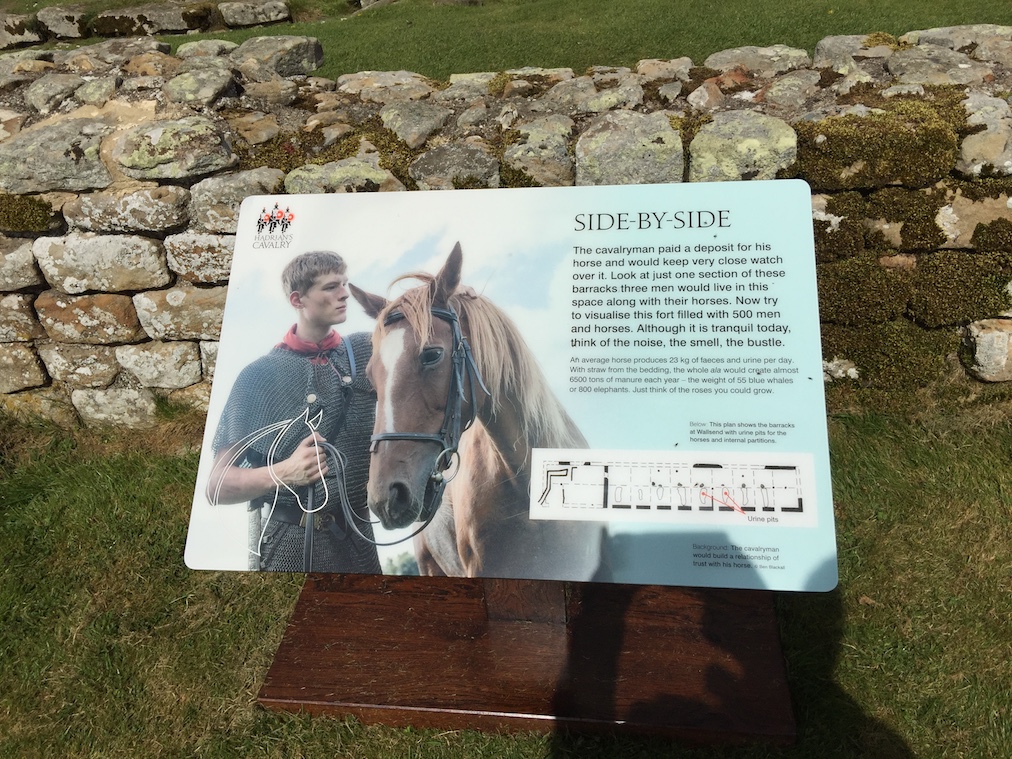
5. In each Roman Fort there were 500 men and horses. An average horse produces 23KGS of faeces and urine per day. That’s 11,500KGS of waste per day!
6. Winston Churchill is famous for being the Prime Minister during World War 2. But he was also an artist, starting his artistry in his forties. He created over 500 paintings over 48 years.
7. Between 75m-200m European people were killed by The Black Plague in the 14th century. This accounted 30%-60% of the total population in Europe. The Black Plague is thought to have been airborne and spread so quickly due to poor hygiene, poor living conditions (including disposal of human waste) and poor disposal of infected corpses.
8. The first black and white TV sold in the UK was around 1936. The first colour TV sold in the UK was around the late 1960s.
9. Britain first slaving expedition set out in 1562 by Sir John Hawkins. Slavery continued until 1807, when the UK passed legislation making slavery illegal and freeing all slaves. The slave trade was abandoned for moral reasons, rather than economic reasons, as at the time there was still a lot of money to be made in the trade of slaves.
10. The NHS and The Welfare State were both established after the second World War. The UK was recovering from an expensive war, yet still deemed healthcare, social security, free education, council housing and full employment as priorities. The NHS was established in 1948 and Social Security began 1945.