Reviews

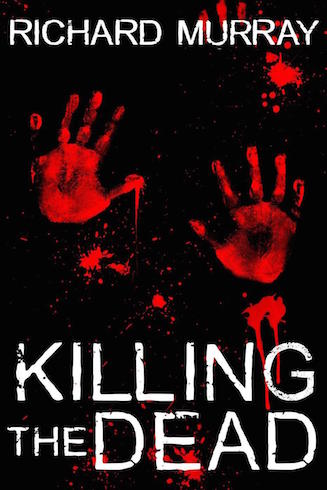
Ebook Review: Killing The Dead by Richard Murray
Reading Time: 2 minutes

Ryan has just thanked the man he has murdered for the pleasure he got from taking his life, when an incessant banging comes from his front door. He opens the door to Lilly, a frightened woman who is being chased by zombies. She explains that the world is being taken over by the living dead.

Then Lilly discovers Ryan’s secret hobby – killing the living.

We discover that Ryan is a serial killer from the North of England and that he believes his best chance of survival in this new world of The Undead is to be part of a group. Lilly agrees to be part of his group – but with rules and conditions.

Ryan and Lilly then set off on an action-packed adventure, being chased by zombies as they search for somewhere safe.

The concept in Killing The Dead is brilliant. A serial killer in a zombie apocalypse. It’s great to read a zombie apocalypse story set in Britain, written by a British Writer.

Ryan’s character was fascinating. Cold and logical but still likeable. The other characters felt two dimensional and lacked development – but this was probably due to the relative short length of the novella format. I think the story would have been better as a novel.

Ryan’s character was so captivating, that his perspective was enough to make the reader want to read on. The use of hooks would have benefited the story. As would the use shorter sentences for action scenes, which would have added to the readers sense of tension.

Killing The Dead had good description and perfect pacing, however the ending was a bit abrupt and left the reader with no sense of conclusion or satisfaction. I have since discovered that this novella is part of a series – it’s good to know that more of the story will be told.

A lack of editing let Killing The Dead down. There were sentences that didn’t make sense due to missed or wrong words, a few grammatical inaccuracies and similarities that just didn’t work.

Overall, you’ll enjoy Killing The Dead by Richard Murray, which is available to download for free (at time of writing this review) on Amazon.

Review soon,

Antony

The Z-VIRUS Series

Z-VIRUS Powers

The Z-VIRUS mutates people’s DNA. The majority of infected people become zombies, but a minority seem immune but the virus causes them to develop powers.

At first these powers like invisibility, telepathy and telekinesis aided survival. But as the Z-VIRUS continues to mutate, the powers become more and more destructive.

Forced with no other choice, one group goes in search of a cure. But will they survive the roaming zombie hordes long enough to make an epic journey across the country to find the cure?

Join Alexis, Vis, Chan, Luke, Natalie, Grace, Chloe, Kyle, David and Goliath on this journey in Z-VIRUS Powers, the first instalment of this three part story.

Z-VIRUS Monsters

The Z-VIRUS is mutating, now affecting plants and animals.

A group of people, most with supernatural powers, are in desperate hunt for a cure.

Their powers which once helped their survival, are now becoming destructive.

Can they survive for long enough to find the cure? And if so, what will happen when they take it?

Join Alexis, Goliath, Luke, Lucy, Kyle, Natalie, Erin, Sophie, Kevin, George, Zoha, Harry and Ryan on this epic, entertaining and thrilling adventure.
Share on Social Media:
Amazon, Books & Authors, Reviews, , , , , , , , , , , , , , ,

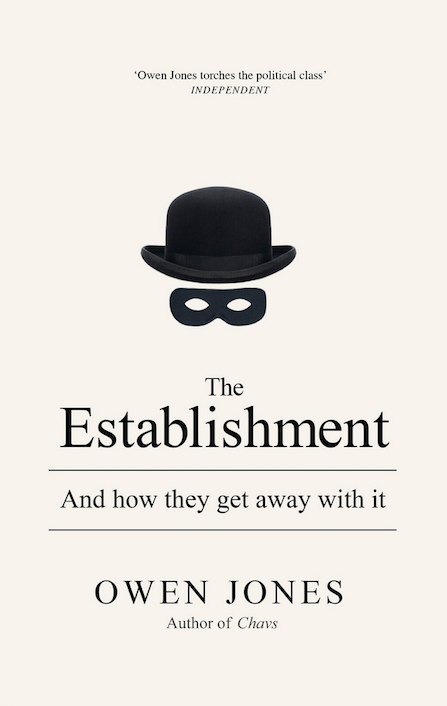
Book Review: The Establishment – And How They Get Away With It by Owen Jones

Reading Time: 4 minutes

In The Establishment, Owen Jones starts by defining Britain’s Establishment today. Then Jones looks back at political history to how the modern day Establishment of Britain came to be, focusing on each facet, in chapters titled: The Outriders, The Westminster Cartel, Mediaocracy, The Boys in Blue, Scrounging off the State, Tycoons and Tax-Dodgers, Masters of the Universe and The Illusion of Sovereignty.

In ‘The Outriders’ Jones explains how a few wealthy elite changed societies view (the ‘Overton Window’) from one of socialism to capitalism, the free market and privatisation. Jones demonstrates how people with alternative views to The Establishment are silenced, discredited or have their lives destroyed for speaking out.

In ‘The Westminster Cartel’ Jones exposes the revolving door of MPs going back and forth between Politics, Business, the Media and Think Tanks. In ‘Mediaocracy’ Jones reveals the media’s role in propaganda both for governments and against, with the media’s agenda being those of their wealthy owners – whom have close-links with MPs from all political parties.

In ‘The Boys in Blue’ Jones describes the role the Police played in creating today’s Establishment and gives examples of Police corruption and cover ups. He explains how the Establishment eventually turned on the Police. Jones gives real examples of the inequality of Police treatment between different groups, which includes the difference in treatment between those with power and those without.

Jones writes about the real people ‘Scrounging off the State’: the wealthy elite. He writes that public assets, such as the railways, are being and have been sold off for profit. That the wealthy elite get the profits, as well as tax-payer subsidies (as well as benefits for employees on low wages, healthcare for their employees, employees educated by the state, etc.) but that the tax-payer shoulders all the risk. If something goes wrong – like it did with the Banks, big business relies on the State to step in and bail them out.

In ‘Tycoons and Tax-Dodgers’ Jones explains how the rich feel that they pay enough tax and sheds light on the complicated tax avoidance schemes used by big businesses, that are all perfectly legal – thanks to the big businesses’ Lobbyists, Accountants and PR firms. Jones exposes the toxic relationship between the Treasury and big companies. That big companies actually help to develop Tax Policy with Treasury Civil Servants and the Government.

In ‘Masters of the Universe’ Jones examines the financial sector, particularly ‘the City’ referring to London’s financial sector. Jones discusses how successive governments relaxed regulation to keep their Banker friend’s happy prior to the financial collapse in 2008. That despite the collapse and the tax-payer bailout to the tune of over a trillion pounds, there is still no real robust regulation and there’s an attitude of continue as before. That the financial sector is driven by an unregulated greed for profit, a big bonus culture and to increase the wealth of the already extremely wealthy.

In ‘The Illusion of Sovereignty’ Jones scrutinises the relationship between Britain’s Establishment, the United States of America (US) and European Union (EU). He shows that the Establishment’s mentality is international and shared with the US, by looking at the history of the ‘special relationship’. Jones looks at the history of the Britain and the EU, identifying some elements of the EU that share the British Establishment’s mentality and other elements that oppose the British Establishment’s mentality. This mix of shared and opposed views to the British Establishment, is most likely why there is a politically mixed view of the EU in the UK.

In Jones’ final chapter titled ‘Conclusion: A Democratic Revolution’ he states that the Establishment is being run for a wealthy few, rather than for the majority. He states that the majority have had enough; enough of falling living standards, the rich getting richer and the poor getting poorer, and that the time to challenge the Establishment is now. Jones states that austerity is ideological rather than required. He identifies changes to improve society, but gives little practical advice for readers who may want to get involved with political change. This chapter was also the shortest in the book, which was a slight disappointment.

Throughout The Establishment, Owen Jones references the points that he makes, shares interviews he has conducted with people who have been involved with creating and maintaining the Establishment and gives examples to illustrate his points.

The Establishment shows the shocking level of corruption and vested interests, along with laws that protect the wealthy elite – all created by The Establishment (the wealthy elite) to balance society in their favour. It will make you think. Hopefully by Jones shining a light on the murky Establishment it will lead to the people challenging The Establishment for the political change they want.

The Establishment is an excellent and informative book about how society has come to operate today for the minority and how it can be changed to operate for the majority. The Establishment is an essential read for all, especially those interested in politics or political change.

If you liked this post, you might like the following pages:

Review soon,

Antony

More Content From Antony

Here are the books that Antony has published:

Share on Social Media:
Amazon, Books & Authors, Political, Reviews, , , , , , , , , , , , , , , , , , , , , , , , , , , , ,

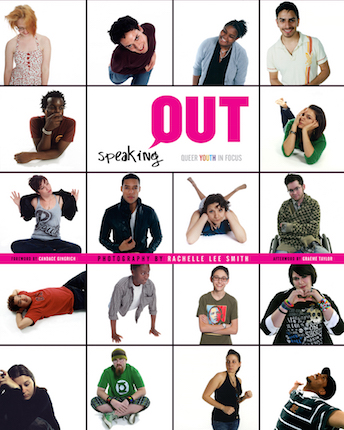
Book Review: Speaking Out – Queer Youth in Focus photography by Rachelle Lee Smith

Reading Time: 2 minutes

Speaking Out is a collection of photographic portraits of LBGT young people (aged 14-24 years old). 65+ young people, mostly from the USA are photographed. On each portrait young people have shared their thoughts, feelings or an experience. The young people have been honest in sharing their joys and tribulations of being an LGBT youth in a heterosexual world.

In Speaking Out photographer Rachelle Lee Smith took the portraits, handed young people a sharpie pen and left them to write what they wanted. Among other topics, young people wrote about: stereotypes, identity, homophobia, self-love and romantic love. Young people identify as gay, lesbian, bisexual and transgendered. It was great to see transgendered young people represented, however the vast majority of the young people identified as lesbian.

Years later, some young people reconsidered their portrait. They wrote about how their lives had changed and what they would write now. It was enjoyable to read these reflections from young people and the book would have benefited from having more of these. Several pages of the book felt wasted as they contained quotes that either praised the photographer or the book its self. Never was there any praise for the young people who were actually brave enough to share their stories.

Speaking Out is presented well, it’s a large book with 127 glossy pages in full colour. There is the odd page where a young person’s hand writing makes it difficult to read what they’ve written, but at no point is it unreadable.

Speaking Out is an enlightening book that shows how we are all the same, rather than how we are different. It should be available in every school, college, library and youth club.

If you liked this post, you might like my All Love, Relationships & Gay Community Content page or my FREE Article: Influential UK Gay Men [PDF Download].

Review soon,

Antony

More Content From Antony

Here are the books that Antony has published:

Share on Social Media:
Books & Authors, Gay, Reviews, , , , , , , , , , , , , , , , , , , , , , , , , , ,

Review: Sun Jar by Suck – Disappointing & Flawed Design

Reading Time: 2 minutes
sun-jar-by-suck-my-photo
My Photo of the Sun Jar I bought myself.

A Jam Jar stores Jam.
A Sun Jar collects and stores Sunshine.
So that you can use it at Night.

…Or so the Sun Jar box says.

The idea is great: use a solar panel to charge a rechargeable battery during the daytime and then when a sensor senses that it’s dark use the battery to power a small LED light bulb.

The Sun Jar features:

  • Two modes: Auto mode and Charge mode. In auto mode the sensor is supposed to detect when it’s dark and power the light bulb.
  • A solar panel, rechargeable AAA battery and LED light bulb.
  • Waterproof – meaning that it can be used both indoors and outdoors.
  • Comes in a choice of light bulb colours: orange/yellow, blue and pink.
  • The frosted material gives a glow to the light.

But unfortunately, due to a flawed design the Sun Jar is disappointing and essentially useless. The Sun Jar isn’t bright enough to be used on it’s own as a night light; but switching on any sort of artificial light causes the sensor on the Sun Jar to switch off the LED light bulb. Making the product essentially useless.

What’s annoying is that Suck, the creators of the Sun Jar, could have easily solved this problem. They could have had three modes on the Sun Jar: Auto (use of the sensor), On (sensor off but light bulb lit) and Charge (sensor off and just charging). It’s shocking that they didn’t discover this fundamental design flaw in the product prototypes.

The Sun Jar could be significantly improved by alternating the colours of the lights. This could have been done through each Sun Jar unit having a number of different coloured LED bulbs. It would be even better, if through a switch, the customer could choose what colour light will be produced or set it to random.

My final thought on the Sun Jar is that it was expensive, costing £20. I don’t think I would have felt this was expensive if I had been able to use the product as I intended: to be a night light, along with another night light to give adequate light.

The Sun Jar is available to buy on Amazon, but honestly, I wouldn’t bother until they’ve made significant improvements to the design.

Review soon,

Antony

Click the Image to be taken to Square to purchase the book.
Share on Social Media:
Amazon, Technology, , , , , , , , , , , , , , , , , , , , ,
Scroll to Top
×