The Vasculitis flare ups had been getting more and more frequent. More painful. So when my blood test results can back abnormal, I can’t say that I was surprised.
In the next month, I’ll be having two infusions of Rituximab, two weeks apart.
Let’s be clear about the aim of this treatment:
It’s to try to slow down the progress of the Vasculitis. Not to treat it or cure it. Just to slow it down.
What is Rituximab? Rituximab is a drug that essentially kills certain white blood cells that make up the immune system.
Side Effects of Rituximab Treatment Include:
Fatigue
Nausea / Vomiting
Gastro Issues – loose bowels or constipation
Rashes / Hives
Hair Loss
Headaches
Swelling caused by a build up of fluid
Allergic Reaction – causing a high temperature and potentially difficulty in breathing
Weight loss
High blood sugars
Anxiety / Agitation
Dizziness
Mouth Ulcers
Sweating
But the big one is an increased risk of getting an infection. Infections that the body would usually be able to fight off, it won’t be able to. This means that any infection could become quickly life threatening and potentially kill me (if not treated promptly or if I am just unlucky).
It’s a scary time. But whatever I think and feel about it, its got to be done.
Just over a year ago, I felt numb and like I was coasting through life. I was existing, rather than living. I hadn’t been well for a while and had recently been diagnosed with vasculitis.
People with vasculitis have a significantly reduced life expectancy when compared to that of the average person. This diagnosis caused me to re-think every aspect of my life. It caused me to ask myself: Are you happy? The answer was no.
So then I started asking myself: What would make you happier? I had to look at everything: my health, my work, my relationships with others, my passions (including writing), my finances, my home life, my mental & emotional health.
It was a daunting task. Sometimes, it is easier to be stuck in an unhappy and unfulfilling rut, rather than be brave and face the truth. Especially when facing and accepting where I was in my life involved acknowledging the unhappiness and beginning to make changes.
Change is always hard. Our brains like patterns of behaviour. They are key to our survival as a species, but not key to a healthier and happier life.
So I got counselling. I explored every aspect of my life. I started making changes: prioritising my health, changing jobs, working with others to improve relationships – resetting of expectations and putting in boundaries, getting back on the dating apps, working on a more balanced approach to pursuing my passions, reducing my financial outgoings were possible and trying harder to stick to a budget, getting rid of excess clutter at home and generally taking better care of my mental and emotional health.
None of it was easy. And I’m still not where I want to be. But I’m pleased to say my health has improved in some areas such as my diabetes management & mental health. I am also happier than I can ever remember being.
The power of the subconscious mind should never be underestimated. The subconscious mind is responsible for automatic responses to stimuli including: physiological states/changes, storing & processing of experiences/memories, prompting thoughts into the conscious mind, determining emotional responses and morals/beliefs. The subconscious mind can influence our behaviour without our conscious mind being aware of it.
Some good examples of the subconscious mind in action are any behaviour that we do without consciously thinking about it (such as breathing or holding your breath, your heart beating, walking, body language) and learned behaviours (such as navigating a route, riding a bike, driving a car).
The role of your subconscious mind is to keep you safe and to make life a little easier for you. But unlike your conscious mind it isn’t driven by thoughts and logic, instead it is driven by emotions and intuition.
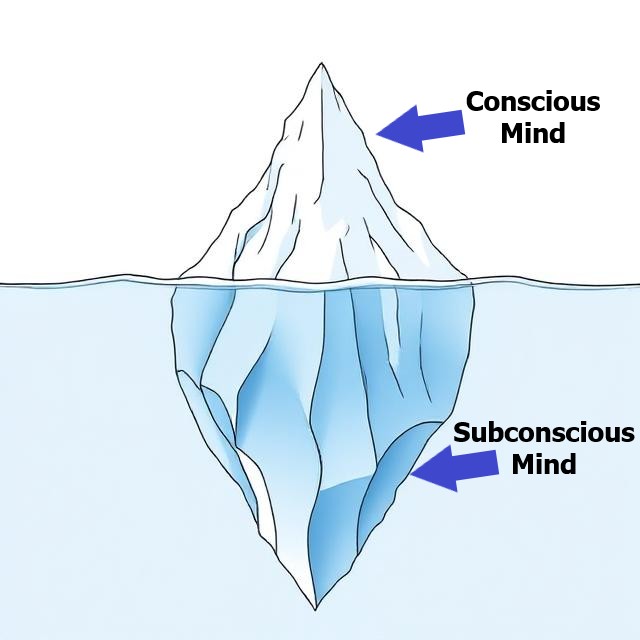
Think of the two parts of your mind as being like an iceberg. Your conscious mind being above the water level, whereas your subconscious mind is the much larger part of the iceberg hidden below the water.
If your subconscious mind is troubled or disturbed, you are likely to experience some of the following symptoms:
Difficulty sleeping – you may struggle getting to sleep or staying a sleep. You might have disturbing dreams or even night terrors. Waking up more tired than when you went to bed.
A lack of energy – including feeling exhausted. This in turn will impact on your motivation levels, as energy and motivation are intricately linked.
Muscle tension – throughout your body. You may experience unexplained aches and pains.
Difficulty relaxing and a lack of enjoyment in activities you used to find pleasurable.
Increased anxiety levels – along with all the symptoms that anxiety brings with it.
A reduced ability to concentrate, including difficulties in making both small and large decisions.
Feeling overwhelmed.
Becoming easily irritated or annoyed.
So how do you heal a troubled or disturbed mind? It’s a difficult one.It’s not easy. It takes work.
Your subconscious mind doesn’t operate the way your conscious mind does. Your conscious mind is made up of thoughts. You can reason and use logic with it.
Your subconscious mind on the other hand, it communicates in emotions, symbolism in dreams and random and often irrational thoughts. But there are things you can do to help your subconscious mind heal from being troubled, disturbed or traumatised. They include:
Create a safe and positive environment – Your subconscious mind craves safety and a sense of security. So having an environment where you feel safe and positive is essential.
Explore your emotions, lean into all of them and fully experience them. No more suppressing or ignoring hoe you feel. Process your emotions logically and thank your subconscious for sharing information through emotions.
Pay close attention to you conscious thoughts. Look out for rumination, a critical inner voice and repetitive thoughts of self-doubt.
Keep a journal. Express your thoughts and feelings on paper (or computer). Doing this allows your brain to properly process, rather than pushing thoughts and feelings down into the subconscious.
Meditate. Meditation builds self-awareness and quietens your mind so you can better hear the messages from your subconscious.
Practice self-care. Try to eat well, take regular exercise and have a good sleep routine. These actions not only help you physically but are an important signals to your subconscious. By practising self-care you are giving/repeating a message to your subconscious: That you matter enough to be kept safe and taken care of.
Create new experiences – Focus on activities that bring you pleasure, enjoyment and happiness.
Stop harmful behaviours – If you use alcohol, substances, disordered eating, excessive work or other behaviours that you are harming you whether that be physically, mentally or emotionally try to stop these. You may need professional help and it may take time. But do it. It is worth it, I promise.
Evaluate your relationships. Make sure all your relationships are healthy and not in anyway abusive or neglectful. If you are in a toxic relationship, run, get out. You deserve to have relationships that are healthy, loving, kind and respectful.
Get professional support. Get counselling or other talking therapies. The process of counselling (or other talking therapies) can help you to identify how you can change your life to make you healthier and happier. I will warn you that counselling or other talking therapies require active participation, reflection and a desire to deal with problems and make changes.
Check in with how you are feeling regularly. Set a time each day to check in with how you feel. Try to choose a time when you are not busy – like first thing in the morning, lunchtime or before bed.
Deal with any past traumatic experiences – This may include acknowledging what trauma you’ve experienced, dealing with difficult emotions and learning to forgive and let go.
Before I finish, I will say just one more thing: That healing the subconscious takes time. Don’t expect instant results. Just keep working on it and keep focused. Always ask yourself: Will my thinking/behaviour lead to a happier and healthier me? If the answer isn’t an instant yes, then change your thoughts or behaviour until the answer is a distinctive and strong YES!
Write soon,
Antony
Support
I recognise that people visiting this page/post might want to know where they can get support. If you require support around your mental health, addiction or physical health, see this Support page here.
Anxiety is typically described as a feeling of apprehension or dread in situations where there is no actual real threat and is disproportionate to the situation faced. Unlike stress, anxiety persists even after a concern has passed. In some cases, anxiety can escalate into an anxiety disorder and can affect day-to-day life.
Recently I’ve been experiencing episodes of anxiety. Here is a list of physical symptoms of anxiety:
Not Experienced (Yet) Palpitations Panic Attacks Shortness of Breath / Hyperventilating Restlessness Difficulty Performing Everyday Tasks Dry Mouth Teeth Grinding
Anxiety can affect anyone and can be quite debilitating. It usually has a trigger. In my case there has been several concurrent triggers. You can get diagnosed with anxiety and treated for it.
Treatment for anxiety can include medication and/or counselling therapies.
I recognise that people visiting this page/post might want to know where they can get support. If you require support around your mental health, addiction or physical health, see this Support page here.