It was reported in various news sources (see for example here on the BBC) that one of the hospital bosses in charge of the NHS Trust where Lucy Letby committed her crimes was arrested by the Police on suspicion of perverting the course of justice this week.
The limited information about the ‘Hospital Boss’ have given me a lot of questions, including:
Why wasn’t the individual named? Lucy Letby was named before being found guilty, so surely it can’t be about protecting the individual’s identity.
Three other hospital bosses were arrested in June/June 2025 (see this previous BBC News report), but there has been no update. Why?
Are any of these hospital bosses professionally registered, and if so, have they all informed their professional bodies (such as the General Medical Council, the Nursing & Midwifery Council, etc.) of the allegations made against them?
Have any of these hospital bosses, who may have moved on to roles in other NHS Trusts/Other Employers, made their new employers aware of these allegations?
What happened to the idea of having a regulating body for senior healthcare leaders who are not otherwise professionally regulated? This idea seems to have been completely forgotten about.
Who are the Police using as professional advisors? They will require experts in the field to advise whether any evidence they discover is expected practice or not and if the evidence demonstrates corporate manslaughter or gross negligence. In Lucy Letby’s case the Police used a very questionable expert to help to convict Letby. I hope they don’t repeat this mistake.
What does suspicion of perverting the course of justice mean in relation to this case?
What support have the families been offered in relation to these on-going enquiries?
Are the Police including only the cases that Lucy Letby was convicted on or looking at all cases of infant deaths on the neonatal unit? If so, what time period are they looking at? The reports indicate that the Police are investigating corporate manslaughter and gross negligence manslaughter, both of which could have been happening before the crimes of Lucy Letby. They could even still be continuing.
What is the NHS Trust doing to ensure nothing like this ever happens again?
What is the Care Quality Commission’s (CQC) role in all this? The CQC last inspected this NHS Trust in the end of 2023, rated most areas as Requires Improvement (in the areas of Safe, Effective, Responsive & Well-led). I want to be clear: This is not a criticism of the CQC. Just a question. An idea I have thought about is the CQC perhaps having legal set timeframe for returning to any healthcare organisation that has areas that Requires Improvement?
Why hasn’t the Department for Health & Social Care released any statement about this or anything that is being done at the NHS Trust to improve? Surely, this would reassure local people.
I’m hoping that time will provide answers to at least some of these questions, if not all of them.
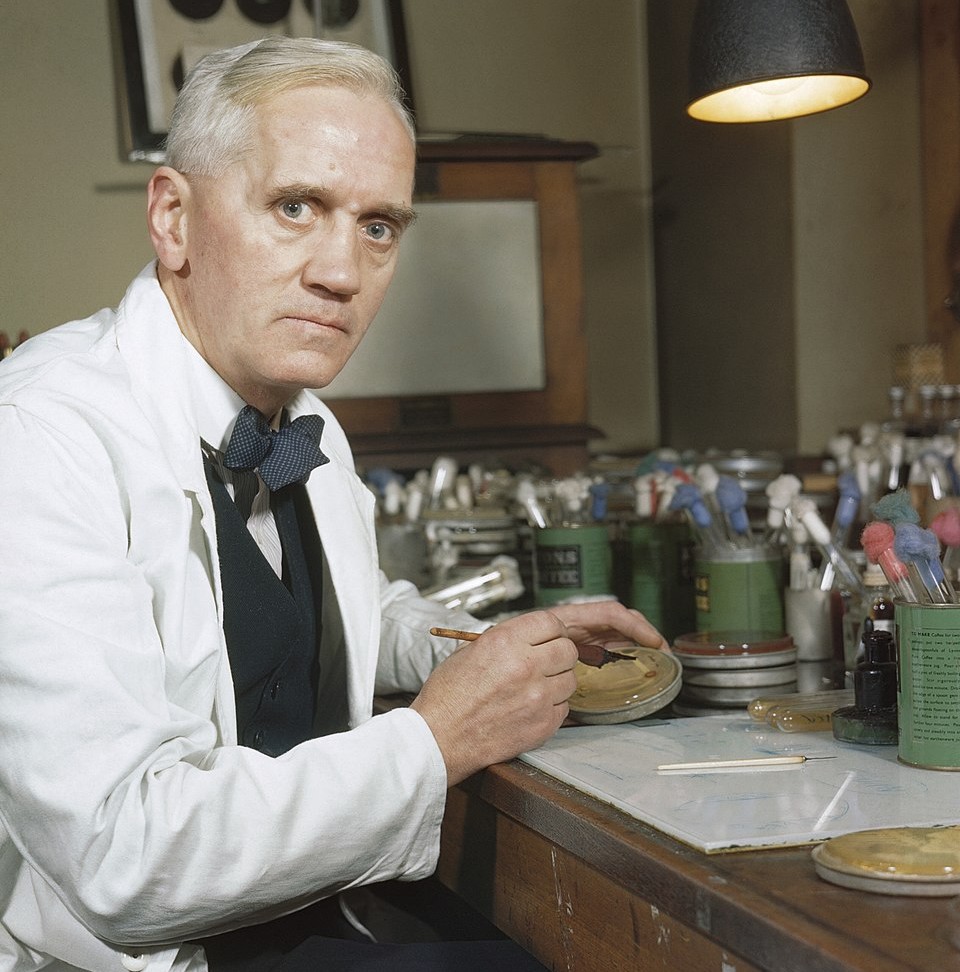
Sir Alexander Fleming was a Doctor and Microbiologist who discovered the first antibiotic, Penicillin, by accident.
In 1928, Fleming was studying the bacterial organism Staphylococcus. Fleming accidentally left some petri dishes containing Staphylococcus uncovered in his lab before going away on holiday.
When Fleming returned to his lab, he discovered one of the petri dishes had developed mold. On examination, he discovered that all the Staphylococcus bacteria had been eliminated. Fleming discovered that this mold had produced a substance that had eliminated the bacteria. He identified the mold as Penicillium notatum, which is where he got the name Penicillin from.
The following year, Fleming reported his discovery in a talk to a Medical Research Club and wrote a paper which was published in the British Journal of Experimental Pathology. But it took nearly a decade for the scientific community to realise the implications and potential of Fleming’s discovery.
Fleming later reflected on his accidental discovery:
One sometimes finds what one is not looking for. When I woke up just after dawn on September 28, 1928, I certainly didn’t plan to revolutionise all medicine by discovering the world’s first antibiotic, or bacteria killer. But I suppose that was exactly what I did. – Sir Alexander Fleming
Discovering Penicillin was not Fleming’s only achievement, but his most notable one. He was knighted in 1944 and shared the 1945 Nobel Prize in Physiology or Medicine. Knighted is when the reigning King or Queen bestows a knighthood, meaning that your title becomes Sir, rather than Mr or Dr.
Fleming was not exaggerating when he stated that he revolutionised all medicine. Antibiotics save many millions of lives across the world each year.
However, according to the NHS we are now seeing bacterial organisms that are resistant to some antibiotics. This means that some antibiotics no longer kill some harmful bacterial organisms. The NHS has been running a Keep Antibiotics Working campaign for a number of years, which has included this TV advert:
I saw an announcement on social media about a new law in the UK, one that in theory will help protect girls and women from harassment. I posted a comment stating that I hoped that this law would be applied regardless of gender.
I was making a simple, but important point: That the law should be applicable to and applied equally, regardless of gender.
I found myself under attack from well meaning women in the comments. I never disagreed that the safety of girls and women is an issue in our society. Nor that boys and men are usually the perpetrators of harassment towards girls and women.
I replied to each comment, encouraging girls and women learn the lesson from the gay civil rights movement. The lesson is this: The gay civil rights movement made changes happen because they gained allies. I encouraged these women to gain allies, rather than go on the attack.
To girls and women: Know that there are many boys and men that are not harassing you. Know that many boys and men don’t share the views, attitudes or behaviours of those that harass you or might do.
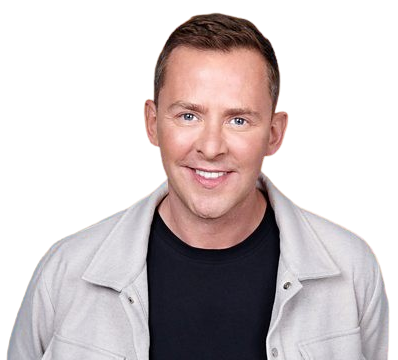
Late last week the BBC announced that they had sacked Scott Mills, Radio DJ, due to ‘personal conduct.’ Almost immediate after this announcement, it was reported that his BBC colleagues where shocked by this news.
Since then, there have been countless reports in the media and an infinite number of discussions online about Scott Mills and why the BBC sacked him.
I’ve read a lot of speculation, many assumptions and an awful lot judgements made about both Scott Mills and the BBC. But what I haven’t read are many facts.
I’m not sure why more details haven’t been shared with the public. But this noticeable lack of factual information seems to have led to most people to assume Scott Mills is guilty of something. Many people are assuming that Scott Mills has done something heinous and potentially illegal.
It doesn’t help that the BBC hasn’t got a great track record when it comes to dealing with abuses and crimes by its Talent/Stars. Just think of Huw Edwards & Jimmy Savile as examples of this.
The truth of the matter is that right now, we just don’t know why Scott Mills was sacked. I think that as time progresses more facts will emerge. As facts are disclosed, I hope they justify the BBC’s sacking of Scott Mills and their handling of the situation.
Otherwise, the BBC will be highly criticised and rightly so. If Scott Mills has done nothing wrong, or something very minor, the BBC’s actions could potentially not just ruin his career, but his life too.
I am choosing to reserve any judgement of Scott Mills or the BBC’s actions until I have more information and I suggest you do too.