Tag

trust

Lucy Letby: A Miscarriage of Justice?

By ThinkingNo Comments

Lucy Letby was a Neonatal Nurse at Countess of Chester Hospital, an NHS run hospital in Cheshire, UK.

Letby was accused of and convicted of 7 counts of murder and 8 counts of attempted murder of neonatal infants whilst working on the Neonatal Unit at the hospital. Letby was sentenced to life in prison without the possibility of parole.

Many years ago, as a Student Nurse, I completed a placement on a Neonatal Unit. With this limited experience I couldn’t understand how practically Letby would be able to do what they were suggesting she did. A Neonatal Unit is a very busy place: Lots of Nurses, Doctors, Health Care Assistants, Other Healthcare Professionals, Parents, etc. There are always other people around.

I was never alone with any neonate for more than 2 minutes. Even if I were, I could be seen by other staff through windows at all times. Some of what Letby is accused of would require longer than 2 minutes to execute, so it just didn’t make sense to me.

I had a gut feeling that in the case of Letby, that something wasn’t right. As more details of Letby’s crimes were reported in the media, this only added to my doubts are her guilt.

So I decided to learn all I could. What I discovered is truly shocking. Here is what I learned:

1. Nobody ever saw Letby harm any neonate.

2. Nobody has given any possible motives as to why Letby would want to harm or murder neonates. The Police don’t even explore possible motives, in fact, they actively avoid discussing this in the documentaries I’ve seen.

3. Staff at the hospital became alarmed after a spike in neonatal deaths on the unit.

However the unit has a number of problems including:

  • A lack of suitably qualified and experienced staff – it is reported that Letby was one of only two full time qualified Neonatal Nurses on the unit. Remember this is for a unit that operates 24/7/365.
  • The unit was admitting neonates that were much more complex than staff could care for safely and effectively.
  • Team working on the unit was poor. This included poor communication and a poor level of trust between the professions.
  • Consultant Ward Rounds only took place twice a week, rather than twice a day as is standard practice on other neonatal units. Consultants were unavailable out of hours and Nurses reported that it was often to difficult to find a doctor when one was required.
  • Taps were contaminated. Sewage came up from drains in the sinks. This led to outbreaks of serious and potentially life threatening infections.

Despite all of the above, Cheshire Police did not explore or examine what was happening on the neonatal unit as part of their investigation.

3. Dr Stephen Brearey, Dr John Gibbs, Dr Ravi Jayaram and another doctor (not named publicly for legal reasons apparently) suggested to Cheshire Police that Letby could be harming/murdering neonates, without any evidence.

Their main reason for suspecting Letby was that she always seemed to be around when incidents happened. This was unsurprising when you consider the staffing levels of the unit, that she was one of the most qualified and experienced Neonatal Nurses and was available to pick up additional shifts due to having no other responsibilities outside of work (apart from caring for her cat).

4. Cheshire Police launched their investigation but needed an expert medical review of suspicious cases to establish if neonates had been intentionally harmed/murdered or if there could be other causes for harm or death.

Around this time, Dr Dewi Evans, a retired Paediatrician approached the Police offering to provide his medical experience and expert opinions in exchange for being paid. It is reported that in less than 10 minutes of reviewing the first case he declared that harm/death had been intentional.

It is also reported that Dr Dewi Evans told the Police that he had “never lost a case.” This suggests that he wanted to find intentional harm/murders, rather than providing a balanced and evidence-based medical opinion.

Dr Dewi Evans went on to review all suspicious cases and classify them, without ever giving a rationale for why some cases were put in his ‘intentional harm/death’ category and others in ‘harm/death by other causes.’ His expert testimony in court likely led to Letby’s conviction.

However Dr Dewi Evans was a Paediatrician and not a Neonatologist. In one case he quoted a research paper by Dr Shoo Lee (a recently retired Neonatologist from Canada). The research paper was from over 30 years ago. Dr Dewi Evans drew the completely wrong conclusion from the research paper and cited it as evidence of intentional harm towards one of the neonatal cases he reviewed.

Dr Shoo Lee heard about Letby’s case and how his research had been used after Letby’s trial and conviction.

Dr Shoo Lee was concerned about the misuse of his research paper and concerned that this evidence might have been used to wrongly convict Letby. He assembled a panel of 14 internationally respected Neonatologists. They worked in pairs, reviewing the case notes for each suspicious case of neonatal harm/death.

If the pair of Neonatologists didn’t agree on the cause or contributing factors of harm/death in a case, a third Neonatologist would be brought in to review the case to aid in discussion and reaching an agreement.

Dr Shoo Lee and the other 14 Neonatologists did this at their own expense produced a comprehensive report. Dr Shoo Lee and the team of 14 Neonatologist found that in all cases, there was no evidence of intentional harm or murder.

5. Police appeared to assume Letby was guilty, without the evidence to support this assumption. In interview footage released, Police Officers repeatedly asked Letby to provide them with an alternative explanation for harm/death caused to neonates if she didn’t do it. In the UK it is the Police Officer’s responsibility to prove guilt, beyond reasonable doubt, not for someone accused of a crime to have to prove their innocence.

6. Police Officers reported that Letby was “very compliant,” but have also made comments that on occasions Letby said “no comment” and this increased their conviction that she was guilty. In court it was suggested that Letby repeatedly said “no comment” when questioned, which could be an indicator of guilt.

However, according to people who’ve read the transcripts of Letby’s interviews the amount of times that Letby said “no comment” in interviews was greatly exaggerated by both Police Officers and the Crown Prosecution Service in court.

It should be noted her that Letby is entitled to say “no comment,” may have been advised to do so by legal counsel. It appears that Police Officers jumped to an assumption that Letby was guilty and did not consider other possibilities. Police Officers are supposed to keep an open mind and discover the truth.

7. Police Officers appeared to assume Letby must be guilty because she couldn’t remember details of neonatal cases from years ago. Police Officers were suspicious and appeared to assume Letby must be guilty because she couldn’t remember requested details of neonatal cases from years ago.

As a Registered Nurse I couldn’t provide details of cases I worked on a few year ago. This is due to the number of patients I’ve seen since and the general passage of time.

Being unable to remember specific details of cases, without access to clinical notes, is not an indicator of guilt, but an indicator of being human.

8. Evidence against Letby was manipulated so that it was factually incorrect when presented at trial. This included:

  • Showing a duty chart evidencing that Letby was always on shift when all the incidents happened. This chart deliberately excluded incidents where Letby wasn’t on shift. This manipulated duty chart was visually powerful. However, if the incidents where Letby wasn’t on shift had been included, it wouldn’t have shown any pattern what so ever.
  • Use of swipe card data to access the unit was used. Even though everyone on the unit was aware of the code to the backdoor, which allowed entry without swiping an ID card.
  • In a search of Letby’s home on one occasion Police found notes Letby had written. The Crown Prosecution Service pointed to specific comments Letby wrote such as “I did it.” “I wasn’t good enough.” and “I’m evil.” The Crown Prosecution Service stated that these comments were a confession. Yet they failed to mention other comments Letby wrote such as “I’m innocent.” and “I’ve done nothing wrong.” The Crown Prosecution Service failed to mention that Letby was mentally ill due to the stress of being under investigation in court. Or that Letby had also been advised to write down any and all thoughts by a Counsellor provided by the hospital’s Occupational Health Department.

9. Letby’s defence team didn’t present any Expert Medical Witnesses to challenge Dr Dewi Evans’ testimony or suggest an alternative narrative. Nobody really knows why Letby’s defence team didn’t do this. But there are reports from people that were in court of utter shock and disbelief that they didn’t present any expert medical witnesses. One of the most compelling arguments of Letby’s guilt was the medical evidence provided by Dr Dewi Evans.

10. Voices that felt Letby was being wrongly accused and that she was innocent were silenced. It is reported that some Nursing colleagues and even her Unit Manager felt that Letby was being wrongly accused, yet they were silenced by the hospital trust. These were some of the people who worked closely with Letby and their voices should have been heard.

Miscarriage of Justice? My Thoughts:

After careful consideration of all the above, I am convinced that Letby’s convictions are a miscarriage of justice. I suspect that in time, all will come to think this. But what will have been the impact of this miscarriage of justice?

Letby has already lost everything: Her freedom, her vocation, her privacy, her ability to ever lead a normal life.

But the impact is much bigger than that. People will trust institutions like the Police, the Crown Prosecution Service, the Courts and the NHS significantly less. There will be a number of public inquires to try to understand what happened in Letby’s case, to learn from it, so it doesn’t happen again. But the damage will have been done.

Trust once gone, is very difficult for institutions to regain. It may take several generations for people to forget the abuse of power and serious errors in judgement in the Letby case. But for this to happen, it relies on institutions not abusing their power in the future.

The impact of the Letby case could be used positively. Some ideas for this include:

  • To improve standards in neonatal and maternity care in the NHS. I think the conversation around this has already started to happen as a result of this case.
  • Used to re-examine the role of leaders within public institutions. We should consider how they are accountable for their organisations, what values they should have and what culture they should foster.
  • Cause reflection and discussion around every aspect of the criminal justice system. What its purpose? How it should operate? Etc.
  • Used to reconsider the appeals process for convictions.
  • Used as an example of how institutions and professionals within them shouldn’t operate.
  • Used to develop critical thinking within all public institutions.

Write soon,

Antony
mental-health-wisdom-banner
Share on Social Media:

Book Review: Dare To Lead by Brené Brown

By Amazon, Books & Authors, ReviewsNo Comments

I first discovered Brené Brown when I saw this TED talk titled The Power of Vulnerability:

Click here to display content from YouTube.
Learn more in YouTube’s privacy policy.

Which Brown followed up with this TED Talk, Listening to Shame:

Click here to display content from YouTube.
Learn more in YouTube’s privacy policy.

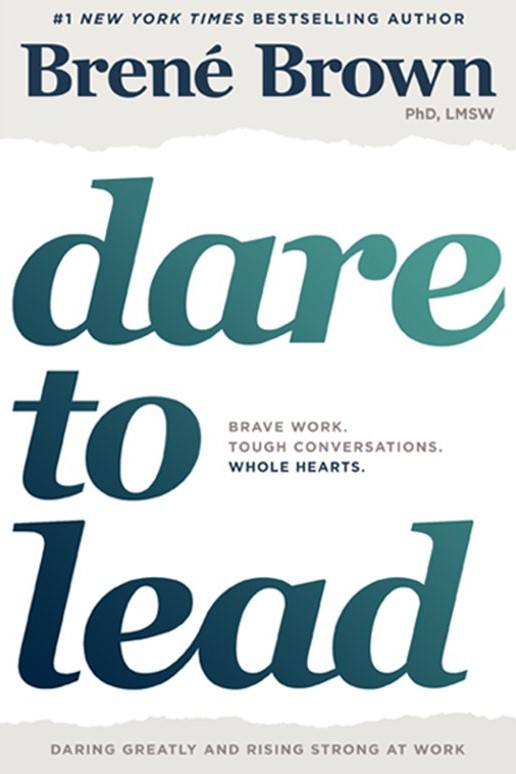
dare-to-lead-brene-brown-book-cover So when I started on a leadership course at work, I decided to buy Dare To Lead by Brené Brown.

Dare To Lead is about leadership that is vulnerable, values-based, trusting and resilient. The book is split into four parts.

The first and biggest part is Rumbling with Vulnerability. In this section Brown discusses what vulnerability is, why it is important, myths about vulnerability, using courage to drop our armor as leaders, dealing with shame and empathy and curiosity grounded in confidence.

The second part is Living Into Our Values. Values are very important to me, so unsurprisingly this was my favorite part of the book. This section covers what our own values are, what organisational values can be and how to turn values into measurable

behaviours. The List of Values activity I completed with some of my colleagues at work and I found it an incredibly useful in terms of learning more about them and what they value. Since I have also contributed to a consultation at work around our organisational values.

The third part of the book is Braving Trust. This section of the book is all about building trust as a leader and recognising how trust is built up gradually over time and can be easily lost.

The fourth part of the book is Learning to Rise which is all about resilience. This part of the book is about recognising emotion within ourselves and others as a leader, being curious about emotions and being self-aware enough to recognise what is going on emotionally for ourselves and others.

Throughout Dare To Lead are many helpful strategies that if implemented would make you a better leader. Including strategies around: having difficult conversations, increasing self-awareness, being aware of the values of ourselves and of the people we lead, being aware of the stories we tell ourselves (that may or may not be true), how to build trust and courage in the people that you lead.

Dare To Lead is written in a way that feels like you’re having a conversation with Brown. She gives examples from her own experience and also asks open questions styled in a coaching method to encourage the reader to think about how these experiences relate to their own life.

About Brené Brown
Brené Brown is a Research Professor at the University of Huston, is a Social Worker and delivers talks and training on leadership around innovation, creativity and change. Brown has worked with Pixar (Disney) and Facebook around leadership. You can learn more about Brené Brown on her website here.

Dare To Lead by Brené Brown is available to buy on Amazon.

Review soon,

Antony

mental-health-wisdom-banner

Share on Social Media:

The Healthy Relationship Checklist

By Love & Relationships, Thinking2 Comments

How do you know if you’re in a healthy relationship or not? Find out more below.

relationship-gender-symbols

Relationship Gender Symbols. Copyright © Antony Simpson, 2018.

If you are in a healthy relationship you should tick most of the boxes on the checklist below:
Unticked Box You can do things independently, without getting a hard time from your partner. You can explore interests, have hobbies, etc.

Unticked Box You can communicate openly and honestly with your partner without negative judgement or fear.
Unticked Box You never have to hide anything from your partner.
Unticked Box You get support from your partner when you are vulnerable.
Unticked Box Your partner encourages and supports you in everything that you do.
Unticked Box You have shared your dreams and hopes with your partner.
Unticked Box You and your partner have shared ambitions for your life together.
Unticked Box You feel safe: physically, mentally and emotionally.
Unticked Box You have regular contact with friends and family members.
Unticked Box Your partner never makes you feel bad for spending time with others.
Unticked Box Your partner always shows you respect.
Unticked Box You and your partner laugh together.
Unticked Box You and your partner listen to one another.
Unticked Box You and your partner both approach the relationship as a learning experience.
Unticked Box Your relationship adds something to both you and your partner’s life.
Unticked Box Your partner speaks to you with kindness.
Unticked Box Your friends and family honestly think your relationship is a healthy one.
Unticked Box Your relationship started with vulnerability, connection and intimacy.
Unticked Box You would use these words to describe your relationship: trust, warmth and attachment.
Unticked Box Your partner never belittles you.
Unticked Box Neither your partner or yourself displays contempt for the other. No eye rolling. No squinting at them as if to say what are you talking about?
Unticked Box You don’t feel controlled or manipulated.
Unticked Box Your partner is never aggressive or violent towards anyone or anything. This includes: you, any children and any pets or animals.
Unticked Box Your partner knows where the line is and doesn’t cross it. Either accidentally or purposefully.
Unticked Box You feel equal to your partner in the relationship.
Unticked Box You like the way you grown and changed while you’ve been in the relationship.
Unticked Box You and your partner express appreciation and admiration for one another.
Unticked Box You have fun together.
Unticked Box Your partner offers comfort, love and support when you’re upset, stressed or fearful.
Unticked Box You make decisions jointly.
Unticked Box You are intimate. By intimate I mean hugs, cuddles, kisses, holding hands, being close to one another and sex.
Unticked Box You and your partner don’t argue constantly.
Unticked Box Your partner loves and likes you when you look and feel at your worst.
Unticked Box Your family and friends like your partner.

If you think or feel that you maybe in an unhealthy or abusive relationship, the following websites have useful information on:

Blog soon,

Antony

mental-health-wisdom-banner


I aim for posts on this blog to be informative, educational and entertaining. If you have found this post useful or enjoyable, please consider making a contribution by Paypal:


Share on Social Media:

What are some of the most difficult questions in life?

By Life, ThinkingNo Comments

most-difficult-questions-in-life

Here are some of the most difficult questions in life, along with my current partial answers to them. None of these complex questions have simple answers. If you have a better answer than the one I have, or would like to share your answer to these questions, please leave a comment below.

Who am I?

Who I am is fluid rather than fixed and changes constantly. It encompasses my thoughts, feelings, intentions, actions, omissions, behaviours and my soul. Who I am changes as quickly as each encompassed element can change.

What is consciousness?

Consciousness is a result of billions of neurons in the brain firing electrical signals to other neurons. Our body allows us to sense the world (through taste, sight, touch, smell, sound and psychic intuition) and then create thoughts and feelings based on the now, memory and past experiences, dreams and hopes for the future.

What’s the meaning of life?

I have no idea what the meaning of life is. But I’ve got a feeling that it’s different for every life. I do know that you should decide on the purpose or ideally purposes of your life.

Purposes may include: dedication to family/friends, goals/achievements of your own, contribution to the wellbeing of others, learning/studying/growth, to create or destroy, to consume and enjoy, to travel, to adventure and experience, to improve humanity, to love, the list goes on and on.

Where does creativity come from?

Perhaps the question should read: what inspires creativity? A large number of things can inspire creativity, including: nature, research, other people’s creative works (art, music, literature, sculpture, etc.), curiosity, questions, past experiences, daily life, failures, logic/illogic, other people’s ideas, emotions, procrastination, through play, again the list goes on and on.

Does God exist?

Pagans are polytheistic, meaning that they worship many Gods and Goddesses. I personally believe that these Gods and Goddesses represent humanistic aspects of a Divine Energy.

This Divine Energy is infinitely complex and incomprehensible by the limited human mind. This Divine Energy is within everything that ever was, is and will ever be. It is timeless, interconnects everything and keeps the universe in balance through constant creation, change and destruction.

Why do bad things happen to good people?

We all have a sense of fair play. When we see bad things happen to good people, we notice it as it feels unfair. We notice it more because the person is a good person. But life events are simply what they are.

Sometimes bad things appear at random and sometimes they are methodological. They can be difficult to accept and it is normal to feel a sense of injustice and unfairness.

Reframing your thoughts to acknowledge that bad things happen regardless of whether a person is good or not is a way to balance your thinking. It is also useful in breaking the association between behaviours (being a good person) and negative life events (the bad things).

What happens after we die?

The cells, tissues and organs in your body die (necrosis). Your body decays until the point that only your skeleton is left (skeletonisation).

But when most people ask this question, they are referring to what happens to the soul after death. Well most believe in heaven or an afterlife of some sort. Others believe in reincarnation (being reborn as another person, animal or plant).

I personally believe in both an afterlife and reincarnation. I think that your soul is energy and is released from your body on your death. It travels to another plane of existence (the astral plane).

The astral plane is like an afterlife but not like a traditional version of heaven. You are reunited with other souls that you have known (possibly over several lifetimes and the times in-between). You have the choice of if and when (although there is no concept of time in this place) you want to be reincarnated.

The purpose of being reincarnated is so that you can grow as a soul, but also so you can do some of the things that only physical entities can do (such as enjoy food, music, dance, sex).

What is love?

Poets, Writers, Musicians and Artists have all been exploring what love is and how it is expressed since humans were first able to feel and think. I think any type of love starts with vulnerability, connection and intimacy. From there it grows into trust, warmth and attachment.

For me there are different types of love:

  • Love shared with friends. Familiarity, shared interests, shared values and loyalty.
  • Love shared with family. Familiarity, growing together, mutual respect and unconditional acceptance.
  • Love shared with a lover. Romance, possibility, comfort, sensuality and sex. (I should note here that I am single.)
  • Unexpressed love. Fantasy, a crush, desire and longing.

Have I met Mr/Mrs Right?

How the heck should I know? But I would ask yourself: Does he/she make you laugh? Can you tell them anything? Does he/she build you up and support you? Does he/she add something to your life? Does he/she have their own life, with their own friends, dreams and ambitions? What do your friends and family honestly think about them and you as a couple?

Hopefully answering these questions will give you more insight.

Can love last a lifetime?

Yes. As long as both partners continue to grow independently as well as growing together. And as long as they continue to love one another. I believe love can last, not just a lifetime, but into the afterlife and beyond.

Write soon,

Antony

mental-health-wisdom-banner


I aim for posts on this blog to be informative, educational and entertaining. If you have found this post useful or enjoyable, please consider making a contribution by Paypal:


Share on Social Media:
×