Inspiration

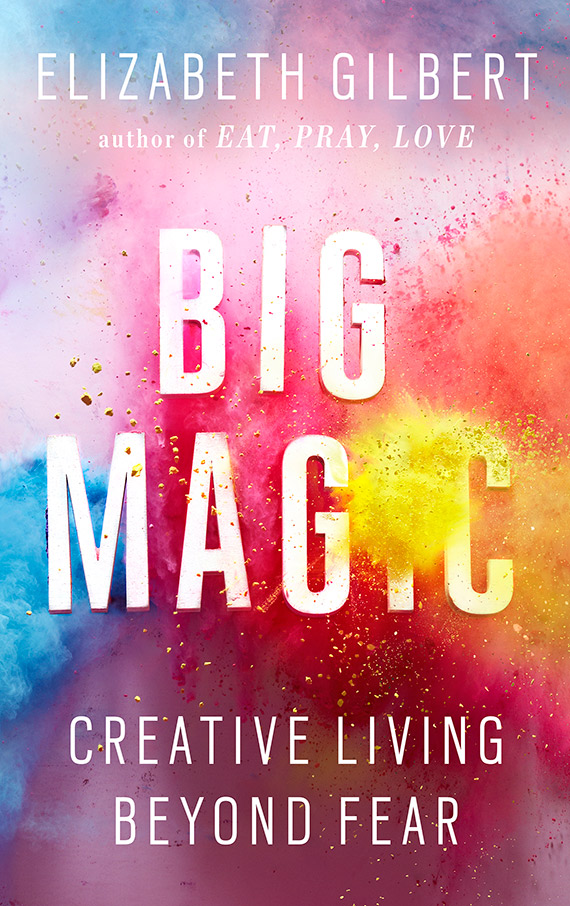
Book Review: Big Magic Creative Living Beyond Fear by Elizabeth Gilbert
Reading Time: 5 minutes

I first discovered the amazing Writer Elizabeth Gilbert when she did a TED talk on creativity (see this TED talk at the end of this post).

Gilbert became a huge success back in 2006, when her memoir Eat, Pray, Love became an international bestseller. It was later made into a film. Prior to this Gilbert had always felt that it was her responsibility to take care of her creativity, so wrote while holding down other jobs. This big success meant she could afford to write full-time. I intend to read and review Eat, Pray, Love at some point in the future.

Gilbert was inspired by creativity, the creative process and the concept of creative living. She began to explore how other cultures throughout history had viewed creativity and the artists that create. This lead her to study the ancient Romans and Greeks. Which in turn led to her quirky and unconventional views about creative living, which she explores in Big Magic – Creative Living Beyond Fear.

Big Magic is split into six parts: Courage, Enchantment, Permission, Persistence, Trust & Divinity. Each section deserves to be written about individually, which is what I have done below:

Courage

Gilbert starts by defining what creative living means to her. She describes it as having the courage to follow your aspirations, longings and talents. Gilbert writes about desires, that you are driven to do from somewhere deep within. Things or activities that have great meaning to you. Gilbert’s examples include: writing, dancing, painting and basically anything with any sort of activity that has an element of creativity within it.

Gilbert writes about fear. She recognises that fear can and does stop some people from living creatively. But as she explains, fear is boring – as fear’s inner voice repeats the same things. Whereas living creatively is never boring. Gilbert advises the reader that fear is not to be conquered, but acknowledged and thanked for its concern. Then the reader should do the thing that scares them anyway.

Gilbert’s key message in this section is that the reader should follow their curiosity without being inhibited by their fear.
Enchantment

Gilbert believes that ideas are disembodied energy that wants to manifest. But in order to do that they need to work with willing, creative humans. Humans that will commit their time and energy to bringing the idea into reality.

A good lesson learned from Gilbert in this section is that you have to make space for the idea. Both physically and figuratively. Which is why in my workspace, my desk has been cleared, ideas have been listed on the wall (in the order that they will be completed) and that time is regularly set aside to work on the idea at the front of the queue.

Gilbert writes that if the reader commits to an idea, that they should try to keep their end of the bargain. Otherwise the neglected idea will eventually get fed up of excuses, waiting and will continue on its travels looking for another human collaborative partner.

Gilbert gives an example from her own life, writing about an idea for a book that got away from her and found its way to Ann Patchett (another author who has an especially special place in my heart for writing The Magician’s Assistant, but I digress). Gilbert tells the story of a conversation she had with Patchett:

I tried to summarize my ex-novel as concisely as possible. I said, “It was about this middle-aged spinster from Minnesota who’s been quietly in love with her married boss for many years. He gets involved in a harebrained business scheme down in the Amazon jungle. A bunch of money and a person go missing, and my character gets sent down there to solve things, at which point her quiet life is turned into chaos. Also, it’s a love story.”
Ann stared at me from across the table for a long minute.
Before I continue, I must give you to understand that – decidedly unlike myself – Ann Patchett is a true lady. She has exquisite manners. There is nothing vulgar or coarse about her, which made it even more shocking when she finally spoke:
“You have got to be fucking kidding me.”
“Why? I asked. “what’s your novel about?”
She replied, “It’s about a spinster from Minnesota who’s been quietly in love with her married boss for many years. He gets involved in a harebrained business scheme down in the Amazon jungle. A bunch of money and a person go missing, and my character is sent down there to solve things. At which point her quiet life is completely turned into chaos. Also, it’s a love story.”

(From: Big Magic Creative Living Beyond Fear, by Elizabeth Gilbert, p. 53-54, 2015. Copyright © Elizabeth Gilbert 2015.)

Permission

Gilbert explains that she never felt the need to be given permission to begin writing; but that some people do feel the need for permission to create. So she advises the reader to give themselves permission to start living creatively. She advises the reader to label themselves, i.e. I am a Writer. Gilbert advises the reader to be authentic and live creatively, first and foremost for themselves.

Gilbert advises the reader to avoid getting into debt. According to Gilbert debt leads to trappings that will greatly influence the ability to live creatively. Being debt free is likely something that most readers will need to work on.

Persistence

Gilbert encourages readers to keep going and don’t be disheartened if the first thing created gets no recognition. Take your time. Learn your craft. She reminds readers that people go to great lengths to create, often maintaining a day job, having busy lives, but always making the time for creativity.

Gilbert motivates her readers to protect the space and time to create from intrusions, distractions and most of all procrastination. Procrastination can be fear’s way of avoiding starting, continuing or finishing a creative project. So watch out – because fear can be sneaky in its tactics.

Gilbert advises of the perfectionism pitfall for creatives. She writes that done is better than good. Yes, by all means work hard to make sure the work is good, but good enough will do. Aiming for perfection is where most people set themselves up to fail, because perfection is an unrealistic goal that either drives a person insane or causes them to give up on an idea.
Trust

Gilbert writes that a creative should go where the idea takes them, even if it’s emotionally uncomfortable. Gilbert states that you should trust in the idea and continue with Stubborn Gladness.

For Gilbert, living creatively is all about following where curiosity takes her. She encourages the reader to follow their own curiosity.

Divinity

Gilbert concludes by writing that creativity is scared and that the reader should start creative living immediately.

Throughout Big Magic Gilbert’s writers voice is warm and engaging. Gilbert tells many wonderful, meaningful and great little stories as examples of her ideas on creativity in action. She tells these stories exceptionally well.

Stories are not the most scientific form of evidence. But does there need to be empirical evidence for creativity and the creative process? After all, even those at the heart of creative processes struggle understand or explain how their creative process works.

What matters in Big Magic, is that Gilbert writes her truth. Every word is written for herself – so that she can further her study of creativity.

The audience for this book is anyone that wants to live a creative and fulfilled life. Gilbert is undoubtably clever, wise and inspiring in Big Magic. The reader will find that some, most or all of Gilbert’s work will resonate with themselves.

So go and buy Big Magic to lap up some creative living inspiration. Big Magic is available to buy on Amazon.

Review soon,

Antony

Click here to display content from YouTube.
Learn more in YouTube’s privacy policy (opens in a new tab).

Elizabeth Gilbert muses on the impossible things we expect from artists and geniuses — and shares the radical idea that, instead of the rare person “being” a genius, all of us “have” a genius. It’s a funny, personal and surprisingly moving talk.
(From: TED, Last Accessed: Thursday 3rd December 2015.)

More Content From Antony

Here are the books that Antony has published:

Share on Social Media:
Books & Authors, Inspiration, Reviews, , , , , , , , , , , , , , , , , , , , , , , , , , , , , , , , , , , , , , , , , , , , , , , , , , , , , ,

A List of Qualities in People that INSPIRE Me

Reading Time: 2 minutes

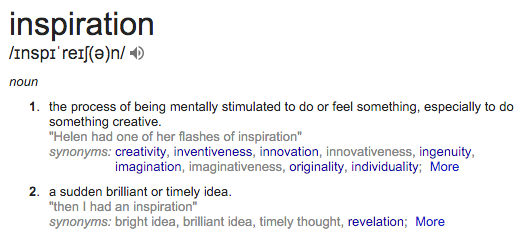
According to Google inspiration is defined as:

inspiration-definition
Google’s Definition of Inspiration

Back in 2008, I wrote a blog post about People that inspire me. I could add so many people to that blog post.

But instead I decided to look at the qualities in people that inspire me. Here’s my list of qualities that those people display:

  • Accepting.
  • Authentic.
  • Balanced in their thinking.
  • Battle their inner demons.
  • Believe in fairness and equality.
  • Brings joy to others.
  • Can have a presence on entering a room or blend into the background in social situations.
  • Captivating Story Teller.
  • Careful in their actions.
  • Cares about others.
  • Comfortable with themselves.
  • Confident yet humble.
  • Connects emotionally with others.
  • Creative.
  • Describes their own thoughts & feelings through words well.
  • Determined.
  • Diplomatic.
  • Dislikes injustice.
  • Empathetic.
  • Enthusiastic.
  • Flawed.
  • Funny.
  • Generous.
  • Good communicator.
  • Has others following them.
  • Honesty.
  • Humorous.
  • Independent.
  • Influences others.
  • Intelligent.
  • Is a Collaborator.
  • Is a Doer.
  • Is a Dreamer.
  • Is Grateful.
  • Kindness.
  • Knows when, who and why to ask for help.
  • Makes others feel comfortable.
  • Makes others laugh.
  • Motivational.
  • Non-judgemental.
  • Occasional vulnerable.
  • One-step ahead of others.
  • Open minded.
  • Optimistic.
  • Passionate.
  • Patient.
  • Positive.
  • Relaxed in new situations.
  • Self-aware.
  • Sensitive.
  • Shares their Knowledge and wisdom.
  • Sincere.
  • Stands up for the rights of others.
  • Supports & helps others.
  • Unconventional.
  • Values community.
  • Vibrant.
  • Wants a better society for all.
  • Wants others to reach their potential.
  • Willing to fight for a cause.
  • Wise.
  • Works hard.

I’m sure there’s many other qualities that could be added to the list. I also know that as well as people, many other things inspire me. Things such as music, books, films, paintings, nature, animals and expressions of love to name but a few.

What qualities do you admire in the people that inspire you? Feel free to share by leaving a comment below.

If you liked this post, you might like my All Inspirational Content page.

Blog soon,

Antony

Share on Social Media:
Inspiration, Life, Thinking, , , , , , , , , , , , , , , , , , , , , , , , , , , , , , , , , , , , , , , , , , , , , , , , , , , , , , , , , , , , , , , , , , , , , , , , , , , , , , , , ,

My India Adventure (Part 5) – Gandhi’s Grave & India Gate

Reading Time: 4 minutes
InidaJuly2015-GandhisGrave-0
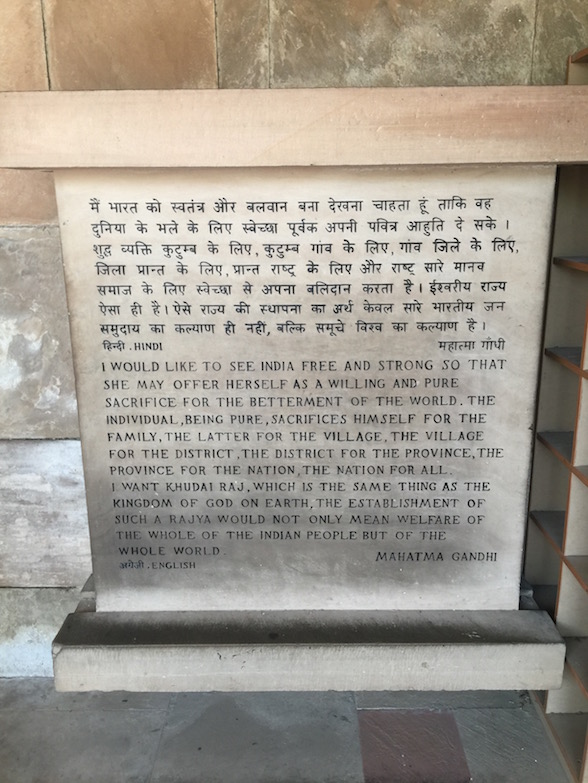
Gandhi Quote.

Gandhi’s Grave

Robert, Neha, Michael and I didn’t intend to visit Gandhi’s grave, but on the day we went to visit the Red Fort it was closed, so we went to Gandhi’s grave which is close by.

Gandhi’s grave was probably my favourite and most significant place of all the sites I visited in India, because of the man it commemorates. Gandhi is seen as the Father of the Indian nation. He is on bank notes and deservedly put on a pedestal. I didn’t know much about Gandhi before I went to India. But when I came home and did some research, it resulted in the visit to his grave meaning even more to me.

Gandhi was an inspirational man. As an adult he was civil rights activist that believed in non-violent protest, non-violent civil disobedience, peace, community and was a leader in the Indian Independence Movement. He was known for being spiritual and religiously Hindu.

Gandhi to me was a enlightened soul, with his common sense ideas being ahead of his time.

One of the things I admire about Gandhi was that as a teenager he experimented with drinking alcohol, eating meat and sex (From: BBC – iWonder, last accessed: Saturday 8th August 2015). This showed to me that Gandhi was on a journey to enlightenment when he was younger. That Gandhi had fundamentally started out as a ordinary human being that went on to become enlightened, using his wisdom and good soul to influence and create some incredible changes in the world. These changes making the world a better place for everyone.

Gandhi apparently predicted his own death, mentioning that he thought he would be assassinated and hoped to be able to forgive the man that did it. Gandhi was on his way to a prayer meeting when he was shot three times in the chest by an extremist. Gandhi who had believed in peace, hope and the best of humanity had been violently murdered. India and the rest of the world mourned his loss.

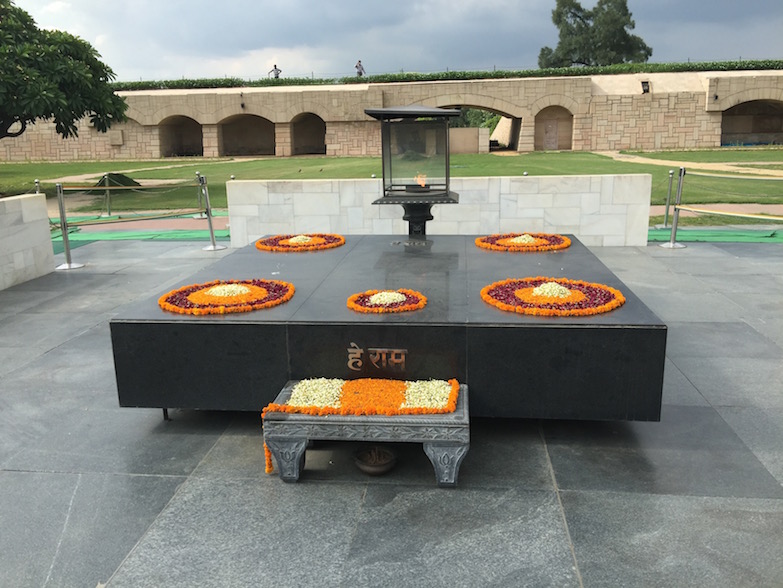
Apparently some of Gandhi’s ashes are buried in this memorial. Here are some photos of Gandhi’s grave:

InidaJuly2015-GandhisGrave-1
Walk up to Gandhi’s Grave.
InidaJuly2015-GandhisGrave-2
Gandhi’s Grave: Where his ashes are.
InidaJuly2015-GandhisGrave-3
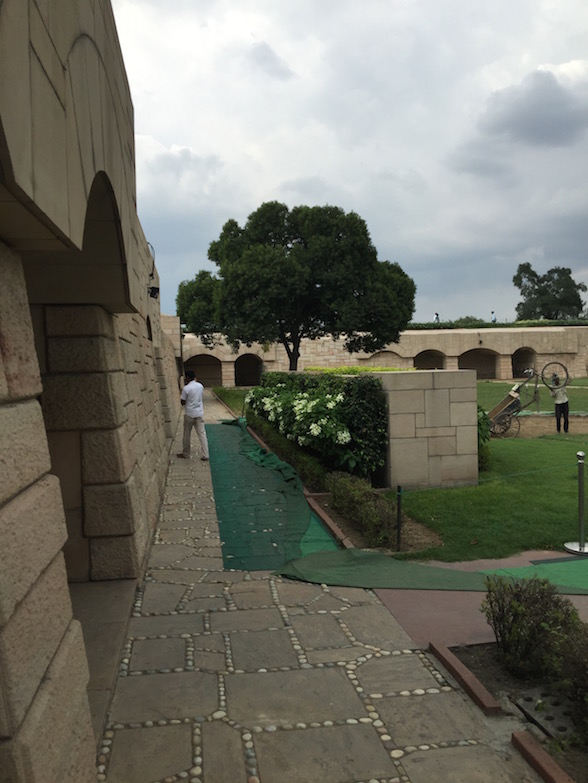
Gandhi’s Grave gardens (1).
InidaJuly2015-GandhisGrave-4
Gandhi’s Grave gardens (2).
InidaJuly2015-GandhisGrave-5
Gandhi’s grave – beautiful tiled flooring.

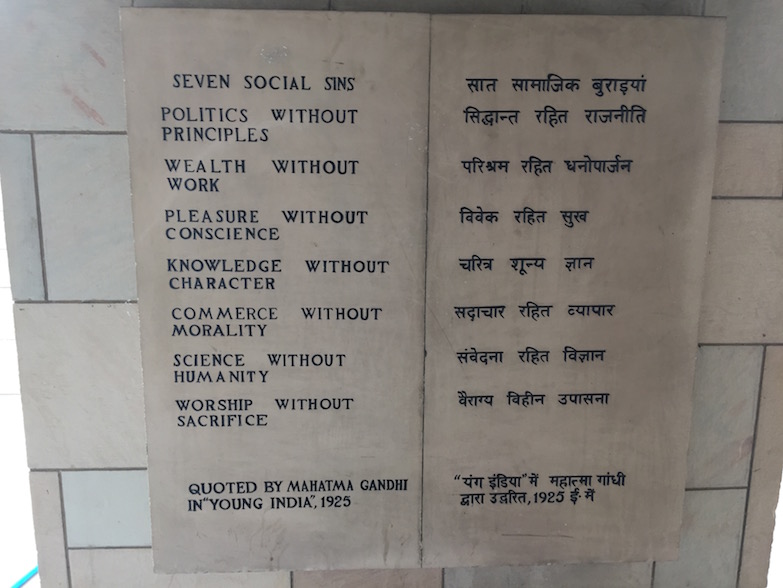
One of the most interesting information stones there was Gandhi’s Seven Social Sins (photographed below). Here they are as photo and text:

InidaJuly2015-GandhisGrave-6
Gandhi’s Seven Social Sins, from ‘Young India’ (1925)

Seven Social Sins

1. Politics Without Principles
2. Wealth Without Work
3. Pleasure Without Conscience
4. Knowledge Without Character
5. Commerce Without Morality
6. Science Without Humanity
7. Worship Without Sacrifice

(From: ‘Young India’ (1925))

Reading this was like seeing a reflection of what’s going on in the world right now. I remember thinking that if Gandhi was around now he’d constantly be leading peaceful protests and marching in them.

India Gate

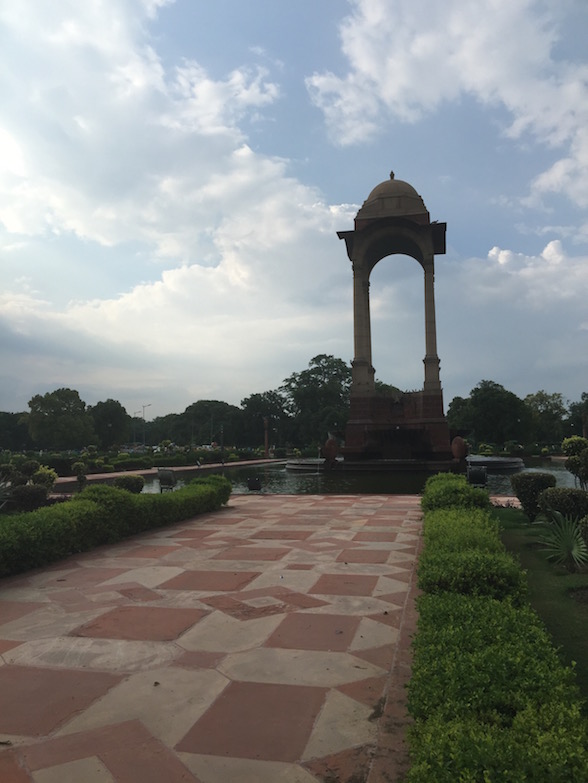
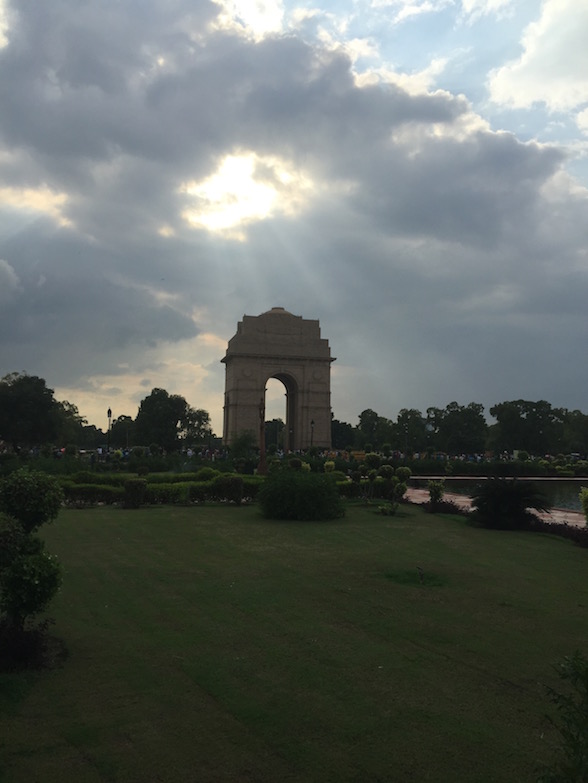
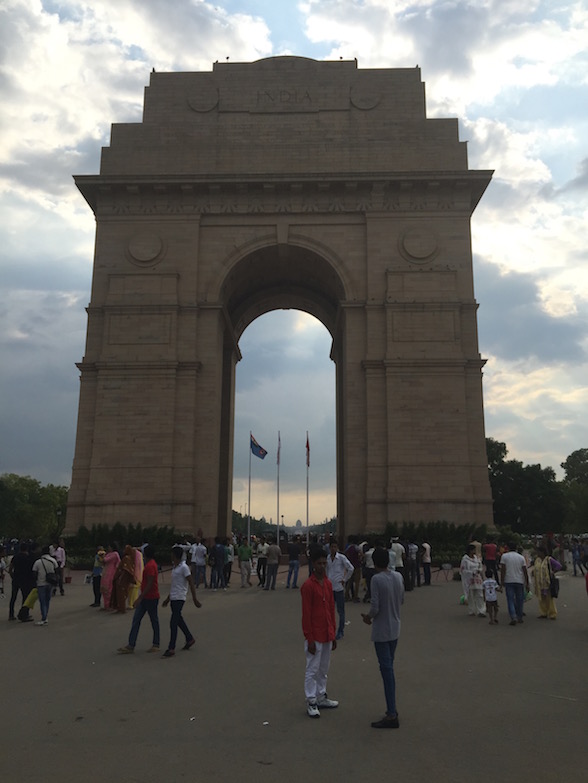
India Gate is a war memorial to all fallen Indian soldiers. The Gate is ginormous. In the middle of the gate is the monument. It’s a raised platform that has a statue of a black gun with matching soldiers helmet resting on top of it. There’s a flame that is always kept burning and soldiers in ceremonial dress. See photos below:

IndiaJuly2015-IndiaGate-0
The Empty Canopy
IndiaJuly2015-IndiaGate-1
India Gate: A War Memorial (1).
IndiaJuly2015-IndiaGate-2
India Gate: A War Memorial (2).
IndiaJuly2015-IndiaGate-4
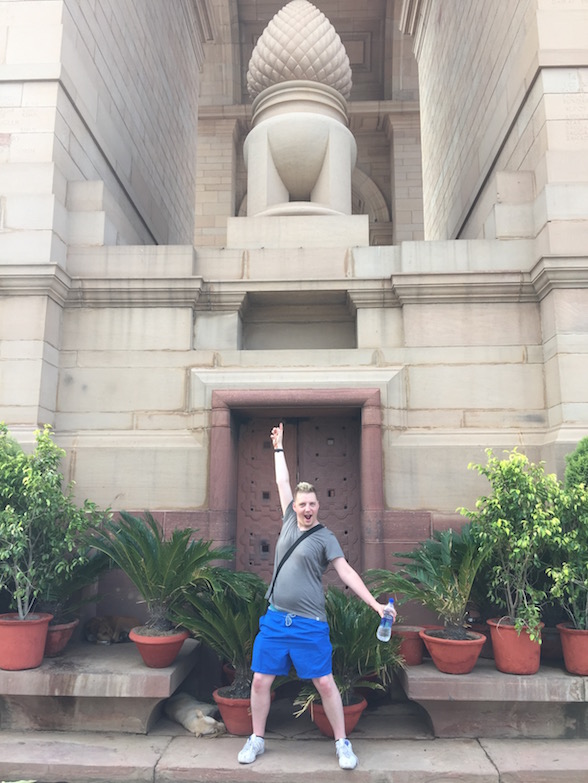
Me pointing out a feature on India Gate.
IndiaJuly2015-IndiaGate-5
India Gate close up (1).
IndiaJuly2015-IndiaGate-6
India Gate close up (2).

The next blog post in this series titled My India Adventure (Part 6) – The Taj Mahal, I will be sharing photos of Taj Mahal’s architectural brilliance. The post will be coming soon, so keep an checking back for updates.

Write soon,

Antony

More Content From Antony

Here are the books that Antony has published:

Share on Social Media:
Adventures, Friends & Family, Happiness & Joy, History, Inspiration, Political, Travel, , , , , , , , , , , , , , , , , , , , , , , , , , , , , , , , , , , , , , , , , , , ,

21 Writers I Admire

Reading Time: 8 minutes

As an avid Reader I have a list of writers I admire. The list is below and is split into genres. The writers are listed in alphabetical order by their surname’s, so the order doesn’t indicate the preference. Along with each Writers name (and link to their official website) is a bit of blurb as to why I admire them.

General Fiction

1. Cecelia Ahern

Her first novel P.S. I Love You shot to the top of the best seller charts and was later turned into a film. I admire Cecelia Ahern because the subject of all of her books is: the strength of the human spirit. Her books are also superbly written.

Related Reviews: Book Review: The Gift by Cecelia Ahern, Book Review: The Book of Tomorrow by Cecelia Ahern, Book Review: The Time of my Life by Cecelia Ahern, Book Review: One Hundred Names by Cecelia Ahern and Book Review: How to Fall in Love by Cecelia Ahern.

2. Emma Donoghue

Room first novel of Emma Donoghue’s that I came across. I admire the concept of Room, along with the stylistic telling of the story. I must admit that I didn’t know that Emma Donoghue has written so many books or done the variety of writing that she has in her career. I may well pick up one of her many published books in the future. Related Review: Book Review: Room by Emma Donoghue.

3. Sophie Kinsella

She is most well known for her Shopaholic series. The idea really was just ahead of it’s time in terms of predicting the credit crunch. I admire her because of her appeal to a wide audience, her light and easy-to-read style and because she previously wrote in her real name: Madeleine Wickham.

After writing as Madeleine Wickham she took a break from writing and came back with The Secret Dreamworld Of A Shopaholic written as Sophie Kinsella. She used this name to see if she could get her work published as a new Writer and because her work was different than that of Madeleine Wickham.

I’m looking forward to the release of Shopaholic to the Stars. Related Reviews: Book Review: Twenties Girl by Sophie Kinsella, Book Review: Mini Shopaholic by Sophie Kinsella, Book Review: I’ve Got Your Number by Sophie Kinsella and Book Review: Wedding Night by Sophie Kinsella.

4. Isla Morley

She makes this list for her second novel Above. I admire Morley for this novel for so many reasons: it’s well written, it’s a great idea, it’s perfectly paced, etc. It’s the only book I’ve ever described as phenomenal. Related Review: Book Review: Above by Isla Morley.

5. David Nicholls

David wrote One Day, a brilliant love story. I love a good love story so admire him for this story set over a lifetime. He has written Starter for Ten and The Understudy, both of which I want to read. He does some acting as well.

6. Ann Patchett

I discovered Ann Patchett through her novel The Magician’s Assistant, which I am currently re-reading. I admire this book’s brilliant opening line: “PARSIFAL IS DEAD. That is the end of the story.” Ann Patchett’s writers voice had me hooked from page one, till the very end. I admire her for writing this is a beautiful story and telling it expertly. Ann Patchett has since become a voice for independent book stores and authors which are other reasons for my admiration.

Ann Patchett’s other novels are The Patron Saint of Liars, Taft, Bel Canto, Run and State of Wonder. All of which I want to read. Related Review: Book Review: The Magician’s Assistant by Ann Patchett.

Fantasy Fiction

7. Trudi Canavan

A friend introduced me to Trudi Canavan’s work and I’m so glad he did. I admire her intricate story telling and the sheer number of books and trilogies she has completed.

I’ve just finished reading Thief’s Magic by Trudi Canavan, so expect a review soon. Related Review: Book Review: The Magician’s Guild (Book 1) by Trudi Canavan.

8. Steven J Mepham

He is a good friend of mine, who is currently working on his first novel. His ideas, plots, characters and description are all exceptional. When his first novel is published it will be outstanding and I will be reviewing it here.

9. J. R. R. Tolkien

I discovered Tolkien when The Lord of the Rings films came out. I’m yet to read The Lord of the Rings trilogy, but I have read The Hobbit. I admire the longevity of his work. Related Review: Book Review: The Hobbit by J. R. R. Tolkien (printed by The Folio Society).

Gay & Lesbian Fiction

10. Mel Bossa

I admire Mel Bossa for her writing style and tackling of tough subjects. She must be given praise as a woman for writing exceptional gay stories. I discovered Mel Bossa through her book: Franky Gets Real. She is one of my all-time favourite writers and now has a string of books to her name.

Related Reviews: Book Review: Into The Flames by Mel Bossa, Book Review: Franky Gets Real by Mel Bossa, Book Review: Split by Mel Bossa, Book Review: Suite Nineteen by Mel Bossa and Book Review: In His Secret Life by Mel Bossa.

11. Yvonne Heidt

Heidt writes lesbian literature. I admire her for her writer’s voice, style and the care readers come to feel for her characters. I’m currently reading her novel The Awakening. Related Review: Book Review: Sometime Yesterday by Yvonne Heidt.

12. Adrian Lilly

I admire Lilly for the amount of work that he produces. He has a number of projects on the go at any one time, yet always maintains the quality of his writing. He writes gay-themed literature that thrills, without resorting to erotica to thrill the reader. I’ve read two books in The Runes Trilogy, which is a story about gay werewolf’s. Related Reviews: Book Review: The Wolf At His Door (Runes Trilogy Book 1) by Adrian Lilly and Book Review: The Wolf in His Arms (Runes Trilogy Book 2) by Adrian Lilly.

Spirituality / Paganism

13. Ly De Angeles

I admire Ly De Angeles for her clear and concise sharing of knowledge in her book Witchcraft: Theory and Practice.

14. Ellen Dugan

Wrote Elements of Witchcraft: Natural Magick for Teens, which I read as a teenager and had a huge influence on my pagan practice. Her engaging writers voice and good use of language engages young people well. She showed me the path to working creatively with the elements.

15. Cassandra Eason

The first book I ever read in spirituality/pagan genre was Cassandra Eason’s A Complete Guide To Psychic Development. It lit my imagination and interest, leading me to collect a library of books in the genre. A Complete Guide To Psychic Development is one of Cassandra Eason’s many titles. Two other titles that I have read and enjoyed are Cassandra’s Psychic Party Games and A Year and a Day in Magick: A Complete Week-by-week Course to a Lifetime in Magick.

16. Judy Hall

I admire Judy Hall for her comprehensive title The Crystal Bible, which to this day is still my reference for anything I want to know about crystals. Since she has gone on to write The Crystal Bible Volume 2 and The Crystal Bible Volume 3.

17. Edain McCoy

She shows her passion for all things pagan with her engaging writing style. Edain McCoy has a number of titles published, but my favourite is Advanced Witchcraft: Go Deeper, Reach Further, Fly Higher. Many pagan books simply regurgitate the same basic information and offer nothing for someone who has been pagan for a number of years. In Advanced Witchcraft: Go Deeper, Reach Further, Fly Higher Edain McCoy showed that she knows what she’s talking about and offered me new ideas to develop my pagan practice.

18. Dorothy Morrison

Shows her personality in her writing style. She’s a strong, independent woman with attitude and her books are enjoyable, full of ideas and engaging. I like that she covers the darker side of paganism and witchcraft, not just the lighter side like many pagan/spirituality authors. A good example of this is her title Utterly Wicked: Curses, Hexes & Other Unsavory Notions. The first book I bought on magic was her Everyday Magic title, which I have read from cover to cover repeatedly.

YA Fiction

19. Julianna Baggott

Is a poet who I discovered through her YA novels in The Pure Trilogy. The Pure Trilogy is hugely different from her previous work and I admire her for opening herself up to a new audience. Related Reviews: Book Review: Pure by Julianna Baggott, Book Review: Fuse by Julianna Baggott and Book Review: Burn by Julianna Baggott.

20. Michael Grant

Michael Grant’s Gone Series is brilliant. It’s fast paced and has kids stuck in a dome, some of whom have powers. The series has a great plot, realistic characters and each of the books is an addictive page turner. I admire Michael Grant for knowing how to thrill readers. Related Reviews: Book Review: Plague by Michael Grant, Book Review: Lies by Michael Grant, Book Review: Hunger by Michael Grant and Book Review: Gone by Michael Grant.

21. Charlie Higson

Charlie Higson is a author, actor, comedian and writer for television and radio. I like everything about The Enemy Series. The concept, writing style, plot, pacing, settings, perspectives, characters and their development. I admire his ability to grip readers from the start to the end of each book and his history of creative diversity. Related Reviews: Book Review: The Fallen by Charlie Higson, Book Review: The Sacrifice by Charlie Higson, Book Review: The Fear by Charlie Higson, Book Review: The Dead by Charlie Higson and Book Review: The Enemy by Charlie Higson.

I admire all Writers for writing. Not only are they creating something, but they are taking an emotional risk by sharing their work with the world. To write, edit and publish a novel also a major time commitment for the Writer.

I’ve noticed a theme about the Writers in this list. That is that many of them do a number of different creative activities. It might be writing in different forms (e.g. poetry, for TV, radio or stage) or do something completely different (yet equally creative) like acting, performance or artistry.

Which Writers do you admire and why? Leave a comment below.

Blog soon,

Antony

More Content From Antony

Here are the books that Antony has published:
Share on Social Media:
Amazon, Books & Authors, Gay, Thinking, , , , , , , , , , , , , , , , , , , , , , , , , , , , , , , , , , , , , , , , , , , , , , , , , , , , , , , , , , , , , , , , , , , ,
Scroll to Top
×