Tag

coming out

Import: My Come Out Reactions

By Creativity, JournalismNo Comments

I’m out to everybody. These days I rarely need to come out and say that I’m gay, but it wasn’t always like that. Over the years I’ve come out to family, friends, work colleagues and even my GP. There’s been mixed reactions from people when I’ve told them that I’m gay, but most have been positive. In this article I’ll share some of the most memorable with you.

Family
Coming out to my mum was one of the best things I ever did. I knew she would be supportive, as one of her best friend’s is gay. She acted as a proxy, telling other members of the family and family friends that I was gay so I didn’t have to. Some years later she did tell me that she was worried that I would have a more difficult life as a gay man as ‘people can be so cruel.’

The funniest reaction from a family member was when my mum told my Granddad. He told her that I ‘just haven’t met the right girl yet.’ This wasn’t homophobic, just a lack of understanding and naivety of the gay world. This naivety is wonderful and one of the many reasons I love him immensely. He used to work on the tills at what has been dubbed The Gay Sainsbury’s in Manchester. He never realised (and still hasn’t!) that all the gay couples are actually together.

When I came out to my older Brother, a sporty lads lad, he said: ‘You’re still my brother. And I still love you.’ This acceptance from him meant the world to me and it still does.

Friends
My friends and I don’t really remember me coming out. That means that it wasn’t really a big deal. It was said, accepted and then we moved on. But there’s always that one friend isn’t there? When I came out to him, he said: ‘Me too.’ We’re still friends today and our same sexuality helped to build the bonds of a lifelong friendship.

Work Colleagues
I’ve had many work colleagues over the years, all in different settings and the vast majority coming out has been done by answering the questions: ‘So how was your weekend? What did you get up to?’

However I did have one Born Again Christian work colleague who said: ‘I accept that this is how you feel, but it’s not part of gods plan. It says so in the bible.’ This was a face palm moment and I rarely spoke to him after that.

At one workplace a closeted lesbian work colleague saw the overwhelmingly positive reaction to me as an out gay man and this gave her the courage to talk about her life and her partner openly. Prior to me arriving she had avoided conversations about anything personal, but after seeing how our work colleagues reacted to my talk of gay pride and my relationships she became more open at work and seemed happier for it.

GP
I had gone to see my family GP, an older Asian man, about something and decided to disclose my sexuality to him. I think I was at the stage in coming out where you want to tell the world that you’re gay. He said: ‘it’s unnatural.’ And then resumed talking about what I had gone to see him about. This hurt. Said by a supposed non-judgemental professional. Whenever I hear someone say ‘unnatural’ it takes me right back to that consultation room and makes me feel really uncomfortable.

My coming out reactions have been in the vast majority positive. I have been accepted for who I am. But that’s not always the case. Gay people coming out face the fear of rejection, actual rejection and in some cases abuse or violence. If someone can’t accept you for who you are and recognise that your sexuality is an important part of who you are, you have to ask yourself a serious question: do you really want this person to be a part of your life? I know what my answer would be.

Published by: The Gay UK on Sunday 16th December 2014.
Share on Social Media:

Book Review: Family Pride by Michael Shelton

By Amazon, Books & Authors, Gigs & Shows, ReviewsNo Comments
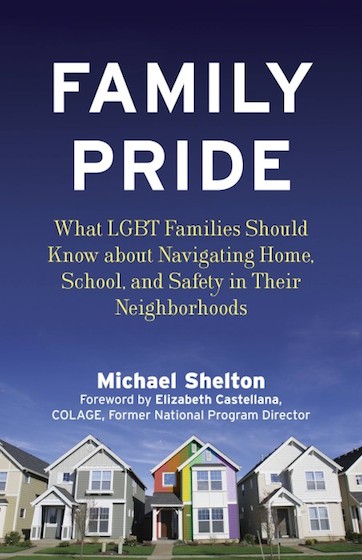
Family Pride Michael Shelton Book Cover Family Pride by Michael Shelton is written like a research article and has an extensive list reference list. Shelton highlights early on that there is a lack of representation of ethic minorities and economically disadvantaged LGBT families in the research. The book is clearly structured and styled as an educational textbook. No definition of an LGBT family is made or attempted; probably because LGBT families are so diverse in their make up and scope. Just like ‘straight’ families.

Shelton interviewed some LGBT parents and even some of their children from across America for this book. I would have enjoyed reading more of these interviews; particularly around their coping strategies for dealing with homophobia, perceived hertrosexism and subtle prejudices. I would have enjoyed reading about these LGBT families hopes for the future.

Family Pride starts with an introduction, explaining the history of gay rights movement and the extreme rightwing (anti-gay) response to this agenda. How the progress of gay rights movement has had an unintended backlash on LGBT families and put many of them in the spotlight in their communities.

I should point out, at this point, that this book is completely Americanised and lacks any international perspective. However many of the issues faced by LGBT families in America will apply to LGBT families in the UK.

Then Family Pride gives a comprehensive review of the issues LGBT families face including:

  • Internalised homophobia.
  • Stages of coming out as an LGBT to children, families and the community.
  • The facade of the perfect family.
  • Issues in schools such as the other same-sex parent not being recognised and bullying of the children by other children (and potentially some of the school staff).
  • Access and engagement with physical and mental health services.
  • The ability to access and enjoy leisure activities (including the all American Summer Camps).
  • Religious Institutions.
  • and the Police & Legal System.

In the conclusion there’s a small section dedicated to how to improve attitudes and acceptance of LGBT families, which will enable better community integration and to give LGBT families a sense of belonging.

Overall Family Pride has good, evidenced-based content. The writing style could have been more engaging and I felt that Shelton over-explained his point at times. This book is ideal for Students or Practitioners in the disciplines of Social Work, Nursing, Mental Health, Youth Work, Housing, the Police, Prison Officers and other public service institutions. It will give Students and Practitioners an awareness of the issues LGBT families face with accessing and engaging with institutions in a way that is dignified, respected and valued.

Family Pride by Michael Shelton is available to buy on Amazon.

I recently interviewed two LGBT parents for The Gay UK; so you might like to read FEATURE: Coming Out to The Kids – Paul’s Story and FEATURE: Coming Out to The Kids – Linda’s Story.

Review soon,

Antony

mental-health-wisdom-banner

Share on Social Media:

Proud of Tom Daley

By The Web, ThinkingNo Comments

I know it’s old news now; but Tom Daley recently revealed that he is in a relationship with a man. He made this disclosure on this YouTube video:

Click here to display content from YouTube.
Learn more in YouTube’s privacy policy.

My initial reaction was pride. All out gay or bisexual men have had to have these difficult conversations at some point, so I definitely empathised. These conversations are hard enough, but for Tom it must have been even more difficult given his position.

Tom is an Athlete in the Sporting Profession; and how many out gay professional Athlete’s or sports people do you know? Gareth Thomas the retired Rugby Player comes to mind, but he only came out as gay after he retired.

Then there’s Robbie Rogers a US Football Player, who used to play in the UK but no longer does. It is unbelievable that of the estimated 4,500 professional Football Players in the UK, he is the only gay or bisexual one. Statistics apparently show that 1 in 10 men are gay or bisexual, so it is likely that there are many professional footballers as well as other Athlete’s and sports people that haven’t come out.

The reason Athlete’s and sports people don’t come out is the stigma still attached with being gay in the sport industry. Professional sports people worry about losing fans, sponsors and ultimately their jobs. Tom will have been aware of all this and is very brave for risking all.

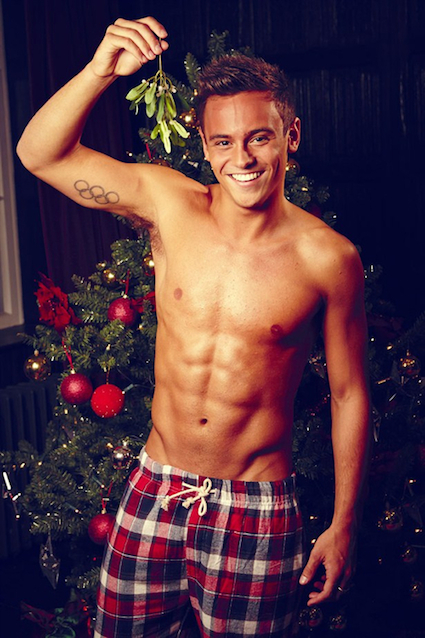
Tom Daley Christmas

I’ve read many journalistic reactions and opinion pieces on his disclosure. I’ve also read many supportive messages to him, along with some quite blatantly homophobic ones.

I wasn’t just proud that Tom had come out as being in a relationship with a man, but that he had put himself in a position of emotional vulnerability in search for acceptance. Acceptance is an innate human desire and in order to gain acceptance you have to let people know you.

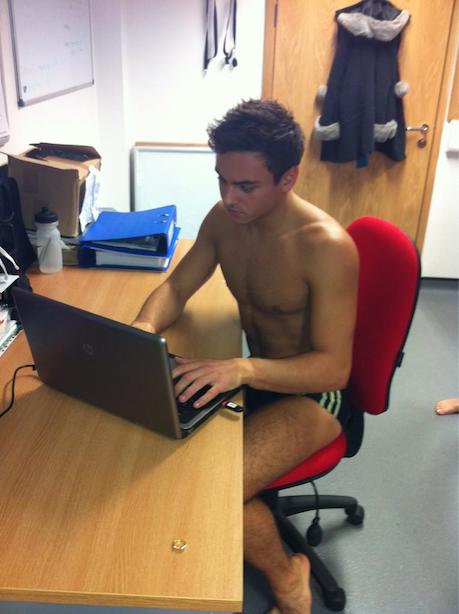
Tom Daley Working I have pondered if Tom deliberately avoided using the words gay or bisexual, or even if these words needed to be said. I’m sure that Tom coming out will be a great role model to any gay teens struggling with their sexuality – what it means for them and their life.

If I were to give a message to Tom it would be this:

Thank you for sharing who you are. I wish you every happiness, you deserve it. Keep the people in your life that accept, love and care for you. The people that don’t this feel this way – don’t worry or waste your time thinking about them. Just keep working, living and loving who you are.

Published by: The Gay UK on Friday 17th January 2014.

Take care,

Antony


I aim for posts on this blog to be informative, educational and entertaining. If you have found this post useful or enjoyable, please consider making a contribution by Paypal:


Share on Social Media:

Changes to The Pink List (2013)

By Gay, History, ThinkingNo Comments

Pink List 2013 Logo

The Independent on Sunday has been producing their annual Pink List since 2000. The Pink List is a list of influential gay, lesbian, bisexual and trans gay people in the UK. Each year The Independent assembles a panel of Judges, opens up for nominations from the public and then decides who to award the 100 places to and in which order.

This year’s Pink List 2013 has been published and with some interesting changes. No longer is it enough to be gay and a well known public figure whose a role model to gay youth. This year people on the list have to have contributed or made a difference in some way.

The Independent on Sunday have created two separate lists in addition to the main pink list; one for National Treasures and one for Politicians. On the National Treasures list is the likes of Russell T Davies, Paul O’Grady, Sir Elton John, Stephen Fry, Sir Ian McKellen and John Barrowman. On the Politicians list is various Westminster Peeps.

I am disappointed by the creation of these separate lists for National Treasures and Politicians. I think it is enough to be gay and a role model, so I’d have kept the one Pink List. I’d have just put people who have contributed more in the last year higher up on the list.

I would have extended the list to accomodate the increasing number gay people coming out. It shows that we are out there in numbers and contributing to society. For easy reading, I would have split the list into parts: 1-10, 11-30, 31-50, 51-100 and 101+.

The Pink List has always missed out people that are not in the media spotlight. I think the Pink List could be massively improved by including these people who are contributing a great deal to their local communities and society as a whole. These ‘ordinary’ LGBT people are doing amazing things. Such as those Workers/Volunteers for The Albert Kennedy Trust & George House Trust, Students who’ve set up LGBT Societies in Universities and Employees that set up or run LGBT forums within their employers organisations.

The Pink List should include out LGBT parents. Its very difficult to be an out LGBT parent. Many LGBT parents worry about the impact of their sexuality/gender identity on their children, in terms of some schools institutional homophobia and bullying by other children. I discovered this through two interviews with LGBT parents for a feature article for The Gay UK. The first interview was with Paul and the other with Linda.

Finally, I think there should be a list of influential straight people who support gay rights. The gay marriage bill would have never been passed into law, if it wasn’t for the many straight people who voted in favour of the bill.

Blog soon,

Antony

mental-health-wisdom-banner

Share on Social Media:
×