All Posts By

Antony

Finally…in Recovery and getting Back to Life

By Health, Life, ThinkingNo Comments
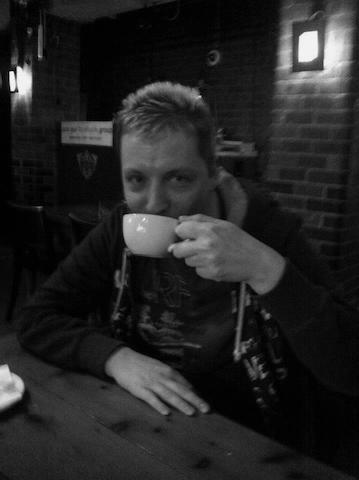
me-drinking-coffee

Me Drinking Coffee. Slowly Getting Back to Life 🙂

In January, everything stopped. I stopped being able to function and was ill. The truth is that I had been ill for a long time before this, but that I had continued to solider on – hoping that I would start to feel better.

Here were some of my symptoms:
Tick Box Bullet Point No concentration span. I wasn’t able to watch TV or films, read or write. I didn’t feel safe to drive, so I didn’t.
Tick Box Bullet Point Short term memory loss.
Tick Box Bullet Point Feeling constantly exhausted despite sleeping for many, many hours.
Tick Box Bullet Point Some insomnia and night terrors.
Tick Box Bullet Point Back pain – despite resting and regularly completing physiotherapy exercises.
Tick Box Bullet Point Head aches.
Tick Box Bullet Point Stomach ache/constipation despite eating a reasonably good diet.
Tick Box Bullet Point Poor personal hygiene and not cleaning my home environment.
Tick Box Bullet Point Overeating or forcing myself to eat despite feeling that I didn’t want to.

Tick Box Bullet Point No motivation – I found it extremely difficult and tiring to do the smallest of tasks.
Tick Box Bullet Point Reckless spending of money – mostly through online shopping.
Tick Box Bullet Point Any extremely variable mood which changed throughout the day and night. From being void of any feelings to a tornado of fast swirling feelings including: guilt, inadequacy and feeling like a failure.
Tick Box Bullet Point Anxiety – resulting in becoming antisocial and finding it difficult to leave home.
Tick Box Bullet Point Worry and panic about what people would think of me.
Tick Box Bullet Point Feeling hopeless, which is the worst feeling in the world.
Tick Box Bullet Point Feeling like I was loosing my mind.
Tick Box Bullet Point Feeling like I was falling down a dark bottomless pit.
Tick Box Bullet Point Feeling frustrated at not being able to snap out of it and that nothing I did made a difference to how I felt or my ability to function.
Tick Box Bullet Point Overly self-critical thoughts and zero self esteem. A critical inner voice that was loud and repetitive.
Tick Box Bullet Point At two particularly bad points I suffered from compulsions to end my life.
Tick Box Bullet Point In short, feeling like my mind, body and soul were being devoured and destroyed by this illness.

So I went to see my GP who completed the PHQ depression test and diagnosed me with severe clinical depression. At several points throughout my treatment, this test was repeated to check on my progress. At one point, I was scoring 24 out of a possible 27. My GP started me on antidepressants and encouraged me to self-refer for counselling.

The first antidepressant didn’t work, despite gradually increasing the dose to the maximum. Apparently this is really common, happening to at least 50% of people. So my GP gradually withdrew the first antidepressant and then started me on another – which thankfully is working. I self-referred to counselling, had an assessment and to this date am still on the waiting list.

January to May has felt like a write-off in every sense of the word. But I feel extremely lucky to have made it through this dark and difficult time. What’s that phrase? Ah yes…I believe I made it through by the skin on my teeth.

Looking back, I’ve had depressive tendencies for at least the last few years. I’ve been rubbish at spotting the symptoms in myself, but am much more aware of signs, symptoms and triggers now.

I’m still in recovery and it is a gradual process. I’m still on the antidepressants and will be for sometime. I’ve started taking multivitamins to make sure my body and mind is getting what it needs. But now I’m feeling good, better than I have felt in years. I’ve even started laughing again, proper belly laughs, which I haven’t done for what feels like forever.

Now I’m getting back to life. I’ve thanked those close to me for their support, love, care and kindness. I’ve gone back to work and realised that I have the most brilliant, amazing and fantastic work colleagues. They’ve been so supportive and I feel so lucky to work with such wonderful people.

Blog soon,

Antony
mental-health-wisdom-banner

Share on Social Media:

Ebook Review: Killing The Dead by Richard Murray

By Amazon, Books & Authors, ReviewsNo Comments
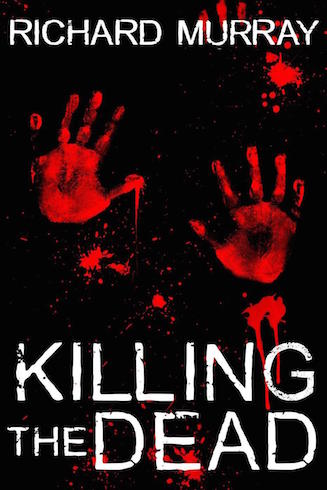
Killing-The-Dead-Book-Cover-Richard-Murray Ryan has just thanked the man he has murdered for the pleasure he got from taking his life, when an incessant banging comes from his front door. He opens the door to Lilly, a frightened woman who is being chased by zombies. She explains that the world is being taken over by the living dead.

Then Lilly discovers Ryan’s secret hobby – killing the living. We discover that Ryan is a serial killer from the North of England and that he believes his best chance of survival in this new world of The Undead is to be part of a group. Lilly agrees to be part of his group – but with rules and conditions.

Ryan and Lilly then set off on an action-packed adventure, being chased by zombies as they search for somewhere safe.

The concept in Killing The Dead is brilliant. A serial killer in a zombie apocalypse. It’s great to read a zombie apocalypse story set in Britain, written by a British Writer.

Ryan’s character was fascinating. Cold and logical but still likeable. The other characters felt two dimensional and lacked development – but this was probably due to the relative short length of the novella format. I think the story would have been better as a novel.

Ryan’s character was so captivating, that his perspective was enough to make the reader want to read on. The use of hooks would have benefited the story. As would the use shorter sentences for action scenes, which would have added to the readers sense of tension.

Killing The Dead had good description and perfect pacing, however the ending was a bit abrupt and left the reader with no sense of conclusion or satisfaction. I have since discovered that this novella is part of a series – it’s good to know that more of the story will be told.

A lack of editing let Killing The Dead down. There were sentences that didn’t make sense due to missed or wrong words, a few grammatical inaccuracies and similarities that just didn’t work.

Overall, you’ll enjoy Killing The Dead by Richard Murray, which is available to download for free (at time of writing this review) on Amazon.

Review soon,

Antony

mental-health-wisdom-banner


I aim for posts on this blog to be informative, educational and entertaining. If you have found this post useful or enjoyable, please consider making a contribution by Paypal:


Share on Social Media:

Be part of the Democratic Revolution with The People’s Assembly

By Political, ThinkingNo Comments
the-peoples-assembly-logo The People’s Assembly is against austerity, which is ideological rather than essential. It’s against Britain being run for the minority of the wealthy elite and instead advocates running society for the majority.

I learned about The People’s Assembly through reading The Establishment by Owen Jones, see my review of the book here.

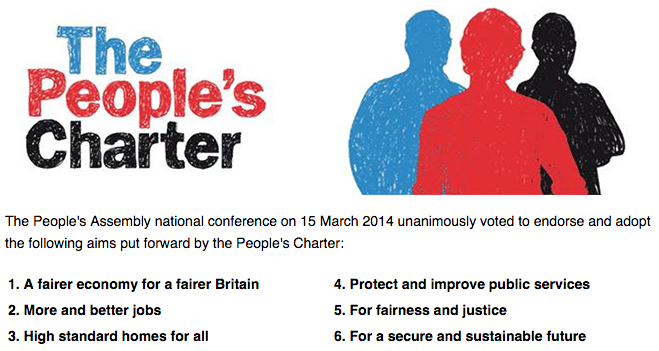
The People’s Assembly has The People’s Charter (below), which gives more detail on what they stand for:


the-peoples-charter

They are not associated to any political party and instead are more like a campaign group or national forum. I encourage you all to support The People’s Assembly and be part of the democratic revolution.

Want to get involved? Here’s how:

I’ve donated and am hoping that The People’s Assembly will do what it sets out to achieve – a fairer society for all.

Write soon,

Antony

Share on Social Media:

Book Review: The Establishment – And How They Get Away with It by Owen Jones

By Amazon, Books & Authors, Political, Reviews2 Comments
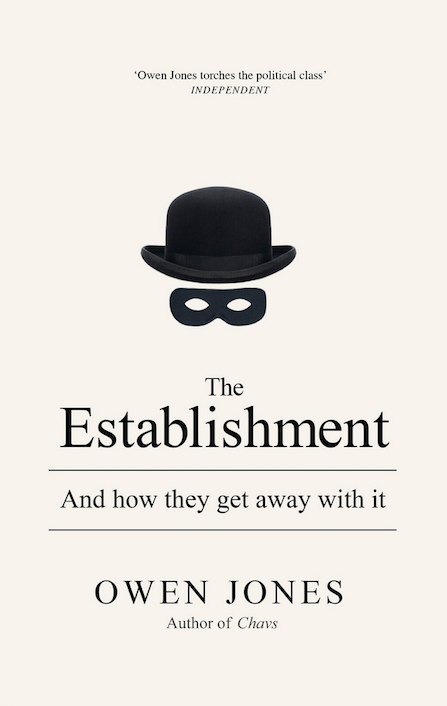
the-establishment-book-cover-own-jones In The Establishment, Owen Jones starts by defining Britain’s Establishment today. Then Jones looks back at political history to how the modern day Establishment of Britain came to be, focusing on each facet, in chapters titled: The Outriders, The Westminster Cartel, Mediaocracy, The Boys in Blue, Scrounging off the State, Tycoons and Tax-Dodgers, Masters of the Universe and The Illusion of Sovereignty.

In ‘The Outriders’ Jones explains how a few wealthy elite changed societies view (the ‘Overton Window’) from one of socialism to capitalism, the free market and privatisation. Jones demonstrates how people with alternative views to The Establishment are silenced, discredited or have their lives destroyed for speaking out.

[Continued below…]

In ‘The Westminster Cartel’ Jones exposes the revolving door of MPs going back and forth between Politics, Business, the Media and Think Tanks. In ‘Mediaocracy’ Jones reveals the media’s role in propaganda both for governments and against, with the media’s agenda being those of their wealthy owners – whom have close-links with MPs from all political parties.

In ‘The Boys in Blue’ Jones describes the role the Police played in creating today’s Establishment and gives examples of Police corruption and cover ups. He explains how the Establishment eventually turned on the Police. Jones gives real examples of the inequality of Police treatment between different groups, which includes the difference in treatment between those with power and those without.

Jones writes about the real people ‘Scrounging off the State’: the wealthy elite. He writes that public assets, such as the railways, are being and have been sold off for profit. That the wealthy elite get the profits, as well as tax-payer subsidies (as well as benefits for employees on low wages, healthcare for their employees, employees educated by the state, etc.) but that the tax-payer shoulders all the risk. If something goes wrong – like it did with the Banks, big business relies on the State to step in and bail them out.

In ‘Tycoons and Tax-Dodgers’ Jones explains how the rich feel that they pay enough tax and sheds light on the complicated tax avoidance schemes used by big businesses, that are all perfectly legal – thanks to the big businesses’ Lobbyists, Accountants and PR firms. Jones exposes the toxic relationship between the Treasury and big companies. That big companies actually help to develop Tax Policy with Treasury Civil Servants and the Government.

In ‘Masters of the Universe’ Jones examines the financial sector, particularly ‘the City’ referring to London’s financial sector. Jones discusses how successive governments relaxed regulation to keep their Banker friend’s happy prior to the financial collapse in 2008. That despite the collapse and the tax-payer bailout to the tune of over a trillion pounds, there is still no real robust regulation and there’s an attitude of continue as before. That the financial sector is driven by an unregulated greed for profit, a big bonus culture and to increase the wealth of the already extremely wealthy.

In ‘The Illusion of Sovereignty’ Jones scrutinises the relationship between Britain’s Establishment, the United States of America (US) and European Union (EU). He shows that the Establishment’s mentality is international and shared with the US, by looking at the history of the ‘special relationship’. Jones looks at the history of the Britain and the EU, identifying some elements of the EU that share the British Establishment’s mentality and other elements that oppose the British Establishment’s mentality. This mix of shared and opposed views to the British Establishment, is most likely why there is a politically mixed view of the EU in the UK.

In Jones’ final chapter titled ‘Conclusion: A Democratic Revolution’ he states that the Establishment is being run for a wealthy few, rather than for the majority. He states that the majority have had enough; enough of falling living standards, the rich getting richer and the poor getting poorer, and that the time to challenge the Establishment is now. Jones states that austerity is ideological rather than required. He identifies changes to improve society, but gives little practical advice for readers who may want to get involved with political change. This chapter was also the shortest in the book, which was a slight disappointment.

Throughout The Establishment, Owen Jones references the points that he makes, shares interviews he has conducted with people who have been involved with creating and maintaining the Establishment and gives examples to illustrate his points.

The Establishment shows the shocking level of corruption and vested interests, along with laws that protect the wealthy elite – all created by The Establishment (the wealthy elite) to balance society in their favour. It will make you think. Hopefully by Jones shining a light on the murky Establishment it will lead to the people challenging The Establishment for the political change they want.

The Establishment is an excellent and informative book about how society has come to operate today for the minority and how it can be changed to operate for the majority. The Establishment is an essential read for all, especially those interested in politics or political change.

Review soon,

Antony

mental-health-wisdom-banner


I aim for posts on this blog to be informative, educational and entertaining. If you have found this post useful or enjoyable, please consider making a contribution by Paypal:


Share on Social Media:
×