Tag

gay

World AIDS Day 2013

By LifeNo Comments
World Aids Day HIV (Human Immunodeficiency Virus) is a virus which attacks the body’s immune system — the body’s defence against diseases. AIDS (Acquired Immunodeficiency Syndrome) is the final stage where the immune system being depleted of its cells by HIV. Once enough of the immune system cells have been destroyed by HIV, the body is not capable of fighting off other bacteria and viruses as easily, particularly opportunistic infections. Infections like pneumonia are usually the cause of death for someone who has HIV/AIDS’.

HIV is passed on through infected bodily fluids, most commonly via sex without a condom or by sharing infected needles, syringes or other injecting drug equipment. Only 1% of mothers with HIV give birth to HIV positive babies.

Did you know that around 100,000 are currently living with HIV in the UK and that 1 in 5 don’t know they’ve got it? World AIDS Day is all about raising awareness about HIV/AIDS.

So do one simple thing for World AIDS Day, take this HIV Awareness Quiz.

I scored 9 out of 12:
HIV-aware-quiz-result

Blog soon,

Antony

Share on Social Media:

Changes to The Pink List (2013)

By Gay, History, ThinkingNo Comments

Pink List 2013 Logo

The Independent on Sunday has been producing their annual Pink List since 2000. The Pink List is a list of influential gay, lesbian, bisexual and trans gay people in the UK. Each year The Independent assembles a panel of Judges, opens up for nominations from the public and then decides who to award the 100 places to and in which order.

This year’s Pink List 2013 has been published and with some interesting changes. No longer is it enough to be gay and a well known public figure whose a role model to gay youth. This year people on the list have to have contributed or made a difference in some way.

The Independent on Sunday have created two separate lists in addition to the main pink list; one for National Treasures and one for Politicians. On the National Treasures list is the likes of Russell T Davies, Paul O’Grady, Sir Elton John, Stephen Fry, Sir Ian McKellen and John Barrowman. On the Politicians list is various Westminster Peeps.

I am disappointed by the creation of these separate lists for National Treasures and Politicians. I think it is enough to be gay and a role model, so I’d have kept the one Pink List. I’d have just put people who have contributed more in the last year higher up on the list.

I would have extended the list to accomodate the increasing number gay people coming out. It shows that we are out there in numbers and contributing to society. For easy reading, I would have split the list into parts: 1-10, 11-30, 31-50, 51-100 and 101+.

The Pink List has always missed out people that are not in the media spotlight. I think the Pink List could be massively improved by including these people who are contributing a great deal to their local communities and society as a whole. These ‘ordinary’ LGBT people are doing amazing things. Such as those Workers/Volunteers for The Albert Kennedy Trust & George House Trust, Students who’ve set up LGBT Societies in Universities and Employees that set up or run LGBT forums within their employers organisations.

The Pink List should include out LGBT parents. Its very difficult to be an out LGBT parent. Many LGBT parents worry about the impact of their sexuality/gender identity on their children, in terms of some schools institutional homophobia and bullying by other children. I discovered this through two interviews with LGBT parents for a feature article for The Gay UK. The first interview was with Paul and the other with Linda.

Finally, I think there should be a list of influential straight people who support gay rights. The gay marriage bill would have never been passed into law, if it wasn’t for the many straight people who voted in favour of the bill.

Blog soon,

Antony

mental-health-wisdom-banner

Share on Social Media:

Import: 14 Tips to Beat Bullying

By LifeNo Comments

This month it’s been anti-bullying month here at The Gay UK. Bullying takes many forms: Name-calling, making negative comments on your work, making someone feel worthless, physical abuse are just some examples.

So we’ve put some tips together to help anyone out there who might be being bullied. It doesn’t matter if you’re being bullied at school, college, university, work or home.

Remember if you are being bullied remember it’s not your fault.

Write Everything Down
Keep a log of every incident; write down the date, time, location, what happened, what they said and any witnesses that were around.

Tell Someone
Tell someone in authority and ask them what they intend to do about it. Tell them any fears you have about reprisals from the bully.

Someone you trust, like a family member or friend can also be useful. It means that you’re not dealing with the problem on your own; a problem shared is a problem halved.

Get Support
Don’t try to deal with it and your feelings about it all on your own. Get some support. Consider counselling for some additional support around your feelings.

Know Your Rights
All educational settings have anti-bullying policies. Some employers have these as well. Even if your employer doesn’t they will have Equality & Diversity Policies as well as other relevant policies. Read them.

There will also be procedures for investigating and dealing with bullying – so have a look at these as well.

Know your rights. Nobody has a right to bully another. Make authority figures aware that you know you’re rights.

Don’t Let It Get To You
Try to not let the things the bully says or does get to you. Bullies bully for a variety of reasons, but it’s always about their issues, not yours.

Try Not To Show A Reaction or Smile
Don’t let the bully see that they are getting to you. To do this, try to give them no reaction or smile. You know that phrase: Smile – it confuses people.

Walk With Confidence
Use your body language to make you look larger. Stand with your legs apart, your back straight and your chest pushed out slightly. Have your arms slightly away from your body and loose by your sides. Head up as you walk looking straight ahead. This does take a bit of practice, but try practicing in front of a full-length mirror. Believe it or not, this is how most bullies walk.

When we see someone walk like this, especially a bully, we do the opposite with our body language. We make ourselves as small as possible including hunching our back, pulling our arms in close and looking down at the ground. Try to remember to keep this confident body language, even when you see the bully.

The only time to avoid using body language to make you look larger is in the event of a physical assault. In that case, have your side to the perpetrator, as this will give them less of a target. In the event of a physical assault, get yourself out of the situation as soon as you can and to a place of safety.

Remember nobody has the right to be violent towards you; likewise you don’t have the right to be violent towards anyone else. All physical assaults should be reported to the Police.

If It’s CyberBullying
If the bully is sending you messages, texts, images and videos, keep them all. Don’t respond to any messages and make good use of privacy settings. Block/Ignore the bully and report them to the social media provider. If the messages get particularly abusive report them to the Police (this is why you need to keep all the messages as evidence).

Take Sensible Steps To Keep Yourself Safe
Keep yourself safe by carrying a mobile phone, personal attack alarm and being aware of your surroundings. Never walk home on your own and always try to stay with someone when travelling around the setting were you come into contact with the bully.

Involve The Police
Any violence or physical assault should be reported to the Police.

If the bullying is homophobic or racist in nature you can report it to the Police as a hate crime. Hate crime also covers bullying that is related to disability religion, ethnicity or transgender identify. Find out more about hate crimes on the True Vision website.

Come up with Good Coping Strategies
We all have different coping strategies. Some good ones are: taking up sports or martial arts (these are particularly empowering and you learn to defend yourself as well), talking to people, expressing how you feel creatively (e.g. writing, music, drawing, making movies, etc.). All of these activities also raise your confidence and self esteem – something that bullies try to damage or destroy.

Avoid Drugs & Alcohol as a Coping Strategy
There is research that links drugs and alcohol misuse to bullying as a coping strategy. Avoid using drugs or alcohol to cope with the bullying. It might make you forget or feel happier in the very short term (for the night), but the next day the bullying often seems much bigger problem.

Know that It Gets Better
Bullying is a massive issue. Many people get bullied. Remember that the situation you’re in now wont last forever. There will be a time that the bullying will stop.

Avoid Becoming The Bully
There’s some research that shows that some people who have been bullied, later become bullies. Don’t let it happen, you’re better than that! Remember how it felt to be bullied. If you’re in a position to safely stand up to a bully that’s bullying someone else – do.

If you’re affected by bullying please check out our resources page for further help and support.

Published by: The Gay UK on Saturday 30th November 2013.


I aim for posts on this blog to be informative, educational and entertaining. If you have found this post useful or enjoyable, please consider making a contribution by Paypal:


Share on Social Media:

Import: Celebrities and Others Record Video Messages to Gay Teens to tell them: It Gets Better

By Gay, Inspiration, JournalismNo Comments

November is anti-bullying month. In 2010 there were a few high profile cases of gay teens committing suicide as a result of homophobic bullying both in school and in their communities in the USA. Dan Savage and his partner Terry Miller uploaded a video on YouTube titled ‘It Gets Better.’ The aim of this video, as you may have guessed, was to encourage gay teens to hang in there, as it does get better.

it-gets-better-logo

It Gets Better Logo

From this sprang the It Gets Better Project, an international campaign that aims to communicate the ‘it gets better’ message to gay teens to give them hope. The It Gets Better Project also aims to inspire and bring about change, so that there is less homophobia, more tolerance and more acceptance of gay teens.

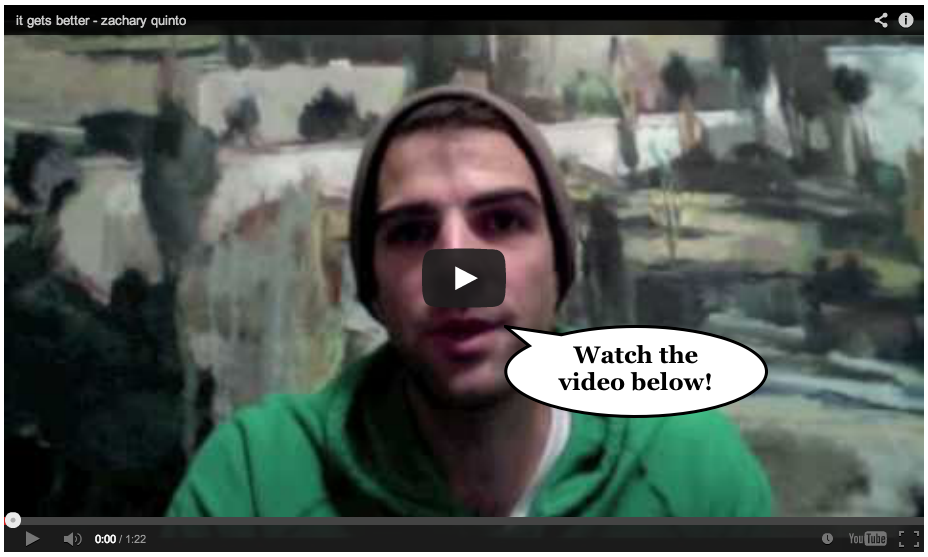
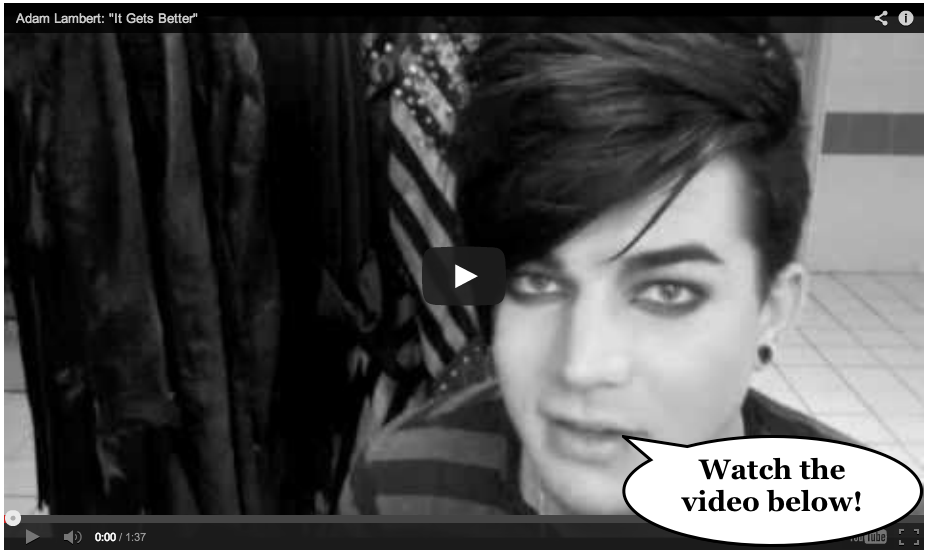
Celebrities have voiced support for the It Gets Better Project with the likes of Zachary Quinto and Adam Lambert making their own ‘it gets better’ videos.

zachary-quinto-video-screen-shot

Zachary Quinto Video Screenshot

Zachary Quinto in his emotional video said: ‘The are countless other teens and young adults that are struggling to find a sense of identify and belonging in a chaotic and often unforgiving world…and to you I say it gets better.’

Click here to display content from YouTube.
Learn more in YouTube’s privacy policy.

adam-lambert-video-screen-shot

Adam Lambert’s Video Screenshot

Adam Lambert in his upbeat video said: ‘You have to be strong…and you have to pay attention to the positive… and in doing so you will push through and you will rise up and you will live your life to the fullest. It gets better but its up to you.’

Click here to display content from YouTube.
Learn more in YouTube’s privacy policy.

President Obama, other American politicians and employees from the likes of Apple, Google, Microsoft and Dell have added their videos. Employees and students from Universities, Sports Clubs and other institutions have added supportive videos.

Thousands of people have used their webcams, video editing software and internet connections to uploaded their own individual videos aiming to give hope to gay teens.

The success of the ‘It Gets Better Project’ has been phenomenal. Seth Levy, Chairman of the Board of Directors for the project says that they’ve had success, but recognises that there’s still much more work to be done:

‘The It Gets Better Project works globally to share message of hope with LGBT youth and to make things better for them. The Project has already had great success through its international efforts in the Americas, Australia, Western Europe and the Carribbean. We are now beginning to work in more regions where, at times, the circumstances for LGBT youth are especially challenging and LGBT-focused resources are scarce. Moldova has historically been such a place. We are very excited to have partnered with our local affiliate, Egali, to help improve things for LGBT youth in Moldova. ‘

To learn more about the It Gets Better Project, visit their website: http://www.itgetsbetter.org/ .

Published by: The Gay UK on Friday 8th November 2013.


I aim for posts on this blog to be informative, educational and entertaining. If you have found this post useful or enjoyable, please consider making a contribution by Paypal:


Share on Social Media:
×