All Posts By

Antony

The Small Safe Review

By Home, Money / Finances, Reviews, ShoppingNo Comments

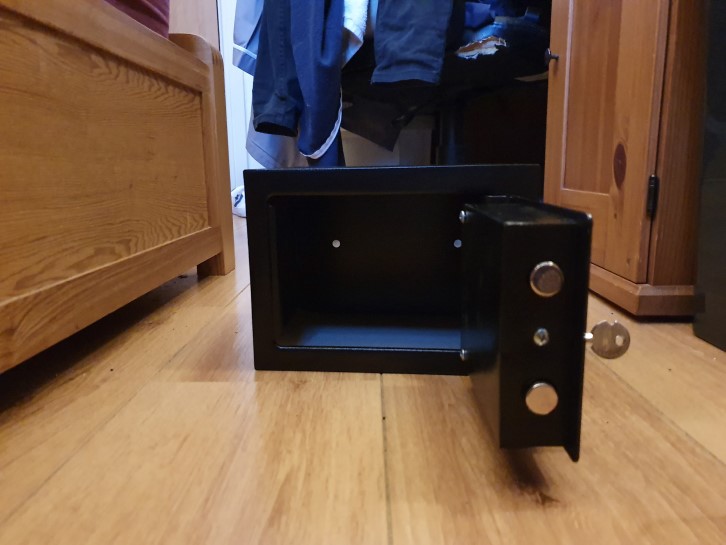
I recently purchased this small safe:
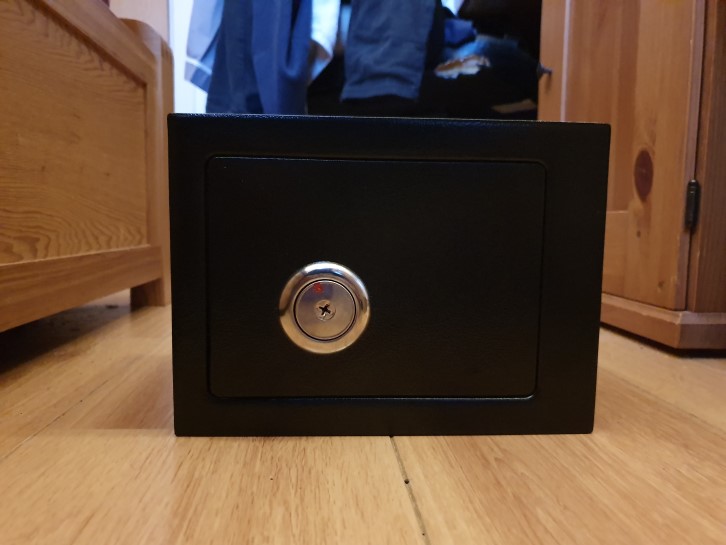
small-safe-2019-0

Small safe: ideal for passports, cash and jewelry.

small-safe-2019-1

Inside the Small Safe: Has holes on back and bottom for bolting.

small-safe-2019-1

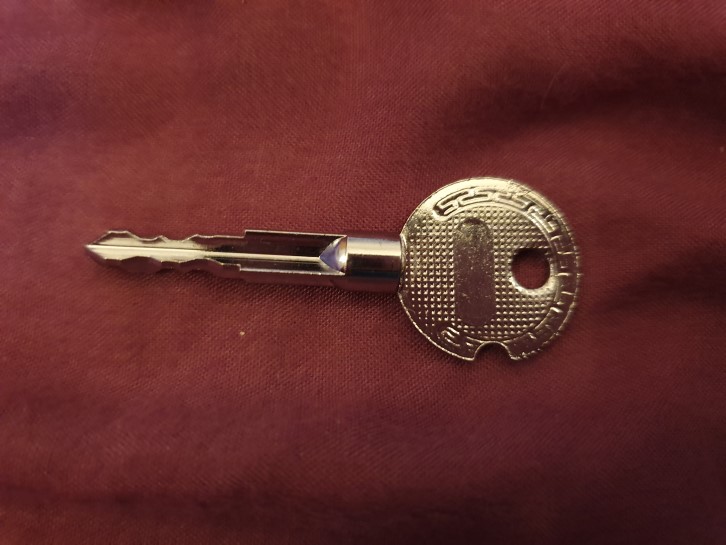
Small Safe Key: Double bit lock, modern aiming to prevent the use of the Bulgarian pick method.

small-safe-2019-3

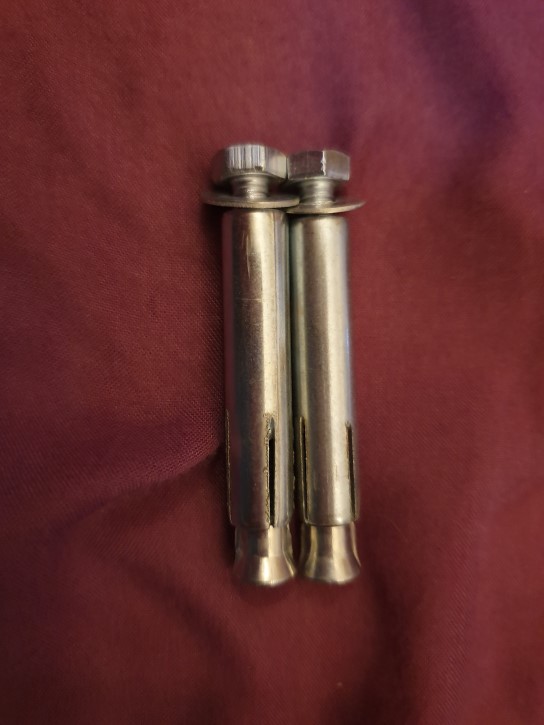
Bolts for securing to wall or other surface (such as inside a wardrobe).

The Pros are:

  • Small – Doesn’t take up much space and perfect size to be hidden away somewhere. It is the ideal size for passports, cash and jewelry.
  • Easy to install and secure into place with bolts.
  • Double Bit lock.
  • Three keys provided.
  • Lightweight.
  • Colour black means it may not be noticed by a thief or others whom you might not want to know about it.
  • I imagine it would be more difficult for a thief to get into than a standard key lock cash tin.
  • No need to remember a combination code.
  • No electronics therefore no chance of electronic failure or the requirement of replacing batteries.
  • It would take a thief quite some effort to get into it. However an expert lock smith could probably open it easily (should you ever loose your keys).
  • Price and availability are good.
  • Lots of positive reviews on amazon.

The Cons are:

  • The safe is so lightweight that it requires bolting to a surface. Otherwise a thief could literally pick it up and walk off with it. I would also recommend that you hide it away somewhere e.g. in the wardrobe, or under the bed, or at the back of a cupboard, or somewhere similar. However if you had a cash tin the thief could do the same, the difference being that this small safe gives you the option to bolt down whereas a cash tin can’t be bolted down.
  • It isn’t fire resistant or fireproof. However it probably is more secure than fireproof safes.
  • Only someone with a key can access. This means if someone hasn’t got a key but you need them to gain access for you, they wont be able to. Unlike a combination safe were you could give them the code.
  • There are probably more secure safes on the market. This is not necessarily a Con, just a fact. But this is the only one of this small size that I could find.
  • It isn’t big enough to keep documents in. This is not necessarily a Con either. It’s just something to be aware of if you’re looking for a safe to keep documents in.

A tip if you choose to buy this safe: There is a trick to getting the key into the lock. You need to line up the missing bit out of the key head to the red dot on the lock. Then the key will slide easily into the lock.

There are more pros than cons for this small safe. I’m happy with my purchase. For obvious security reasons I’m not going to tell you where I’m keeping my safe or what I intend to put in it.

Other Similar Products on Amazon

Click here to display content from ws-eu.amazon-adsystem.com.

Click here to display content from ws-eu.amazon-adsystem.com.

Click here to display content from ws-eu.amazon-adsystem.com.

Click here to display content from ws-eu.amazon-adsystem.com.

Click here to display content from ws-eu.amazon-adsystem.com.

Click here to display content from ws-eu.amazon-adsystem.com.

Blog soon,

Antony

Share on Social Media:

One Nurse’s Experience of Mental Health Care

By HealthNo Comments
One-Nurses-Experience-2019

The Report has been written and submitted as a formal complaint.

Back in September I had a fifteen day stay admitted in mental health ward. Unfortunately, the care that I received and the care I observed other patients receiving was unsafe and did not meet the high standards of care that I would expect from our National Health Service (NHS).

I am proud to be a Nurse and despite still being unwell I feel that it was important to raise the issues I experienced and observed to prevent future patients from experiencing the same.

I never like to complain about anything, but even more so with our NHS. In fact I’ve never complained about anything in the NHS. I have nothing but love and adoration for our NHS, after all it has saved my life several times and the lives of my loved ones countless times. I know it’s not perfect, but I also know that most of the staff do the very best that they can with extremely limited resources.

But I felt that I had an ethical and professional duty to raise these concerns to ensure that I was acting within the Nursing & Midwifery Council’s Code of Conduct (2018). So I sat down with notes I made at the time and wrote an exposé report.

The purpose of this report was to raise issues/concerns and give suggested actions for improvements.

I started the report with the positives, like:

  • The vast majority of staff introduced themselves to other patients and myself.
  • Staff appeared to complete the appropriate paperwork.
  • Staff wore the appropriate badges & tabards.
  • But most importantly staff showed kindness and compassion.

Then I listed each issue or concern that I had along with suggested actions for improvement.

For example, a number of staff reported having “no idea” about diabetes. So I recommended:

  • That all staff should receive training on diabetes that includes the difference between type 1 & 2 diabetes.
  • All staff should be reminded that best practice is to take a BM reading before a meal and 2 hours after a meal.
  • Staff should be reminded of any policies or procedures relating to diabetes care.

I then sent the report to the Complaints Team as a formal complaint, PALS, the Ward Manager (via PALS), the Lead Consultant Psychiatrist (via PALS), the Chief Executive, the Chief Nurse and Deputy Chief Executive and The Governance Team at my local Clinical Commissioning Group.

This was on a Saturday evening. I didn’t expect to hear anything until the following week. But I got an email back from the Chief Executive (on a Saturday!) thanking me for my report and assuring me that the Complaints Team would be in touch.

Since The Complaints Team have been in touch by email. It reads like they are taking my report extremely seriously which is good to read.

I’ll keep you updated.

Antony

mental-health-wisdom-banner

Share on Social Media:

Adventure: The Metropolitan City of Wroclaw, Poland

By Adventures, Friends & Family, Thinking, TravelNo Comments

I recently visited Wroclaw in Poland with my brother and his friends for his stag do and his birthday. It was the first time I had met many of my brother’s friends and they are a great bunch of lads. In this post I’ll be discussing my experience of being in Wroclaw.

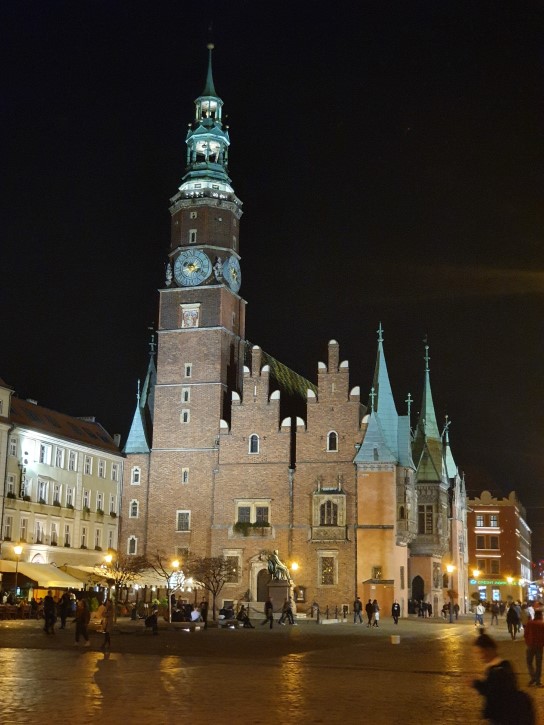
The first thing to write is that the architecture is aesthetically pleasing. There are many buildings with a Georgian style and many churches that are exquisitely designed. Here is an example of one such church:

Wroclaw-0-2019

A Church in Wroclaw, Poland.

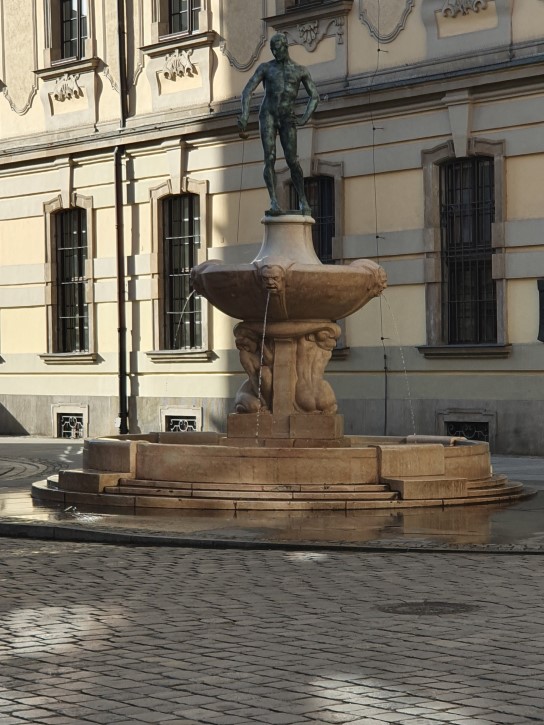
Here are two photos of fountains I took:

Wroclaw-1-2019

Fountain (1).

Wroclaw-2-2019

Fountain (2).

Wroclaw is vibrant, youthful and has an upbeat feel. It is a clean city, only being let down by graffiti that is everywhere. There are plenty of places to eat and drink, with some even having English menus upon request. The cost of living is cheap with roughly 10 slotty (about £2) buying a double vodka and diet coke. I did have difficulties getting zero sugar drinks in a number of places, which was a bit of an issue with me being diabetic.

The only Polish word I managed to learn was Kawa, which means coffee. The main square is huge and has flower market stalls that appear to be open 24/7. I found myself listening to Polish conversations as I walked around and appreciating the beautiful sound of the language. Some Polish spoke English exceptionally well whereas others didn’t speak any English at all. I found the Google Translate App really useful.

Without doubt it is people that make a city. All appeared happy, content and liberal. Polish people had less inhibitions when it came to dancing than we English have. Polish people will quite happily bump into anyone in their way in pubs and clubs. This is normal to the Polish, but being British I found it a little rude.

As Poland is known for being Roman Catholic and as such conservative when it comes to gay people and their rights. I decided to test the waters with a Polish man who I had been talking to and getting on with whilst smoking a cigarette. I came out and asked his views on gay people. He said:

“I don’t care, I don’t give a fuck. That’s your choice. We’re all just friends here.”

He described himself as not being religious, male, heterosexual and was in his mid twenties.

Overall Wroclaw is a beautiful city, with wonderful people and a place that I will be visiting again.

Take care,

Antony

Share on Social Media:

Why the Pharmacology Principle of Administering A Minimum Dose of Medication To Get The Desired Effect is WRONG

By Health2 Comments

In recent years the pharmacological principle of prescribing and administering the minimum dose of medication to get the desired effect has become common place in medicine. Despite not being a Doctor or Nurse Prescriber I have come to believe that this approach is fundamentally wrong. In this post I explain why.

medication-pills

The medication that I take each morning.

Let me explain why the theory and practice has become so popular. It has lots of benefits. It helps prevent patients being overdosed on medications, minimises the likelihood and severity of side effects; can prevent or reduce the risk of patients becoming tolerant to medications and microbes from developing drug resistance (such as antibiotic resistance).

These benefits all sound good, so lets looks at the risks and why I believe the risks outweigh the benefits – put simply why I think this approach is wrong.

The biggest risk is that patients get under-dosed, leaving them in pain or suffering due to Doctors and Nurses being too cautious. Another risk is that Doctors and Nurses are always looking to reduce doses at medication reviews. This could be physically, mentally and emotionally harmful to the patient. Some may argue that pathways are in place to prevent under-dosing and harm. But pathways don’t always account for the complexity of the individual patients.

Here are some examples of when this theory of giving the minimum amount of medication to get the desired effect doesn’t work:

  • A patient brakes their arm and has the bone sticking out. They are understandably in a lot of acute pain. However a pathway, Doctor or Nurse may choose to start them on paracetamol and work up to stronger painkillers. In this case the patient is likely to need Morphine, which is at the top of the pain management pathway. This may result in several hours (or more) of severe pain.
  • A patient with chronic back pain attends a Pain Service for medication review. After the initial assessment, the Doctor or Nurse decides to lower doses of medications despite the patient saying that they’re struggling with the pain. They refer to Physiotherapy – a good decision, but still reduce the doses of medications. This leads to anxiety, possible depression and more physical pain.
  • An elderly patient has a urine infection and type 2 diabetes. After several GP visits due to constantly needing the toilet, she gets antibiotics. However they are of the lowest dose, indicated by a urine infection pathway. The patient has to return to the GP to get a higher dose. During this time her blood sugars are high, leading to even more urination, the risk of dehydration and other associated complications of having a high blood sugar over a prolonged period of time.
  • A patient with mental illness such as bipolar isn’t put on high enough doses of antipsychotics and/or antidepressants. They are given the dose that is as little as possible and it is not increased despite the patient asking for this. This means that the patient has continual relapses and repeated admissions to mental health wards.

I try to avoid writing about things that could cause controversy. But my recent 15 day stay in a mental health ward and experience with community mental health services has left me having being given less than the standard doses advised in the BNF on two mood stabilisers. I believe that standard doses of medications exist for a reason. These are levels of medication that experienced clinicians through research have found to be effective.

I now face an uphill struggle and a battle to get medications I need increasing increased due to this theory. This is why I believe it is fundamentally wrong. Because of the risks of under-dosing and causing harm. I’m sure I’m not the only one affected by this principle, it is no doubt many others across the country and Western world.

Write soon,

Antony

mental-health-wisdom-banner


I aim for posts on this blog to be informative, educational and entertaining. If you have found this post useful or enjoyable, please consider making a contribution by Paypal:


Share on Social Media:
×