Years ago, I bought an Iomega StorCenter Home Media Server.
Iomega was bought out by Lenovo whom only offered limited support for Iomega products. I updated it a few years ago and since its never been able to connect over the Wifi, only by ethernet cable.
Then recently the Server started making hard drive failure sounds. It had all of my downloaded TV series and films on. So I decided it was time to update.
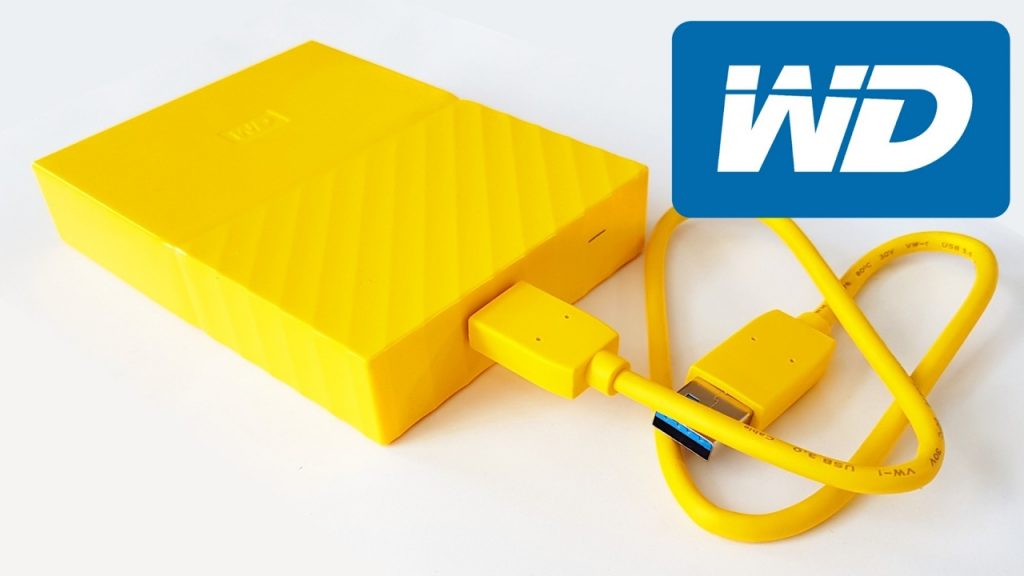
Instead of opting for another media server, I went for a WD My Passport (Yellow) 4TB (photoed above and below). Here’s the My Passport features:
It’s Plug and Play, meaning that it doesn’t require its own power source but is instead powered through USB.
It’s portable.
It is made by Western Digital (WD) whom have an excellent reputation for making high quality hardware products.
It comes in various hard drive sizes: 1TB, 2TB, 3TB & 4TB.
It has a funky design.
It comes in various colours: black, white, blue, red, yellow & orange.
It runs silently.
It is relatively cheap, available on Amazon for just under a £100 for a 4TB model.
It has Built-in 256-bit AES Hardware Encryption meaning that you can set it so that a password is required for access. This feature cleverly allows someone to use the drive on any computer – even one that doesn’t have the WD software installed and without having to install any software.
Auto Backup software is installed. Or you can use other software for backups including Apple’s Time Machine.
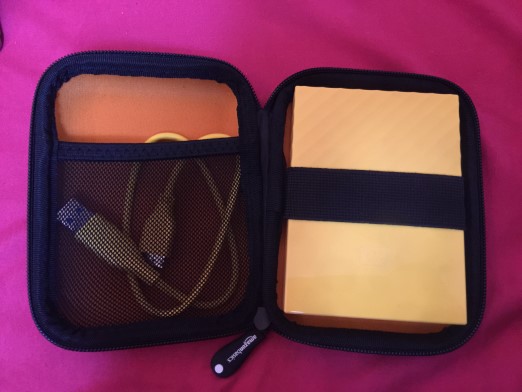
I decided because my new drive is portable that I wanted a solid case to protect it when not in use. I found this AmazonBasics Case:
I found this great solid Amazonbasics Case for the external hard drive.
If you’re looking for an external and portable hard drive to give yourself more disk space on your laptop or PC, I can highly recommend the WD My Passport (Yellow) 4TB on Amazon.
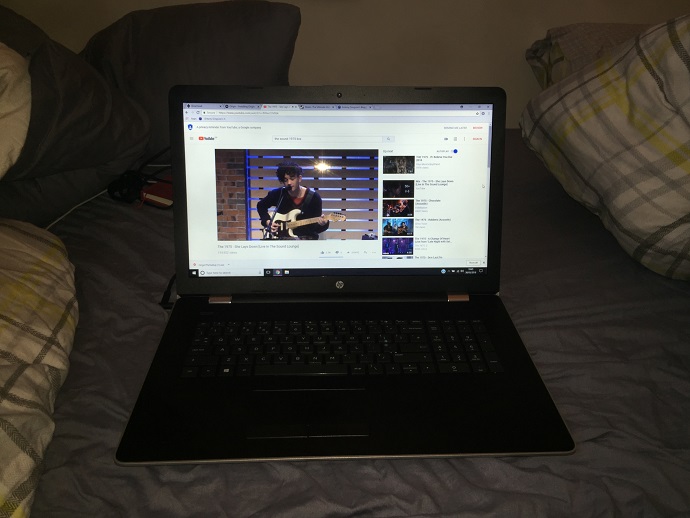
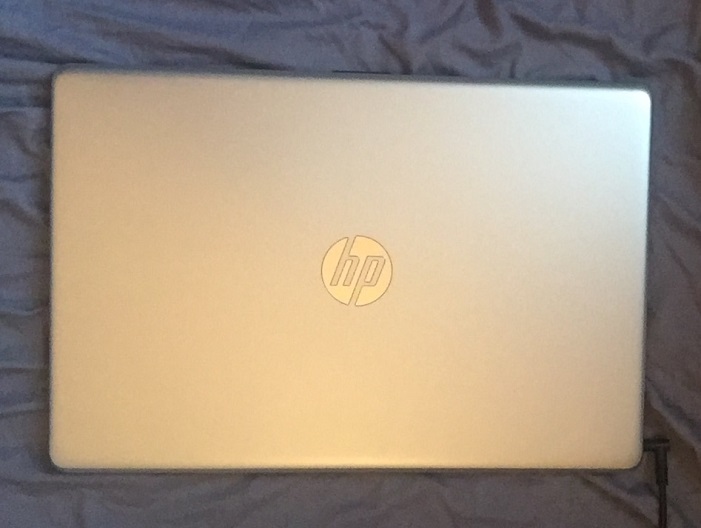
I recently purchased this new Windows 10 laptop, which is brilliant:
My new HP laptop from HP’s Online Store (1).My new HP laptop features a massive 17 inch screen, 1TB hard drive, 8GB ram and Windows 10.
I didn’t realised quite how big the 17 inch screen would be, it’s massive, I’ve never had one so big, oh err!
But having been Apple-based at home for the past several years I needed to get to grips with what essential programs I needed for Windows 10. I did a bit of research, made some decisions and came up with a quick list of essential programs.
Here’s my quick list of essential programs for a new Windows 10 PC or Laptop, these are all programs that I’ve installed on my new laptop:
Internet Browser – Chrome
Chrome is quick, easy and simple to use. It’s quicker than the default Microsoft Edge. The only thing I don’t like is Google tracking my every search.
So I’ve set the search engine to Duck Duck Go. Duck Duck Go doesn’t save any personal information, has no advertisement tracking or anything like that. In my experience they also offer a more varied search result than Google. This is because Google uses your personal information to exclude websites from your results.
CCleaner gets rid of unnecessary files that ultimately slow down you computer. If you don’t keep on top of the file maintenance, your new PC or Laptop could become as slow as a half-dead snail.
I used to recommend Microsoft products, but due to their greedy subscription requirements, I now recommend LibreOffice. LibreOffice is FREE and gets regular updates.
Video & DVD – VLC
VLC is my all-time favourite video player…it just works. An essential program for me on my iMac, iPad and now on my Windows 10 laptop.
GIMP is a program I’ve used many times on my Mac to edit images and create infographics. It’s similar to Adobe Paintshop Pro but without the expensive price tag.
I’ve never tried Paint 3D. But so many articles during my research recommended it, that I’ve downloaded it to give it a try.
To me GIMP is essential as Windows 10 still has Paint but not much else.
iTunes is the first choice for a music management library. However I was concerned that having iTunes on two computers (my iMac and my new laptop) might mess up the library and syncing.
So I went for a free alternative called MusicBee. MusicBee is a good piece of software and is very flexible to different needs of different users.
I’m a casual gamer, but in order to play any games I’ve previously purchased I needed to install both Steam and Origin (I have bought games on both platforms in the past).
Getting files and folders from Mac Formatted Drive to Windows 10 – HSFExplorer
This last program isn’t essential for everyone. But it was for me, having previously being Apple exclusive.
HSFExplorer allows you to view files and folders saved on a Mac formatted pen drive or external hard drive and copy the files over to Windows. A fantastic program that does require Java installed.
Unless stated otherwise the programs above are free. Some have to option to purchase more features, purchase other supporting programs or buy other programs within them.
I hope you’ve found this blog post useful. Are there any programs I’m missing? If so, please let me know what they are by leaving a comment below.
Reading Time: 2minutesLike most homes today mine has more than one computer. I have infact two, a laptop for surfing the net and a desktop in the office / guest room. But I was becoming increasingly fustrated with having my music, pictures and documents split across the two. I’d log on to my desktop to find a document or file and then realise that it’s on the laptop. So I decided to buy My Book World Edition 1TB Home Network Storage.
What I love about it:
Having all my files in one place and being able to access them on any computer
Storage Size – A massive 1TB
Easy to Install – Maps the drive for you and even creates a desktop
Fast transfer time – Didn’t to take that long to transfer my data, considering the size
Security – It has good security features to protect my data including different users with levels of privilages and work groups
System Status – gives you information on space used and how the box is functioning.
What I struggled with:
Limited information on security – I had to fiddle with the security settings in order to work out how it works, at one point I was sharing my music and pictures with everyone. Granted I did put them in the public folder, but I thought it was just public for registered users. There was also limited information on the web when I was looking for support with it. Worked it out in the end though.
What I’ve not used (and therefore can’t review):
Backup software – It comes with 5 free licences but I will be backing up the Network Storage box on a seperate box and haven’t used their software. I’m going to use my own.
Accessing your files from the web – I’ve disabled this feature for added security, plus I have no need to access my files over the internet
Hope my review was useful. Blog technological soon,