Category

Creativity

Import: Stay Safe over Christmas with the iSurvive App

By Creativity, Journalism, TechnologyNo Comments
iSurvive

iSurvive App

The Christmas party season is upon us! We all want to have a good time; but we need to make sure that we’re safe to (and I don’t just mean condoms). Tom Hunt and his team have developed an App to help you out, appropriately named iSurvive.

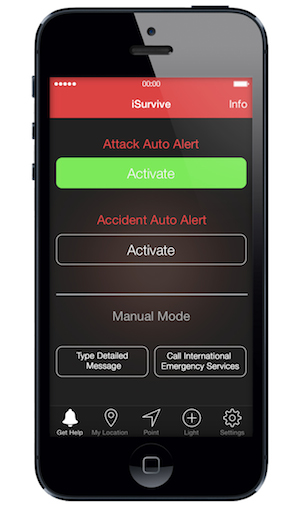
iSurvive has two modes: Attack and Accident. It allows you to send a pre-written emergency text to up to three of your contacts in three quick taps, to let them know you’ve been attacked or had an accident with your GPS location and a Google Maps link.

iSurvive also has a one touch ‘call international Emergency Services’ (112) button, a quick and easy way to find your current location, the ability to turn a flashlight on, use the Flash as an SOS flashing signal and even convert text into a flashing custom Morse Coded signal.

If you move after sending the text, when your contacts click the link they get a real time update of your current location. These updates continue, until you deactivate the app at the end of the emergency situation.

The App was inspired by an event that happened two years ago in the UK, in which someone was reported missing. The Police eventually used the missing person’s mobile phone signal to track them down but it was too late. The victim had been abducted, murdered and left in a remote forest location.

If you’re being attacked and the attacker is trying to get you to cancel the alert in the App you can enter a fake code and it will appear to them that you’ve cancelled it. But in reality it will continue to transmit your location to your three contacts. How realistic it is that the attacker would try and force you to deactivate the alert, rather than smash up your mobile is questionable.

There are a lot of great customizable options on this App including: the pre-written messages, who they are sent to, the ability to type a detailed message to your chosen contacts and the deactivation texts.

If you or someone else kills the App the alert continues to be active, until you fully deactivate it yourself. iSurvive is FREE to download from 14th-28th December 2013, after this is reasonably priced at 99p.

Of course an App alone isn’t going to completely safe. You need to take some sensible steps yourself, such as: knowing your alcohol tolerance limit, staying with friends, not going home/off on your own, carrying emergency money, keep hold of your drink and in the event of an attack attracting as much attention as you can.

Have a great & safe Christmas.

Published by: The Gay UK on Friday 20th December 2013.

Share on Social Media:

Import: The History of Marriage in the UK

By Creativity, Gay, JournalismNo Comments

In this article we look at the history of marriage in the UK. Our history starts at 410AD, as before this time there were no written records of the history of marriage. Before written records, history was past down orally from the older generation to the younger one, unfortunately over time this oral history has been lost.

410AD – The Anglo-Saxons and Other Tribal Groups
For many people marriage is strongly associated with religion, but this wasn’t always the case. Straight marriages at this time were about peace and prosperity rather than religion. Marriages encouraged good diplomatic relations and the development of trade between two (or more) tribal groups.

It was the fathers who decided who their daughters married and the wishes of the couple were seen as irrelevant.

gm-consent

(Image Credit: Andrew Brooks @ Flickr)

12th Century – Consent
In 1140 Decretum Grantiani wrote a canon textbook were he introduced the concept of verbal consent to straight marriage and the requirement for a couple to consummate their union to validate their marriage.

In the 12th century the Roman Catholic Church made verbal consent and consummation necessary for the church to view the straight marriage as legitimate. Some Roman Catholic writers at the time also describe marriage as a spiritual experience tied to God’s presence. While this is not surprising, prior to this very little mention of marriage as a spiritual experience.

gm-the-vows

(Image Credit: Stuart Wrightson @ Flickr)

1549 – The Vows
The tradition of vows came from Thomas Cranmer’s Book of Common Prayer. Although the book was updated later on, many of Thomas Cranmer’s words are still used in religious ceremonies today.

These vows laid the foundation for how the Roman Catholic & Protestant churches viewed straight marriage at the time as: a partnership.

Thomas Cranmer must have reflected the views of the mainstream population about marriage at the time; otherwise it would have been unlikely that the church institutions would have accepted and taken on these views.

Roman Catholic Priests at this time were still delivering marriage ceremonies (as all other religious services) in Latin.

However, the Protestant’s began delivering their services in the English language. This is significant as English was the common language and this change made marriage ceremonies (as well as all other religious services) accessible to all.

Today, Protestantism is one the most popular religions practiced in the UK. Many historians believe that changing the ceremonies to English played a huge part in making Protestantism a dominant religion.

1563 – Sacramental Marriage
The Roman Catholic Church officially declared that straight marriage was one of the seven sacraments in this year; meaning that it was something undertaken in the presence of god. The other sacraments are: Baptism, Confirmation, Holy Communion, Confession, Ordination and Last Rites.

The Protestant Church didn’t see straight marriage as a sacrament at this time.

1753 – State Involvement
The Clandestine Marriage Act (1753) set out what the state expected in order for a straight marriage to be seen as legal. It required the couple to get married in a church by a minister and issue a formal marriage announcement or to obtain a marriage license.

1836 – Civil Marriages
In 1836 it became legal for straight couples to get civil marriages, which were generally held in Register Offices. This was to accommodate both the religious and nonreligious.

For the religious it meant that they could get married in a neutral place, if for some reason they couldn’t get married in their church. For the nonreligious it gave them a place void of religion. Prior to this, nonreligious straight couples had to go through a ceremony in a church and undertake practices & traditions that they didn’t believe in.

In 1837 the civil registration of straight marriages started.

1837 – It’s All About Straight Love
Between 1837-1901 it was the Victorian Era. It is said by contemporary historians that the Victorian Era is when marriage became about love, but still only the love between a man and a women. Gay people weren’t treated well in the Victorian Era in the UK, with laws against sexual acts.

gm-oscar-wild-grave

(Image Credit: Nik Mortimer @ Flickr)

Oscar Wilde – widely regarded as one of the most talented writers of all time; was accused of sodomy by the father of his male lover. He lost the trial and was sent to prison. It was rumored that he could have escaped to France, but he didn’t. Once he’d served his sentence, he moved to France.

Left: Oscar Wilde’s grave in France, covered in Graffiti by gay people from across the world.

gm-divorce

(Image Credit: melbelleinsc @ Flickr)

1858 – Divorce
Between the 17th – 19th Centuries there were 300 cases of people wanting to end their marriages. The only way to do this was for an Act of Parliament for each marriage, as there was no accommodation for divorce in marriage law. So in 1858 the government of the time finally made divorce a legal process.

The legal process that meant those who wanted or needed a divorce could have one. But it also signified a shift in the focus of marriage from being a lifetime commitment – for better or worse, to a commitment that could be changed if life’s circumstances changed.

19th Century – Birth Control
By the 19th Century, both the Roman Catholic and Protestant Church’s had promoted procreation as the main reason for straight marriage. But as more children survived childhood, families got bigger and there was a need to use some form of contraception.

In the 1930s the Protestant Church accepted contraception, viewing it as necessary and not a sin or something God would be unhappy with. But the Roman Catholic Church has remained against any form of contraception, as they continue to see the procreation of children as a fundamental aspect of straight marriage.

gm-rings

(Image Credit: Viviana Hurtado @ Flickr)

2005 – Civil Partnerships
In 2005 the first gay civil partnerships took place, a year after The Civil Partnership Act came into law.

It allowed gay people to have legally recognised relationships, which granted them the same rights, protections and benefits of a married straight couple. This included legal rights, such as being one another’s Next of Kin; rights related to their partner’s children and the benefits including those of taxation reductions.

In terms of the actual act, the gay couple could have a civil partnership ceremony that could consist of anything they wanted (within the law). This could be vows, the exchange of rings, their choice in music, etc.

The Civil Partnership Act included a legal process for those gay people who may want to end their civil partnership. It is called ‘dissolution’ and works on similar legal principles to divorce.

This was the first time that the state in the UK legally recognised gay relationships. In the first five there were 42,778 gay civil partnerships.

Peter Tatchell (Gay Rights Activist) as well as others criticised The Civil Partnership Act, saying that it wasn’t complete equality as it excluded straight people from being able to be civil partners.

gay-marriage

(Image Credit: Gary Dunne @ Flickr)

2013 – Gay Marriage
This year The Marriage (Same Sex Couples) Act has been passed in England and Wales. The first gay marriages are expected in March 2014.

Stonewall said of The Marriage (Same Sex Couples) Act:

‘This is an historic moment for lesbian, gay and bisexual people, their families and their friends. This Act will mean that, for the first time, children growing up to be gay in England and Wales will have full equality in law. We can now proudly claim to be a beacon to the world for gay equality.’

In ancient history marriage had nothing to do with religion, but helped tribes to live and thrive together. Then Christian institutions (both Roman Catholic & Protestant Churches) influenced the definition and meaning of marriage. In the last century the state has got involved for marriage, allowing marriage to be more flexible and much more inclusive.

Marriage as a concept has evolved to meet the needs and desires of society. Currently there is some debate as to what role the churches and state play within marriage. It is likely that over the next century the Churches will continue to reside over the spiritual aspect of marriage, whereas the state will continue to be involved with the legal and administrative side of marriage.

Antony Simpson, Writer of this article would like to acknowledge the following sources that supported putting together this article based on fact:

BBC – Ten key moments in the history of marriage
http://www.bbc.co.uk/news/magazine-17351133

Office for National Statistics – Civil Partnerships Five Years On
http://www.ons.gov.uk/ons/rel/…rd/…/ard-pt145-civil-partnerships.pdf‎

Office for National Statistics – Video Summary: What does the Census tell us about religion in 2011?
http://www.ons.gov.uk/ons/rel/census/2011-census/detailed-characteristics-for-local-authorities-in-england-and-wales/video-summary-religion.html

Peter Tatchell – A setback for equality
http://www.petertatchell.net/lgbt_rights/partnerships/Straight-civil-partnerships-defeated.htm

Stonewall – Equal Marriage to become law – Thank You!
https://www.stonewall.org.uk/what_we_do/parliamentary/5714.asp

Stonewall – Get Hitched! A Guide to Civil Partnership
http://www.stonewall.org.uk/documents/get_hitched_a_guide_to_civil_partnership_english_3.pdf

Published by: The Gay UK Feb/March 2014 Magazine (priced £1.49)

mental-health-wisdom-banner


I aim for posts on this blog to be informative, educational and entertaining. If you have found this post useful or enjoyable, please consider making a contribution by Paypal:


Share on Social Media:

Import: 15 Pleasurable Ways To Spend An Evening

By Creativity, Inspiration, JournalismNo Comments

With the dark nights closing in, the routine this time of year can feel a bit monotonous. So we’ve come up with 15 pleasurable ways to spend an evening.

Depending upon your own personal preferences some of these activities might be your idea of absolute pleasure or excruciating pain. Still, hopefully this list will inspire you to do something different and fun that will break up the routine.

15. Spending Time with your Family
Whether it’s seeing my mum, catching up with my brothers, sister, or my nephews it’s always great to spend time with the family. With life being so busy an unexpected catch up is always welcome. So why don’t you text or call your family and see what they’re up to tonight?

14. Getting on the Consoles
Dust off and switch on your Xbox, PS3 or even the Wii and rediscover an old game. Spend the night shooting zombies, being manager of your own football team and playing online with people from across the world. You never know, you might even make a few new online friends.

13. Ordering A Takeaway
Treat yourself to some delicious food from your local take away. Best of all – don’t stress about the calorie intake, just enjoy.

12. Cinemas or A Night in Watching Films
Venture out of the house to the Cinemas for the latest flick. Alternatively pop on your favourite DVD’s at home for a cosy night in.

11. Hitting The Gym
We all know the gym is good for you, but many of us don’t go often enough. Burning off that excess energy at the gym has two main benefits. First, exercise releases endorphins that make you feel amazing. Second, you’re guaranteed to sleep well.

If you make it a regular thing, you only add to the benefits. Think: loosing weight, tighter body, more muscle mass and more stamina.

Plus there’s an opportunity to see that fitty that frequents the gym. You never know, you may even get talking to him and he may end up becoming your workout buddy.

10. Reading A Good Book
Reading a good book is like being transported into a whole different world; your imagination is ignited and you become totally absorbed.

9. A Romantic Meal Out, or A Meal Out with Friends
If you’re in a relationship, take the time out to have a romantic meal for two out at your favourite restaurant. If you’re single, drag one or three of your friends along to try a new restaurant.

8. Ten-pin Bowling, Laser Quest or Both
Find your local bowling, laser quest or both and book a night out of competitive gaming for you and you’re mates. Choose you’re team carefully though – as the loosing team is buying the drinks!

7. Taking A Dance Class
My friend and I took up Salsa Dancing a few winters ago and we were useless at it. I honestly haven’t laughed that much in ages; we both came out with bellyache from laughing so much at each other.

So take a dance class, even if you’ve got two left feet like me. You can also find some same sex dance classes that cater for gay people.

6. Meditation
Meditation may not be the first thing that springs to mind when you think of a pleasurable evening, but bare with me here. Imagine low lighting, a scented candle (or three) and a guided meditation CD that makes you feel completely relaxed and slightly giddy from the visualisation.

I think relaxation can be pleasurable in itself, especially with the amount of stress we all have in our lives. I’ve spent many evenings doing mediation because I finish feeling absolutely blissful and if that feeling of bliss isn’t pleasurable, then I don’t know what is.

5. Having Sex
Spend an evening having sex! But rather than the usual quickie, make a night of it and take it slow.

Light some candles, sprinkle some rose petals and get the baby oil out. Give your partner a naked massage using the oil and resist the urge to step things up a gear.

Take the time to get to know every part of his body and let the tension slowly build, until climax.

4. A Few Social Drinks
Find out all the latest gossip by having a good chinwag with friends over a few social drinks. Just make sure that you know your limit if it’s a work night.

3. Visit the Roller Ring or go Ice-Skating
Visiting your local roller ring or ice skating may bring back memories of falling on the floor or on to solid ice, but you’ll enjoy it once your there. They usually have flashing disco lights and great music for you to skate to!

2. The Theatre
Book tickets and go and see a production at a theatre. It gives you something to look forward to and there are some absolutely fantastic shows on.

1. Being Creative
There’s nothing better than creating something. Whether you’re into: making music, creating collages, painting, writing, do whatever takes your fancy. Even if you don’t think you’re that good at it, just do it for the love of it.

Published by: The Gay UK on Tuesday 29th October 2013.


I aim for posts on this blog to be informative, educational and entertaining. If you have found this post useful or enjoyable, please consider making a contribution by Paypal:


Share on Social Media:

Import: FEATURE: Coming Out to The Kids – Paul’s Story

By Creativity, JournalismNo Comments
gay-family-1

(Image Credit: erinsy @ Flickr.)

Here at The Gay UK this month it’s all about Coming Out. We’ve spoken to two parents about their experiences of Coming Out to their children. Both of these parents were concerned about the impact of telling their story on themselves and their family and asked for their identities to be protected. So throughout this article pseudo names are used for both the parents and the children.

The second is Paul, a 51 years old father from London, England. Paul has two now-adult children his son David, 25 years old and his daughter Janet, 23 years old.

Tell us, how did you Come Out to your children?
It’s very complex. My ex-wife, the mother of David and Janet, and I had been unhappy for about 5 years. I had met somebody who at the time was just a friend, but he wasn’t the reason my ex-wife and I separated. It was actually she who said: ‘Look I think it’s time we separated.’

I didn’t protest too much, as I knew we had both been unhappy, and I had the support of someone else – who happened to be male. I moved out of the family home and went and stayed with him. I rented a home on my own, and we saw more of each other, then a year later we bought a house together. We wanted somewhere big enough for the children to come and stay. It was very important for me that I could see David and Janet.

The children were gradually introduced to him as a friend. It always crossed my mind – do I tell David and Janet that he was my partner or do we just go on? David and Janet just accepted him and they liked him, they felt included and it felt like a family unit. They were happy because they felt loved and that’s what children want.

Over time, our circumstances changed, we had a series of stressful events happen to both of us. We lost the house and ended up renting a small house. We just grew apart and eventually split up. I got a lodger in to help pay the rent. This lodger also happened to be gay. He had a boyfriend and all was good.

Then about a year later, I met this chap who was twenty-seven. I had dated one or two other men before, around my own age, but the lodger didn’t like this chap and tensions resulted in my asking the lodger to leave. I gave him his month’s notice. David at this time was travelling abroad and Janet was at university.

The lodger left without paying me his final month’s rent, which came as no particular surprise. But then I noticed he’d stolen something – a DVD player. I texted him asking him to return the item but got no reply

The Police came, took my statement and made contact with the lodger, and it was then that the lodger texted Janet, my daughter, along the lines of:
“you’ll want to know your dad’s the stereotypical gay, get c*ck at any cost and has had a string of over 60 boyfriends. I would think twice about sleeping under your dad’s roof because he’s a psychopath who’s likely to stab you.”
The lodger contacted all my friends on Facebook and told them the same things. I had to get a harassment order, but by that time the damage had been done.

I didn’t know any of this until I got a call from my ex-partner who said: ‘You’ve got a real problem. Janet knows everything.’ The ex-partner explained what had gone on.

I didn’t have any contact with any of them: David, Janet or my ex-wife for three weeks, it was horrendous. I didn’t know what was going on in their heads. It was awful.

My ex-wife eventually invited me round to dinner to break the ice; things are much better now.

What were you worried about before you Came Out?
The opportunity for me to tell them in my time was taken away from me in really brutal circumstances – and I still feel very bitter when I think about it. I have always been worried that my children may judge me, and that it would somehow make me less of a parent. I had always had a brilliant relationship with both my children, and didn’t want that destroyed.

How old were your children when you Came Out to them?
David and Janet were 24 and 22 when my ex-lodger decided to tell them about me. I still haven’t been able to discuss any of this with them.
i-love-my-parent2

(Image Credit: sfPhotocraft @ Flickr.)

Has it made you closer to your children?
I’ve always been a very hands-on dad. When they were younger I was probably the principle parent. I was the one who always went to parents evenings, took them camping, we used to do a huge amount together. We have always been close.

Have any of your children told their friends or partner about your sexuality?
When Janet told her friends, they were really sweet. A lot of them said: ‘Oh I always knew your dad was gay. Don’t worry about it.’

David, my son, has gay friends. He’s very non-judgemental.

I’m very proud of both of them.

Have they spoke to you about how they felt when you Came Out to them?
When it all happened Janet was very bitter and angry. She felt I’d lied. She felt that she’d been stuck with this problem while David was travelling.

Janet has said since that they knew that I was gay, and that my ex-partner and I had been a couple as well. It was the shock in the way that they were told.

David’s response was very touching and moving. He was still away travelling when it all happened and his response was: ‘Just make sure that dad is happy.’

David has met my new partner, introduced as a friend. But I have no doubt that he will have put two and two together.

They’re fine now but we’ve never talked about it properly. I think it will come to a point where I have to talk about it with them. I don’t know what they are thinking and that’s the difficult thing. But they talk a lot about my ex-partner. It’s almost as if they think that that’s acceptable but I’m not sure that anything else is yet.

Did you access any sources of support before or after Coming Out to them?
I had two sets of counselling: one from the GP and one from GMI Partnership. GMI Partnership offers sexual health and sexuality counselling and is run by volunteers. I had an amazing woman counsellor there who helped me enormously.

I still find it difficult at times. I don’t call myself a ‘gay dad.’ I’m just a dad.

What advice would you give to other parents thinking about Coming Out to their children?
That’s a really difficult one because everybody’s experience is bound to be different. I still haven’t found my own particular answers.

Thank you Paul, for sharing your story.

Published by: The Gay UK on Sunday 29th September 2013.



I aim for posts on this blog to be informative, educational and entertaining. If you have found this post useful or enjoyable, please consider making a contribution by Paypal:


Share on Social Media:
×