Run is a touching and sentimental novel by the marvellous Ann Patchett.
Run starts with a family dispute over the ownership of a statue of Mary. Traditionally it had been handed down from mother to daughter, the mother choosing the daughter who most looked like the statue.
But Bernadette and Doyle didn’t have any daughters. They’d had Sullivan and later had adopted Tip and Teddy. Tip and Teddy loved the statue and it reminded them of their mother who’d died when they were little. Doyle had broken family tradition by giving it to the boys.
Some years later on a snowy and cold night, Tip argues with Doyle and steps out into the road without looking. He is pushed out of the way of an on coming car by Tennessee. Tennessee is a woman that has been watching Tip and Teddy all their lives in the background. Tennessee is taken to hospital with severe injuries, leaving Kenya, her daughter with no one to look after her.
Doyle, Tip and Teddy decide to take Kenya in. And this is where the revelations start. Doyle, Tip and Teddy are forced to confront some truth’s about their lives and Kenya suddenly has the opportunity to fulfil her dreams.
Patchett’s voice is soothing, as it takes you on a journey into these character’s lives. Her description creates an almost film like moving image in your mind. The words in Run just flow, making it an easy and pleasurable read. The pacing is just right and the ending brings everything together beautifully.
In short Run is how creative writing should be done. Creative writing is an art and one that Patchett is superb at.
Run is available to buy on Amazon and at all good bookshops.
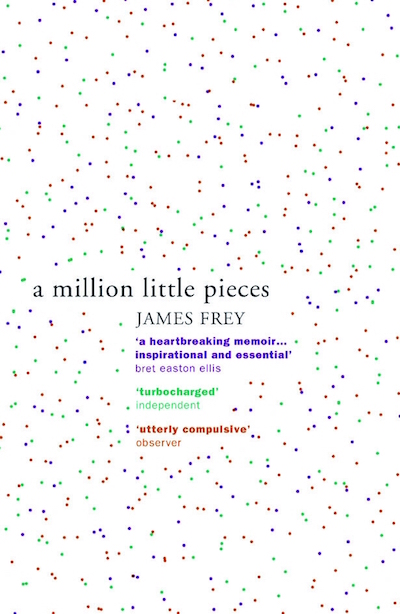
A Million Little Pieces by James Frey is addictive like crack cocaine. Once you pick it up and start reading, you’ll find it near impossible to put back down.
From the cover:
Aged just twenty-three, James Frey had destroyed his body and his mind almost beyond repair. When he enters a rehabilitation centre to try to reclaim his life, he has to fight to determine what future, if any, he has. His lack of self-pity, cynicism and piety gives him an unflinching honesty – a fearless candour that is at once charming and appalling, searing and darkly funny.
(From: Frey, 2004)
Frey takes the reader on his rollercoaster of a journey to recovery from alcohol and drug addiction. It starts with him waking up on a plane with no memory of how he got there, what happened to his face or where he’s going.
is set during Frey’s stay in rehab; is well paced and has plenty of tension, conflict and resolution. Both internally and externally. He recalls memories of his dysfunctional and chaotic alcohol and drug using past.
Stylistically A Million Little Pieces lacked speech marks, but this was possibly deliberate. Not having speech marks was a noticeable stylistic change to the normal layout of a book. Frey was probably using this to subtly hint that his story wasn’t like the story of most people. Frey’s lack of dialogue tags was generally acceptable, but on the odd occasion where Frey had written a scene with a group of people, it did get difficult to establish who had said what.
Towards the end of A Million Little Pieces it began to feel fictional. As I was coming to the end of the book and had enjoyed reading it, I decided to look into other books that Frey had written.
Oprah had to respond to these revelations and interviewed Frey on a few occasions. The most recent, a few years after A Million Little Pieces was exposed as being in part fictional is available to watch below:
I can understand while some people felt lied to, as A Million Little Pieces was promoted and marketed as a memoir.
But I wasn’t in the slightest bit surprised that some of A Million Little Pieces was fact and some was fiction. Because that’s how it read. Who wouldn’t change some of their past if they had the chance? Don’t we all do that all the time? Change things to make them sound better or worse than they actually are with the aim of making our stories more interesting to our friends, family, co-workers, etc. Can we really blame Frey for doing the same for the reader?
Regardless A Million Little Pieces is still a great read. Worth reading if you are interested in addiction, crime, alcohol, drugs, rehab and recovery. Just hold on is a phrase often repeated in the book and was a phrase that I adopted when I was suffering from severe clinical depression.
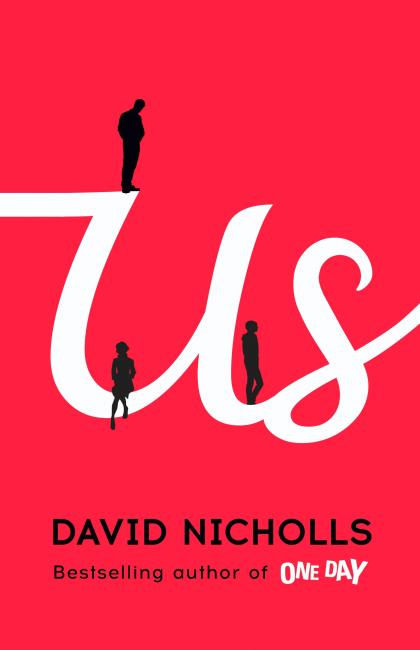
In Us Douglas Petersen discovers that his wife Connie will also be leaving him when their son Albie leaves for University.
Douglas decides to make their last family holiday together a trip of a lifetime by organising what he dubs ‘The Grand Tour’. The journey will take them across Europe and Douglas hopes that along the way he and Connie are drawn closer together and that he finally wins the respect of his son.
Everything about Us was predictable including the perspective, pacing and plot.
Douglas’ perspective was used with him flicking between the present ‘Grand Tour’ and the past to tell the story of his life. His past contains a pretty boring single life, a love romance with the wonderful but flawed Connie who seemed to settle for him and his awkward and difficult relationship with his arty son Albie.
The pacing was reasonable using the travelling to new destinations on ‘The Grand Tour’ to keep it moving along.
The plot was totally predictable, not once was there a plot twist that was unexpected. The reader is likely to become frustrated at just how predictable it is. The ending felt like it hadn’t been thought through by David Nicholls and that he had been lazy.
I pre-ordered Us because it is by David Nicholls, the same Author that wrote the exceptional One Day. I really wanted to like Us, but up to the same standards as One Day it was not.
Overall Us by David Nicholls was OK, it’s the sort of book you’ll only read once and wont change your life. It is available to buy on Amazon.
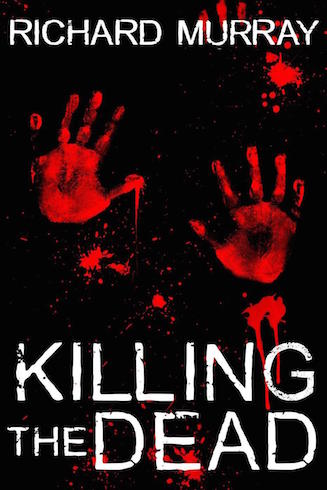
Ryan has just thanked the man he has murdered for the pleasure he got from taking his life, when an incessant banging comes from his front door. He opens the door to Lilly, a frightened woman who is being chased by zombies. She explains that the world is being taken over by the living dead.
Then Lilly discovers Ryan’s secret hobby – killing the living. We discover that Ryan is a serial killer from the North of England and that he believes his best chance of survival in this new world of The Undead is to be part of a group. Lilly agrees to be part of his group – but with rules and conditions.
Ryan and Lilly then set off on an action-packed adventure, being chased by zombies as they search for somewhere safe.
The concept in Killing The Dead is brilliant. A serial killer in a zombie apocalypse. It’s great to read a zombie apocalypse story set in Britain, written by a British Writer.
Ryan’s character was fascinating. Cold and logical but still likeable. The other characters felt two dimensional and lacked development – but this was probably due to the relative short length of the novella format. I think the story would have been better as a novel.
Ryan’s character was so captivating, that his perspective was enough to make the reader want to read on. The use of hooks would have benefited the story. As would the use shorter sentences for action scenes, which would have added to the readers sense of tension.
Killing The Dead had good description and perfect pacing, however the ending was a bit abrupt and left the reader with no sense of conclusion or satisfaction. I have since discovered that this novella is part of a series – it’s good to know that more of the story will be told.
A lack of editing let Killing The Dead down. There were sentences that didn’t make sense due to missed or wrong words, a few grammatical inaccuracies and similarities that just didn’t work.
Antony Simpson is a participant in the Amazon EU Associates Programme, an affiliate advertising programme designed to provide a means for sites to earn advertising fees by advertising and linking to Amazon.co.uk.