
DOOMED!

I don’t know much about Vasculitis.
But I need to know: What comes next? How will my Vasculitis progress?
At a recent clinic appointment with a Renal Consultant, I asked the above questions. The Consultant stirred more intensely at his computer screen, avoiding eye contact. I waited. I wanted some answers. But instead he ignored my questions and moved on to asking about something else.
This wasn’t the first time this had happened to me. A few weeks before, I had seen the Specialist Nurse in her clinic and asked the same questions. She had looked down at her hands and given practically no answers or useful information – instead offering to refer me to a Psychologist.
Months before, I had asked the same questions to my Vasculitis Consultant, who had also avoided eye contact and gave some vague information about Rituximab infusions.
But being a Registered Nurse, I have seen this reaction by Doctors and Nurses to these sort of questions before. When I worked in an A&E Department, patients who were doomed!, destined to die, usually pretty soon, who asked these questions got the same reaction. Eye contact avoided by the Doctors and Nurses. No answers to the questions asked or useful information given.
I do understand the two Consultant’s and the Specialist Nurse’s reactions to my questions. Most Doctors and Nurses go into their professions to heal; to either make people better or to keep people alive for as long a time as possible. We live in a time where all people, including Doctors and Nurses have high expectations of healthcare. Good healthcare has made the occurrences of young deaths very rare.
So imagine being a Doctor or a Nurse and knowing that you could do very little to meaningfully extend a patient’s life due to a disease. That at best, you might minimally slow down its progression. This is sadly the case with Vasculitis.
Now imagine that this patient asks the questions above. These questions are uncomfortable for Doctors and Nurses, because of the wide array of thoughts and emotions they trigger within them. Doctors and Nurses generally don’t want to lie to their patients. Nor do they want their patients to become hopeless, sad, angry or upset.
It takes a great deal of courage, skill, awareness of the patient and themselves for any Doctor or Nurse to have this sort of extremely uncomfortable conversation.
Given all of the above, it is understandable that the two Consultants and the Specialist Nurse have reacted in the ways in which they have. However, in my case, I would prefer we navigate this uncomfortable conversation, so I have answers, know what to expect and have more information.
How You React
There is this very famous quote:
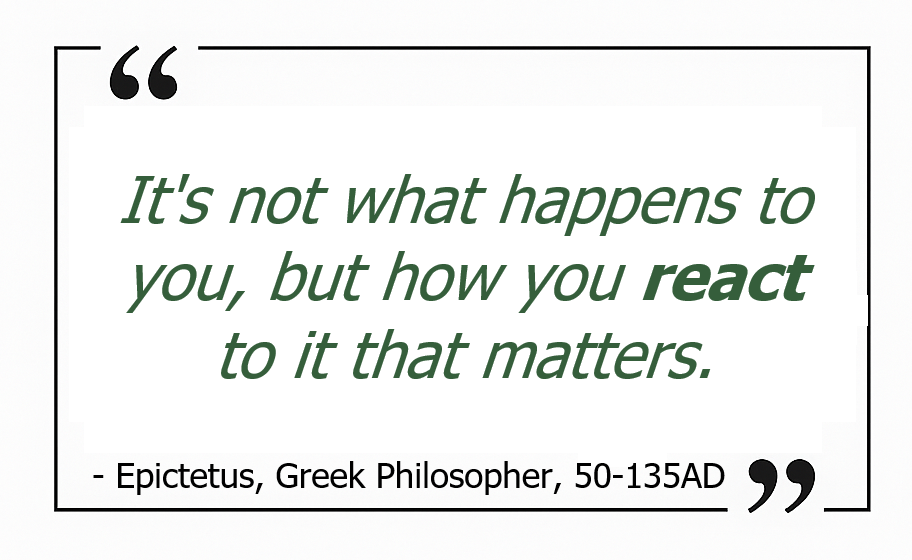
I can’t remember where I first heard this quote, but it is very true statement and the quote has always stayed with me. Everyone reacts to what happens to us through our thoughts, emotions and behaviours (what we say and what we do).
Here are my thoughts regarding the way the two Consultants and the Specialist Nurse have reacted to my questions:
- I would prefer to have the uncomfortable conversation and in doing so, gain answers and more information. That way I can prepare for and plan for the progression of my Vasculitis.
- Although I regularly experience fatigue/exhaustion, swelling and pain, I am grateful that I do have 10-15 productive hours and that the pain is not currently agony and unmanagable.
- I am okay with dying. Everyone dies. Would I have liked more time? Of course. Most people would. But very few people get to choose when their life comes to its end. Death is part of The Cycle of Life.
- That I need to make the best use of the limited time I have left alive.
- That I want to prepare the people that I love for my death. This won’t eliminate or lessen any grief they feel, but will hopefully eliminate any trauma that could be caused by the shock of an unexpected death. My Darling Baby Brother unexpectedly died in 2011, the trauma caused by the shock took me 5 years to deal with. This delayed my grieving for loosing him.
- An appreciation for how valuable and precious time is, as a limited resource.
- I’ve been thinking about legacy, what it means and what mine could be, see below.
I have also developed a desire and the motivation to experience happiness and joy as often as possible for as long as I live.
A Note About Legacy
A legacy is essentially what you leave behind when you die. It can be physical things such as possessions/property/money, or less tangible things like memories/values/impacts on others or a combination of both. After a great deal of thought, I realised something:
My legacy will be decided by those that carry on living after I’m gone.
It is not something for me to decide on and certainly nothing I need to influence.
Realising this was a great relief, as I realised that there is nothing I need to say or do around this.
Emotionally, I feel:
- Fearful about my future for a number of different reasons.
- Sad about the things I will not get to experience/create.
- Sad that people that I love will have to grieve. Although, I do acknowledge that there is nothing I can do to prevent this and that it is a natural reaction to loss.
- Guilt that Vasculitis symptoms and side effects of treatments will reduce my ability to be physically, mentally and emotionally present as much as I would like for the people that I love.
- Guilt for not being well enough to contribute to all the communities that I am part of.
- Guilt & Shame feeling like I am letting people down, for not meeting their expectations.
- Guilt & Shame about the help/support/care I may need from others in the future.
- Embarrassment for some of my symptoms and the limitations these symptoms cause.
After I was diagnosed with Vasculitis I did feel angry and depressed, however, with time, I have been able to let both of these emotions go and they have been replaced with acceptance for the circumstances I find myself in.
Behaviour-wise, I am taking each day as it comes, one day at a time. Vasculitis symptoms fluctuate, meaning that the severity of symptoms and what I am able to say and do varies greatly. I’m currently doing what I can, when I can.
My Vasculitis Tongue
Vasculitis is a rare disease and as such information available online is limited. There are also a number of different types of Vasculitis, each having slightly differing symptoms. Vasculitis can also vary in severity from person to person and at different points during the diseases’ progression. A great source of information is the charity Vasculitis UK.
I’m documenting my experiences living with Vasculitis on this blog for two reasons. The first reason is that it helps me. The second reason is that it might potentially inform or help other people experiencing the same.
With this second reason in mind, I want to share with you this AI generated image (based on a photo of my own tongue) to illustrate what a tongue affected by Vasculitis can look like:
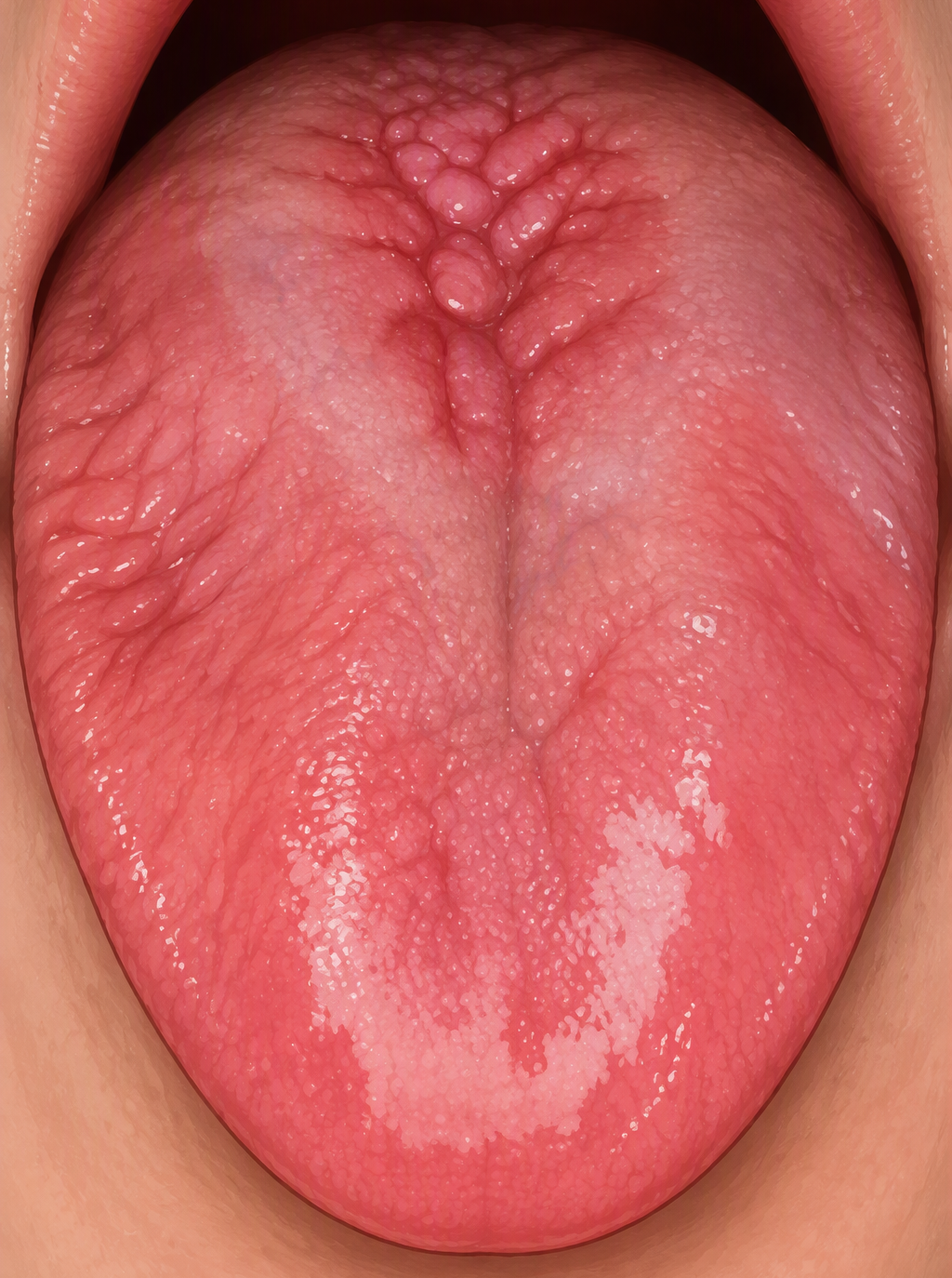
I have chosen to use an AI generated image, rather than an actual photo due to embarrassment about how my tongue currently looks. I do appreciate that I have no valid reason to feel this way, but nevertheless it is how I feel. I can assure you that although it is AI generated it is an accurate representation. The signs of Vasculitis being present in both the centre top of the tongue (deep red lines) and either sider of the tongue (lighter red lines).
Initially, I noticed the lines, but there wasn’t any real swelling or pain. However more recently, pain has started to be present and it does make it more challenging to eat hot foods and drink hot drinks.
What’s Next?
I am informed that my recent blood results did not indicate that my Vasculitis is currently active, however I am having flare ups of symptoms very regularly, indicating that the blood results may not be giving a fully accurate picture, or that there maybe something else going on.
So I have had an MRI scan with contrast, am for an urgent ENT Review and in the meantime I continue to take photos of the facial swelling and state of my tongue and report my symptoms to both the Vasculitis Specialists and my GP.
Write soon,
Antony
Other Content
If you liked this post, you might like:
- All Vasculitis Content page.
- Post: Vasculitis Fatigue.
- Post: Vasculitis Treatment: Rituximab.
- Post: Vasculitis Facts.
Support
I recognise that people visiting this page/post might want to know where they can get support.
If you require support around your mental health, addiction or physical health, see this Support page here.
